
We know the feeling. You’ve spent weeks crafting the perfect user journey. You’ve segmented your audience based on last month’s data. You’ve set up rules that would make a logic professor proud. You launch. And then?
Then real life happens.
Visitors behave in ways you didn’t predict. They arrive incognito. They bounce between tabs. They browse for winter coats in July. The rigid tunnels we build for our customers rarely match the chaotic, non-linear reality of their actual browsing habits.

For a long time, the industry standard was to look backward. We’d analyze what happened, create a segment, and hope that next time, we’d get it right. But in a world where attention spans are measured in milliseconds, “next time” is often too late.
At AB Tasty, we believe there’s no such thing as trial and error. Just trial and better. And getting to “better” requires a shift in mindset. It requires moving from a static view of the world to one that adapts, breathes, and evolves in the moment.
Enter AdaptiveCX.
This isn’t just another tool in your stack. It’s a fundamental shift in how we approach the digital experience. It’s the difference between reading a script to a customer and having a conversation with them. In this guide, we’re going to peel back the layers of AdaptiveCX.
We’ll look at the technical engine that drives it, the massive opportunity hiding in your anonymous traffic, and how you can turn every click, scroll, and hesitation into a signal for growth.
We’re the optimization partners pushing brave ideas from the inside out. Let’s dare to go further.
1. Why AdaptiveCX Matters: The Invisible Majority
Let’s start with a hard truth. You probably know less about your traffic than you think.
Open your analytics dashboard. You see conversion rates, bounce rates, session times. But dig deeper into the who. For most mid-market and enterprise e-commerce brands, the vast majority of visitors—upwards of 90%—are anonymous.
The Problem: Designing for the 10%

Traditional personalization tools were built for the known user. They thrive on historical data, logged-in profiles, and CRM matching. They’re excellent at serving the loyal customer who visits every Tuesday and buys the same brand of coffee.
But what about the other 90%?
These are the first-time visitors. The incognito browsers. The users who haven’t logged in yet. To a traditional, rule-based system, these people are ghosts. The system sees them as “Unknown User #4928,” serves them a generic homepage, and hopes for the best.
This is where revenue is left on the table.
Static personalization relies on rules. If user is from New York, then show raincoats. If user visited the “shoes” category last week, then show shoe banner. –
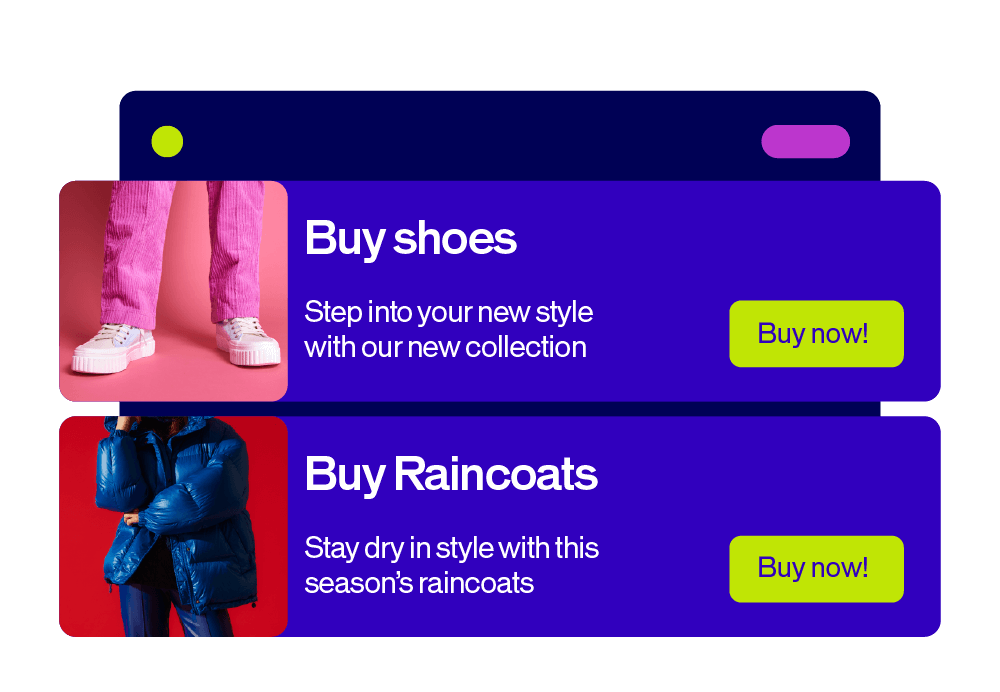
These rules fail because they are rigid. They don’t account for the fact that the user from New York might be buying a gift for someone in Florida. They don’t account for live behavior. If that user clicks on a sandal, the “raincoat” rule is instantly obsolete. Yet, the static system keeps serving the raincoat.
This misalignment creates friction. Friction kills conversion. And when 90% of your traffic faces this friction, the opportunity cost is staggering.
The Opportunity: Capturing the Micro-Moment
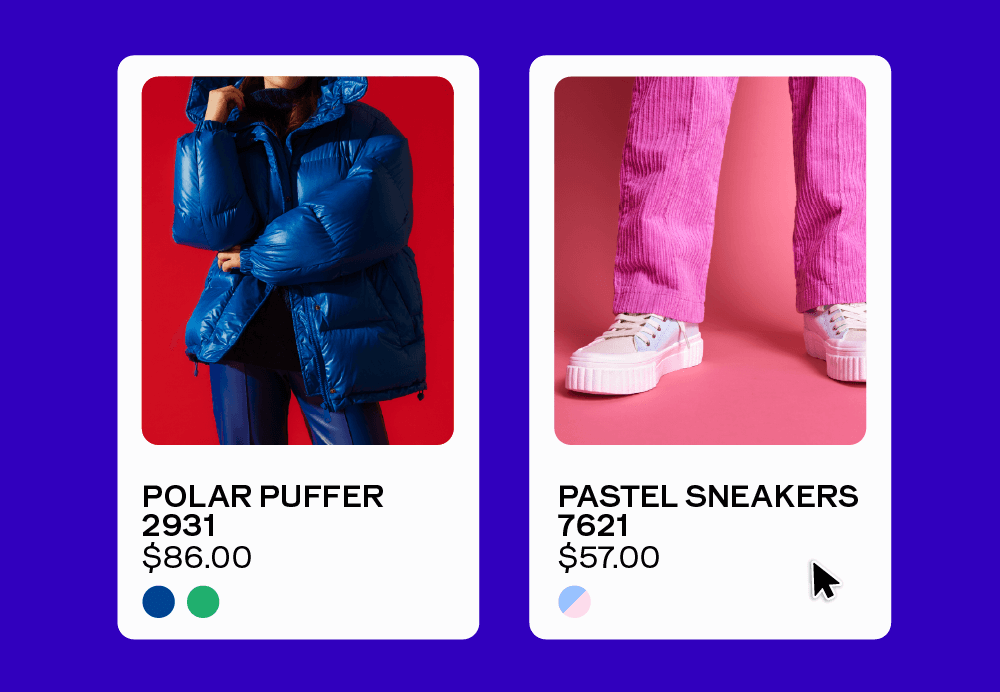
AdaptiveCX flips the script. It doesn’t wait for a login. It doesn’t rely on data from three months ago. Instead, it treats every interaction as a signal.
A mouse hovering over a price tag. A quick scroll past the hero banner. A hesitation on the “Add to Cart” button. A switch between tabs.
These aren’t just random actions. They are the digital body language of your customer. AdaptiveCX captures these signals—trillions of them every month—to understand intent as it happens.
The opportunity here is massive. By moving from identity-based targeting (which only works for the few) to intent-based prediction (which works for everyone), you unlock the hidden value in that anonymous 90%. You stop waiting for visitors to identify themselves and start serving them relevant experiences based on what they are doing right now.
It’s about catching the visitor in the micro-moment. It’s about recognizing that a user zooming in on a fabric texture is expressing a different level of intent than a user rapidly skimming a category page.
When you can read these signals and react instantly, you don’t just improve the experience. You transform it.
2. Core Value Proposition & Benefits
So, you embrace the adaptive mindset. You start listening to the signals. What does that actually look like for your business? The impact is measurable across both the hard metrics of your P&L and the soft metrics of brand loyalty.
Business Impact: The Numbers
When you stop treating anonymous traffic as “low-value” traffic, the ceiling for growth lifts significantly. Based on typical outcomes we see with AdaptiveCX, the impact creates a flywheel effect on revenue.
- Conversion Rate Lift (~+10%): This is the baseline. By simply showing relevant content to users who would otherwise see generic pages, you remove friction. When users find what they want faster, they buy. It’s that simple.
- Retention Boost (~2.5×): This is where it gets interesting. An adaptive experience creates a subconscious feeling of “this brand gets me.” When a first-time visitor has a smooth, relevant session, they are significantly more likely to return. We see repeat visits jump by up to 2.5 times because the initial friction of discovery was removed.
- Revenue per Visitor (RPV) Growth (+15%): This is the holy grail. It’s not just about getting more orders; it’s about getting better orders. By predicting intent, AdaptiveCX can identify when to upsell (because intent is high) and when to offer a discount (because the user is price-sensitive). This intelligent dynamic ensures you aren’t leaving money on the table or giving away margin unnecessarily.
Visitor Experience: No More Dead Ends
For the visitor, the value is less about “conversion” and more about “flow.”
Imagine walking into a physical store. You walk toward the running shoes. A good associate doesn’t hand you a flyer for lawnmowers. They notice you’re wearing old running shoes. They ask if you’re training for a marathon. They guide you.
AdaptiveCX digitizes this associate.
- Real-time personalization for everyone: The incognito user gets the same level of white-glove service as the VIP loyalty member. The experience feels premium from the very first click.
- Instant relevance: Search results reorder themselves based on what you clicked three seconds ago. Content blocks shift to highlight the category you’re seemingly interested in.
- Tailored discovery: If a user is doom-scrolling, AdaptiveCX can inject a burst of inspiration. If a user is laser-focused on specs, it can highlight technical details.
The result? A digital experience that feels less like a vending machine and more like a partner in the customer’s journey.
3. How AdaptiveCX Works: Under the Hood
This is where the magic happens. But unlike a magician’s trick, the logic here is fully visible. AdaptiveCX uses a “clear box” approach, ensuring that the data signals, logic, and how outputs are achieved are always transparent. It’s more than just trusting the engine driving your revenue—it’s transparent data science applied to adaptive personalization. So let’s pop the hood and look at the architecture of AdaptiveCX.
It operates on a three-step cycle: Signal, Predict, Activate. And it does this continuously, hundreds of times per session.
a. The Real-Time AI Engine

The core of AdaptiveCX is a predictive engine that lives primarily on the client side. This is crucial for speed. If we had to send every mouse click to a server, wait for processing, and send it back, the moment would be lost.
- Live Signals Processing: The engine ingests non-PII (Personally Identifiable Information) behavioral data as it unfolds. It watches the scroll depth, the mouse velocity, the active time on page, the sequence of clicks. It processes over 3.7 trillion data points a month across our global network.
- Instant Intent Prediction: This is the brain. Using XGBoost classifiers and regression models, the engine analyzes the stream of signals to predict future states. It assigns scores in real time: “Purchase Probability: High,” “Churn Risk: Medium,” “Affinity: Leather Goods.” It does this even for visitors with zero history.
- Immediate Activation: This is the muscle. Once the prediction is made, the engine triggers the experience. This happens in milliseconds (typically ~20ms for prediction). The page adapts before the user can even blink.
b. The “Clear-Box” Approach
One of the biggest fears marketers have with AI is the “black box.” You feed data in, magic happens, and you have no idea why.
AdaptiveCX is designed to be transparent.

- Predictive, not guessing: We show you the logic. You can see why the AI scored a user as “high intent.” Was it the three return visits? The focus on the sizing chart? The interaction with the gallery?
- Control: You remain in the driver’s seat. The AI provides the intelligence, but you define the parameters of the activation. You aren’t ceding control of your brand; you’re supercharging it.
c. 100% SaaS & No-Code
We know that engineering resources are scarce. Marketing teams often have “brave ideas” that die in the IT backlog.
- No-Code Integration: Deploying AdaptiveCX doesn’t require a sprint cycle. For most customers it’s a single tag, meaning you can deploy in days, not months.
- Scalable: It’s pure SaaS. No infrastructure burdens. No server maintenance. Whether you have 10,000 visitors or 10 million during Black Friday, the system scales automatically.
d. Privacy-First Design
In an era of cookie deprecation and GDPR/CCPA regulations, reliance on third-party data is a liability.
- Cookie-less Compatible: AdaptiveCX thrives on first-party data. It doesn’t need to follow the user around the internet. It only needs to know what they are doing on your site right now.
- Anonymous by Default: Because it focuses on behavioral signals rather than identity, it is inherently privacy-safe. It doesn’t need to know who the user is to know what they want.
4. Typical Use Cases: The Playbook in Action
Theory is great, but practice drives revenue. How does this adaptive capability translate into specific on-site scenarios? Let’s look at four killer use cases backed by real-world success stories.
Use Case 1: The Adaptive Carousel
The Scenario: You have a “New Arrivals” carousel on your homepage. It has 10 slides.
The Problem: Most users never click past the third slide. The items in slots 4-10 are effectively invisible. If the user’s perfect item is in slot 7, you’ve lost a sale.
The Adaptive Solution: As the user interacts with the site—perhaps clicking on a “Summer Vibes” email link or browsing the “Swimwear” category—AdaptiveCX detects a “Summer” affinity. The Result: When the user returns to the homepage, the carousel instantly reorders. Slot 7 (the swimsuit) moves to Slot 1. The “Winter Coats” in Slot 1 move to the back.

CASE STUDY: Colony Brands
Colony Brands leveraged AdaptiveCX to ensure their campaigns were seen by the right eyes. By moving from static displays to adaptive prediction, they achieved massive gains in visibility for their key merchandise.
- +44% Exposure to Sales
- +60% Exposure to New Arrivals
“We are running many campaigns with AdaptiveCX to push new product categories and drive revenue. It is easy to use and its flexibility allows us to leverage data and predictions to create personal experiences.” — Laura Poole, Digital Marketing.
Want to see more real-world results? Check out how Kurt Geiger boosted homepage conversions by 23% with AdaptiveCX.
Use Case 2: The Out-of-Stock Pivot
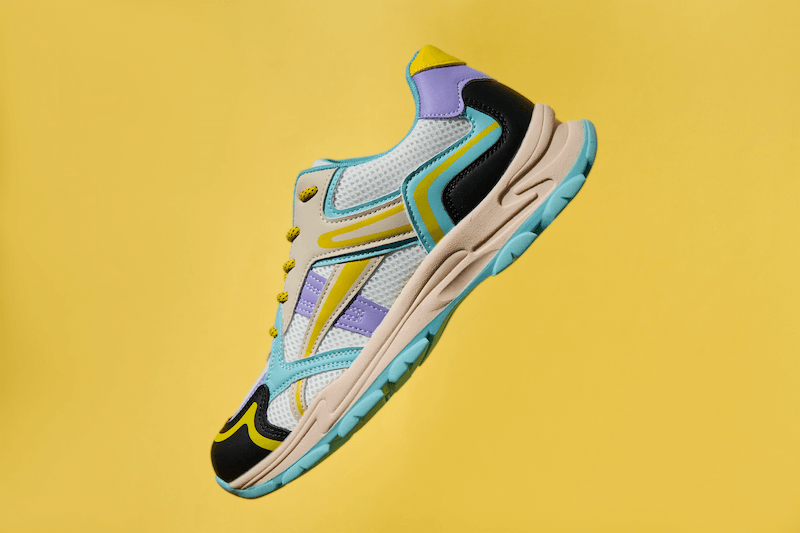
The Scenario: A user lands on a product page for a specific sneaker.
The Problem: It’s out of stock in their size.
The Standard Outcome: Frustration. Abandonment. The user closes the tab and goes to a competitor.
The Adaptive Solution: AdaptiveCX detects the “Out of Stock” event. But crucially, it also knows the user’s intent signals—they like this style, this price point, and this brand. Instead of a dead end, the AI instantly injects a dynamic widget: “Available in your size: Top alternatives to this sneaker.”
The Impact: This turns a bounce into a journey. We see 1.5-2x follow-up orders from users exposed to this adaptive recovery.
Use Case 3: Intelligent Incentives (Margin Protection)
The Scenario: You have a 10% off pop-up for new visitors.
The Problem: You are giving that 10% to everyone. This includes the high-intent shopper who was going to buy anyway (wasted margin) and the low-intent window shopper who needs a bigger push (lost conversion).
The Adaptive Solution: The AI predicts purchase probability in real time.
- User A (High Probability): They are adding items to cart, checking specs, moving fast.
- Action: No discount shown. Or perhaps a “Free Shipping” nudge. Margin saved.
- User B (Low Probability): They are hesitating, checking return policies, moving to the exit.
- Action: Trigger the 10% discount to close the gap.
- The Impact: You stop subsidizing your organic conversions and start buying only the conversions that need help.
CASE STUDY: Abercrombie & Fitch
Abercrombie faced a common challenge: They were running broad campaigns to drive all visitors to their native app. The result? Most visitors didn’t convert, and engagement was low.
They switched to AdaptiveCX to identify “High-Quality” visitors—those with the highest predicted likelihood to return and spend. They only triggered the app download campaign for these high-value users.
- +3X Visits per Visitor after downloading
- +2X Improvement in follow-up orders
By targeting intent rather than random traffic, they turned their app into a loyalty engine.
Use Case 4: Adaptive Search Search bar
The Scenario: A user clicks the search bar.
The Problem: The “Recommended” products in the empty search state are generic bestsellers.

The Adaptive Solution: Before the user types a single letter, AdaptiveCX populates the “Recommended” area with products matching the user’s in-session affinity. If they spent the last five minutes looking at leather handbags, the search bar suggests “Leather Totes” or “Crossbody Bags” instantly.
The Impact: Searchers convert at a higher rate. Making the search experience adaptive typically drives a 10-15% conversion lift after search.
5. Integration & Time to Value
Implementation timelines often stand in the way of progress. Complex integrations and heavy developer requirements can stall even the best strategies
We built AdaptiveCX to break that cycle.
Fast Onboarding
The implementation process is designed for speed.

- The Tag: You add a single JavaScript tag to your site header.
- The Validation: We verify the data flow (usually within 24 hours).
- The Auto-Map: The system automatically maps your key sections and events.
- The Launch: You can be live with your first adaptive experience (like an Adaptive Search widget or an Intelligent Incentive) in days, not months.
No Heavy Lift
Because the intelligence happens on the client side and the configuration happens in a no-code interface, your marketing team can own this. You don’t need to wait for a deployment window from engineering to change a personalization strategy. You just do it.
This agility is a competitive advantage. While your competitors are writing specs for a new feature, you are already testing, learning, and optimizing.
6. Outcomes & Success Metrics
How do you know it’s working? At AB Tasty, we love data. We believe in proving value, not just promising it.
When you deploy AdaptiveCX, you shouldn’t just look at “vanity metrics” like clicks. You should track the core health of your business. We recommend using control groups (A/B testing) to measure the incremental lift.

The Core KPIs
- Conversion Lift: The percentage increase in users who transact. This metric is your primary proof that you are successfully removing friction from the user journey.
- Benchmark: +10% lift for adaptive audiences.
- Revenue Per Visitor (RPV): Calculated as Total Revenue divided by Total Visitors. This captures both conversion rate and Average Order Value (AOV). It’s the truth-teller metric: if you increase conversion but kill your margin with discounts, RPV will reveal it.
- Benchmark: +15% growth.
- Retention / Repeat Visits: The percentage of users who return for a second session within a set timeframe. High retention indicates quality; you are building loyalty, not just buying traffic.
- Benchmark: 2.5x increase for adaptive users.
- Engagement Rates: Measured by “Page Views per Session” or “Time on Site.” For content-heavy sites or discovery phases, this confirms that users are finding relevant content.
- Benchmark: +40-60% pageviews for targeted categories.
- Margin Saved: The total value of discounts not given to high-intent users. This is pure profit added directly to the bottom line—the invisible revenue that most tools don’t measure.
7. Implementation checklist
The path from initial setup to measurable value is simple and streamlined into three key phases.
Phase 1: Implementation (Day 0)
This is the technical handshake to start data collection.

- Generate Tag: Obtain your unique Tag ID from the platform.
- Install Script: Add the JavaScript tag to the <head> of every page on your site. (Pro tip: Load it pre-consent for maximum data capture where compliant).
- Configure Access: Whitelist necessary domains (e.g., *.wandzcdn.com) in your firewall if required.
Phase 2: Immediate Validation (Day 0-1)
This is where you run the health check to ensure data is flowing.
- Verify Tag Load: Open your browser’s DevTools Network tab and confirm the tag loads with a 200 OK status.
- Check Console: Ensure there are no JavaScript errors generated by the script.
- Confirm Ingestion: Verify in the platform that raw data is being received and timestamped correctly.
Phase 3: Setup & Refinement (Day 1-7)
Here is the strategy phase, where you define your business logic.
- Map Sections: Verify that the system has correctly auto-mapped your key page types (Home, Product, Cart). Adjust manually if needed.
- Define Events: Set up critical business events like “Add to Cart” or “Click Checkout” if they aren’t auto-detected.
- Launch First Experience: Align on your first use case (e.g., Adaptive Search) and go live.
By following these steps, you move quickly from technical setup to seeing the results that matter, turning static sessions into adaptive, revenue-generating experiences.
8. FAQ
We know that shifting from static rules to adaptive AI raises questions. Here are the answers to the most common ones we hear from teams like yours.
Does AdaptiveCX work for anonymous and non-logged-in visitors?
Yes. In fact, it was specifically designed for them. It works for the “Forgotten 90%”—visitors who are anonymous, first-time, or not logged in—by using in-session behavioral signals to build affinities and predictions without requiring identity or login.
What specific data does AdaptiveCX collect?
AdaptiveCX captures hundreds of non-PII data signals out of the box. This includes behavioral data (mouse velocity, scroll depth, dwell time, clicks), contextual data (device type, time of day, referral source), and interaction data (search queries, filter usage). It focuses purely on in-session activity to determine intent without needing to know who the user is.
Is AdaptiveCX compatible with privacy regulations (GDPR, CCPA)?
Yes. The architecture is cookie-less by design and focuses on in-session signals, not third-party tracking. It can operate in private browsing modes and is designed to respect your site’s consent framework.
Does the AdaptiveCX tag slow down my site?
No. AdaptiveCX performs predictions in around 20ms compute time. It uses a lightweight client-side implementation designed to run asynchronously, meaning it won’t block your page load or negatively impact your Core Web Vitals.
How does AdaptiveCX connect to the rest of my tech stack?
AdaptiveCX acts as a real-time intelligence layer that amplifies your existing stack. It doesn’t replace your tools; it makes them smarter. You can feed adaptive signals and predictions into your other platforms (like AB Tasty, your search provider, or your CRM) via JavaScript, local storage, or APIs to orchestrate a unified experience across channels.
We already have a Customer Data Platform (CDP). Do we really need AdaptiveCX too?
Yes. A CDP gives you a unified profile of history (who they are). AdaptiveCX acts as the real-time brain (what they want right now). It observes in-session behavior and predicts next actions, which can actually feed back into your CDP to make it smarter. You don’t have to rip and replace; you make your current stack more intelligent.
What technology powers the predictions in AdaptiveCX?
The engine uses sophisticated machine learning models, specifically XGBoost classifiers and regression models, to process trillions of data points. These models analyze live signals to calculate probabilities (like “Purchase Probability” or “Churn Risk”) in milliseconds, allowing the platform to serve the right content before the user clicks away.
Do we need data scientists to operate AdaptiveCX?
No. While data scientists love the “Clear Box” transparency, the platform is built for non-technical teams (digital, product, marketing). You can build prediction models and audiences in a no-code interface without writing a single line of Python.
Can I explain the AI’s decisions to my stakeholders?
Absolutely. AdaptiveCX follows a “Clear Box” approach. You can see exactly which signals (e.g., scroll depth, price sensitivity) influenced a prediction. It’s not a black box; it’s transparent data science.
9. Conclusion: Dare to Go Further
Your competitors are just a click away. Customer loyalty is fragile. The old way of doing things—static rules, reactive data, ignoring the anonymous—is a slow path to irrelevance.
AdaptiveCX offers a different path.
It’s a path where you listen to every visitor. Where you value every signal. Where you treat the unknown user with the same care as the known one. It’s about shifting from “What did they do?” to “What will they do?”

Stop leaving potential at the door. When you adapt to the moment, you turn the invisible majority into your most visible wins. The friction drops. The revenue rises. And you find your “better” faster than ever before.
This technology is here. The opportunity is real. The only question left is: What will you try?