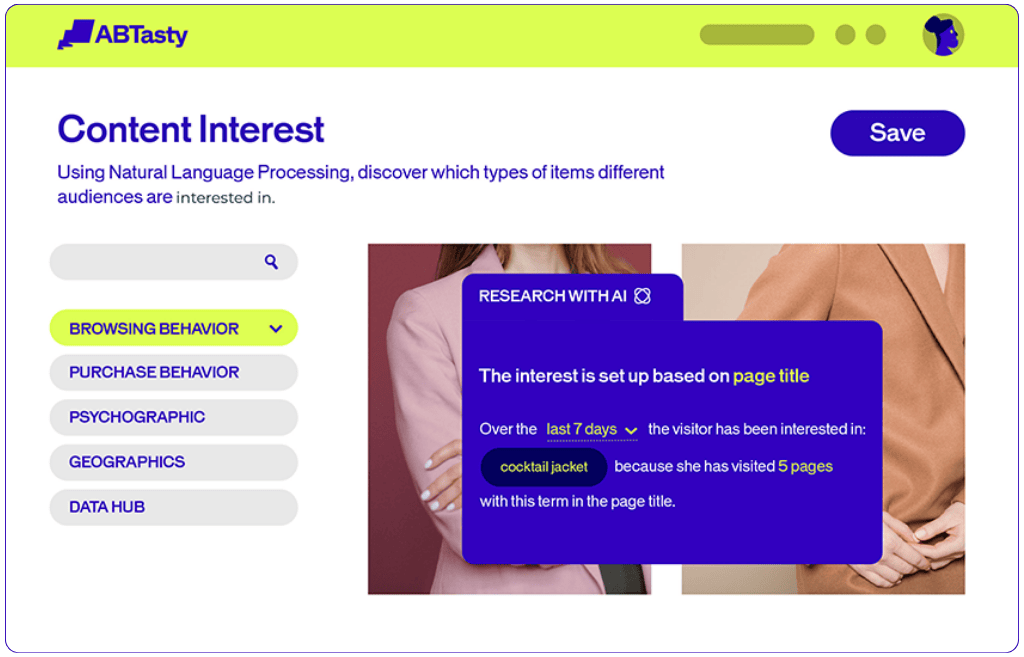
AI Optimization refers to the use of artificial intelligence and machine learning algorithms to enhance, automate, and personalize digital experiences across web, mobile, and omnichannel environments.
By leveraging AI, organizations can analyze vast amounts of data, identify patterns, and make real-time decisions that drive higher engagement, conversions, and customer satisfaction.
This umbrella term encompasses a range of features and techniques, including personalization, experimentation, recommendations, and more—all powered by intelligent automation and data-driven insights.
Key Components of Artificial Intelligence Optimization
AI-driven optimization isn’t magic—it’s built on three core capabilities that work together: understanding language, learning from patterns, and forecasting what comes next.
1. Natural language processing (NLP)
A branch of artificial intelligence that enables computers to understand, interpret, and generate human language using machine learning.
NLP combines computational linguistics with statistical modeling and deep learning to help computers recognize and communicate with human language, asIBM explains.
2. Machine learning
A subset of AI that allows computers to learn patterns from data and make predictions without explicit programming. According to IBM, these algorithms can autonomously improve their performance as they process more training data.
3. Predictive modeling
Uses statistical algorithms and machine learning to forecast future outcomes based on historical data patterns. As GeeksforGeeks describes, it creates mathematical models that analyze past data to predict unknown or future events.
How Does AI Optimization Work?
There isn’t one feature that drives results in AI optimization, in fact it’s a complete ecosystem of intelligent capabilities working together.
Here’s how each component transforms your digital experiences.
1. Delivering Experiences That Feel Personal
Use AI-driven segmentation and behavioral signals to deliver 1:1 experiences that feel genuinely relevant. AI analyzes customer behavior and preferences to create hyper-personalized experiences—from product recommendations to targeted messaging—keeping users engaged and driving conversions.
The result? Experiences that feel genuinely relevant—not generic or mass-produced.
2. Testing Ideas with Confidence
Let AI experimentation handle traffic allocation, surface hidden insights, and validate ideas in real time. AI-driven A/B testing uses dynamic algorithms to continuously learn and optimize, offering more accurate and actionable insights than traditional methods—with faster results and the ability to handle complex data sets effortlessly.
Key capabilities:
Multi-channel A/B and multivariate testing
Simultaneous experiments across web, mobile, and more
Intelligent traffic allocation and performance monitoring
Data-driven decisions, not guesswork
3. Guiding Users to What They Need
Deploy AI recommendations that suggest the right products, content, or next steps at exactly the right moment. AI-powered recommendation engines match user tastes with real-time personalized suggestions across websites, apps, and email—increasing engagement and conversion rates across all platforms.
4. Rolling Out Changes Safely
Great ideas deserve a safe path to production, and it is now possible thanks to AI rollouts. Use progressive deployment and automatic rollbacks to launch changes safely—without breaking things. AI-powered platforms enable you to test multiple variables simultaneously, improving the speed and accuracy of marketing experiments while minimizing risk.
5. Connecting on a Human Level
Data shows what users do, revealing how they feel throughEmotionsAI.
AI optimization techniques deliver measurable outcomes: maximized ROI, enhanced engagement, increased customer loyalty, reduced risk, and the scalability to optimize millions of experiences simultaneously. But the real magic happens when these capabilities work together—creating an intelligent ecosystem that learns, adapts, and improves with every interaction.
Proven impact:
AI-driven experimentation can test thousands of ideas in hundreds of combinations—exponentially increasing effectiveness.
Companies using AI in content strategies see an average 35% increase in audience engagement.
An AI agent is a software powered by artificial intelligence that autonomously pursues goals and completes tasks on your behalf. Unlike a traditional software that waits for commands, AI agents think, plan, and act independently—exhibiting reasoning, memory, and decision-making capabilities without constant human oversight.
What does an AI agent bring to your team? A team member who works 24/7, never forgets a detail, learns from every mistake, and gets better with every task.
How Do AI Agents Work ?
AI agents are software programs that interact with their environment, collect data, and use that information to perform self-directed tasks toward specific goals. Unlike traditional tools that simply follow commands, AI agents operate through a continuous cycle: observe, reason, and act.
Here’s how they work:
1. Perception
AI agents gather and interpret information from their surroundings—whether it’s text, user behavior, web data, or system inputs. They process what’s happening in real time to understand context and identify opportunities.
2. Memory
Agents store past experiences and outcomes, building a knowledge base that helps them learn from what worked (and what didn’t). This allows them to improve over time and apply lessons to new situations.
3. Reasoning
Using logic, patterns, and available data, AI agents analyze information to draw conclusions and solve problems. They evaluate different paths forward and choose the best approach based on evidence, not guesswork.
4. Planning
Agents break down complex goals into manageable steps, determining the optimal sequence of actions to achieve the desired outcome.
5. Action
Once a plan is set, agents execute tasks autonomously—whether that’s generating code, updating data, triggering workflows, or delivering insights.
6. Learning and Adaptation
AI agents continuously refine their approach based on feedback and results, becoming smarter and more effective with each iteration.
The result? An AI agent doesn’t just automate tasks—it learns, adapts, and makes intelligent decisions that drive better outcomes.
AI Agents Examples
AI agents are already transforming how digital teams work across industries. Here are some real-world examples of how businesses are using AI agents today:
1. Customer Support Agents
AI agents like Intercom’s Fin and Zendesk’s AI assistants handle customer inquiries autonomously—answering questions, troubleshooting issues, and escalating complex cases to human agents. They learn from past interactions to improve response accuracy and reduce resolution time.
2. Content Creation Agents
Tools like Jasper and Copy.ai act as writing agents, generating marketing copy, blog posts, and product descriptions based on brand voice and audience insights. They adapt tone and style based on feedback, helping content teams scale output without sacrificing quality.
3. Sales & Lead Qualification Agents
Platforms like Drift and Qualified use AI agents to engage website visitors in real time, qualify leads through conversation, and route high-intent prospects to the right sales rep—all without human intervention.
4. Marketing Automation Agents
HubSpot’s AI agents analyze campaign performance, recommend optimizations, and automatically adjust targeting and messaging based on engagement patterns. They help marketers test faster and make smarter decisions with less manual work.
5. Code Generation Agents
GitHub Copilot and Cursor act as coding assistants, suggesting code snippets, debugging errors, and even writing entire functions based on natural language prompts. They accelerate development cycles and make technical work more accessible.
AI Agents for Digital Optimization
In digital optimization, AI agents transform how teams work. They don’t just run experiments—they suggest what to test, build variations, monitor performance in real time, analyze results, and recommend next steps. AI agents turn experimentation from a manual process into an intelligent, self-improving system that delivers faster insights and better outcomes.
AB Tasty’s Evidence-Based AI Agent for Digital Optimization
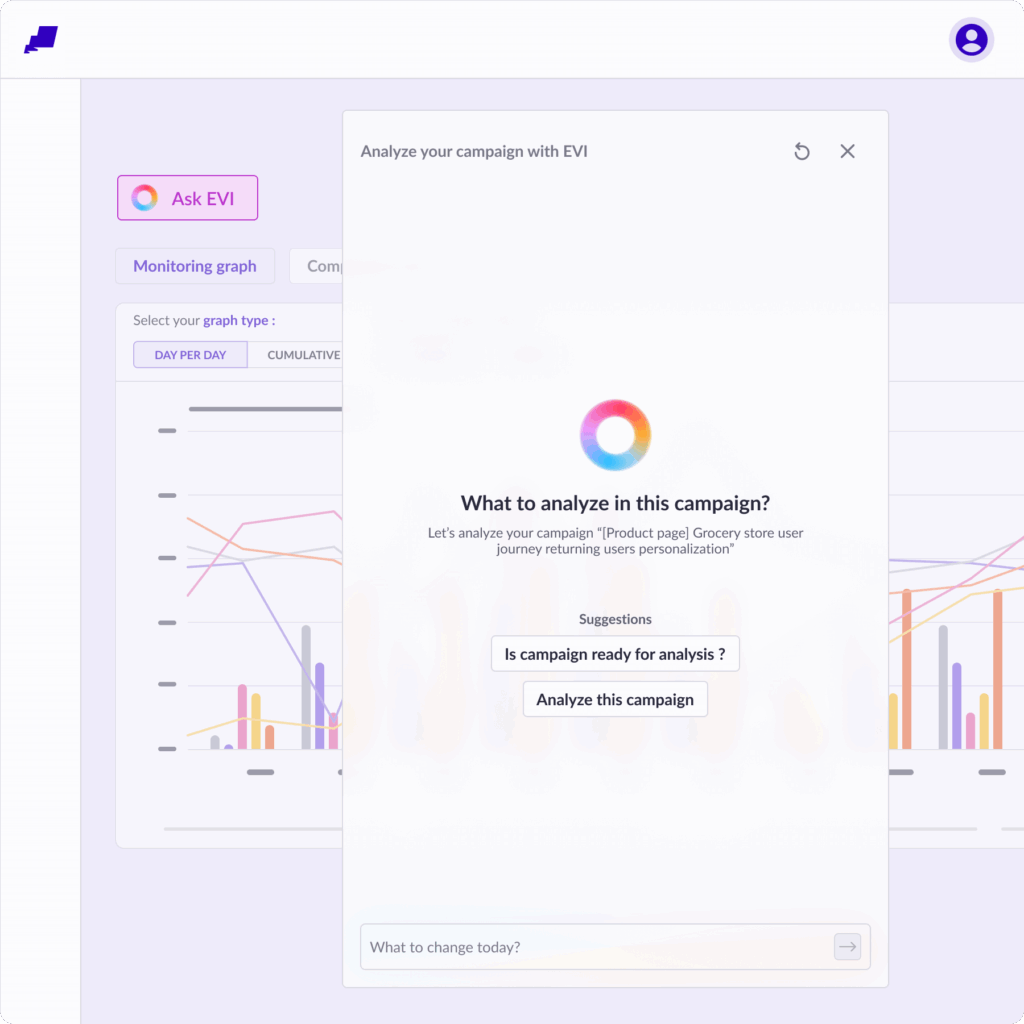
While many AI agents focus on specific tasks like support or content, Evi is purpose-built for digital experience optimization—automating the entire experimentation workflow from ideation to analysis.
Unlike generic AI tools, Evi is grounded in evidence. It draws on AB Tasty’s proprietary experimentation data and insights from thousands of tests to guide every decision.
Here’s how Evi works:
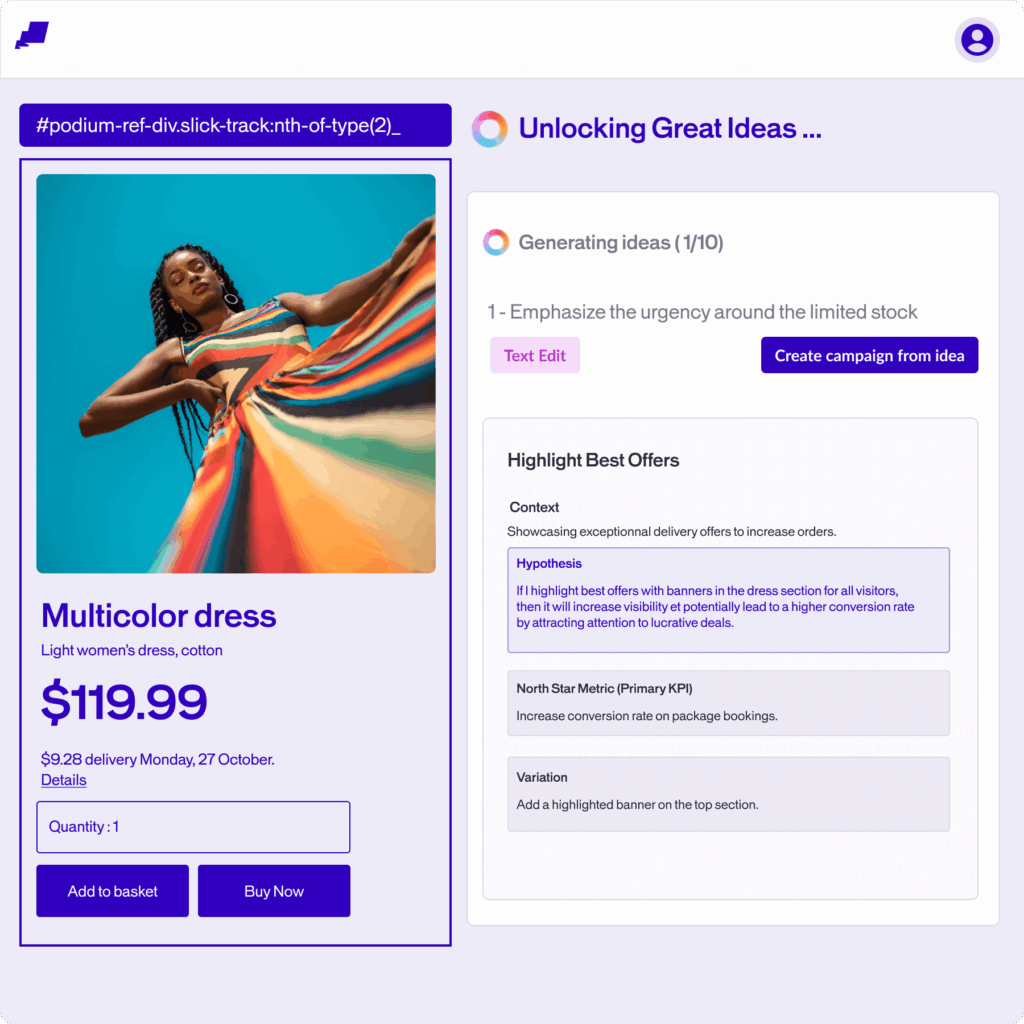
Smarter hypotheses: it scores your test ideas against proven data models, highlights gaps, and suggests improvements—so every experiment is grounded in evidence.
Bold test ideas: it analyzes your pages and suggests data-backed concepts you might have missed—uncovering opportunities faster.
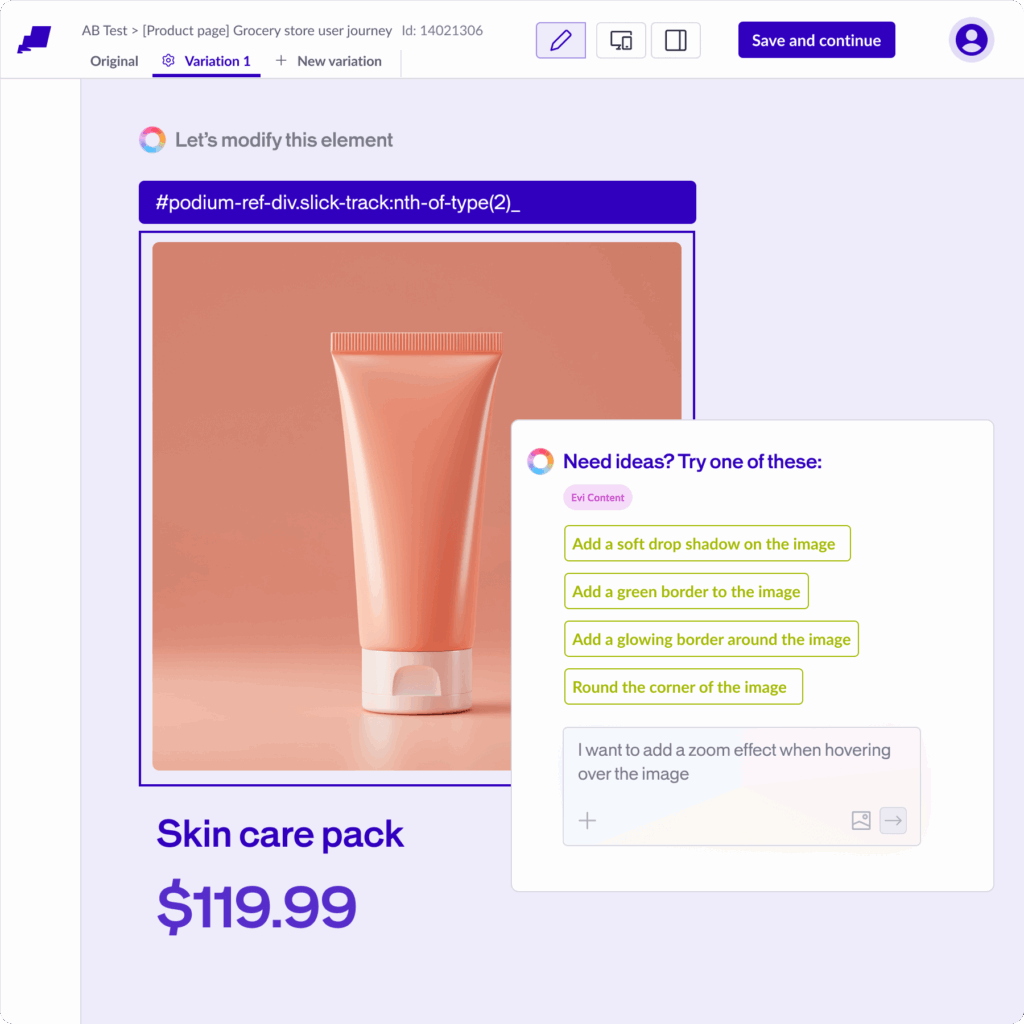
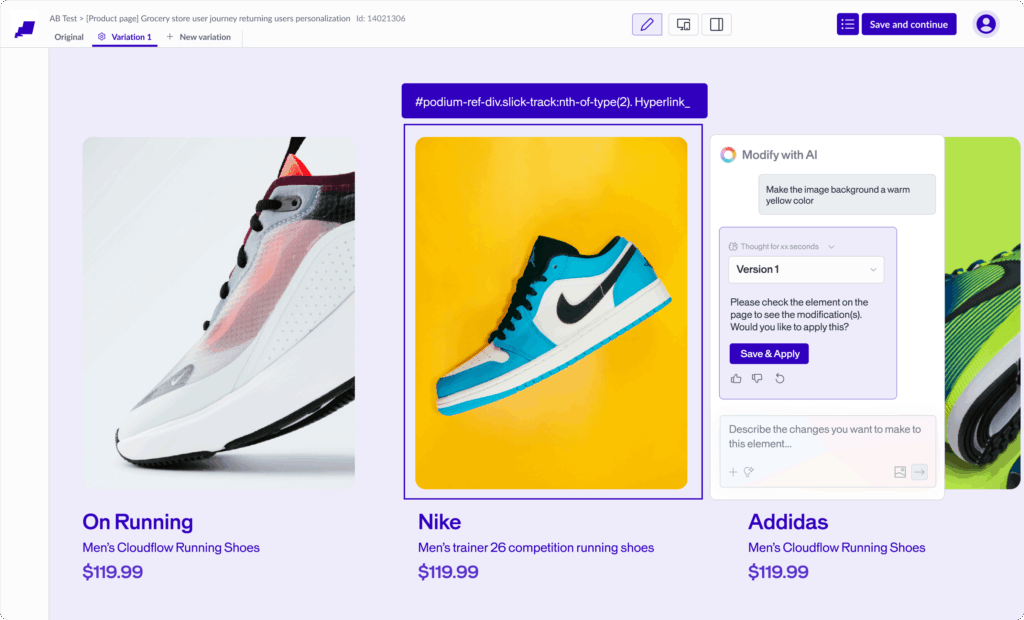
No-code building: Just describe what you want in plain language. Evi generates the code—no technical skills needed.
Instant analysis: it processes all your data (quantitative and qualitative), spots trends, and delivers clear insights in seconds—so you always know what’s working and what to do next.
EVI doesn’t just speed things up—this AI agent it’s smarter, bolder, and grounded in what actually works.
5 AI Optimization Techniques For Digital Experiences
Artificial intelligence is transforming how teams optimize digital experiences. Here’s what you need to know about five proven AI techniques that help you test smarter, personalize better, and convert more visitors.
1. AI-Powered Personalization
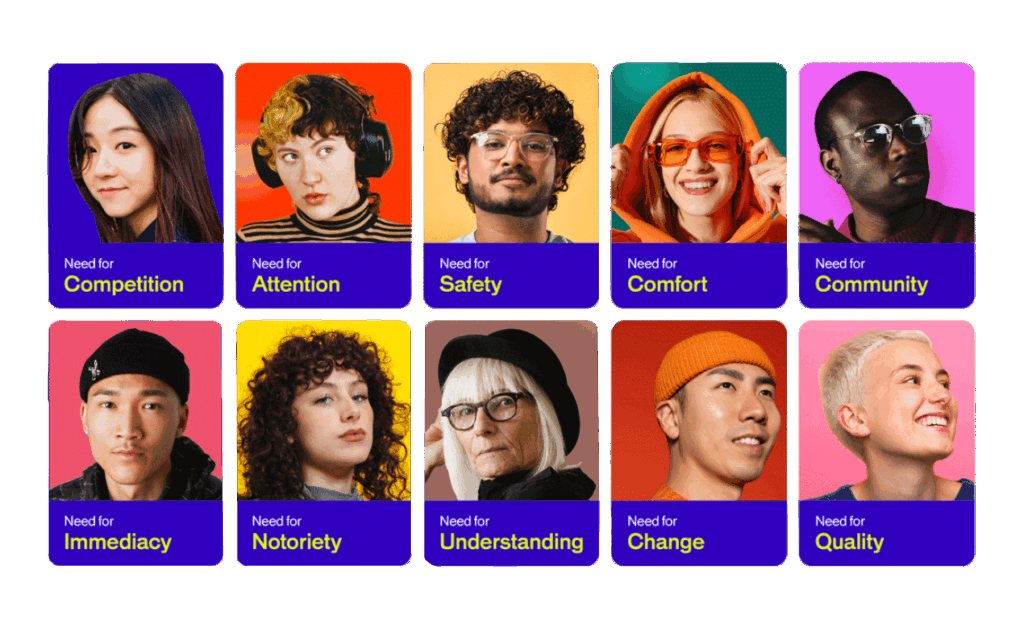
Instead of basic demographics, AI can analyze behavior and emotion to create dynamic visitor groups.AB Tasty’s EmotionsAI identifies 10 emotional profiles in 30 seconds, while engagement scoring automatically classifies visitors as Loyal, Valuable, Wanderers, or Disengaged. This means you can tailor experiences to what visitors actually need—not just who they are.
Think of AI Copilots or AI assistants as your experimentation team members. They can help you build test variations using simple language prompts, automatically analyze which version won and why, and even generate new test ideas from screenshots. The result? Faster testing cycles without needing developers for every change.
3. Personalized Product Recommendations
AI watches what visitors browse and buy in real time, then suggests the perfect products for each person. When you combine this with emotional profiling, you can show innovation-seekers your newest items while price-conscious shoppers see the best deals. This emotion-based approach boosts recommendation performance by 6% on average.
4. Predictive Targeting That Finds Your Best Visitors
Why wait for visitors to convert when AI can predict who’s most likely to buy? Predictive segments identify high-intent visitors based on their first 30 seconds of behavior. Meanwhile, dynamic traffic allocation automatically sends more visitors to winning test variations as soon as they prove successful—maximizing conversions without manual intervention.
5. Analytics That Surface Hidden Opportunities
AI doesn’t just crunch numbers—it finds insights you’d miss. It can analyze thousands of customer feedback responses in seconds, identify test variations that won for specific emotional segments (even when overall results look neutral), and process billions of data points daily to keep optimization running smoothly.
How To Use AI For SEO Optimization ?
AI is changing how teams approach search visibility—and it’s not just about ranking higher.
From smarter keyword targeting to personalized user experiences and automated content workflows, AI-powered tools help you improve discoverability, drive organic traffic, and create the kind of experiences search engines actually reward.
Here’s how AI transforms SEO across three critical areas—and what it means for your rankings.
AI Optimization Meets User Intent
Traditional search relies on exact keyword matches. Artificial Intelligence reads intent.
AI search optimization uses machine learning and natural language processing to understand what people really want—not just what they type. It interprets context, predicts intent, and surfaces the most relevant results in real time.
Why Does It Matters for SEO?
AI search optimization aligns with modern SEO best practices by focusing on user intent, semantic relevance, and contextual understanding. Search engines like Google increasingly prioritize content that answers specific questions clearly and provides genuine value.
By optimizing your site’s internal search with AI, you:
Improve overall user experience—a key ranking factor for search engines
Reduce bounce rates by helping visitors find what they need faster
Understand conversational and voice search queries, making your content discoverable in natural language
Surface relevant content based on semantic keywords, not just exact matches
Better internal search means users stay longer, engage deeper, and signal to search engines that your site delivers value.
AI Website Optimization: User Experience as a Ranking Factor
AI website optimization automates personalization across the entire user journey. And here’s what matters for SEO: user experience directly impacts your rankings.
Google wants to display websites that its users like visiting. When AI helps you deliver faster, more relevant, and more engaging experiences, search engines take notice.
SEO Benefits of AI-Driven Personalization
1. Reduced bounce rates
When visitors land on pages tailored to their needs, they stay longer and explore more—sending positive signals to search engines.
2. Improved page speed and mobile optimization
AI helps identify and fix technical issues that slow down your site, both critical ranking factors.
3. Better engagement metrics
Personalized experiences increase time on site, pages per session, and return visits—all indicators that search engines use to evaluate quality.
4. Optimized landing pages for paid traffic
AI personalizes landing pages for visitors from different acquisition channels, improving Quality Score for paid search campaigns and overall site relevance.
By automating complex personalization tasks, AI frees your team to focus on creating high-quality content and strategic SEO improvements—while the platform handles real-time optimization at scale.
AI Content Optimization: Creating Content That Ranks
AI content optimization uses natural language processing and machine learning to analyze, generate, and refine website content. From dynamically adjusting headlines and meta descriptions to creating new variations for testing, AI helps you deliver content that both search engines and users understand.
What Does AI Bring to SEO Content?
1 . Keyword research and semantic analysis
AI tools analyze keyword trends, user intent, and semantic relevance to help you create content that ranks higher.
2. Content structure for featured snippets
AI helps format content with clear headings, concise answers, and semantic markup—making it easier for search engines to extract and surface your content in featured snippets and AI-powered search results.
3. Automated content variation for testing
AI generates multiple versions of headlines, meta descriptions, and CTAs for A/B testing—helping you discover what resonates with both users and search algorithms.
4. Natural language optimization
AI understands conversational queries and helps structure content around real user questions, aligning with how modern search engines evaluate relevance.
5. Internal linking optimization
AI can identify opportunities to strengthen your site’s internal linking structure, helping search engines crawl and understand your content hierarchy.
SEO Best Practices with AI
AI content optimization ensures your website delivers clear, relevant, and structured content that both search engines and users can understand.
Here’s how to make it work:
1. Prioritize depth, clarity, and expertise
AI models evaluate factual accuracy, topical authority, and trustworthiness (E-E-A-T) when determining which sources to reference.
2. Optimize for conversational and voice search
Structure your content around natural language questions that match how people actually search.
3. Focus on technical SEO fundamentals
Page speed, mobile optimization, HTTPS protocol, and clean HTML structure remain critical for both AI crawlers and search rankings.
4. Use AI to enhance, not replace, human expertise
The best strategies blend AI automation with human oversight—using AI to uncover gaps, generate outlines, and test variations, while experienced writers handle brand voice, narrative flow, and final edits.
Why Does AI Matters for SEO?
Search engines are increasingly powered by AI—from Google’s AI Overviews to Bing’s intelligent search features. To stay visible and competitive, your website needs to deliver content and experiences that AI systems can interpret and recommend.
The goal of SEO is to raise your ranking in organic search results by making your site more appealing to both users and search engines. AI helps you do both—at scale.
By aligning your optimization efforts with how AI-powered search engines define good results, you gain more visibility, drive more organic traffic, and deliver better experiences.
AI optimization isn’t about perfection—it’s about progress. Every test you run, every insight you uncover, and every experience you personalize brings you closer to what works. The tools are ready. The data is live. The only thing standing between you and better results is the decision to start.
AI optimization is the use of artificial intelligence and machine learning to enhance, automate, and personalize digital experiences, analyzing data to make real-time decisions that drive higher engagement and conversions.
How does AI optimization differ from traditional A/B testing?
AI optimization automates traffic allocation, continuously learns from behavior, and tests thousands of combinations simultaneously—while traditional A/B testing requires manual setup, fixed traffic splits, and human analysis.
What are the main benefits of AI-powered personalization?
The main benefits include 1:1 personalized experiences, increased engagement and conversion rates, higher customer loyalty, and content that feels genuinely relevant to each visitor.
Do I need technical expertise to use AI optimization tools?
No, modern AI optimization platforms like AB Tasty offer visual editors and AI assistants that let marketers create experiments without coding—just describe what you want to test in plain language.
How does EmotionsAI work?
EmotionsAI analyzes behavioral signals like mouse movements, scroll patterns, and navigation to identify emotional states (frustration, excitement, hesitation) and deliver empathetic, emotionally intelligent experiences.
What are the major AI crawler user-agents?
The major AI crawler user-agents include GPTBot and OAI-SearchBot (OpenAI), ClaudeBot (Anthropic), Google-Extended (Google), PerplexityBot (Perplexity AI), Amazonbot (Amazon), Applebot (Apple), Meta-ExternalAgent (Meta), and CCBot (Common Crawl)—all indexing web content for AI training and search results.