

There’s nothing like the feeling of having your suitcase packed, ready to take flight, and being on your way to take a step on new parts of the planet. But the moments before takeoff may not be as simple as you think. This is where multivariate testing in travel steps in.
These days, travelers know what they want: and they’ll bounce quickly if their booking experience doesn’t meet their expectations.
As travel remains one of the most competitive, emotionally complex purchase decisions a customer can make online – it’s extremely important to curate a satisfying digital experience. Otherwise, you don’t only risk losing a sale – but a long-term customer.
The travel experience starts long before luggage is pulled out of closets. People check the weather, potential flight cancellations, and research recommendations and reviews prior to booking flights or hotels.
With so many factors at play, it’s crucial to continuously test every word, click, or button that could be optimized. In fact, a staggering 90% of visitors who land on a travel site end up leaving without booking.
Luckily, strategies like multivariate testing can give travel brands the power to understand not just what works, but which combination of varied pages, buttons, and banners drive the highest conversion — across search, booking, and beyond.
In this guide, you’ll learn what multivariate testing is, how it can benefit travel, and why optimization can be the answer to making the booking journey as smooth as the trip itself.
The Travel Booking Funnel: Why It’s Uniquely Complex
The Modern Traveler’s Journey is Non-Linear
Today’s travelers don’t move in a straight line. They open up a link on their phone, move to their laptops to make comparisons, add a flight to their cart on tablet, and abandon the purchase altogether — all before booking.
The overview stat cards below will reveal how dynamic the travel booking experience can be:
94%
A whopping 94% of travelers switch between devices when planning a trip.
70%
The majority use mobile devices, with up to 70% of people researching on their smartphones. However, only 31% complete a booking there.
53%
Over 53% of Americans have made a same-day hotel booking, revealing how spur-of-the-moment travel can be.
This cross-device, multi-session behavior makes it extremely difficult to identify which types of pages provoke drop-off during the booking process.
The Emotional Complexity of Travel Purchases
Unlike buying a product online, booking a holiday involves a myriad of emotional factors:

Excitement
The primary driver of travel planning. Lean into this emotion with high-quality, aspirational imagery and headers that spark joy.

Stress
Navigating flight times, hotel locations, and budgets can be overwhelming. Simplification and clear UX are your best tools here.

Potential Disorganization
Travel involves many moving parts. Help users stay organized by providing clear summaries and easy-to-find booking details.

Trust
Booking travel is a high-cost commitment. Build trust through social proof, secure payment markers, and clear cancellation policies.

Budget Sensitivity
Most travelers are price-conscious. Highlighting value, discounts, and “best price” guarantees is critical for this group.

Fear of Regret
Reassure users with flexible booking options, easy comparisons, and real-time availability updates to mitigate the “what if” factor.
All of these factors must be taken into account when designing the travel booking experience. This is because there’s no way to measure how one user may be reacting emotionally to travel-driven content created with the intent to draw in more bookings.
For instance, a headline that creates urgency may convert one visitor and deter another. A price display that feels transparent to one user may feel overwhelming to another. This uncertainty and complexity is exactly where multivariate testing can help, as it experiments with different elements to help travel brands discover which winning combination works best for a diverse set of visitors.
The High Cost of Getting It Wrong
Across several industries, the travel industry is home to some of the highest cart abandonment rates. As booking funnels often require several steps and sensitive, financial data to secure – every part of the journey is an opportunity to either build trust or lose it.
What is Multivariate Testing?
Multivariate testing (MVT) refers to the method of testing multiple variables on a page at the same time to determine which combination of changes produces the best result.
Unlike A/B testing, which compares two versions of a single set of choices – MVT tests include several elements at the same time, providing a greater set of data to reveal how each component interacts with one other.
The goal of multivariate testing is to test a multitude of ideas on the same page, at the same time, to determine which set of variables make for the most impactful digital experience.
A Travel-Specific Example
Multivariate testing and travel can go hand in hand for several steps throughout the booking journey.
Imagine you want to optimize a flight search results page. This could include testing the headline copy, the layout of the pricing display, the CTA button text, or even the way an urgency message is phrased (i.e., “only 3 seats left – book now).
As multivariate testing automatically generates and runs every possible combination of these elements, it can identify not only the best-performing version of each individual element (button, text size, font, etc.), but the best-performing combination.
MVT vs. A/B Testing in a Travel Context
When it comes to optimizing your travel booking website, A/B testing and Multivariate testing can both be beneficial – but it’s important to understand how different the two types of testing can be in the world of travel.
Here’s a breakdown of how each type of testing works in the travel industry:
- A/B Testing: Best for testing one hypothesis at a time — e.g., “Will ‘Book Now’ outperform ‘See Availability’?” Fast and accessible.
- Multivariate Testing: Best for understanding how multiple trust signals, urgency cues, and CTAs work together to drive a booking. More powerful, but requires more traffic.
Does My Travel Brand Qualify for Multivariate Testing?
In general, MVT requires more traffic than A/B testing to reach statistical significance.
If your travel website wants to optimize using multivariate testing, you’ll need to have substantial traffic. As a rule of thumb, sites seeking to use MVT should aim for pages with at least 50,000 to 100,000 monthly visitors.
Lower-traffic travel pages can consider Fractional Factorial Testing, which tests a statistically representative subset of combinations.

How Does Multivariate Testing in Travel Work?
Multivariate testing works by simultaneously testing several components to discover which elements can have the most profound effect on making progress on your optimization journey.
Here’s a step-by-step guide to how multivariate testing works:
Step 1: Identify the High-Value Page
This is where brands will focus on high-traffic, high-intent pages where even small improvements could create a tangible impact on revenue.
In the travel industry, these pages often include:
- Search result pages for flights & hotels
- Destination landing pages
- Booking & checkout pages
- Loyalty or reward program sign-up pages
- Mobile homepages
Step 2: Define the Elements to Test
This is when travel companies choose between 2 and 4 elements that are likely to have the greatest influence on user behavior.
In travel, these variables could be:
- Urgency messaging: This refers to the message travel bookers often see as a way to incentivize a purchase. Examples of these types of text include, “only 2 rooms left” or “book before prices rise” – as it puts users under the impression that they should book before the good deal is gone.
- Price display format: The way that prices are presented on a travel booking website can have an impact on potential travel purchases. This means brands must decide between showing the total price, price per-night, or even pay over time options.
- CTA button copy and design: The color of a button, size of the text, or even the font could have an effect on the travel experience and incoming visitors looking to book a trip.
- Trust signals: When booking a trip, a lot of anxiety is induced – as people are spending large, lump sums of money on a single website. This means that things like security badges, reviews, and payment icons are important, as they make the user feel emotionally secure and more confident to move forward with a travel purchase.
- Hero image or destination photography: Have you ever been enticed to take a trip because of the gorgeous photo on a travel brand’s homepage? The images used on travel websites can play a pivotal role in encouraging users to book a vacation.
- Social proof: These days, people find comfort in knowing a particular website or brand is popular – as it serves as a form of security throughout the multi-faceted booking process. Subtitles or images revealing other people are interested in a travel booking site, like “500 people viewed this trip today”, can make a difference.
Step 3: Create Variations and Launch
This is when travel brands will pick 2 to 3 variations to test at the same time. A MVT platform will automatically generate all of these possible combinations, meaning no manual setup will be required.
Once these elements have been decided, a hypothesis can be defined – and the effects of MVT can provide new, indispensable insights.
Here’s an example of how this works in practice:
- 2 urgency messages (e.g., “Only 3 seats left at this price” vs. “Prices will increase in 24 hours”)
- × 2 price displays (e.g., total price upfront vs. per-night breakdown)
- × 2 CTA button variations (e.g., “Book Now” vs. “See Availability”)
- = 8 unique combinations, all tested simultaneously
The traffic is evenly split across all the different combinations, and the test runs until statistical significance is achieved.
Step 4: Analyze Results
After all the multivarious elements have been simultaneously tested, the platform determines the winning combination. This advanced analysis reveals which individual components were most successful and which parts had an unexpected effect on user interaction.
Types of Multivariate Tests for Travel
The great thing about multivariate tests is that there are several different kinds – all of which could prove beneficial for travel in different ways.
Here’s a breakdown of the various types of multivariate tests that can be used for travel:
Full Factorial Testing
A full factorial test determines how multiple factors influence a specific outcome, otherwise known as the response variable. Each of these factors are tested at different levels, and the experiment includes every possible combination of these levels across all variables.
While full factorial testing is the most comprehensive, it is also the most traffic intensive. This makes full factorial testing best for high-traffic search results or homepages for large OTA or airline sites.
Fractional Factorial Testing
A reduced version of full factoring testing, fractional factorial testing uses a smaller subset of combinations in conjunction with statistical modeling to predict performance for untested combinations.
This type of multivariate testing requires significantly less traffic, making it more suitable for mid-sized travel brands. While it’s not as precise as full factorial testing, it can still provide actionable results – such as for hotel booking pages, tour operator product pages, loyalty sign-up flows.
Taguchi Method
The taguchi method is a highly structured form of fractional testing designed to minimize the number of experiments required while maximizing directional insight. This is particularly useful for travel brands with seasonal constraints, since long test durations aren’t viable.

The Top Pages to Run Multivariate Tests in Travel
When multivariate testing for travel, there are several pages that are worth experimenting with, such as:
1. Search Results Pages
Search results pages are often the highest-traffic, highest-intent page on any travel site – and yet, they remain one of the most challenges ones to optimize.
Some of the ways search pages can be tested and optimized include default sort order, filter visibility, urgency messaging, price display, and card layout.
Real-world example: CGN increased transaction rates by +29.3% and filter clicks by +6% by making the search bar and filters sticky on scroll.
2. Product / Destination Pages
This is a key component in travel website testing and optimization. Since this is where emotional decisions and purchases are made, this page needs to build desire, trust, and urgency to encourage the consumer to make a booking.
Popular elements to test on these pages include the hero image selection, itinerary layout, pricing transparency, social proof placement, and CTA placement.
Real-world example: Club Med achieved a +2.4% uplift in conversion rate by hiding the default price until the user had selected their travel criteria, reducing sticker shock and improving perceived value.
3. The Booking & Checkout Funnel
The checkout is usually the most off-putting part of the travel booking journey. A/B testing alone typically can’t reveal the most optimal combination of trust signals, payment options, and form design. This is where multivariating testing can be vital to long-term success.
Common things to test for these travel pages include the length of forms users must fill out for purchases, progress bar visibility, where the trust badge or FAQs are placed, and payment display.
Real-world example: A North American insurance company saw a +140% increase in application submissions after repositioning an FAQ section above the quote form.
4. Mobile Homepage & Landing Pages
With 70% of travelers researching on mobile, the mobile homepage is a critical conversion opportunity – but remains difficult to optimize.
Key elements to test for these pages include the design and location of the search bar, CTA prominence, navigation layout, and what content is displayed for promotional banners.
Real-world example: Air Europa adopted a mobile-first experimentation strategy and achieved a +9% increase in overall conversions.
5. Loyalty Program Pages
Loyalty enrollment is one of the best ways for travel brands to ensure long-standing, high-value conversion rates. But it isn’t always tested as much as it could be, as the focus is usually on search results, landing, and checkout pages.
Crucial components to test for loyalty reward program pages include value proposition messaging, benefit display format, and sign-up form length.
Real-world example: Best Western increased loyalty program engagement by +12% through intent-based personalization.
MVT and Personalization: A Powerful Combination
Travel is inherently a personal choice: with people picking places to discover based on emotions, preferences, and lifestyle. This means that not only can multivariate testing help to optimize the travel booking experience, but so can personalization – especially when they work together.
Finding the Winning Combination for Every Segment
The real power of MVT in travel is not just finding the best-performing combination for the average visitor, but understanding which combination performs best for different types of travelers.
A family booking a summer holiday has different emotional needs than a solo business traveler. Traditionally, it could be hard to differentiate what each traveler needed – but multivariate testing can analyze results by audience segment and reveal personalization opportunities that would’ve otherwise gone unnoticed.
EmotionsAI: Adding an Emotional Layer to MVT
In addition to the benefits of traditional multivariate testing, personalization tactics with the use of tools like AB Tasty’s EmotionsAI classifies visitors into one of 10 emotional segments. These groups include safety-seekers, competition-driven shoppers, or people prone to impulsive purchases users.
Think of a safety-oriented visitor, who may convert best with a website layout that emphasizes secure payment icons, flexible cancellation copy, and a softer CTA. On the other hand, an immediacy-driven visitor may respond better to urgency messaging, a prominent “Book in 1 click” CTA, and real-time availability data.
By layering the use of EmotionsAI with MVT, travel brands will be able to better serve each visitors according to their emotional needs – which increases the chances of conversion.
AdaptiveCX: Solving the 90% Anonymous Visitor Problem for Travel
As 90% of travel site visitors are anonymous, traditional personalization tools can fall short – and with travel, it’s increasingly imperative to ensure the booking experience is tailored to each individual traveler.
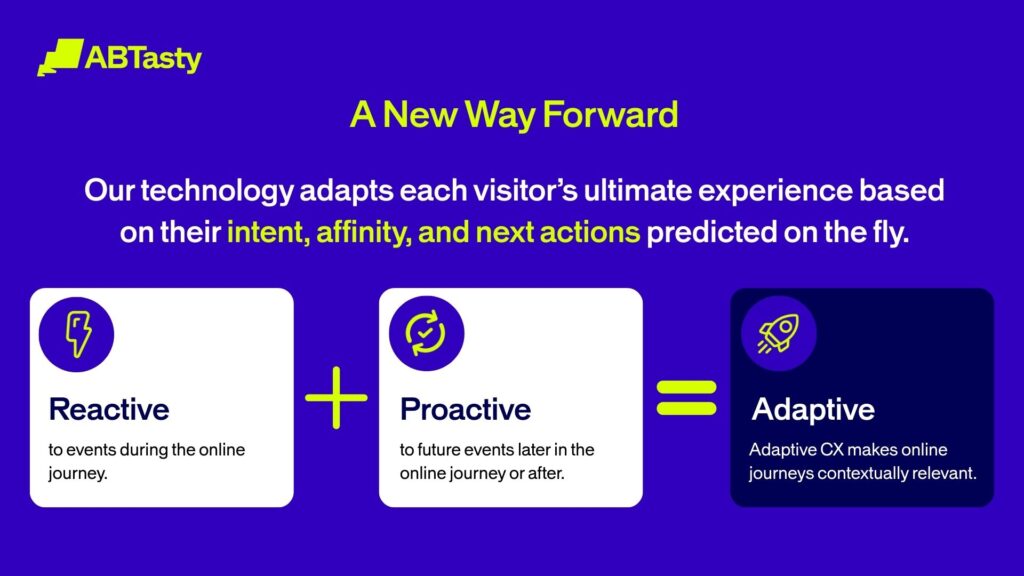
This is where tools like AdaptiveCX can help travel brands meet their booking goals. AdaptiveCX uses in-session behavioral signals instead of traditional third-party cookies. This predicts user intent and their preferences in real-time, which can ensure that MVT insights are implemented for 100% of your traffic.
Common Mistakes to Avoid in MVT for Travel
Multivariate testing can be transformative for travel, but it’s also important to know when pushing the boundaries is pioneering, and when it’s been pushed too far. Maintaining the right data and strategy for MVT is integral to achieve the right growth.
Here are some of the most common mistakes made for multivariate testing and travel
Testing Too Many Variables at Once
Multivariate testing can make it exciting for travel brands to test several bold ideas simultaneously, but it’s also important to avoid getting carried away.
Remember, the more combinations your brand wants to test requires more traffic. It’s best to stick to 2 to 3 elements and 2 to 3 variations each to keep the length of your test comprehensive and effective. This is especially important in travel, as seasonality means tests that run for too long can risk being compromised by external factors – like school holidays or weather predicaments.
Ignoring Mobile vs. Desktop Differences
Recent research from PYMNTS suggests that mobile has become the predominant channel for travel purchases – with 59% of long-distance travel bookings now being made on mobile devices. This highlights the shift toward smartphone-first vacation planning.
It’s essential it is to ensure that winning desktop combinations could also be successful on mobile devices, and vice versa – as one could over or under perform the other.
To prevent this, aim to divide your MVT results by device type. Given the fact that most people research trips on mobile devices and switch to booking on their desktops – this is a decisive factor to keep in mind while multivariate testing.
Running Tests During Peak Periods: A Strategic Choice Seasonality
Seasonality is an influential force in the travel industry. This means that knowing when to test is just as important as knowing what to test. Unlike retail’s traditional holiday rush shopping period, travel has multiple “peak” seasons. This includes the January-to-March booking window when many travelers plan their summer vacations in addition to the traditional summer and holiday travel periods themselves.
Running tests during these high-traffic times can provide several strategic benefits.
Advantages of Peak Season Testing
When your site traffic is in the middle of a peak, tests can reach statistical significance in a fraction of the usual time. This allows for rapid iteration and quick wins on high-impact pages. If you have a strong, data-backed hypothesis for a simple change, like a new CTA on your booking page, testing during peak season can deliver reliable results at a much faster rate.
Risks of Peak Season Testing
The downside of testing during peak season is that it can present external variables that could compromise your test results. Factors like competitor fare sales, school holiday schedules, and sudden spikes in demand can influence user behavior. For instance, a winning combination during a Black Friday sale might not be as successful during a typical week in May.
It’s true peak season tests can be very effective and responsive due to high traffic. However, it’s important to remember these potential variations and account for them accordingly when interpreting results and making long-term decisions.
The Strategic Approach: A Balanced Testing Calendar
The most effective travel brands use a balanced approach:
- Use Peak Seasons for Data & Speed: Implementing low-risk A/B tests during a massive influx of traffic can allow for fast answers and the opportunity to gather rich behavioral data for building future hypotheses.
- Use Shoulder Seasons for Stability & Confidence: Running more complex multivariate tests during more “normal” traffic periods are great for stable results. This is because they will be more representative of your site’s baseline performance, giving you greater confidence for your next bold test.
Stopping Tests Too Early
Travel websites may be eager to implement new changes that have seen success with multivariate testing, but declaring a winner too early could lead to costly decisions.
Reaching statistical significance is crucial to effectively target leads.
Otherwise, you could be deploying tactics derived from unreliable results.
A good rule of thumb in MVT is to always define your minimum sample size and confidence threshold before launching.
Not Documenting Learnings
We believe that failure can lead you to new learnings for your next best test. Every MVT result, whether it be a win, loss, or inconclusive – contains valuable insights about your customers.
Building off of this newfound knowledge as base can help your brand to avoid duplicating unsuccessful tests and improve future personalization strategies.

Getting Started: A Travel Brand’s MVT Roadmap
You don’t have to be a whizz in optimization to take flight with multivariate testing for travel.
Here’s a step-by-step guide on how your travel brand can incorporate multivariate testing in its optimization strategy:
Step 1: Audit Your Booking Funnel
The first step of multivariate testing for travel is to identify which pages and steps of the booking process have the opportunity for the highest drop-off rates. Travel brands should seek to prioritize pages that are both high in traffic and user intent, as they provide the strongest opportunities for conversion. This can be done by using session recordings, heatmaps, and funnel analytics.
Step 2: Build Hypotheses Based on Real Data
Every element to be tested for travel websites should be backed by a data-informed hypothesis. This can be done by using qualitative data like exit surveys and support tickets, which provide direct feedback on the customer’s experience.
The goal is to understand why your visitors leave the site before making a booking, and amending the site’s various fonts, colors, and layouts to reduce the risk of abandonment.
Step 3: Start with a Focused Test
Multivariate testing could appear overwhelming for a travel brand dipping its toes in the water and world of optimization. To make MVT more approachable, it’s best to choose one high-value page, 2 to 3 elements to test, and 2 to 3 variations per element.
Using AB Tasty’s no-code visual editor can help your travel brand to build your variations quickly, without developer dependency. (might remove this if there isn’t a good internal link)
Step 4: Analyze Beyond the Headline Result
Looking beyond the most successful combination could inspire daring ideas that lead to even smarter wins.
After multivariate testing, travel brands should ask themselves which elements had the greatest individual impact and aim to develop new mechanisms that could take them one step closer to new, courageous experiments.
Coming up with new ways to tackle targeted customers from different devices, traffic sources, or audience segments could allow for additional optimal outcomes in multivariate testing for travel.
Step 5: Activate the Insights
Collecting the information is one thing, but actually putting it to use is another. Using your MVT learnings to improve your long-term personalization strategy could prove worthwhile over the long-term for travel companies. This is because overtime, your brand will be more knowledgeable in how to draw-in customers according to their specific travel needs.
Find what wins with your highest-intent users, and let it lead your personalization playbook.
Conclusion & Next Steps
The travel industry can be challenging to test, as stakes are high, competition is fierce, and the customer journey is cluttered.
Thankfully, multivariate testing is one of the most powerful tools available to digital teams – and can help mitigate the obstacles associated with travel website optimization. This is because MVt doesn’t just tell you what works, but what works together — and that distinction is what separates incremental gains from destination-defining results.
The most successful travel brands combine MVT with personalization, EmotionsAI, and real-time behavioral data to deliver adventure ready experiences that feel effortless for every type of traveler.
Let your booking take off without turbulence. Together, we uncover insight tactics to make travel optimization effortless, seamless, and adventurous.
FAQs
Still have questions about multivariate testing in travel? Here are the answers you need.
What is Multivariate Testing?
Multivariate testing is a method of testing multiple variations of different elements on a page at the same time to see which combination performs best. It helps identify how changes in design, messaging, and layout interact to influence user behavior.
Why is Multivariate Testing Good for Travel?
Travel booking journeys are often complex and non-linear, with many decision points along the way. Multivariate testing helps optimize each touchpoint, making it easier for users to move from inspiration to booking with less friction.
Which Travel Brands have used Multi-Variate Testing?
Many leading travel brands like airlines, OTAs, and hotel platforms use multivariate testing to refine their booking flows and improve conversions. These brands continuously experiment with layouts, pricing displays, and messaging to enhance the user experience.
Can small travel brands benefit from multivariate testing?
Yes, small travel brands can gain valuable insights even with limited traffic by testing key elements strategically. Starting with high-impact areas allows them to improve performance without needing large-scale resources.

About the Author
John Huges
John Hughes is the Vice President of Marketing for AB Tasty, with over 20 years experience in tech and SaaS. Passionate about creativity and driving global growth to the company, John often seeks new and innovative ways to demonstrate the benefits of experimentation and bold solutions offered by AB Tasty. As he is often traveling for the company, John contributes to the AB Tasty blog to share his firsthand insights on how AI and optimization can benefit all areas of the travel industry in addition to various consumer patterns relative to our software and services.