
Article

7min read

Pop-ups to personalization: why frustration is an AI-powered opportunity

E-Commerce never stays still. That’s why we’ve put together a roadmap to help you understand the 2026 consumer in our e-book, The Spontaneous Shift: Consumer E-Commerce Trends for 2025. But amidst the rise of new tech, the old rules of friction still apply. Online shoppers still hate intrusive pop-ups, and they still crave connection with brands they trust. 

Visitors just want to be heard

For the second year in a row, our research indicates that the problem of “too many pop-ups” is by far and away the number one frustration for online consumers around the world. That shows that interruption marketing treads a fine line. Pop-ups can be a great way to drive engagement on your website but overusing them is also a big reason why people leave without making a purchase.

Our research also indicates that the human desire to be recognized for who we are is stronger than ever. When we asked what makes an online shopping experience feel personal, a resounding majority said personalized offers/promotions (57%). And yet, only 10% of shoppers felt that their favorite brands “completely” understand them. While 60% said that their online shopping experience was only “moderately” personalized.

Harness the power of personalization

Taken together, what do these different pieces of information mean? What they tell us is that shoppers increasingly want relevance over noise. They don’t want more messaging; they want better messaging that’s more targeted to their needs. They want and even expect a personalized buying experience. The good news is that personalization also lets you build stronger relationships with visitors to your website.

By sending the right messages to the right people at the right time, you can turn things like pop-ups from frustrations into golden opportunities to provide value and drive engagement. And when our research also shows that 85% of shoppers are open to impulse buys, the opportunity to increase basket size through targeted personalized recommendations is massive.

Fortunately, there are now AI-powered tools available that make it easier than ever to personalize your interactions with visitors and treat them like the VIPs they are.

AdaptiveCX: say goodbye to the unknown

If you want to offer visitors to your website unique messages and personalized recommendations, you obviously need to gather some information about them. That’s much easier if you can convince visitors to create an account and provide you some basic information. But what about the up to 90% of visitors who are aren’t signed in and anonymous?

Traditional analytics can’t see visitors with no data and no history. Our AdaptiveCX predictive AI enables you to identify visitors in real-time, as they are browsing your website, even the anonymous ones. It adapts to each visitor’s behavior as it happens, ensuring they get a tailored experience and maximizing both engagement and sales.

How AdaptiveCX works in real-time

Analyzes live signals: AdaptiveCX captures every click, scroll, and pause to understand visitor intent as it happens.

Predicts intent instantly: Its predictive AI learns from these interactions to anticipate every visitor’s needs, even when they have no prior history on your website.

Delivers real-time results: Adaptive search, personalized recommendations, and tailored content are all delivered in real-time to each visitor.

Solves the anonymous visitor challenge: Transforms what were previously blind spots into conversion opportunities, no matter who is visiting.

Leading brands are now adapting every moment in real-time, and the results of our clients who are using AdaptiveCX speak for themselves:

  • +10% Conversion rate
  • 2.5x Retention rate
  • +15% Revenue per visitor

Example AdaptiveCX use cases

Here are just a few of the ways in which you can use AdaptiveCX:

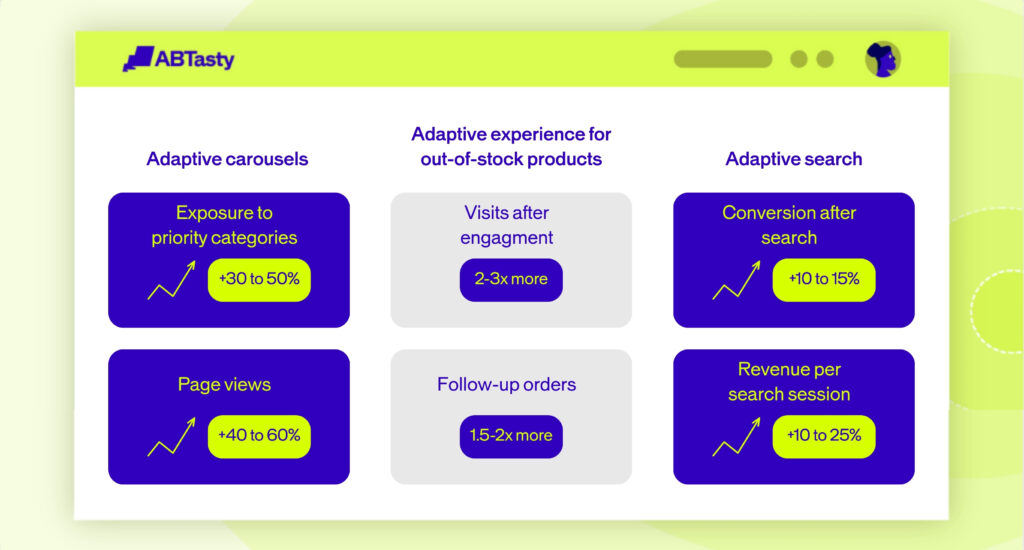
  • Adaptive carousels: Reorder product categories in real-time based on intent, driving deeper exploration and discovery. Users report 30-50% increased exposure to priority categories and a 40-60% increase in page views.
  • Adaptive experience for out-of-stock products: Instantly show personalized alternatives that match visitor intent and sharply reduce abandonment. Users report 2-3x more visits after engagement and 1.5-2x more follow-up orders.
  • Adaptive search: Pull visitors into search using intent-based prompts and smart widgets. Users report an increase in conversion after search of 10-15% and 10-25% more revenue per search session.
Emotions AI: see what really drives your audience

Standard personalization can help you create more relevant buying experiences for visitors. But when you understand a visitor’s emotional intent, you can take these experiences to a whole different level. Emotions drive an estimated 80% of human decisions, and the buying journey is packed with micro-moments shaped by those feelings. That’s where our Emotions AI steps in.

Built on over eight years of behavioral analytics, Emotions AI helps you uncover hidden opportunities in the user journey. It shows you not only how to improve a visitor’s experience, but also the cost of inaction. Emotions AI can identify the emotional mindset of every visitor within 30 seconds of activity on your website. This enables you to segment and target them with unmatched precision and speed.

Turn emotions into data-driven sales

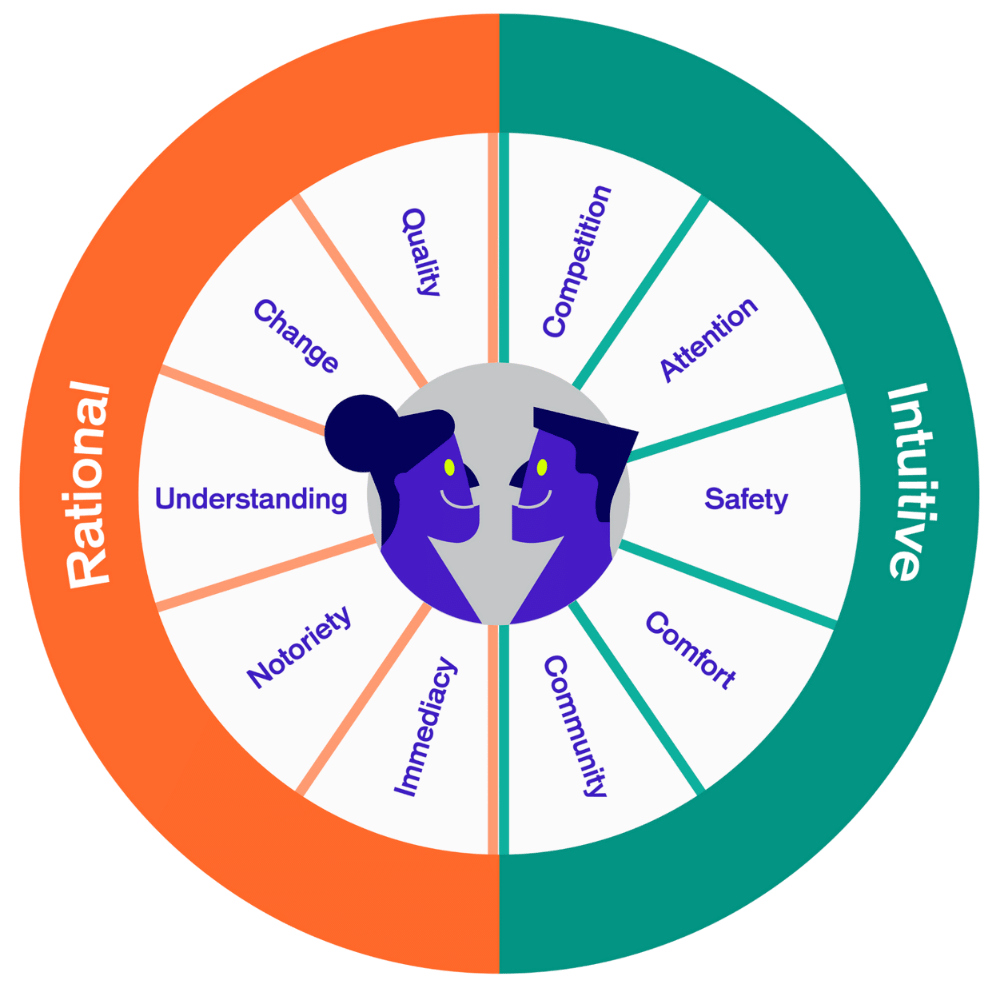
While there might be a lot of different emotions running through a visitor’s mind when they come to your website, Emotions AI classifies visitors into one of ten emotional segments:

  • Competition: visitors strive to make the best possible choice to stay ahead and be the best.
  • Attention: visitors need to feel that everything is being done to satisfy them.
  • Safety: visitors need to feel secure and in control of their situation. 
  • Comfort: visitors need to drift through the buying journey free from disruption and unnecessary effort.
  • Community: visitors feel a strong connection with the people they care about and the environment.
  • Immediacy: visitors need to be constantly stimulated to take action
  • Notoriety: visitors prefer to minimize risk by choosing options already validated by many people.
  • Understanding: visitors need comprehensive factual information to make decisions.
  • Change: visitors seek new experiences, fresh adventures, and opportunities to break from routines.
  • Quality: visitors need qualitative information to make decisions.

Once you know the specific segments you want to target, you can deliver personalized content to them using AB Tasty’s optimization platform and an entire library of widgets.
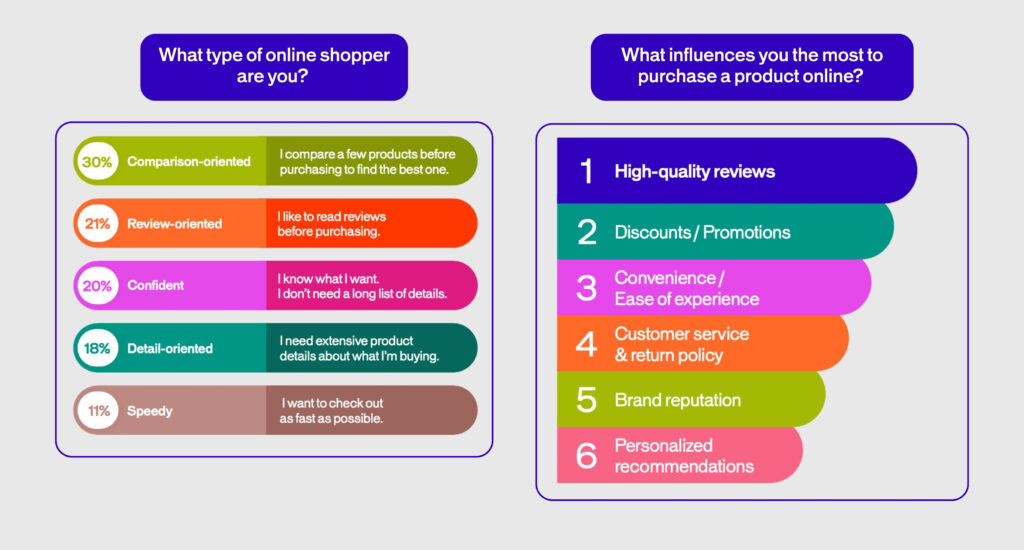
Real-world examples of EmotionsAI in use

  • Clarins launched a personalization campaign targeting the Safety and Comfort segments that displayed a pop-up presenting the benefits of a specific offer. This resulted in an 18% increase in the conversion rate of these segments.
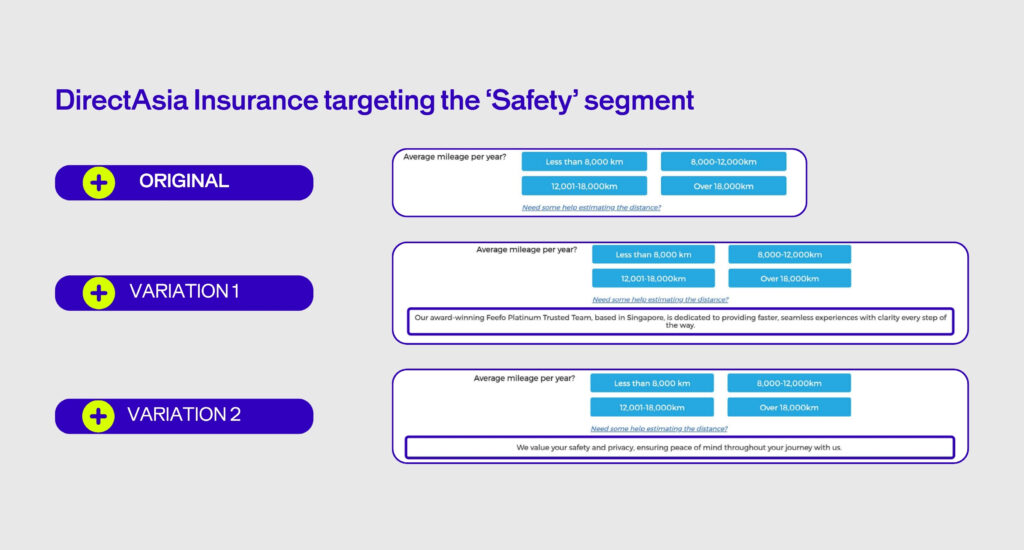
  • DirectAsia wanted to increase the conversion rate of the Safety segment. When collecting visitor information, they displayed two variations of a banner to visitors from this segment, reassuring them and prompting them to move to the quote page. Variation 1 increased access to the quote page by 10.9% and variation 2 by 14.8%.
  • North American Insurance tested moving FAQs above the quoting area for dental insurance policies for the Immediacy segment. This resulted in an increase in application submissions of more than 140%.
Start your recommendation engines

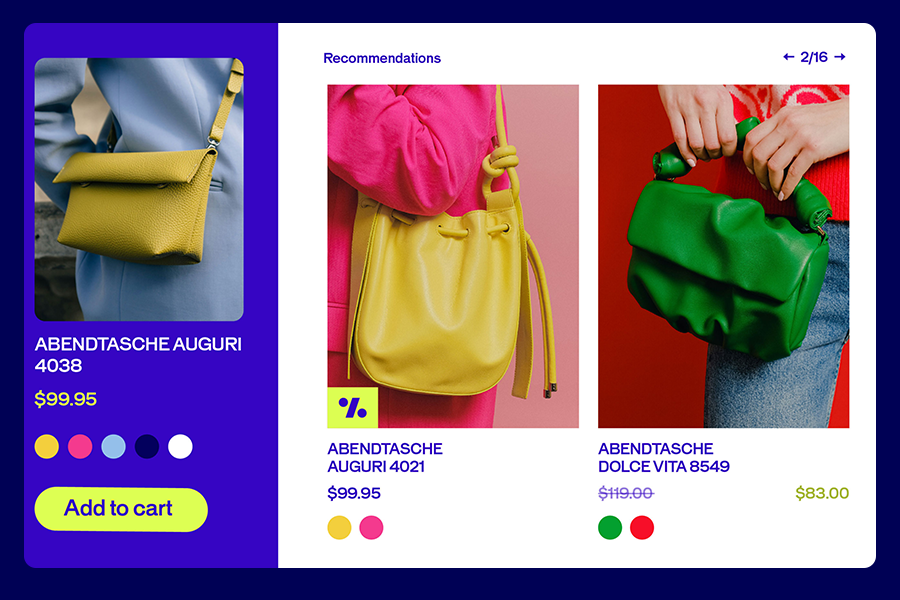
By combining A/B testing with AI-powered insights about different segments, you can also identify opportunities to optimize personalized recommendation algorithms for these segments. These are designed to point specific visitors to suggested products beyond those they searched for or viewed.

Our AI-powered product recommendation algorithms learn from visitor behavior and transaction data. These can then be deployed across websites, personalized email campaigns, and CMS platforms like Prestashop, Shopify, or Agentforce Commerce to optimize product visibility and sales performance.

Real-world examples of personalized recommendation algorithms

  • Jacadi combined Emotions AI with personalized recommendations to target the Understanding segment. Visitors looking at product recommendations saw a widget that noted how much they needed to spend to qualify for free shipping. This increased revenue from these visitors by 10%, the AOV by 1.7%, and the click rate by 3%
  • ITM Home Equipment Group (Bricorama, Bricomarché, Bricocash) combined testing different personalized recommendations with real-time information about user behavior. This resulted in 10% more visitors using the recommendations, increased the conversion rate by 21% on the home page, and the average basket by 21% on product pages.

Conclusion

Online consumers are returning to brands that reward them and treat them like individuals. They’re willing to give you their data (and loyalty) if you give them value in return. And AI-powered tools make it easier than ever before to personalize your interactions with visitors and turn their frustration into opportunity.

Article

4min read

Beauty E-Commerce Gets a Glow-Up: Insights from Our Cosmetics Consumer Report

The way consumers shop for cosmetics is evolving fast. Today’s beauty buyers aren’t just looking for the right shade or texture. They care about what’s inside, how it’s made, and whether they can trust the brand behind it.

To help brands stay ahead, we recently hosted a webinar inspired by our e-book, Decoding Online Shopping: Cosmetics Consumer Trends for 2025. Our hosts, Lara Hourquebie and Justin Trout unpacked what today’s beauty shoppers expect, the digital experiences that build loyalty, and practical test ideas you can apply right away. If you missed the live session, here’s your recap of the new rules shaping beauty e-commerce.

Beauty

What’s shaping beauty e-commerce in 2025

From our research and client insights, three big themes stood out:

  • ? Sustainability isn’t optional: eco-friendly, cruelty-free, and ethical sourcing have become the baseline.
  • Ingredient transparency: shoppers want to know exactly what goes into their skincare and cosmetics.
  • ? Social media’s influence: skincare routines and beauty standards are amplified online, fueling demand for authenticity and trust.

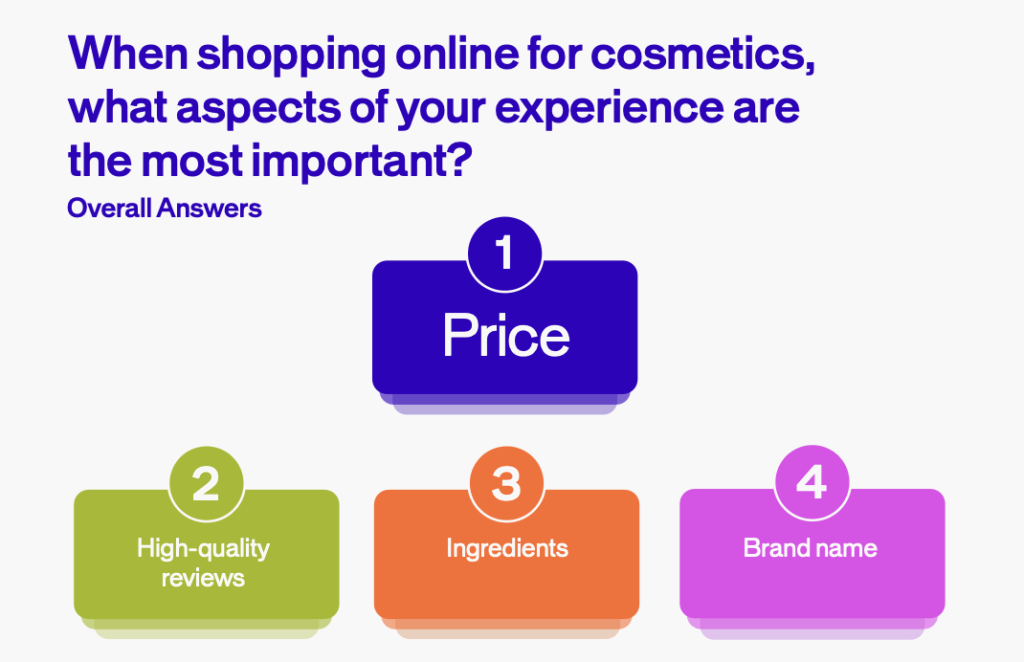
And yes, price still matters, but high-quality reviews are the second most influential factor.

Beauty pollfish

Why social proof works (and how Clarins put it to the test)

One of the strongest insights from both the e-book and webinar was the importance of social validation. Shoppers feel reassured when they see that others have purchased, rated, or recommended a product – especially in beauty, where confidence is key.

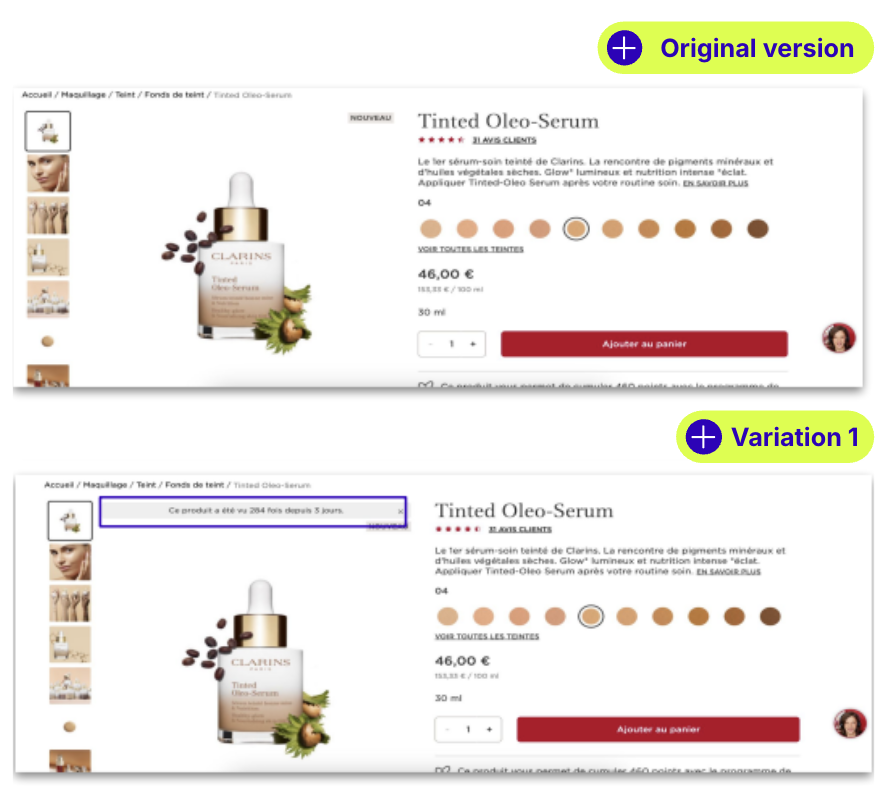
Clarins put this into practice by experimenting with a social proof widget on their product pages. The idea was simple: show shoppers in real-time that others were also browsing or buying the same product.

Clarins test

The impact?

  • +5% increase in average order value
  • +€5.8K uplift in revenue

By targeting this experiment to the right audience segments, Clarins proved that even small nudges can build confidence and boost sales.

Your 2025 beauty brand checklist

  • Embed sustainability and ingredient transparency into your brand story.
  • Make reviews and social proof highly visible – don’t leave trust-building to chance.
  • Test new ideas, even small ones like Clarins’ widget – they can create outsized results.
  • Keep the focus on loyalty over discounts: long-term trust beats short-term price cuts.

Building better experiences through relevance

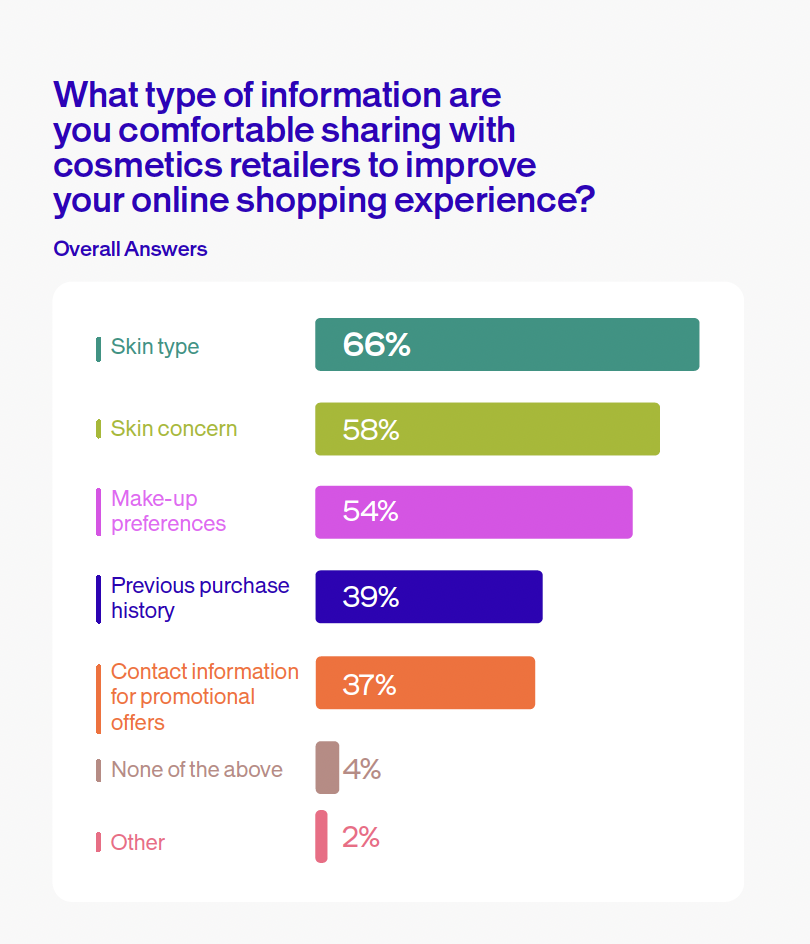
As our research shows, shoppers are happy to share details like their skin type, concerns, or makeup preferences if it helps them find the perfect match. But when it comes to things like personal contact details, they’re far less willing.

The takeaway? Consumers want relevance, not noise. They’re open to sharing what improves their journey – as long as brands use it thoughtfully and transparently.

In short: the beauty brands that blend values, personalization, and experimentation will be the ones to win hearts (and baskets) in 2025.

? For more insights, download our e-book Decoding Online Shopping: Cosmetics Consumer Trends for 2025 and see how to turn shopper expectations into results.

Article

5min read

Click Happens: Smarter Digital Experiences for 2025

With acquisition costs rising and consumer patience shrinking, the pressure is on: every digital experience has to work harder. That was the key message in our recent webinar with Contentsquare: Optimizing Digital Experiences: Strategies from AB Tasty & Contentsquare.

In the session, John Hughes from AB Tasty and Evan Wells from Contentsquare unpacked key findings from AB Tasty’s 2025 Consumer Trends Report and Contentsquare’s 2025 Benchmark Report, revealing what it really takes to deliver faster, smarter, more cost-effective customer journeys in 2025.

Here’s a quick breakdown of the top takeaways.

1. The Rising Cost of Digital Experiences

Traffic is getting more expensive and more competitive.

  • Organic traffic is down by 5.7%.
  • Paid traffic now makes up 39% of visits.


More worrying? Overall traffic is down 3.3%, even as ad spend rises by 13.2%. Consumers are migrating toward closed ecosystems like TikTok, and search engine changes are squeezing unpaid visibility.

“If someone does land on your site,” said Evan, “you can’t afford to lose them to a clunky experience.”

2. Earning Loyalty

Retention is getting tougher and more expensive:

  • 30-day retention is down 7%
  • Bounce rates for returning paid traffic are rising
  • Brands are spending more to re-acquire the same users

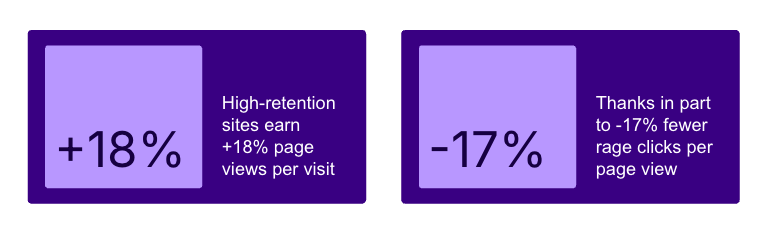
But here’s the good news: Sites with the highest retention also had:

High retention rate of digital experiences

Retention isn’t about loyalty programs anymore. It’s about immediate value:

If the first experience isn’t seamless, fast, and relevant, there might not be a second chance.

As John pointed out:

“Customers are overwhelmed. Consent banners, pop-ups, chatbots… all stacked on each other. The more you push, the more they bounce.”

3. Personalization = Relevance

Our 2025 Consumer Trends research confirms it: Shoppers now expect relevance, not just recognition. What moves the needle?

Personalized shopping experience factors

“It’s not just about product recs. It’s about respect. Show people you’re paying attention, and they’ll come back.” – John

At AB Tasty, we’ve taken personalization beyond demographics into emotional and behavioral segmentation.

With EmotionsAI, brands can now tailor experiences based on what really motivates visitors:

  • Safety Seekers: need reassurance (trust signals, easy returns)
  • Fast-Trackers: want speed (minimal steps to checkout)
  • Community-Driven: respond to peer validation (“others bought this”)
  • Comfort Seekers: look for clarity and low friction
EmotionsAI Wheel

These insights can shape everything from PDP content to CTA language. And best of all? It’s not guesswork, it’s behavior-based.

4. Attention Is Dropping – Especially for New Visitors

Consumers are seeing less of your site, unless you’re earning their attention.

From Contentsquare:

  • Overall site consumption (time, scroll rate, pages viewed) is down 6.5%
  • Returning visitors consume 19% more pages and spend one minute longer on site than new visitors
  • More landing pages are now product pages, not homepages

This shift reinforces something we’ve known for a while: homepages are branding, product pages are business. If you want to improve conversion, that’s where you optimize.

5. AI: The Secret Weapon to Optimize Digital Experiences

Both AB Tasty and Contentsquare are embracing AI to help marketers do more with less:

At AB Tasty:

  • Our AI Copilot helps teams quickly generate test ideas, reword content, promote blocks, or personalize experiences with natural language prompts.

At Contentsquare:

The goal? Speed up insight, scale up experimentation, and automate repetitive tasks – without sacrificing control.

AI - digital experiences

6. Experiment Often, Act Fast

The most successful teams aren’t just collecting data. They’re closing the loop:

1. Contentsquare shows what’s broken

2. AB Tasty helps you test, fix, and personalize

3. AI helps you move faster, with less effort

Whether it’s launching 1:1 recommendations, fixing high-friction journeys, or adapting content to emotional profiles, the brands that win in 2025 are those that act quickly and optimize constantly.

Key Takeaways

In 2025, optimizing digital experiences isn’t just a nice-to-have – it’s a survival strategy. With rising acquisition costs and falling attention spans, brands need to ensure every visit delivers real value. That means fixing friction fast, personalizing with emotional and behavioral insight, and using AI to move from insight to action at speed. Retention now begins with the first impression, and product pages, not homepages, are where real conversions happen.

The brands that will win are those that test often, personalize with purpose, and close the loop between data and decision-making.

Want More?

Explore the 2025 Consumer Trends Report by AB Tasty.

Check out the 2025 Benchmark Report by Contentsquare.

Watch the full webinar here:

Article

6min read

Test, Dress, Impress:  Top Fashion Consumer Trends 2025

Forget traditional shopping journeys, today’s fashion consumers are rewriting the rules! Our 2025 Fashion Consumer Trends report reveals the shifts in how consumers discover, decide, and commit to fashion brands today.

Introduction

In a recent webinar, 3 experimentation leaders came together to unpack the latest consumer trends shaping the fashion industry. The conversation brought together Ben Labay, CEO of Speero, Jonny Longden, Speero’s Chief Growth Officer, and Mary Kate Cash, Head of Growth Marketing for North America at AB Tasty. They shared valuable insights from AB Tasty’s recent global fashion consumer survey, highlighting what drives inspiration, conversion, and retention in today’s fast-evolving fashion landscape.

Social Media is Changing the Game 

Traditional search engines remain the top channel for fashion discovery, followed by direct website visits, Google Shopping, and Social Media ads. However, the differences between these top four channels are shrinking year over year, with social media rapidly gaining ground, especially among Gen Z consumers, where 60% of survey respondents highlighted Social Media ads as their preferred avenue to finding new products. Jonny predicts this trend will expand across all age groups. 

“Social and fashion just go so hand in hand. The big change that’s happened with social is that fashion itself has become more rapid in the way it changes, and so it’s really driving different consumer behaviour.”

Jonny Longden, Chief Growth Officer at Speero

Different Channels, Different Mindsets

People use search when they know what they want. Social media, on the other hand, encourages experimentation. As Ben pointed out, shoppers arriving from social media are often inspired to try new styles or connect with communities, engaging in “social shopping” and not just focusing on finding a specific product. This opens the door for more tailored experiences based on where customers are coming from and what type of inspiration they’re seeking.

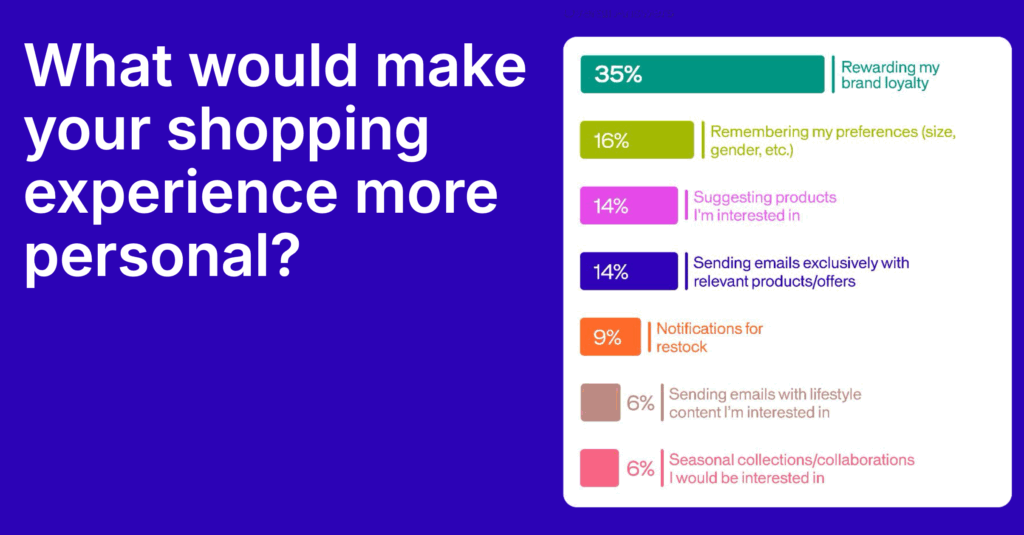
Reward Loyalty in Meaningful Ways – When asked how brands could make customers’ experiences more personal, the top answer was clear: rewarding brand loyalty. Discounts, early access, or perks for repeat buyers make shoppers feel seen and increase the chances of account creation and repeat visits. 

Jonny pointed out that “the really interesting tension in this whole industry at the moment is the difference between what is the right thing to do and what is the profitable thing to do. about finding that balance is experimentation in the broadest sense of the word.”

Make Recommendations That Actually Fit – Consumers want relevant suggestions that go beyond basic personalization. Jonny compared it to having a personal stylist: a brand should know both the customer and the market, understanding trends and styles while matching these to individual preferences.

Personalization - fashion trends

What Actually Drives Conversions

When it comes to converting browsers into buyers, shoppers across generations are surprisingly aligned. 

Product quality leads the way across all age groups and regions. Shoppers are still willing to pay for craftsmanship, comfort, and durability, even in a price-sensitive market.

Discounts come next, but the strategy matters. Overuse can cheapen brand perception. As Jonny put it: “Fashion, especially the lower price point fashion has ended up in a kind of race to the bottom where discounting is the way to compete. […] and a lot of consumers wouldn’t consider paying full price. The challenge is how to be careful with the commerciality of discounting.”

Discounts - fashion trends

Sizing and fit clarity also ranks high, especially in fashion, where hesitation often comes from uncertainty about how something will feel or look. Ben noted that some major retailers are tackling this head-on, investing heavily in tools to improve sizing and try-on experiences.

For Gen Z, high-quality reviews and transparency around production methods, sustainability, and pricing are big drivers. Ben shared tactical approaches to transparency on product detail pages, like using engaging CTAs such as “Do you want to know a secret?” to reveal value props related to sustainability and ethical production.

Why Shoppers Abandon Carts

Cart abandonment remains a major friction point, and two reasons dominate globally:

  1. Not ready to buy – Many shoppers use the cart to explore shipping, delivery timeframes, or total cost before making a decision. Jonny explained it simply: “People use the checkout of an ecommerce website just to see what’s gonna happen. […] When’s it gonna be delivered? What are the delivery options? How much is delivery gonna cost? 
  2. Payment Methods not being accepted – This came in a close second, showing how overlooked payment flexibility still is. Buy-now-pay-later options like Klarna may move the needle, especially in fashion, where customers often purchase multiple sizes with the intention of returning some items. Jonny emphasized that payment method testing is one of the best arguments for AB testing and experimentation, as the “best practice” of offering many payment options doesn’t always lead to better conversion.

Retention: Loyalty Built on Familiarity

Finally, we explored what drives customers to create accounts with fashion brands, buy products from them, and what motivates them to stick around.

Loyalty Rewards Drive EngagementGlobally, the top reason for account creation is earning loyalty points, especially among Gen Z and Millennials. Discounts and sale updates follow closely behind.

Balancing Novelty and Trust – Shoppers crave both newness and familiarity: new products ranked highest in driving retention, but previously purchased items and trusted brands followed close behind. This balance is key to keeping customers engaged long-term.

Jonny raised an interesting point: a lot of loyalty programs end up rewarding people who would have come back anyway. Mary Kate added that tools like segmentation can help brands tell the difference between genuinely loyal customers and those just passing through, making it easier to design rewards that actually make an impact.

While conventional wisdom discourages forced account creation, Ben challenged this assumption, arguing it can work when paired with compelling promotions or rewards, especially in social ads. “Social ads that inspire and combine short-term promotions, rewards, and discounts are increasingly leading into forced account creation sequences.”

Conclusion

As shown in our 2025 Fashion Consumer Trends report, the e-commerce fashion industry is evolving, along with consumer expectations. To remain competitive, brands must go beyond simply selling products. They must deliver seamless, personalized shopping experiences that speak directly to the modern shopper’s needs.

This is where experimentation becomes a critical advantage. The most successful brands are those willing to test assumptions about everything from product discovery and presentation to payment options, loyalty strategies, and the evolving role of social commerce. Experience optimization is no longer a nice-to-have. It’s the foundation for building trust, loyalty, and long-term growth in the fast-moving world of online fashion.


Want a deeper dive? Watch the full webinar below to hear expert insights and practical strategies shaping the future of fashion commerce.