
AI has quickly become part of the modern marketer’s workflow. Teams use it to draft copy, summarize research, brainstorm campaign ideas, and speed up repetitive tasks. Experimentation teams are no exception.
When an A/B test ends, many teams already turn to generic AI tools for help. They take screenshots of campaign reports, export data, copy performance summaries, or paste research findings into tools like ChatGPT and ask:
This behavior makes sense. Experimentation teams are under pressure to move faster, interpret more data, and continuously identify new opportunities for optimization. AI can help.
But there is a problem: generic AI tools were not built for your experimentation workflow.
They do not automatically understand your campaign setup. They do not know your variations, metrics, traffic split, hypotheses, audience segments, report links, or past experiments. They cannot easily connect one campaign to another. And they cannot help you move directly from insight to action inside your testing platform.
In other words, generic AI may be useful — but it is disconnected. That’s why experimentation AI should live inside your testing platform.
The hidden cost of copy-paste AI workflows
At first, using a generic AI tool to analyze experimentation data feels efficient: Export a report, upload a screenshot, ask a question, and get a summary in seconds.
But over time, the friction becomes clear. Users still have to manually gather the right information: campaign details, results, segment data, objectives, and business context. If they leave out a key metric, audience detail, variation description, or goal, the AI may produce an answer that sounds confident but misses what matters.
The workflow also stops short of action. A generic AI tool might suggest a new test idea, but the user still has to return to the experimentation platform, find the right campaign or page, set up the test, define metrics, configure targeting, and QA the experience.
The result is a fragmented workflow: data in one place, AI in another, and campaign setup somewhere else. For teams trying to scale experimentation, that fragmentation slows decisions and makes it harder to turn insights into action.
Wingify’s AI layer
AB Tasty and VWO are joining forces to become Wingify.
If you’ve used AB Tasty’s Evi or VWO’s Copilot, you’re already familiar with AI that’s built for the experimentation space. In our new platform, Wingify, our combined AI layer is called Wandz.
Unlike a bolt-on feature or a standalone assistant sitting beside your workflow, Wandz is woven throughout the platform. From campaign setup and audience targeting to results analysis and hypothesis generation, Wandz is present at every stage of the experimentation journey. It’s not just smarter AI. It’s AI built for experimentation — and it’s finally in the right place.
Wingify’s AI layer brings intelligence into the workflow
Wingify’s AI, Wandz, layer is designed to solve this problem by bringing AI directly into the experimentation platform.
Instead of exporting data or pasting screenshots into a separate tool, users can ask questions in natural language inside our platform. Wingify’s AI layer, Wandz, acts as an intelligent interface between teams and their experimentation data, helping them explore campaign performance, compare results, generate ideas, audit setup, and identify next steps without switching dashboards.
For example, users can ask:
Because our platform’s AI is connected to the experimentation environment, it can return campaign-specific context such as variation details, traffic split, hypothesis, primary and secondary metrics, report links, and decision status.
That is the key difference between asking a generic AI tool to interpret copied information and asking an AI assistant that understands where that information comes from.
AI is not valuable simply because it responds quickly.
AI is valuable when it responds with the
right context.
From insight to next action
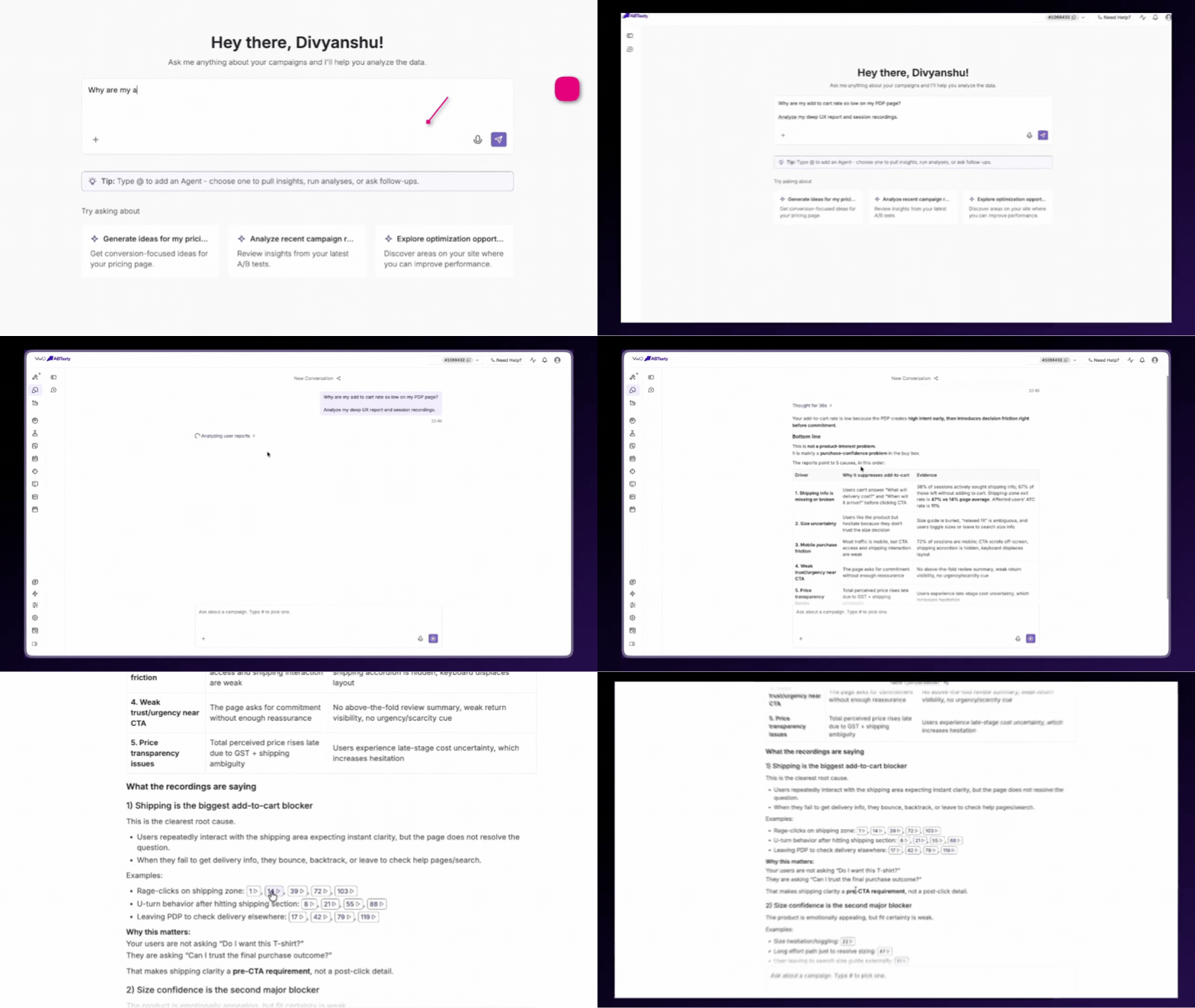
The real promise of AI in experimentation is not just summarizing what happened. It is helping teams decide what to do next.
Wandz, Wingify’s AI layer, can generate data-backed experiment ideas based on campaign performance, user behavior, and business goals. Users can also upload screenshots, competitor designs, UI mockups, project briefs, or research findings, allowing the AI to connect performance data with business and design context.
That means teams can move from results to stronger hypotheses faster — with recommendations grounded in both experimentation data and the broader context behind the customer experience.
AI that supports setup, not just analysis
Another limitation of generic AI tools is that they typically stop at advice.
Wingify’s AI layer, Wandz, can go further by supporting the campaign setup phase. It can audit draft campaigns, reviewing configurations such as metrics, target audience, traffic split, and goals to help determine whether a campaign is ready to go live.
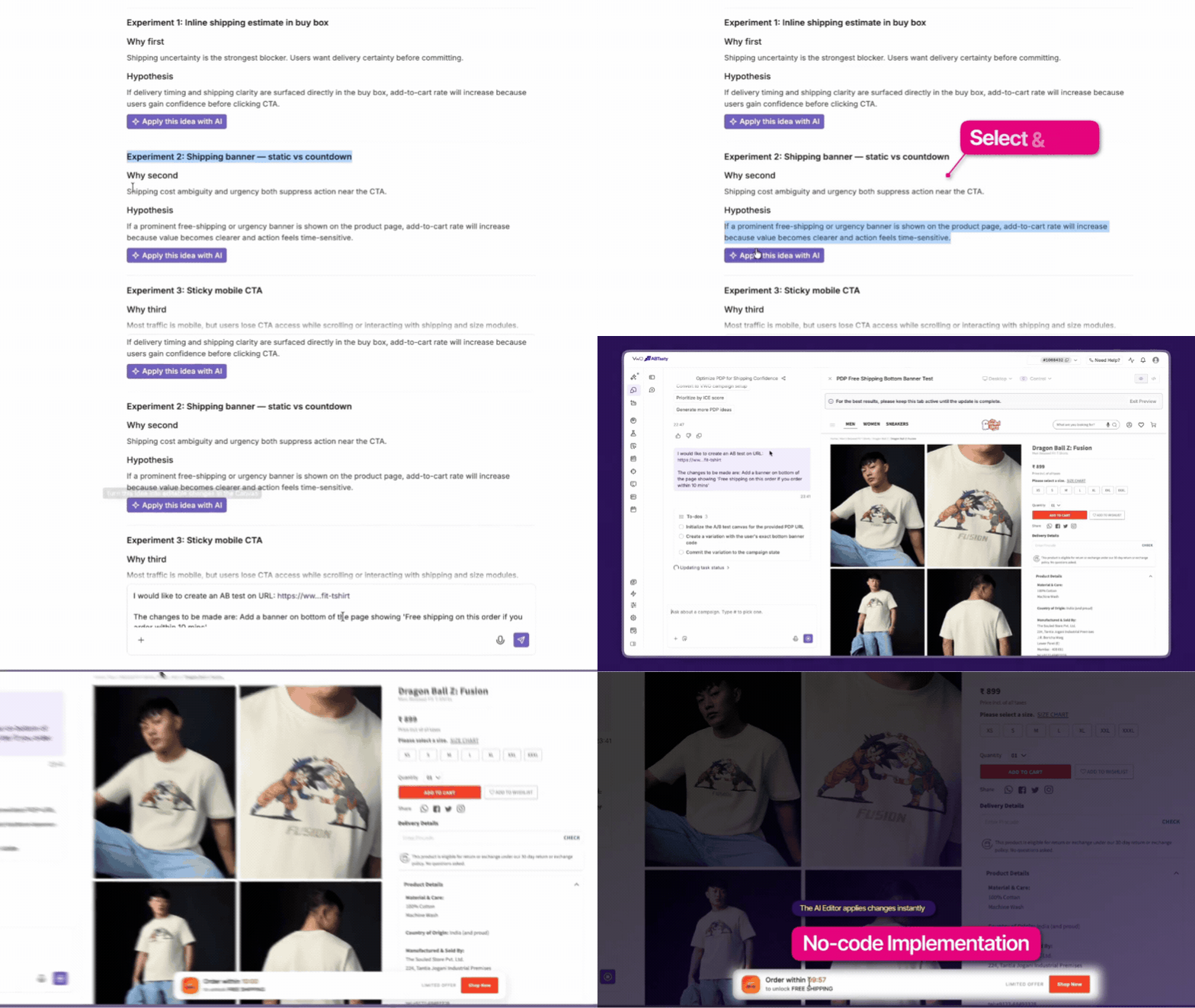
This gives teams an additional QA layer before launch and helps reduce the risk of configuration gaps.
Our AI Editor also helps users create or modify campaigns through natural-language prompts. Importantly, this does not remove human control. Users can review the AI’s changes, refine them, and continue managing key campaign settings. The AI acts as an accelerator, not a black box.
Stop moving your data to AI. Bring AI to your data.
The rise of generic AI tools has shown that teams want faster ways to analyze information and generate ideas. But for experimentation, the next step is clear: AI needs to be embedded in the workflow.
Copying and pasting campaign data into external tools can provide quick help, but it also creates friction, removes context, and separates insight from action.
Wingify’s AI layer, Wandz, brings AI directly into the experimentation platform, where it can work with campaign context, report links, metrics, segments, and supporting business documents. It helps teams ask better questions, get faster answers, generate stronger ideas, and move toward campaign creation with less manual effort.
Because the future of experimentation is not just more AI, it’s AI in the right place.
Raw Individual Visitor Data is retained for up to 13 months in accordance with our data retention policy. Aggregated campaign metrics remain available beyond 13 months as well.

About the Author
Emily Healy
Emily Healy holds a Bachelor’s degree in Public Relations and a Bachelor’s degree in Spanish from the University of Louisiana, and a Master’s in Business from UC3M. She has worked in content and product marketing and holds PMA certifications in brand, positioning, messaging, and AI marketing.