
Case Studies

How Three Ships Drove Traffic to Partner Pages Using a Single Widget

7% Increase in CTA clicks to partner pages

2 weeks Test duration

Three Ships is a marketing agency dedicated to driving growth for its partners. Their multifaceted approach spans affiliate marketing, performance-driven content, conversion rate optimization, and media investment management.

Three Ships teamed up with AB Tasty to accelerate growth for its partners through experimentation. By thinking critically about the connection between user intent, device, and UX design, they were able to increase visits to partner pages by 7%. Here’s how they did it.

The Situation

Mattress Advisor is a comprehensive resource for shoppers looking to purchase a new bed— complete with user reviews, product guides, and general resources on all things sleep-related. The Three Ships team wanted to focus on Mattress Advisor’s branded pages, which featured only one mattress brand (as opposed to comparing multiple, like on non-branded pages).

The goal was to get users to click on the CTA (“Buy Now”), which would send shoppers to the brand’s own page to complete the conversion.

Three Ships knew that visitors to Mattress Advisor’s branded pages had a strong intent (incoming traffic was via paid search links, meaning shoppers had used brand-specific keywords in their search). These shoppers were nearing the end of their research, had a specific mattress in mind, and were closing in on a purchase decision.

In analyzing this website traffic further, Three Ships saw that roughly two-thirds of visitors were using mobile devices. So, optimizing the CTA had to consider both the stage in the customer journey and mobile usability (e.g. smaller screen sizes, the role of touch in the user experience).

The Experiment

Three Ships used an AB Tasty banner widget to place a sticky CTA at the bottom of the screen and duplicated this test across all branded pages.

The idea was that a sticky CTA would be easily accessible to visitors on mobile devices without blocking important information like reviews and ratings that often influence decision-making.

Results

It only took two weeks for this experiment to reach statistical significance due to the high traffic of these pages.

In the end, the sticky CTA across branded mobile pages was a success, with the conversion rate averaging at about 7%. It’s since been hard-coded onto the site.

Takeaway Tip

Mattresses are big purchases with long periods between return customers. It’s important to find a balance between encouraging a conversion while not coming across as too pushy. In this scenario, Three Ships knew that visitors were close to making a purchase. So, it was important that taking the next step to convert was easily accessible while not overtaking the entire web page.  Implementing this experiment was simple, fast, and scalable thanks to AB Tasty’s widget library. No developer support was needed to create the sticky CTA, and it took only two weeks to prove its effectiveness.

Spark
your curiosity!

Get your copy of "How Three Ships Drove Traffic to Partner Pages Using a Single Widget" now.

Case Studies

Cluse Sees an Uplift in Transactions With Product Landing Page Optimization

+1.12% Uplift in transactions

+2.39% Increase click-through rate to the PDP

Known for their modern, simple, and elegant watches & jewelry, Dutch watch brand Cluse has established itself as one of the fastest-growing accessories brands.

The Challenge

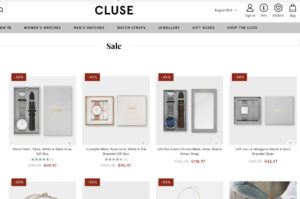
Cluse noticed that the bounce rate for their product landing pages was high and found that not many users clicked through to the product display pages. There was no clear call-to-action for the user to progress to the product display page.

Original

Test Hypothesis

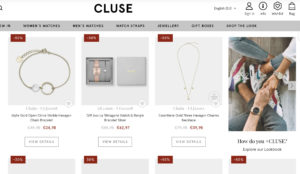
To encourage more users to click through to the individual product pages Cluse set up an A/B/n test including different CTA color variations. The “View Details” CTA button was inserted below the product image, linking to the respective product display pages (PDP). With a clear CTA the objective of the test was to increase users reaching the PDP from the product landing page, which in turn would increase the add-to-cart clicks and transactions.

Results

Targeting all users across desktop and mobile, the A/B/n test ran for 3 weeks across Cluse’ French domain. The winning variation (pictured below) significantly increased the click-through rate from the product landing page to the product display page as well as driving an increase in transactions.

  • +2.39% increase in click-through rate to the product display page
  • +1.12% uplift in transactions

Winning Variation

Takeaway Tips

  • Make it easy & clear for your users to reach the product display page. Optimizing the gateway to your product pages can help you convert users into customers.
  • Small changes to your CTA’s can help you achieve quick wins.
  • Analyze the data you have from an AA test or insights from other means, to better understand the user behavior on your site, and help you come up with test ideas that could help improve the users’ experience on the site.

Spark
your curiosity!

Get your copy of "Cluse Sees an Uplift in Transactions With Product Landing Page Optimization" now.

Case Studies

How Lush’s Focus on Human Connection Optimized the Digital Customer Experience

250% Increase in click-through rate

$7.5K Increase in sales during the experiment

Lush is a cosmetics company known for its emphasis on fresh ingredients and cruelty-free products—not to mention being credited as the original inventor of the bath bomb. From early days in England to currently operating 250 stores across North America, Lush continues to have a dedicated following for its soaps, shampoo bars, moisturizers, and scrubs.

The Challenge

For retailers (and all businesses for that matter) entire strategies had to be reworked in response to COVID-19. Digital became the central, if not sole, channel to focus on.

At Lush, the team had implemented a travel campaign before social distancing and non-essential business closures were government-mandated. While the campaign had initially been performing well, there was a drastic dip in engagement as travel restrictions tightened.

Lush knew that they needed to pivot. But they also needed to consider how current circumstances were affecting their customers. What was the best way to connect with people during this time? How could they strike a balance between offering familiarity while not coming across as out of touch?

The Test

Lush focused on their homepage promotions, evaluating everything from the banner image to CTA phrasing and featured products. The team created two campaigns that subtly addressed the new reality of staying at home and socially distancing.

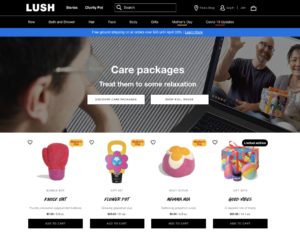
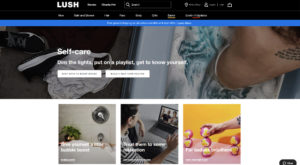
The first variation was centered around self-care. Lush offers head-to-toe cosmetics products that range from relaxing to invigorating. The idea was for customers to put together an entire regimen for themselves, perhaps gravitating to products they wouldn’t normally have had time for (like scalp treatments and bath bombs). The second variation was built around the theme of sending care packages to loved ones. Even though people couldn’t physically see friends and family, they could send these gifts as a thoughtful gesture or for special occasions.


Results: Part 1

It quickly became clear that the care package promotion was the better performer, with a 250% higher click-through rate than the self-care campaign. During this experiment, the care package promotion also generated $7,500 more in sales than the variation. While the team couldn’t know with absolute certainty if people were buying care packages for their own use, it was clear that this messaging had more of a pull. So, Lush decided to dig deeper into this trend. They launched another A/B test that compared the general care package promotion with a variation focused specifically on Mother’s Day.

Truthfully, the team wasn’t sure how users would react. Would they gravitate to the theme of Mother’s Day or would it be unintentionally upsetting for those unable to see their parents in person? Testing provided a safe framework to find out. 

Results: Part 2

The Mother’s Day campaign did appear to resonate with users more, gaining a higher click-through rate than the more general care package promotion. Following the results from this test, Lush started mapping out a similar campaign that focused on Father’s Day to keep the momentum going. 

As Lush demonstrates, effective experimentation is continuous. In one of the first tests launched in this series, Lush saw the positive impact of messaging that focused on human connection. Leveraging this insight, they were able to develop a series of campaigns that explored this further: considering everything from how users would respond to specific holidays to whether promotional images that featured people performed better than those with just products.

Takeaway Tip

It takes users approximately 50 milliseconds to visually assess a website and decide whether to stay or leave. Lush’s strategy shows a sharp awareness of this short time frame. They weren’t concentrating on refining just one or two details of their website, but how every element came together to form a holistic experience. In this way, their approach became more psychographic, asking questions related to what piqued users’ interest and how this impacted the customer experience. And in doing so, Lush was able to stay in sync with its customer base during a time of rapid and widespread change.

Spark
your curiosity!

Get your copy of "How Lush’s Focus on Human Connection Optimized the Digital Customer Experience" now.

Case Studies

How Fenty Increased CTA Clicks by 42%

42% more CTA clicks

15 min. test setup

Musician and entrepreneur Robyn Rihanna Fenty partnered with LVMH to release her namesake clothing line, FENTY, in 2019.

Challenge

One of the first KPIs the FENTY team wanted to measure and optimize was the clicks to its homepage CTA, which brought visitors to the latest collection.

Experiment

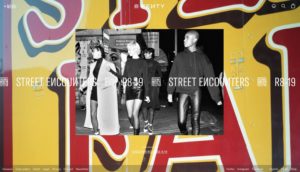
FENTY wanted to see if CTA size had an effect on the click rate. Using the AB Tasty platform, they set up a split test that would compare the performance of a CTA sized at 13 pixels versus a CTA that was slightly bigger at 15 pixels.

FENTY-homepage

FENTY homepage

Results

In the end, bigger was better. The 15-pixel CTA generated 42% more clicks than the 13-pixel variation and was permanently added to the FENTY homepage.

Takeaway Tip

FENTY proved that simple tests can have a significant impact. In this example, it took 15 minutes to set up the test, and a difference of 2 pixels, to increase CTA clicks by an impressive 42%. Focus on making the key elements of your web page (which could be a call to action, a navigation button, etc.) a focal point for your visitors by considering both size and placement.


Spark
your curiosity!

Get your copy of "How Fenty Increased CTA Clicks by 42%" now.

Case Studies

Generali’s Chatbot Averages 800 Conversations a Day to Streamline Customer Support

800 conversions per day

2,400 calls avoided

Generali is a global insurance and assets management group that’s been focused on building life-long partnerships with customers since its establishment in 1831.

Situation

No one likes being put on hold—especially when you’re trying to reach customer support with a question related to your livelihood (like insurance or wealth management). So, Generali decided to streamline the entire process.

The goal was to help visitors more readily find the information they needed on Generali’s website and curb calls to customer support (particularly for questions that could more easily be answered online). This way, Generali’s customer support team would have the increased bandwidth needed to help individuals with complex questions.

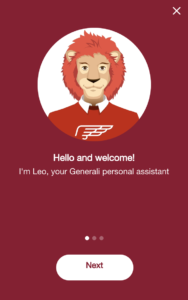
Generali developed a chatbot that was able to interact with visitors on its site by answering basic questions and highlighting relevant insurance offers. If there was a question the bot couldn’t answer, it would connect users to the appropriate Generali agent directly.

The Generali team had tested various names and avatars for its bot among a small pool of clients before ultimately settling on ‘Leo.’

Then, Generali worked with AB Tasty to integrate Leo into its website and track performance.

Campaign

AB Tasty Technical Solution Engineers were able to write the JavaScript and CSS code needed to trigger Leo on desktop devices. Data was then collected in real-time (in the AB Tasty platform) to track Leo’s engagement rates and highlight how visitors interacted with the chatbot during a 6-month period.

Generali also used AB Tasty’s visual editor to quickly make cosmetic changes to the site and measure the impact of these modifications on Leo’s performance.

Results

Leo was clearly a hit with Generali’s clients. At the end of the campaign, there were 100,000 recorded interactions with Leo on the website and more than 2,400 calls avoided, giving Generali the reassurance they needed to integrate the chatbot on mobile and tablet devices.

These high engagement rates, and reduced customer support wait times, proved Leo’s positive impact on the user experience. This campaign also provided a benchmark for evaluating Leo’s ongoing performance—which is essential for continuous optimization.

Currently, interactions with Leo are averaging 800 conversations a day.

Takeaway Tip

Chatbots have the potential to streamline customer support and enhance user experiences—when implemented strategically. As Generali shows, simply integrating a chatbot into your site isn’t enough. You need to set performance goals, collect analytics and track engagement to understand how visitors use this feature. With AB Tasty, Generali was able to easily modify their interface and collect data on Leo’s performance to know with certainty that it benefited the user experience.

This campaign also points to the ways in which artificial intelligence can increase the efficiency of human operations. Leo wasn’t created to take the place of customer support representatives, but to help them by handling straightforward tasks so team members could focus on more complex, higher-level questions.

Spark
your curiosity!

Get your copy of "Generali’s Chatbot Averages 800 Conversations a Day to Streamline Customer Support" now.

Case Studies

How Eurosport’s Survey Pop-In Got 5K Responses in Less Than Two Weeks

5000 responses

3 countries

Eurosport is the go-to network for sports coverage in Europe. Working with AB Tasty since 2016, stakeholders across their Product, Web Analytics, and Digital Marketing teams have quickly excelled at more nuanced experimentation that leverages personalization and precise targeting to create relevant experiences for the company’s international clientele.

Challenge

The Australian Open, like all Grand Slam tournaments, is a huge event for Eurosport. Coverage is comprehensive to meet the demand of its viewership, spanning best-of-the day replays, clips of press conferences, and interview-style videos of athletes sharing insights. But, as one would expect, the main attraction is consistently the real-time streaming of matches. These high-profile events will always be top performers when it comes to traffic and streams. But Eurosport wanted to more concretely evaluate the quality of its coverage from viewers’ perspectives—using these insights to drive and refine their larger live event strategy.

Campaign

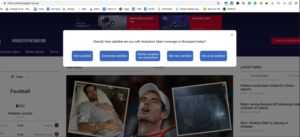
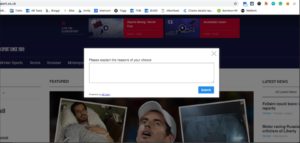
Using AB Tasty’s NPS widget, Eurosport set up a short campaign in which a survey pop-in would appear for desktop users in France, the UK, and Italy who viewed any Australian Open content. The first pop-in asked users to rank their satisfaction with the Australian Open coverage on a scale that ranged from “Very Satisfied” to “Not at all Satisfied.” After making this initial selection, a second pop-in would ask users to explain their reasoning in a write-in field.

eurosport nps 1

First survey pop-in

eurosport pop-in

Second survey pop-in

Results

At the end of the two-week experiment, roughly 5,000 written insights were collected from users—invaluable information on the strengths of Eurosport’s coverage and what could be improved (and how these sentiments varied between regions). But, two key reasons why this test succeeded was the timing and the targeting. Eurosport adapted the pop-ins to suit three different markets, which were strategically chosen for this test. They then ran the experiment during peak viewership as there was an increased likelihood of responses.

Takeaway Tip

As a pan-European company, Eurosport saw an opportunity to gain international insights on its viewership by running a survey during the Australian Open. This is one of the pillars of conversion rate optimization: sending the right message at the right time. While surveys and/or NPS pop-ins will always be valuable, maximize their potential by launching them during peak traffic times or high-profile events

Spark
your curiosity!

Get your copy of "How Eurosport’s Survey Pop-In Got 5K Responses in Less Than Two Weeks" now.

Case Studies

ŠKODA Jump-Starts Test-Drive Bookings with Countdown Banner

2x Number of booked test-drives

8 Day campaign

One of the gems of the Czech industry, ŠKODA has evolved into a modern, respected car manufacturer present in more than 100 markets worldwide. Known today for their unique and reliable designs, the ŠKODA brand started out over a hundred years ago crafting bicycles, followed by motorcycles and, ultimately, cars.

Challenge

In the automotive industry, booking a test-drive is a crucial step in the purchase funnel. Marketers spend considerable time, resources and budget converting website traffic into test-drive appointments; naturally, people who are willing to leave their personal information to physically try out a vehicle are exhibiting high buyer intent.

On a more pragmatic level, retailers also prefer potential customers to book ahead of time, instead of stopping by on the fly, so they can better manage their schedules. All around, increasing the number of online test-drive bookings generates hot leads and better pipeline visibility.

In addition to this ever-present goal, the digital marketing team at ŠKODA’s French branch had a particular challenge to address. They wanted to capitalize on a rare, time-limited promotional offer – a zero-interest loan program – to jump-start their online test-drive bookings. They just weren’t sure of the best website optimization tactic to employ.

Urgency Principle and Engagement Idea

They brought the opportunity to the attention of AB Tasty and Rosapark, their digital marketing agency. “We talked through a few options for how to make the most of this valuable offer,” explained Laura Rérolle, Partnership Success Manager at AB Tasty. “We decided on a simple countdown banner that would show how much time was left before the zero-interest loan option ended. The idea was to give the offer the air of an event, to make it prominent on the homepage and other key areas of the site. This would attract attention and draw interested viewers down the purchase funnel. Since this type of engagement technique is not frequently used in this industry, we wanted to try it out in this limited scope to test the idea.”

The team at ŠKODA then worked with Rosapark on the creative design and deployment aspects. They ran the campaign using AB Tasty for mobile and desktop viewers for the full duration of the offer (eight days), on their homepage and the product pages (those that detailed the cars for sale).

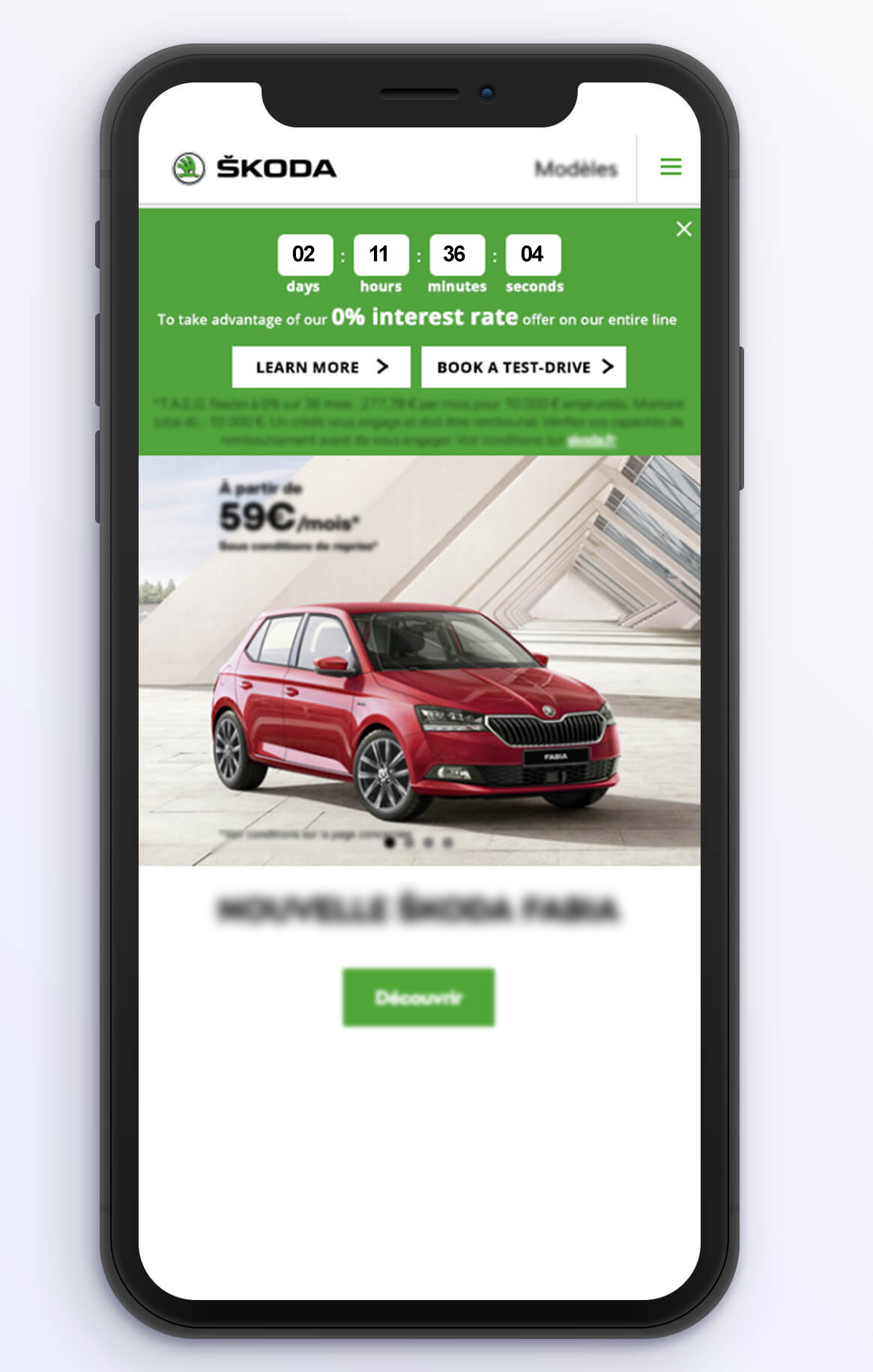
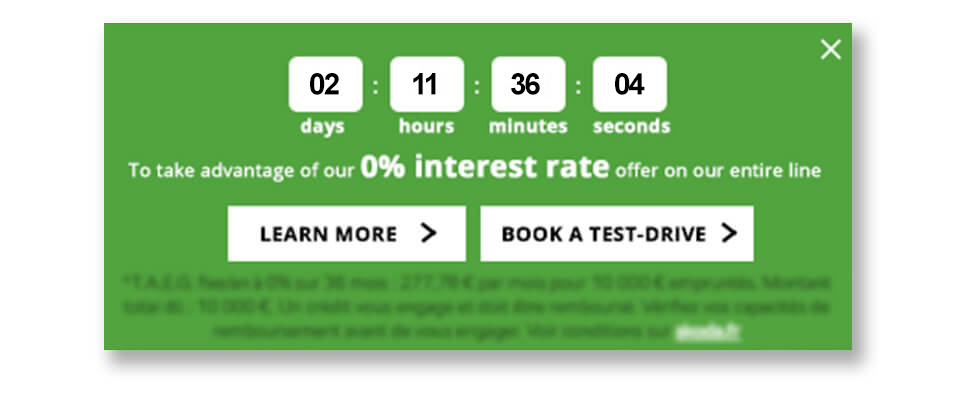
The countdown clock banner included two calls-to-action: one to ‘learn more’ about the offer, (which redirected to an explanatory landing page), and the other, ‘book a test-drive,’ to a booking page.

mock-up mobile skoda

mock-up mobile skoda
Zoom in on mobile version of countdown banner
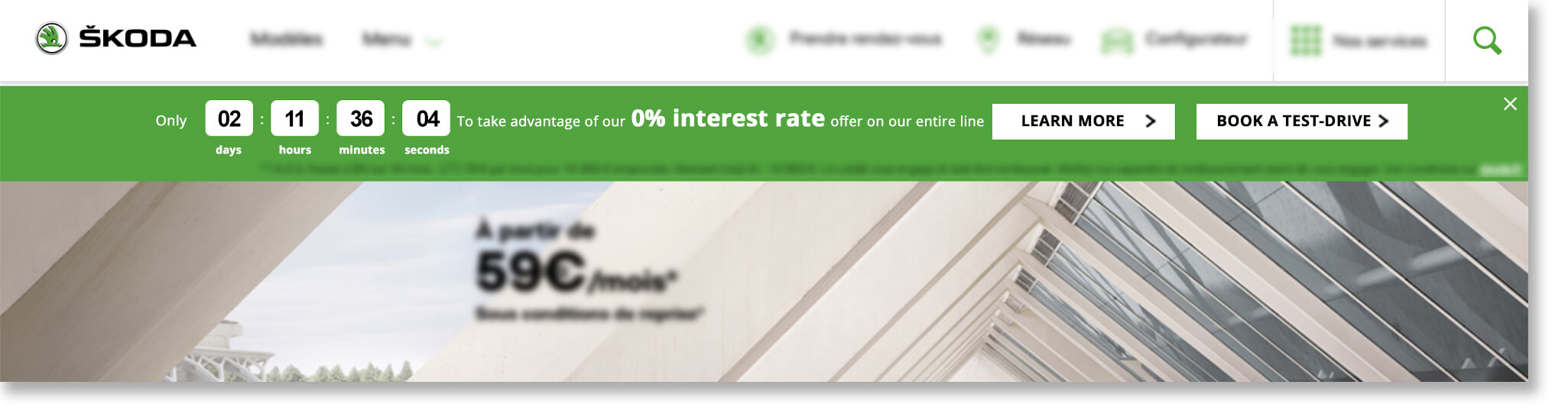
mock-up website skoda
Countdown clock on desktop

Results

There was no doubt about it – the countdown banner clearly drew positive attention, encouraging online visitors to book the coveted test-drives. “We ran this campaign with AB Tasty as part of a big media blast around this offer. We were thrilled to see that, the week of the campaign, we more than doubled the number of booked test-drives compared to the previous week. In fact, a full 13% of that week’s leads came directly from this countdown clock. This is a significant uplift in qualified leads, at very little extra effort or resources. We’re very happy with these results,” explained Sebastien Toussaint, Customer Experience & Data Performance Manager at ŠKODA, France.

“The countdown banner was very effective during this key offer. While taking care not to overuse this engagement tactic, ŠKODA could certainly employ it again during their open house events two or three times per year,” elaborated Laura.

Takeaway Tip

Engagement techniques like countdown banners, when used judiciously, can effectively nudge website visitors into converting.

Spark
your curiosity!

Get your copy of "ŠKODA Jump-Starts Test-Drive Bookings with Countdown Banner" now.

Case Studies

Kiehl’s Increases Revenue by 31% with Basket Page Optimization

+5% Basket size

+31% Total revenue

Inspired by other brands in the L’Oréal Luxe portfolio, such as Lancôme, Biotherm, Urban Decay and YSL Beauty, the digital teams at Kiehl’s started working with AB Tasty in January 2018. With the help of Léa Benquet, their dedicated Customer Success Manager, the team was even able to surpass their initial targets.

Challenge

Our e-commerce clients often have the same main KPI: maximize the total revenue generated on their website. As for Kiehl’s, they have an impressive success story to tell: the brand began selling their products in stores such as Colette (in 1997) before opening their own boutiques (almost 15 in France). Naturally, their proprietary website’s performance is particularly vital to the brand.

In order to tackle this challenge head on, the digital teams at Kiehl’s decided to concentrate on the basket page. The idea? Create a visual that would be presented to the shopper before they finalized their purchase, encouraging them to take advantage of a free gift over a certain basket amount. For the brand, the advantages are numerous: increase the average order value (interested shoppers will increase their basket size in order to receive the gift), as well as strengthen client loyalty with exclusive, branded Kiehl’s gifts!

A/B Test

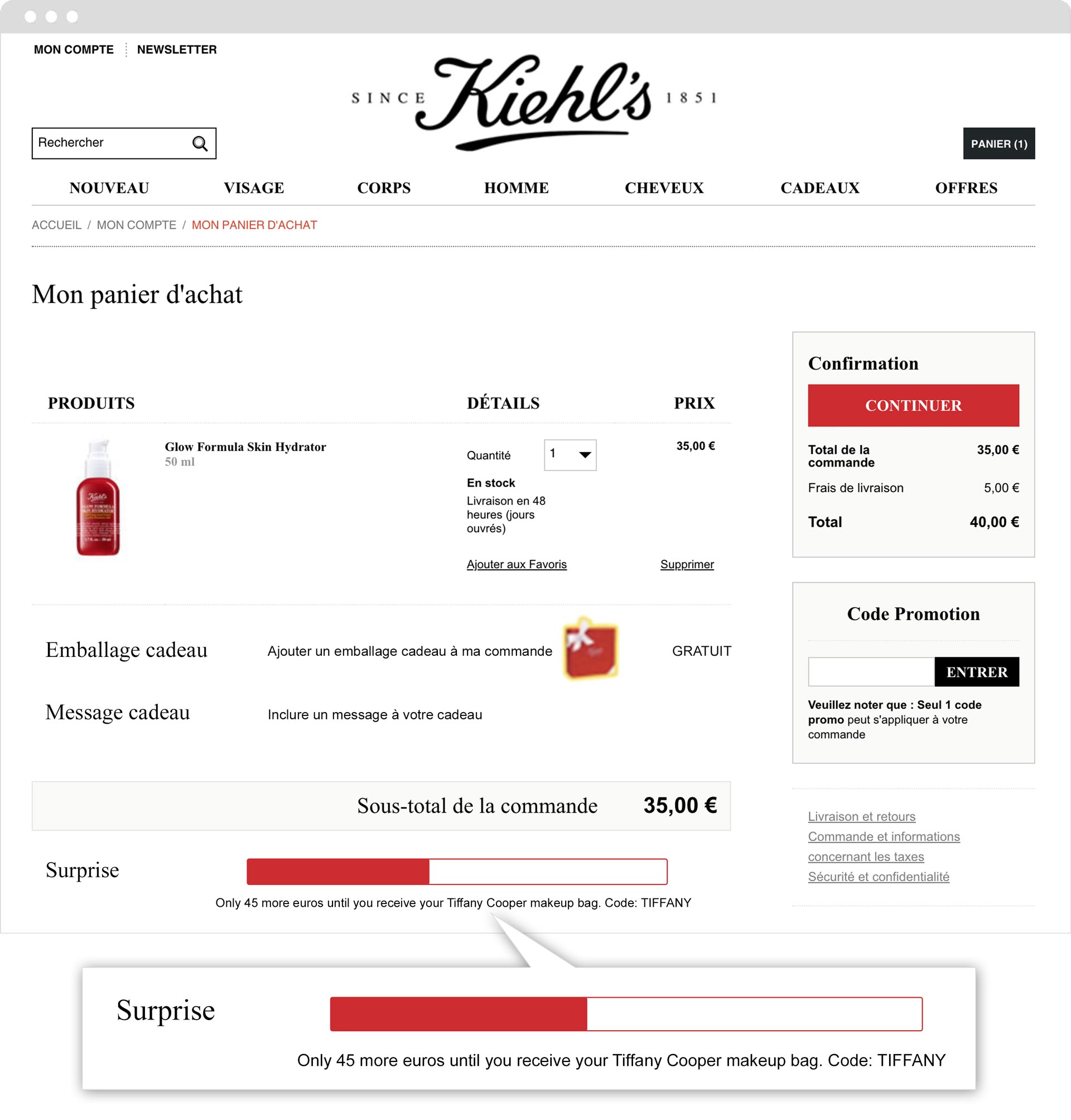
Kiehl’s decided to implement a sort of visual gauge on the basket page that indicates how much more the browser has to add to their basket in order to get the gift (in this case, a free product).

AB Tasty’s WYSIWYG editor made it easy to implement this visual barometer. In order to determine how well the test performed, different KPIs were measured, such as the click rate, access to the rest of the purchase funnel, number of transactions and the impact on the average basket size.

Kiehl's AB Tasty A/B Test“One of our e-commerce clients’ biggest expectations is to be able to increase their average basket size per visitor. With Kiehl’s, our main challenge was to find a way to optimize this KPI by combining agility, scalability and a visual effect. We consider our work here a success since this campaign’s positive performance inspired other brands in the L’Oréal group.” – Léa Benquet, Customer Success Manager at AB Tasty

Results

Kiehl’s website visitors were particularly receptive to this barometer. This very visible incentive led to 7% more clicks on the CTA ‘continue’, and importantly, it also led to an increase in the average basket size of almost 5%! We also were able to report an increase in total revenue of 31%, with 25% more additional purchases and 31% more revenue per visitor.

Takeaway Tip

The urgency principle is being used more and more frequently. However, it needs to be applied intelligently. The trick is to find the right balance between creating anxiety in the shopper, while at the same time offering them a substantive incentive (free shipping, exclusive gift, etc.). Showing how much one needs to spend before receiving a free gift isn’t enough anymore: it’s the visual aspect – the barometer – that makes the message truly impactful. The image allows one to better retain the message. A semantic incentive, coupled with a relevant visual, is the perfect combination for prompting an internet user to make a decision at this stage in the purchase funnel.

Spark
your curiosity!

Get your copy of "Kiehl’s Increases Revenue by 31% with Basket Page Optimization" now.

Case Studies

Lancôme Increases Revenue by 15% With Login Page Optimization

+30% Clicks on 'create account'

+17% Transactions

Part of the L’Oréal Luxe brand portfolio, Lancôme was founded in 1935 by Frenchman Armand Petitjean. Today, the brand is known the world over for their luxurious skincare, cosmetics and fragrance products.

Challenge

When consulting their data, Lancôme’s digital team noticed an unusually high bounce rate on their login page. This lead Lancôme’s team, along with AB Tasty, to analyze the page’s structure and the behavior of its visitors. Together, they were able to identify a potential point of friction, related to the fact that there were numerous ways for a visitor to sign in. Indeed, someone who wished to purchase a product could log in as a client or guest, or they could create a new account – all potential exit points for visitors to leave the page.

A/B Test

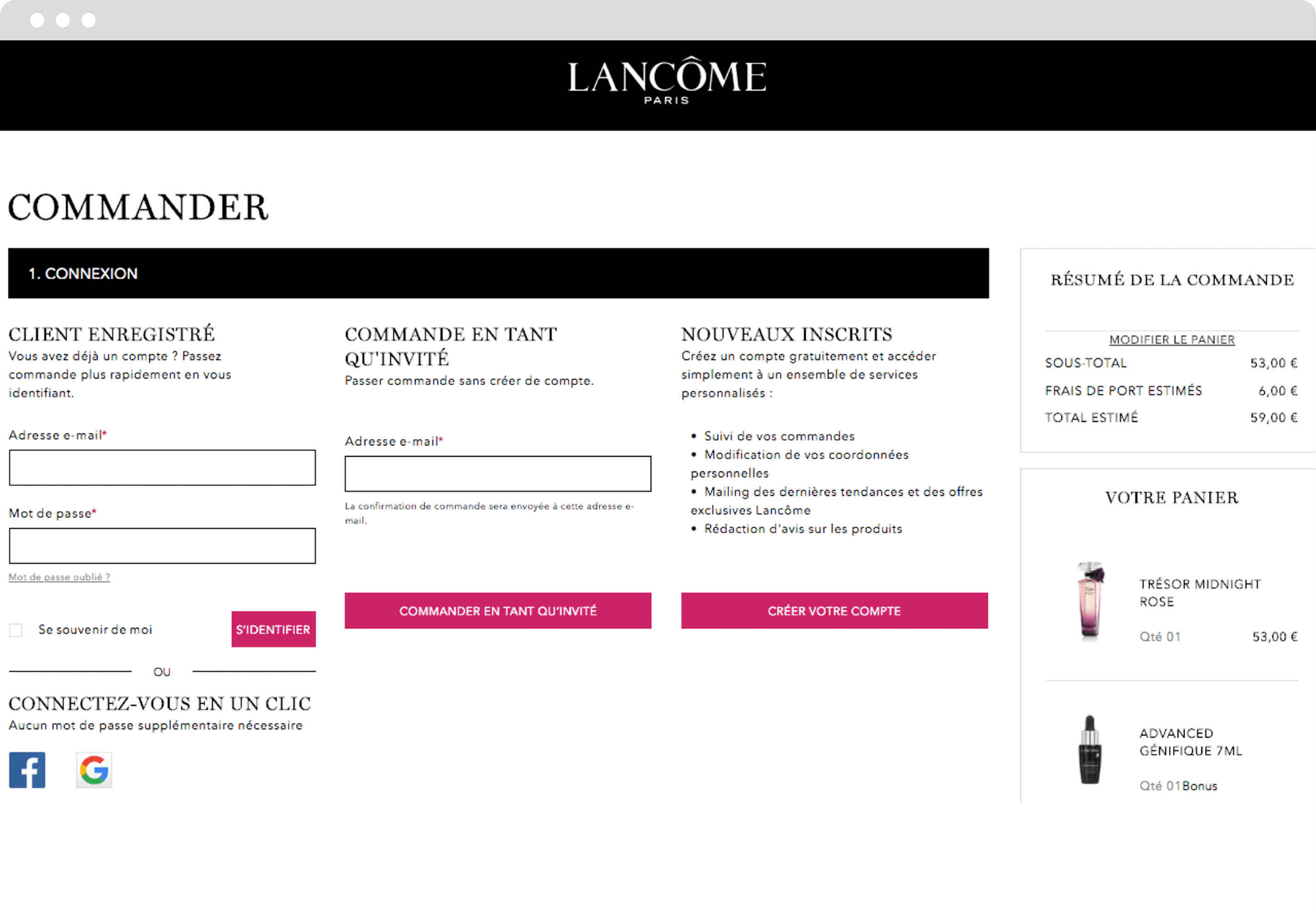
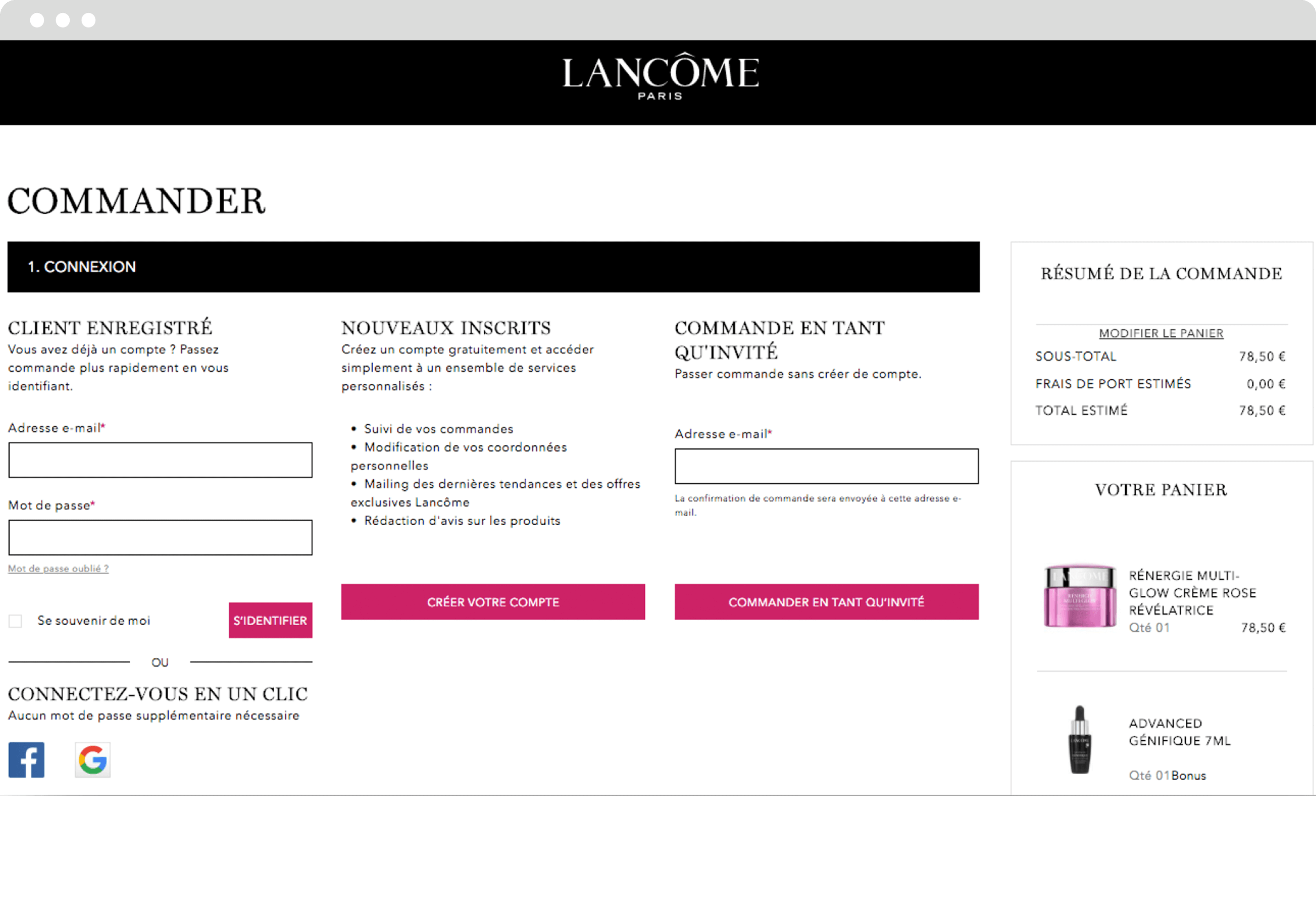
Working with Léa Benquet, their dedicated Customer Success Manager at AB Tasty, Lancôme decided to try a simple design change. Up until then, on their login page, they had (from left to right) presented the different sign-in options as listed above. However, they decided to test moving the ‘create a new account’ option to the center of the page, therefore shifting ‘sign in as a guest’ to the right. ‘Log in as a client’ would remain on the left. They wanted to test if this would be a more logical organization for visitors, therefore encouraging transactions, account sign-ups, and perhaps even overall revenue.

The test was easy and quick to set up with the AB Tasty WYSIWYG editor. In thirty minutes it was up and running, with no help from the IT team needed. All that was left to do was let the test run for a few weeks, and analyze the results.

lancomeorginal

Lancome variation

Results

Perhaps unsurprisingly, moving the ‘create a new account’ block to the center of the page increased clicks to this CTA by 30%. What was more exciting, and more unexpected, was that transactions increased by 17%, with an associated bump in revenue of 15%.

Takeaway Tip

The login page is one of the most important pages to optimize on your site. In the physical world, shoppers don’t have to worry about logging in or creating an account to make a purchase. But in a digital context, this extra step is often the source of significant friction, and even of drop off and cart abandonment. Designing a user experience on this page that is logical and intuitive for your audience can have a real impact on sales, as the above case study shows.

Spark
your curiosity!

Get your copy of "Lancôme Increases Revenue by 15% With Login Page Optimization" now.

Case Studies

Yves Saint Laurent Beauty Increases Online Transactions by +10%

+9% Access to basket page

+13% Access to checkout page

Part of the L’Oréal Luxe brand portfolio, Yves Saint Laurent Beauty is known around the world for their luxurious skincare, makeup and fragrance products for men and women.

Challenge

As with the other brands in the L’Oréal Luxe portfolio, YSL Beauty products are sold in both online third party boutiques, as well as on their own proprietary website. For this reason, optimizing every aspect of the homepage and checkout funnel is key to making sure consumers purchase on the actual YSL Beauty site.

One of the crucial questions that needed answering was, what is the best order of the menu bar tabs? As a high end fashion house, YSL Beauty has plenty of news and products to showcase – but they still didn’t know what to emphasize on the homepage menu bar to maximize transactions.

A/B Test Idea

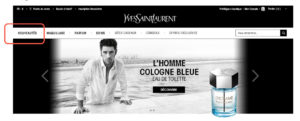
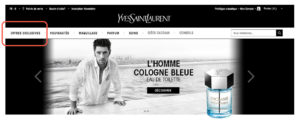
AB Tasty’s consulting team proposed a simple A/B test – switch the positions of the ‘New Products’ and ‘Exclusive Offers’ tabs to see if this would impact sales. By putting the ‘Exclusive Offers’ tab first – which takes browsers to current offers and gifts with purchase – instead of the ‘New Products’ tab, they aimed to test the appetite of website visitors for special and exclusive offers over new releases.

The test was easy to configure – with the WYSIWYG editor, the new version of the homepage and the parameters of the test were up and running in 30 minutes.

originalYSL
Original


variationYSL
Variation

Results

After letting the test run for a month on over 150k visitors, the results were conclusive: emphasizing the ‘Exclusive Offers’ tab had a visible effect on sales. Not only did access to the basket page shoot up by 9%, and to the checkout page by 13%, but overall transactions enjoyed a 10% increase. The team wasted no time pushing 100% of the test’s traffic to the winning variation and hardcoding these changes into their website.

Takeaway Tip

For high-end brands like YSL Beauty, accenting exclusive offers, over and above new products, proved to be especially effective. This is probably because shoppers of luxury brands are particularly susceptible to messaging about rarity and exclusive treatment. These consumers are likely to appreciate a product that’s shown to be exclusive and generous offers (reminding them of the ‘high end’ nature of the brand).

Spark
your curiosity!

Get your copy of "Yves Saint Laurent Beauty Increases Online Transactions by +10%" now.