

Building personalization strategies can feel complex at first. Let’s clear things up.
Your website visitors aren’t just traffic. They’re people—with preferences, habits, and expectations. And right now, they’re deciding whether your experience feels relevant enough to stick around.
That’s where personalization comes in.
At its core, personalization means tailoring every step of the customer journey—what people see, when they see it, and why it matters to them. Think targeted landing pages, product recommendations that actually resonate, messages that feel like they were written for one person, not a million.
And it’s no longer a nice-to-have, because 71% of consumers expect personalized interactions, and 76% say they get frustrated when they don’t get them.
Today’s shoppers don’t just want to be seen. They want to feel understood. When a brand gets that right, it builds trust, drives conversions, and keeps people coming back.
So how do you get there? It starts with knowing your customers—and using that knowledge wisely.
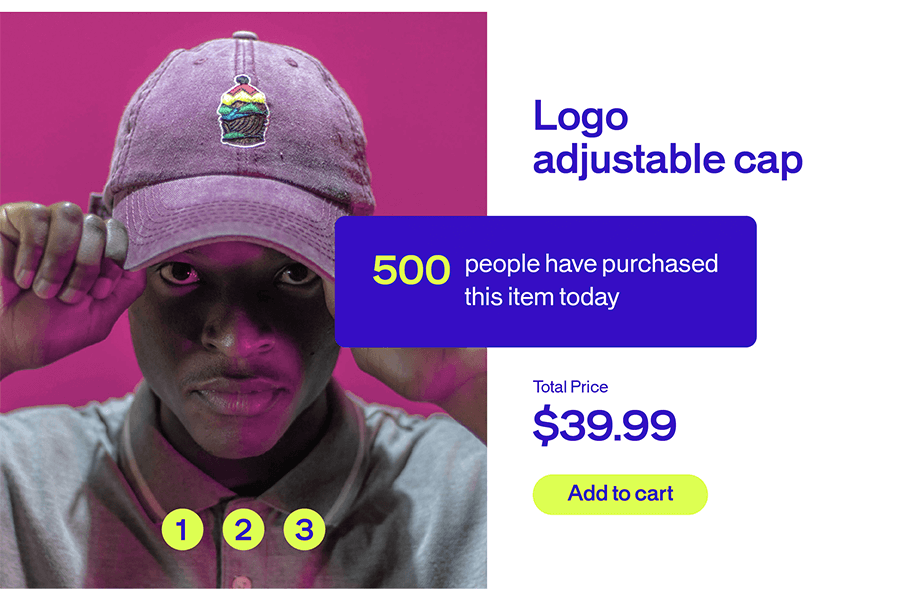
Why Is It Important for E-commerce Brands to Personalize User Experiences?
Many brands think they’ve got personalization covered. A first-name in an email here, a “you might also like” section there. But there’s a real difference between adding a few personal touches and truly knowing what your customers want and expect from you.
The brands that get it right never stop evolving. The more they learn about their customers, the better the experience gets. And the better the experience, the more loyal the customer becomes.
Here’s the thing: personalization isn’t a feature. It’s a mindset.
- Your customers already expect it. Your customers aren’t comparing you to your direct competitors anymore. They’re comparing you to every great digital experience they’ve ever had. Meet the expectation or risk losing them to someone who will.
- It turns browsers into buyers. When you show the right product, to the right person, at the right moment conversion follows naturally. The more relevant the experience, the more likely the click, the add-to-cart, and the purchase. In fact, faster-growing companies derive 40% more revenue from personalization than their slower-growing peers.
- It builds the kind of loyalty that lasts. When a customer feels understood, and your site greets them warmly, remembers their preferences, and surprises them with a birthday voucher—they don’t just buy again. They stay. And the loop keeps going: more interactions mean more data, more data means better experiences, better experiences mean deeper loyalty.
What does that look like in practice?
- Product recommendations curated from browsing and purchase history
- Welcome messages that adapt for new vs. returning visitors
- Modal pop-ups and how-to guides for first-time visitors who need a nudge
- Personalized emails and vouchers triggered by birthdays or milestones
- Tailored landing pages that reflect where a customer is in their journey
Small touches. Big impact.
A/B Testing vs. Personalization: What’s the Difference and Why Does It Matter?
| A/B Testing | Personalization | |
| Core Purpose | Evaluates multiple variations of an experience to discover the overall winning option | Customizes the user journey according to unique visitor tastes and behaviors |
| Target Audience | Focuses on general trends that appeal to the largest segment of your audience | Provides extremely targeted and relevant interactions for specific individuals rather than the broad majority |
| Execution Timeline | Tests are conducted one after another (sequentially) | Tests are run simultaneously (in parallel) |
| Technical Requirements | Depends heavily on developer and engineering support | Requires very little technical or engineering involvement |
Let’s start with what A/B testing does well—because it does a lot.
You pick an element, create two versions, split your traffic, and let the data decide. It’s structured, scientific, and genuinely useful for understanding what moves the needle. Want to know if a red CTA button outperforms a green one? Run a test. Want to validate a new homepage layout? Run a test. A/B testing is one of the most reliable tools in any optimization toolkit.
But here’s where it hits a wall.
A/B testing optimizes for the average.
It finds the version that works best for the majority, then rolls it out to everyone. Sounds logical, right?
Until you remember that “everyone” is never actually one person.
Your audience is a mix — first-time visitors and loyal regulars, bargain hunters and premium buyers, mobile browsers and desktop shoppers. A single winning variation can’t speak to all of them equally.
Take a retailer testing their homepage banner. Their audience skews 70% female. The women’s-focused banner wins — so it gets deployed to 100% of visitors, including the 30% of men for whom it’s completely irrelevant.
The test worked. The experience didn’t.
There’s also a velocity problem. You can only run one A/B test at a time on a given element without risking interference. And the more tests you run, the smaller the gains become. At some point, you’ve squeezed everything you can out of the average — and the ceiling is right there.
That’s exactly where personalization picks up.
A/B testing asks: “What works best for most people?”
Personalization asks: “What works best for this person, right now?”
It’s not about replacing testing. It’s about going further with what testing teaches you.
Here’s the key distinction:
- A/B testing is about structure. It changes what your site looks like.
- Personalization is about relevance. It changes who sees what — and when.
With personalization, there’s no single winner for everyone. Instead, you’re running multiple targeted experiences in parallel — each one tailored to a specific segment, each one shaped by real behavioral data.
A returning customer who always shops the sale section sees something different from a first-time visitor who just landed from a paid ad. Both experiences are optimized. Neither is generic.
And unlike A/B tests, personalization campaigns don’t interfere with each other — because they’re additive, not competitive. You’re not splitting your audience to find a winner. You’re giving each part of your audience exactly
When you bring them together, the real magic happens.
Think of it as a two-step process:
- A/B testing tells you what works.
- Personalization makes sure it works for everyone — not just the majority.
You test to find the best message, the best layout, the best creative. Then you personalize to deliver the right version, to the right person, at exactly the right moment.
Add AI into the mix, and the loop becomes self-reinforcing. Machine learning analyzes how every variation performs across every segment in real time — automatically serving the most relevant experience to each visitor, continuously improving without any manual intervention.
The result? Less guesswork. More relevance. And experiences that feel less like a website — and more like a conversation.
How Does A/B Testing Validate Your Personalization Strategy?
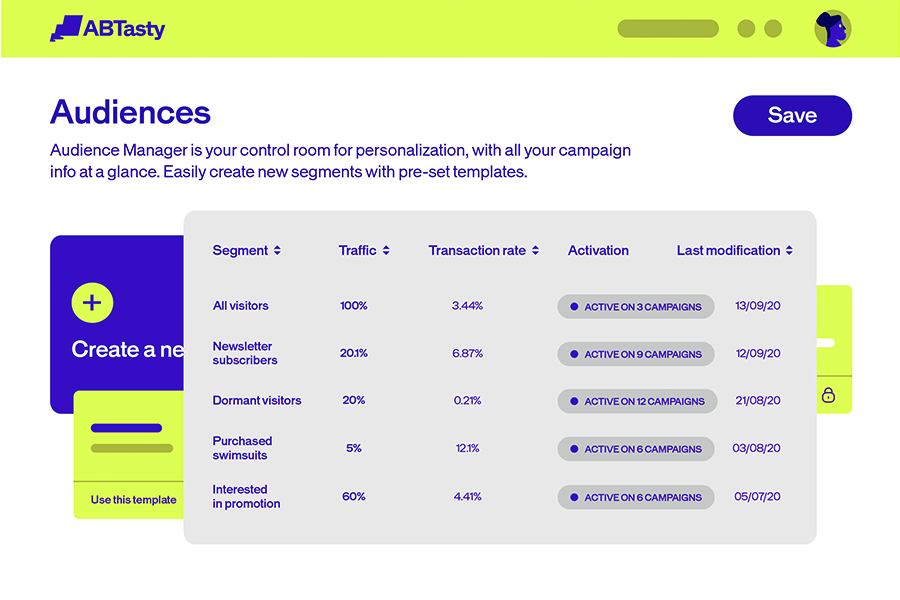
Once you’ve committed to running a personalization campaign and set your goals, you must know how to measure if it’s working or not. Here are a few guidelines to consider:
Test, test, and test again
You may already use web experimentation tools to optimize your website or your landing pages, but you can go even further and run A/B tests to identify which personalized version of your website works best for a given segment.
Every test will reveal the most effective element to deploy so you can keep improving your site accordingly.
Ensure data reliability for your A/B testing solution
Conduct at least one A/A test to ensure traffic really is randomly assigned to different versions. If there is a dramatic skew between versions, something has gone wrong and will throw off your results.
Test one variable at a time
This is the golden rule of A/B testing! To isolate the impact of a certain variable, you’ll need to make sure this is the only one that changes between different tests.
Conduct one test at a time
When running several tests simultaneously, it can be hard to interpret the results and hone in on which elements have had the biggest impact. Focus on a single test before moving on to the next to ensure you’re measuring the impact of each modification correctly.
Adapt the number of variations to traffic volume
Bear in mind that the greater number of variations you test, the more traffic you’ll need. If you are unable to generate a large enough volume of traffic to test your assumptions, you should test the variation you believe will have the biggest impact first and slowly add variations over time.
Be aware of sample ratio mismatch while A/B testing →
Wait for statistical reliability before making definitive changes
Wait until the test attains statistical reliability of at least 95% before you hardcode any changes to your site. You don’t want to jump the gun and implement a modification that doesn’t really improve your existing website.
Measure multiple key performance indicators (KPIs)
Always set a primary objective and secondary objectives to measure your results. This can include your add-to-cart rate, the average cart value, click rates, etc.
Take note of marketing actions during a test
Keep in mind that large-scale marketing campaigns and other external variables can throw off your results. Make sure that you align with your marketing team and are fully aware of which campaigns are running in the background before interpreting the test results.
How Can Brands Scale Personalization?
Knowing personalization matters is one thing. Building it at scale is another.
The good news? You don’t have to figure it all out at once. Scaling personalization is a journey—and it starts with getting the right foundations in place.
McKinsey frames it around five key pillars: data, decisioning, design, distribution, and measurement. Together, they form the backbone of any personalization program that actually works at scale.
Here’s what that looks like in practice.
Start with your data.
You can’t personalize what you don’t understand. Scaling personalization starts with building a clear, centralized view of your customer — one that brings together browsing behavior, purchase history, real-time signals, and more.
The goal isn’t to collect everything. It’s to collect the right things, and make them accessible across every channel, in real time.
Make smarter decisions, faster.
Data alone doesn’t personalize anything. You need to act on it — quickly, and at scale.
That means using analytics and AI to:
- Spot behavioral patterns
- Group customers into meaningful segments
- Automatically serve the most relevant experience to each one
The brands winning at personalization aren’t making these calls manually. They’ve built systems that do it for them.
Choose the right technical approach.
You can’t personalize what you don’t understand. Scaling personalization starts with building a clear, centralized view of your customer — one that brings together browsing behavior, purchase history, real-time signals, and more.
The goal isn’t to collect everything. It’s to collect the right things, and make them accessible across every channel, in real time.
Choose the right technical approach.
Client-side personalization
Runs in the browser- Best for speed, quick iterations, and front-end changes.
- Lower lift and more marketing-friendly for day-to-day updates.
- Great for UI messaging, banners, modules, and rapid experimentation.
Server-side personalization
Runs in the backend- Best for complex logic, deep integrations, and advanced segmentation.
- Higher lift and typically requires developer support.
- Ideal for inventory-aware experiences, authenticated journeys, and rule-heavy use cases.
The smartest approach? Use both. Client-side for speed and agility. Server-side for depth and complexity. Together, they give you the full range of possibilities.
Still unsure? A/B testing guide to choose server vs client-side →
Design experiences worth personalizing.
Personalization at scale only works if the experiences themselves are worth tailoring. That means investing in content, creative, and messaging that can flex — adapting tone, imagery, and copy to different audiences without losing brand consistency.
GenAI is making this faster and more scalable than ever.
Measure what actually matters.
Personalization isn’t a set-it-and-forget-it strategy. The brands that scale it successfully keep testing, learning, and iterating.
Track both:
- Upstream signals — clicks, opens, engagement
- Downstream outcomes — conversions, revenue, retention
Let the data tell you what’s working — and what to try next.Factbox:
What Is the Future in Personalization Strategy? : Adaptive CX
Scaling personalization is one thing. Making it feel effortless, for your team and your customers, is another.
That’s where Adaptive CX comes in.
Traditional personalization works in snapshots. You define a segment, build an experience, deploy it. Effective? Yes. But also static. The experience you designed last week might not reflect what your customer needs right now, in this session, at this exact moment.
Adaptive CX changes that.
Instead of reacting to who someone was, it responds to who they are right now. Every click, scroll, hesitation, and tab switch sends a signal. Adaptive CX reads those signals in real time, predicts intent, and serves the most relevant experience automatically, within a single session.
Here’s how it works:
- Signal — Capture live behavioral cues: scrolling patterns, hesitation, product interactions, exit intent
- Predict — AI interprets those signals to understand what the visitor needs next
- Activate — The right experience is served instantly, no manual rules, no waiting
Think of it like a great in-store associate. They don’t wait for you to ask for help. They read the room, anticipate what you need, and show up at exactly the right moment without being intrusive. That’s what Adaptive CX does, at scale, for every visitor on your site.
Why it matters for e-commerce:
- Works for anonymous visitors too, no login or purchase history needed
- Eliminates dead ends by surfacing alternatives when someone gets stuck
- Creates that “this brand gets me” feeling, the kind that turns first-time visitors into loyal customers
- Early results show conversion lifts of around +10%, with faster onboarding than traditional setups
And unlike rule-based personalization, your team doesn’t need to anticipate every scenario in advance. The system learns, adapts, and improves continuously.
Adaptive CX isn’t a replacement for your personalization strategy. It’s what happens when that strategy grows up.
Less manual effort. More relevance. Experiences that feel less like a website and more like a conversation.
Ready to personalize smarter? See all our personalization tools →
What Do Customers Actually Value in Personalized Marketing?
We know customers want personalization. But what does that really mean to them?
It’s easy to assume it’s about discounts, or seeing their name in a subject line. But the reality goes deeper than that. When customers talk about personalization, they’re talking about something more fundamental: they want to feel like you know them. Not as a data point—as a person.
Here’s what actually moves the needle.
Feeling seen—not just targeted.
There’s a big difference between a brand that collects data and one that uses it thoughtfully. Customers can tell.
When a brand understands the person behind the click — not just their buyer persona — and remembers preferences, anticipates needs, and communicates in a genuinely relevant way, it sends a clear signal: we’re invested in the relationship, not just the transaction.
That feeling of being understood is what turns a one-time buyer into a loyal customer.
Recommendations that open new doors.
Customers don’t just want to be reminded of what they already saw. They want to discover what they wouldn’t have found on their own.
The best recommendations don’t just echo browsing history — they extend it:
- the right product
- at the right moment
- in a way that feels intuitive, not intrusive
That’s the difference between a recommendation engine and a genuinely helpful experience.
Timing that feels like good instinct.
Relevance isn’t only about what you say — it’s also about when you say it.
A few examples:
- A post-purchase check-in
- A how-to guide right after a first order
- A replenishment reminder before someone realizes they’re running low
These moments don’t feel like marketing. They feel like service. And that’s the point.
Less effort, more enjoyment.
People value personalization because it makes life easier.
When your site already knows their size, preferred brands, and past orders, customers spend less time searching and more time finding. That reduction in friction is a form of respect. It says: we value your time. And customers notice.
Consistency across every touchpoint.
A personalized email that leads to a generic homepage is a broken promise.
Customers expect the experience to feel coherent—whether they’re on mobile, clicking from an email, or returning to their cart on desktop. Personalization that only lives in one channel isn’t really personalization. It’s a missed opportunity.
The bottom line? Customers don’t value personalization just for the perks. They value it because it changes how a brand feels.
Done right, it’s the difference between a transaction and a relationship — and that’s what keeps people coming back.
What Does E-Commerce Personalization Do for Business?
You’ve heard the case for personalization. Now let’s talk about what it actually moves—in your numbers, your customer relationships, and your competitive position.
Because here’s the truth: personalization isn’t just a better experience. It’s a better business.
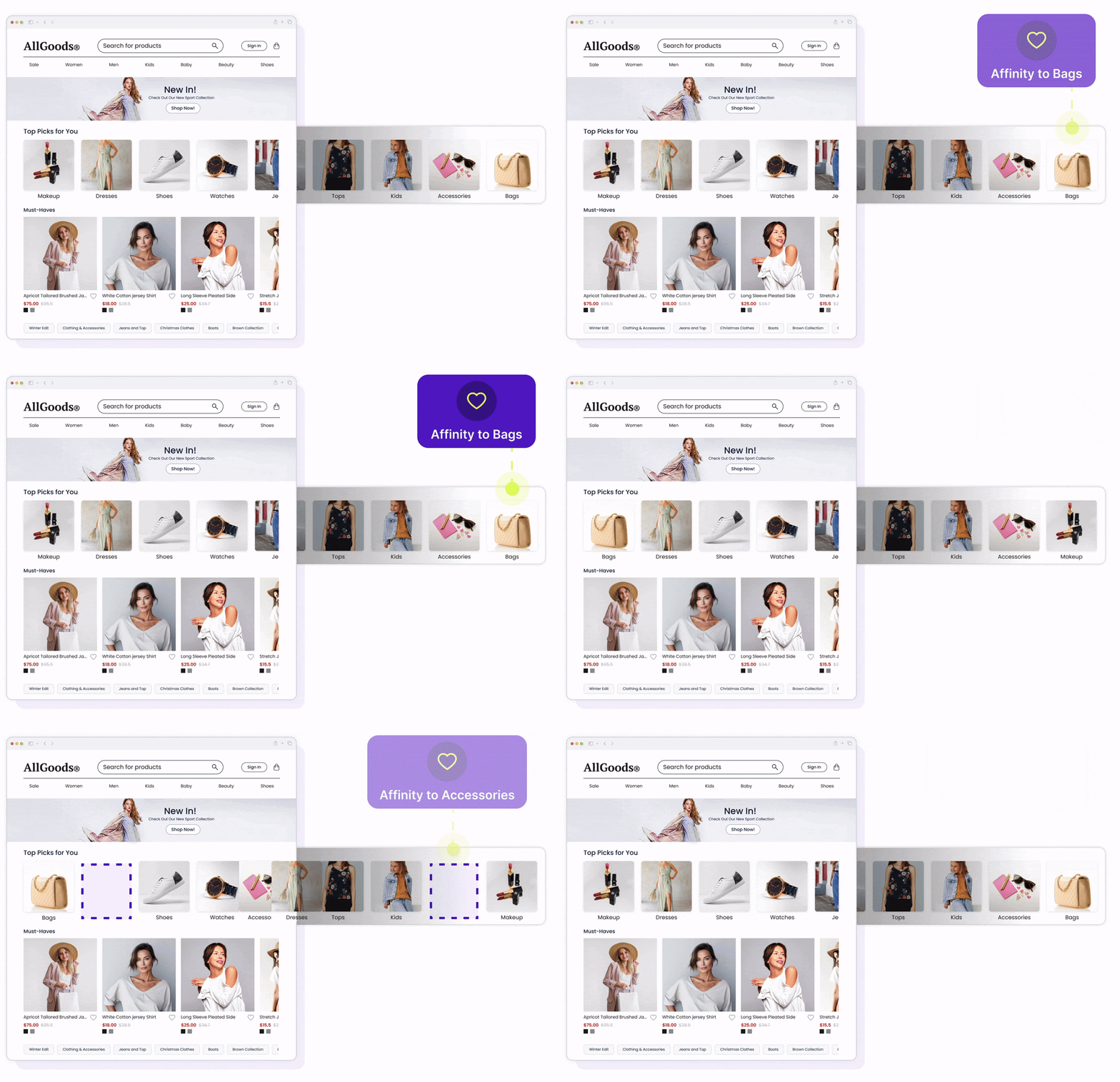
1. It makes every visit more valuable.
When a site feels relevant right away, customers don’t just browse, they engage. They do it by:
- exploring more pages
- spending more on-page time
- discovering products they wouldn’t have found otherwise
Think of Spotify’s Discover Weekly, it surfaces artists you didn’t know you needed. The same idea applies to e-commerce. The more your site reflects what a customer cares about, the more they’ll want to explore it.
More time on site means more chances to convert — and more chances to build a relationship that lasts beyond a single session.
2. It turns one-time buyers into repeat customers
Acquisition is expensive. Retention is where the real value lives.
Personalization is one of the strongest drivers of repeat visits because it makes customers feel like your brand was built for them. 60% of consumers say they’re likely to become repeat buyers after a personalized shopping experience.
And loyal customers don’t just buy more — they spend more, refer friends, and forgive the occasional misstep. That’s the compounding value of getting personalization right.
3. It drives revenue at every stage of the funnel
Personalization doesn’t only help at the point of purchase. It supports the entire journey — from first visit to post-purchase follow-up.
A few benchmarks:
- Personalized CTAs convert 202% more than generic ones
- Targeted product recommendations can increase AOV by 10–15%
- Leaders in personalization generate 40% more revenue than slower-moving peers
These aren’t marginal gains. They’re the kind of improvements that compound over time.
4. It sharpens your understanding of who your customers really are
Every personalized interaction is also a learning moment.
The more you tailor experiences, the more signal you collect — what resonates, what doesn’t, and what customers are actually looking for. Over time, you move from broad assumptions to real behavioral insight.
That insight feeds back into better personalization, better products, and better decisions across the board.
5. It gives your brand an edge that’s hard to copy
Prices can be matched. Promotions can be replicated.
But a brand that genuinely knows its customers — anticipates needs, speaks their language, and shows up at the right moment — is much harder to compete with. 91% of consumers say they’re more likely to engage with brands that recognize them and offer relevant recommendations.
That’s not just a conversion metric. That’s a moat.
What Does a Well-Executed Personalization Strategy Look Like?
A few businesses have really nailed personalization:
Grammarly
Helps users improve—not just correct mistakes—by sending weekly progress reports that show progress over time and clear areas to work on next.
Whole Foods
Makes repeat shopping easier by remembering past purchases for quick reorders, and sends personalized offers when customers are near a store.
Nike
Removes in-store friction through loyalty: members can scan items to check availability in their size and preferred colors.
Privacy, data, and personalization
Collecting data is a sore spot for many consumers who worry that businesses will bombard them with unwanted communication or sell their data to third parties. However, this doesn’t mean that many customers can’t be swayed to hand over their information in exchange for something the company can offer.
According to research from Merkle, 71% of users are willing to share personal information with brands if it means that they get a personalized experience. While collecting user data, keep in mind that there is a fine balance between personalization and invasion of privacy.
Why Is Data Collection Important for Fueling Personalization?
Your customer data tells a story. Who your customers are, what they want, and what they’re likely to do next. Use it well, and you can meet their needs at exactly the right moment—before they even have to ask.
Responsible data collection
Data should be gathered ethically, in line with GDPR, CCPA, and other regulations. You’ll want a healthy mix of data types—behavioral, geographic, demographic, and psychographic—alongside a solid understanding of your traffic and granular customer insights.
A customer data platform (CDP) can help you pull it all together, stitching different data sources into a clear picture of your most valuable segments.
Balance personalization with data privacy
Once you have the data, the real challenge is knowing how far to go.
Think of it this way: if a friend recommends a pair of sneakers, it feels thoughtful. If a stranger does the same thing on the street, it feels strange. The same logic applies to personalization.
Check out our guide on successfully using data for 1:1 personalization →
Conclusion
The gap between brands people tolerate and brands people love comes down to how well you understand the person on the other side of the screen.
Personalization is how you close that gap. But it’s not a one-time project — it’s an ongoing commitment to knowing your customers better, and showing up for them in ways that actually matter.
That means building the right foundations: clean data, smart segmentation, and experiences designed to flex. It means using A/B testing to validate what works, and personalization to make sure it works for everyone, and at the same time embracing tools like Adaptive CX — so your site isn’t just reacting to who your customers were, but responding to who they are, right now, in real time.
The brands getting this right aren’t waiting for the perfect strategy. They’re iterating toward it — one test, one insight, one session at a time. That’s the mindset.
Ready to go further? Let’s build better experiences together →
FAQs
Still have questions about personalization? Here are the answers you need.
What is a personalization strategy?
A personalization strategy is a plan for tailoring customer experiences based on individual needs and preferences. It helps you identify distinct visitor segments so you can deliver the right experience to the right person, every time.
What is the purpose of e-commerce personalization?
E-commerce personalization helps you understand what your customers want — and act on it. It builds loyalty, increases engagement, drives relevant product recommendations, grows cart size, and keeps people on your site longer.
What’s the difference between personalization and customization?
Personalization is brand-driven: you use customer data to tailor the experience automatically. Customization is customer-driven: the user manually adjusts a product or service to fit their own preferences. Both matter, but they work differently.
What’s the difference between personalization and segmentation?
Segmentation is the foundation; personalization is what you build on top of it. Segmentation means dividing your audience into groups based on shared characteristics. Personalization uses those groups — and individual signals — to deliver experiences tailored to each visitor’s unique needs.
What are user personas and why do they matter?
User personas are archetypal profiles built from real customer data. They represent the key characteristics, behaviors, and needs of your main audience groups. They help your team make smarter decisions about what experiences to build and for whom.
How can I improve my personalization strategy?
Start by defining your goals and mapping out your key customer segments. Then use A/B testing to validate your hypotheses and refine your approach over time. No-code tools make it easy to launch experiments quickly, without waiting on developers.
How do I measure the results of my personalization strategy?
Always compare your personalized experience against the original. Running your personalization campaign in parallel with the default version of your site — through A/B testing — lets you measure the real impact of every change you make.
What are the best personalization tools?
The right tools depend on your goals. AB Tasty gives you everything you need to build end-to-end personalized experiences across your digital channels — and test them continuously for improvement.