
You might also like...
Article
10min read


Article
7min read
 abtasty
Personalization is the practice of tailoring experiences, content, and messages to individual customers based on their unique behaviors, preferences, and characteristics.
Think of it as creating a one-to-one conversation at scale. You’re using data—browsing history, past purchases, location, demographics—to deliver the most relevant “next best experience” for each person who interacts with your brand.
This isn’t just about adding someone’s first name to an email (though that’s a start). Real personalization means:
Customers will feel understood, and when people feel understood, they engage, convert, and stick around.
Learn more about what personalization means in digital marketing →
Here’s where things get interesting. Personalization and customization sound similar, but they’re fundamentally different—and understanding that difference matters.
Your brand uses data and algorithms to modify the experience without the customer lifting a finger. A streaming service recommending shows based on viewing history? That’s personalization, the brand does the work.
The customer actively makes choices to tailor their own experience. Designing your own sneakers online or rearranging your dashboard layout? That’s customization. The user is in control.
The key difference: Who initiates the action. On the one hand, personalization is implicit and brand-driven, while on the other hand, customization is explicit and user-driven.
Both approaches enhance the customer experience, and the best strategies often combine them. Treat them as two sides of the same coin, and give customers control when it matters, and anticipate their needs when you can.
Personalization has become a critical driver of customer behavior and business performance. Research from Epsilon shows that 80% of consumers are more likely to make a purchase when brands offer personalized experiences. When you deliver relevance, you build trust—and when you miss the mark with generic messaging, you lose attention fast.
The revenue impact is equally compelling. Here’s what the data shows:
Personalization doesn’t just boost immediate conversions—it builds lasting relationships:
Customer expectations have fundamentally shifted:
Personalization isn’t one-size-fits-all (ironic, right?). There are multiple approaches, each with its own strengths.
Divide customers into groups based on shared characteristics—demographics, interests, purchase history—then tailor messages for each segment. It’s a solid starting point that balances scale with relevance.
Automatically trigger messages or content based on specific customer actions. Think abandoned cart emails, price drop alerts, or welcome messages after sign-up. The timing makes all the difference.
Respond to customer behavior as it happens. Someone spending time on a product page? Trigger a chat offer or show related items. Real-time personalization creates momentum and captures intent.
Create seamless, consistent experiences across all touchpoints—website, email, mobile app, in-store. Your customers don’t think in channels, so your personalization shouldn’t either.
Explicit personalization uses data customers directly provide—preferences they select, surveys they complete, profiles they build.
Implicit personalization observes behavior—browsing patterns, search queries, time spent on pages—to infer preferences without asking.
Continuously adjusts experiences based on ongoing interactions and learning. The more someone engages, the smarter the system gets.
The holy grail: tailoring every interaction to the individual. It’s resource-intensive but powerful when executed well. One-to-one personalization involves customizing messages, offers, and experiences for each website visitor based on collected data.
Check out these examples we gathered for you →
AI personalization is transforming what’s possible. By leveraging machine learning, natural language processing, and predictive analytics, AI can:
AI doesn’t just make personalization more efficient—it makes it smarter, faster, and more human. Modern AI-powered personalization goes beyond traditional methods to understand not just what customers do, but why they do it—including the emotional drivers behind their decisions.
Let’s talk about what personalization actually delivers for your business:
Tailored content captures attention. When messages resonate, people pay attention, click through, and interact with your brand.
Relevant recommendations and targeted offers significantly boost the likelihood of purchase. Personalized calls to action outperform generic ones every time.
Customers stick with brands that understand them. Personalization builds emotional connections that reduce churn and increase lifetime value.
Meeting expectations leads to satisfaction. Exceeding them with personalized experiences? That creates advocates.
Implementing personalization means collecting and analyzing customer data systematically. Those insights help you refine strategies, identify trends, and make smarter decisions.
Targeted campaigns mean efficient spending. You’re reaching the right audience with messages that matter, maximizing impact per dollar spent.
Stand out by showing customers you care enough to personalize their experience. In a sea of generic marketing, relevance wins.
Brands that deliver meaningful, personalized experiences are viewed more favorably. Personalization signals that you value your customers as individuals, not just numbers.
See these 5 examples of personalization →
Personalization isn’t theoretical—it’s practical. Here’s how brands leverage it across the customer journey:
Curate product recommendations based on browsing behavior to guide discovery and increase average order value. When recommendations feel spot-on, they drive purchases.
Reach people who showed interest but didn’t convert. Personalized retargeting reminds them why they were interested and gives them a reason to come back.
See all these behavior-driven use cases →
Send personalized vouchers and emails for special occasions like customer birthdays. Drip campaigns tailored to where someone is in the buyer’s journey nurture relationships over time.
Change headlines, images, offers, and calls to action based on who’s visiting. First-time visitors see different content than returning customers.
Trigger proactive support or offers based on behavior. Someone lingering on a pricing page? Offer help. Someone about to abandon their cart? Send a nudge.
Reach unknown or first-time visitors with modal pop-ups and how-to guides to help them navigate your site effectively.
Tailor the initial user experience to specific needs and interests. Help new users find value faster by showing them what matters most to them.
Tailor experiences based on the types of products or services visitors show interest in, creating more relevant journeys.
Check out our complete guide on personalization →
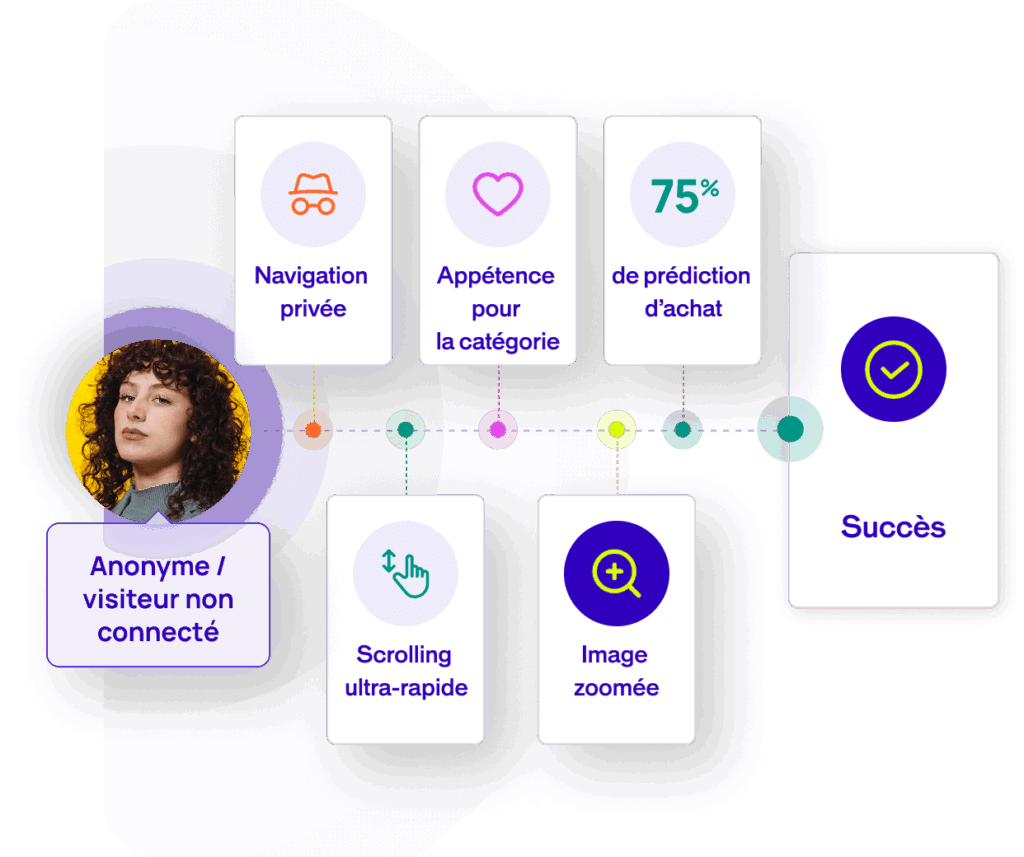
Here’s how to build a personalization strategy that works.
Before diving into tactics, let’s cover the fundamentals:
You can’t personalize without data. Collect information on demographics, preferences, behaviors, and purchase history from every touchpoint.
Divide customers into meaningful groups based on shared characteristics. Segmentation makes personalization manageable at scale.
Clear goals guide your strategy and help you measure success.
Personalization should benefit the customer, not just serve your business goals. If it doesn’t add value, don’t do it.
Be clear about data collection and usage. Build trust by respecting privacy and giving customers control.
Use CDPs, AI tools, and marketing automation platforms to manage data and deliver personalized experiences efficiently.
Implement A/B testing to measure impact and optimize for better results. Personalization is an ongoing process, not a one-time project.
Ensure compliance with regulations like GDPR and CCPA. Obtain enthusiastic consent and protect customer data.
Create unified customer profiles by connecting data from all touchpoints. Fragmented data leads to fragmented experiences.
Let’s get tactical. Here’s your roadmap:
This is your foundation. Gather information on customer needs, habits, and behaviors from every available source—website analytics, CRM systems, purchase history, support interactions, surveys.
Focus on first-party data (collected directly from your audience) for accuracy and privacy compliance.
Group customers with similar traits, preferences, or behaviors. Start broad, then get more granular as you learn what works.
Common segmentation criteria:
Clearly outline what you want to achieve. Align personalization goals with broader business objectives. Examples:
Establish a clear strategy for data collection, management, and application. Determine:
Ensure you have the tools to support your strategy:
Implement your planned personalized content and interactions across relevant channels. Start with high-impact, manageable initiatives, then expand.
Quick wins:
Continuously monitor performance, conduct A/B tests, and iterate based on results. What works for one segment might not work for another.
Track key metrics:
Treat personalization as an ongoing experiment. Test boldly, learn quickly, and keep improving.
Personalization isn’t easy. Here are the challenges you’ll face—and how to think about them:
| Challenge | Description | Solution |
| Data Volume and Quality | Hard to manage large amounts of data; bad data leads to bad personalization. | Define a core data schema, use CDP/ETL pipelines to clean and unify data, and assign clear data ownership. |
| Privacy and Regulations | Customer data but must comply with GDPR/CCPA and maintain user trust. | Implement consent management, document data usage, and apply privacy-by-design (minimize, pseudonymize, give users control). |
| Siloed Data and Non-Unified Profiles | Customer data is scattered across tools and teams, creating fragmented customer views. | Use a common user ID, deploy a CDP (or similar) to unify profiles, and standardize key events and attributes across systems. |
| Technological Requirements | Advanced personalization requires capable tools and solid integrations between systems. | Start with a minimal viable stack (analytics + experimentation + CDP), integrate via APIs/events, and scale capabilities gradually. |
| Scalability | Difficult to personalize effectively for large audiences and many touchpoints. | Automate with rules and models, use a segmentation hierarchy (broad → refined), and reuse standardized performant components. |
| Content Creation | Creating enough personalized content for multiple segments is resource-intensive. | Prioritize high-impact journeys, use modular content blocks, and leverage AI to generate, adapt, and reuse strong variants. |
| Finding the Right Balance | Personalization can feel either too generic or too intrusive to customers. | Define red lines on what not to personalize, start with contextual/behavioral data, A/B test intensity, and use customer feedback to fine-tune efforts. |
Let’s look at real brands achieving remarkable results with personalization:
Clarins, the multinational cosmetics brand, implemented a “Wheel of Fortune” gamification experience on their EMEA websites during the holiday season. They personalized gamification gifts based on each country’s local culture, creating a seamless, engaging experience where visitors received personalized offers (promo codes) automatically applied to their baskets.
The results? An 89% increase in conversion rate and a 145% increase in add-to-basket metrics.
Why it works: The gamification element made the experience fun and interactive, while the personalized offers created urgency and value. By tailoring the concept to local cultures across different markets, Clarins proved that personalization works best when it respects regional preferences.
Read the full case study here →
Fashion brand GANNI used experimentation and personalization to strengthen their brand identity while driving commercial results. By testing different personalized experiences and content variations, they discovered what resonated most with their audience.
The result? A 12% increase in average order value.
Why it works: GANNI combined brand authenticity with data-driven personalization. They didn’t just push products—they created experiences that aligned with their customers’ style preferences and shopping behaviors.
See the full case study here →
Le Slip Français, the iconic French fashion brand known for its “Made in France” ethos, implemented personalized product recommendations based on user location and browsing behavior. During the holiday season, they displayed exit-intent pop-ins promoting region-specific products—for example, visitors from Brittany saw “Made in Brittany gifts” with a CTA directing them to a curated landing page.
The results? A 6% click-through rate on the pop-in and an 11% increase in post-click transactions.
Why it works: By combining geolocation data with personalized product recommendations, Le Slip Français created a sense of local relevance and urgency. The exit-intent trigger captured visitors at a critical moment, turning potential bounces into conversions.
Check out the full case here →
At AB Tasty, we’ve built a platform that makes sophisticated personalization accessible to every team. We combine powerful AI capabilities with intuitive tools—so you can deliver experiences that truly resonate.
Here’s how our solutions transform personalization:
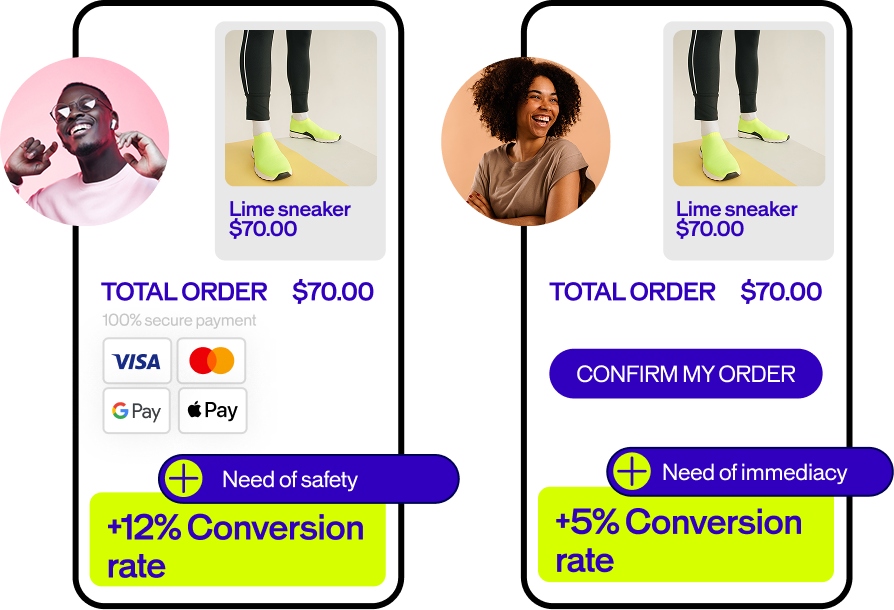
EmotionsAI uses AI to analyze and segment website visitors by their emotional needs, then builds experiences to satisfy those needs. It identifies 10 distinct audience segments based on emotional intent: Competition, Attention, Safety, Comfort, Community, Immediacy, Notoriety, Understanding, Change, and Quality.
EmotionsAI helps you understand the psychological aspects behind personalization, leveraging emotions throughout the digital customer journey. By understanding lasting emotional needs for conversion, you can predict the ROI of your personalization efforts.
Real applications for different emotional segments:
EmotionsAI combines emotional, behavioral, and contextual data to reveal what truly motivates your audience.
Want to read more about EmotionsAI? Click here →
AdaptiveCX focuses on predictive personalization, utilizing AI and machine learning to process vast amounts of session journey data and real-time behavioral insights to deliver highly tailored shopping experiences.
Our solution represents the next evolution in personalization—moving beyond reactive responses to proactive prediction. The platform continuously learns from every customer interaction, building increasingly sophisticated models of individual preferences, intent signals, and purchase patterns.
AdaptiveCX analyzes multiple data layers simultaneously:
AI processes this information in milliseconds, making split-second decisions about what experience will drive the highest engagement and conversion for each individual visitor.
Read more on AdaptiveCX here →
Evi is AB Tasty’s AI agent designed to help you move from complex data to actionable strategies. Think of it as having an expert teammate who helps you build, optimize, and scale personalized experiences.
Our AI capabilities are powerful, but they’re just part of the story. AB Tasty provides everything you need to execute personalization at scale:
Create and edit personalized content without coding. Marketing teams can build experiences fast—no developer bottleneck required.
Segment audiences based on engagement levels (loyal vs. disengaged), content interests, and behavioral patterns. For example, show disengaged visitors first-time buyer promotions, while inviting loyal customers to brand ambassador campaigns.
AI-powered recommendation engine that suggests products customers actually want, driving discovery and conversions.
Connect with your existing tech stack—CRMs, CDPs, analytics tools—to create unified customer profiles and deliver consistent experiences across channels.
This is why AB Tasty is not just any platform. AB Tasty is your partner in going further with personalization.
Personalization is more than a marketing tactic—it’s how you show customers you see them, understand them, and value them as individuals.
The benefits are clear: higher engagement, better conversions, stronger loyalty, and real revenue growth. The challenges are real too: data management, privacy concerns, technological complexity.
But here’s the thing: you don’t have to solve everything at once. Start small. Test boldly. Learn quickly. Iterate forward.
With the right strategy, the right tools, and the right mindset, you can build personalized experiences that make customers feel something. And when people feel something, they stick around.
Ready to go further? Let’s build better experiences together →
Personalization is done for the user by the brand using data and algorithms. Customization is done by the user, who actively makes choices to tailor their experience. Personalization is implicit and brand-driven; customization is explicit and user-driven.
Personalization improves customer experience, increases engagement and conversion rates, builds stronger brand loyalty, enhances lead generation, and provides a competitive advantage. Customers expect personalized experiences—80% are more likely to buy from companies that offer them.
Common types include segmentation-based, event-triggered, real-time, omnichannel, explicit, implicit, adaptive, one-to-one, and AI-driven personalization. Each approach has unique strengths depending on your goals and resources.
AI enables brands to process vast amounts of customer data, analyze behaviors, predict needs, and deliver highly targeted experiences at scale. Advanced AI like EmotionsAI can identify emotional drivers behind customer actions, while predictive AI like Wandz.ai anticipates needs before customers express them.
Key challenges include managing data volume and quality, ensuring privacy compliance, breaking down data silos, integrating technology systems, scaling personalization efforts, creating enough personalized content, and finding the right balance to avoid over-personalization.
Start small with high-impact initiatives like personalized email subject lines, basic product recommendations, or behavior-triggered messages. Focus on one or two customer segments initially, test what works, and expand gradually. You don’t need a perfect tech stack to begin—start with what you have and build from there.
Track engagement rates, conversion rates, revenue per customer, customer lifetime value, retention rates, cart abandonment rates, and overall ROI. Choose metrics that align with your specific personalization goals.

Subscribe to our Newsletter