
You might also like...
Article
10min read


Article
7min read
 abtasty
Conversion Rate Optimization (CRO) is the process of increasing the percentage of website or app visitors who complete a specific goal. Including, buying a product, signing up for a newsletter, or even adding an item to their cart.
It’s not about getting more traffic. It’s about making the most of the traffic you already have.
Two quick examples of CRO in action:
Learn more in our guide on conversion rate optimization →
The business case for CRO is clear: more conversions mean more revenue, lower acquisition costs, and a better customer experience.
| Business Impact | What It Means |
|---|---|
| Revenue Growth | A 1% conversion lift on a $10M site adds $100,000 in revenue, instantly. |
| Lower Acquisition Costs | Converting more existing visitors reduces your effective Customer Acquisition Cost (CAC). |
| Better Customer Experience | Removing friction creates smoother journeys that build loyalty and repeat purchases. |
The formula is straightforward:
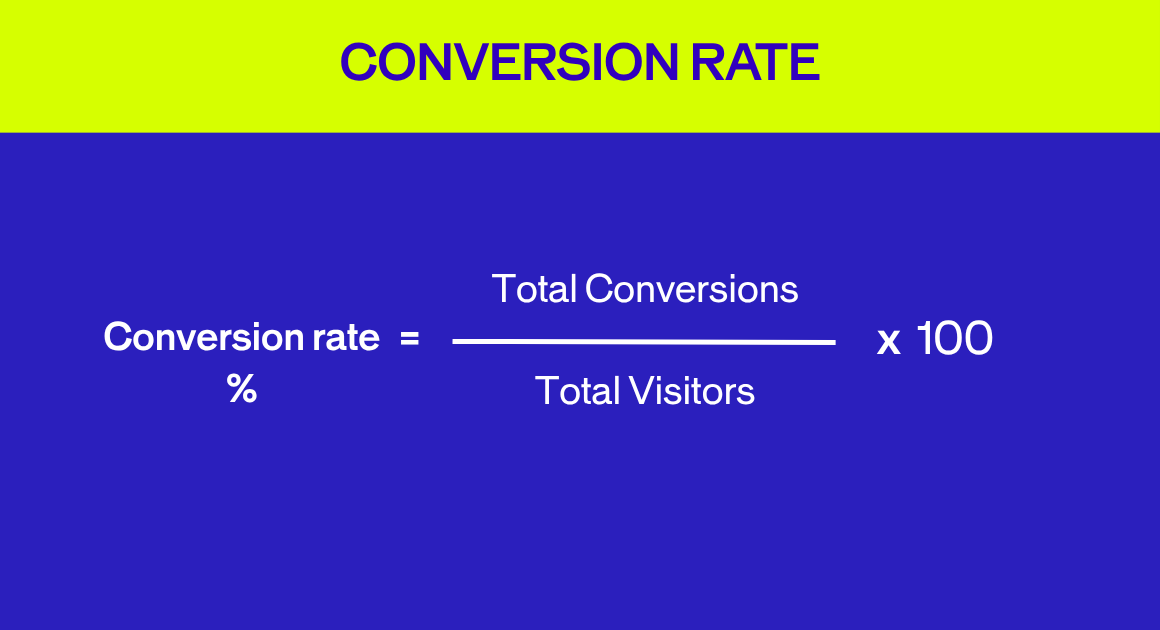
Here’s how to use the formula: If your website gets 2,000 visitors in one day and 20 of them complete a purchase, the calculation would be (20 ÷ 2,000) × 100 = 1%, which means your conversion rate is 1%.
Your product pages are your digital sales floor. Make them count.
Give visitors a reason to act now, not later.
A 5% increase in customer retention can boost profits by 25–95%, loyalty programs are a long-term CRO play, not just a short-term tactic.
If visitors can’t find what they’re looking for, they leave.
Checkout is where conversions are won or lost. Keep it frictionless:
Did you know? 26% of abandoned carts result from being forced to create an account.
Performance is a conversion strategy.
Read more about on Mobile Optimization here →
Trust is the invisible conversion lever.
CRO is a cycle, not a checklist.
Make A/B testing a regular part of your marketing operations →
| The Mistake | The Problem | The Fix |
|---|---|---|
| Neglecting Mobile | A clunky mobile experience causes high bounce rates and lost sales. Mobile cart abandonment reaches up to 84%. | Use responsive design, test on multiple devices, and ensure all CTAs are easy to tap. |
| Ignoring Page Speed | Slow pages frustrate users. More than half mobile users abandon a page that takes over 3 seconds to load. | Audit with Google Lighthouse, compress images, and enable browser caching. |
| Overcomplicating Checkout | Too many steps or required fields create friction. | Reduce checkout to the minimum steps, offer guest checkout, and simplify navigation. |
A strong CRO program is a continuous loop—not a one-time fix. Here’s where to start:
Use analytics and heatmaps to identify high-exit pages and friction points.
Define specific, measurable, achievable, relevant, and time-bound targets.
Start with your homepage, product pages, and checkout flow.
Make A/B testing a regular part of your marketing operations.
Track cart abandonment rate, average order value (AOV), and customer lifetime value (CLV) to measure real impact.
| Term | Definition |
|---|---|
| Conversion Rate | Percentage of visitors who complete a desired action. |
| A/B Testing | Comparing two versions of a page to see which performs better. |
| Cart Abandonment Rate | % of shoppers who add items to a cart but don’t complete the purchase. |
| Average Order Value (AOV) | The average amount spent per transaction. |
| Customer Lifetime Value (CLV) | The total revenue a customer generates over their relationship with your brand. |
| Heatmap | A visual tool showing where users click, scroll, and engage on a page. |
| Core Web Vitals | Google’s performance metrics measuring load speed, interactivity, and visual stability. |
CRO isn’t a one-time project you check off a list. It’s a mindset, a commitment to continuously learning what your visitors need and making it easier for them to get there.
Some tests will win. Some won’t. That’s the point. Every experiment, every heatmap, every data point brings you closer to a digital experience that genuinely works for your customers. And when your experience works for them, it works for your business too.
Start small if you need to. Pick one high-traffic page, form one clear hypothesis, and run your first test. Then do it again. And again.
That’s how great e-commerce experiences are built, not in a single launch, but in a thousand small, brave iterations.
If you want a deeper understanding on how to building a mature experimentation program, check out this conversation with Jeremy Epperson.
Ready to go further? Let’s build better experiences together →
It depends on your traffic volume and the scope of your tests. A high-traffic site can reach statistical significance in a matter of days. Lower-traffic sites may need several weeks per test. The key is to be patient, stay consistent, and never stop iterating.
Start where the most value is at stake. For most e-commerce sites, that means the checkout page (where purchases are completed or abandoned) and high-traffic product pages (where purchase decisions are made). These pages have the highest potential impact on revenue.
Not necessarily. While enterprise-level tools offer advanced capabilities, many impactful CRO improvements, like simplifying a form, rewriting a CTA, or improving page speed, require minimal investment. What matters most is a structured process and a willingness to test and learn.
Look for statistical significance, typically a confidence level of 95% or higher. This means there’s only a 5% chance your results are due to random variation. Most A/B testing tools calculate this automatically, but always ensure your test has run long enough to collect a meaningful sample size.
Focus on metrics that directly reflect business outcomes:
Absolutely. In fact, small stores often see the most dramatic improvements because there’s more low-hanging fruit to address. Start with the basics, fast load times, clear CTAs, guest checkout, and build from there.

Subscribe to our Newsletter