Case Studies

Scaling Speed: How PUMA Powers Global Growth Through Personalized Experimentation

About PUMA

PUMA is one of the world’s leading sports brands: known for designing, developing, and marketing footwear, apparel, and other active-wear accessories. With a long-standing commitment to expand global operations and make insight-driven decisions, PUMA aims for high performance on both the track field and in the digital world.

The Challenge: Breaking the Speed Barrier

PUMA’s had three main goals: to scale globally, implement stronger personalization, and conduct tests in a timely manner that could keep up with growing business goals. 

To accomplish this, Puma needed:

  • Trustworthy Insights: A partnership dedicated to providing reliable, valuable information that could be easily shared.
  • Scalability: A long-term investment in a tool that could grow alongside their global ambitions.
  • Flexibility: The power to address friction points anywhere in the funnel without technical difficulties.

Since partnering with AB Tasty, Puma has built a single global CRO squad that punches well above its weight. With focused resources and a shared roadmap, the team has been able to iterate faster, launch validation tests with confidence, and build deeper expertise over time.
puma bags black and white

The Solution: One Squad, Global Scale

By partnering with AB Tasty, PUMA transformed its existing optimization journey: moving from small steps to big leaps towards a more cohesive global strategy.

“Since our partnership began, we’ve actually been able to scale globally. We now have a global CRO squad that we work together to implement and report on tests to a global audience.” – PUMA

Small Steps to Big Ideas

PUMA was passionate to learn more about testing and how small steps could create big shifts in experimentation. In turn, a major component of their growth in optimization was their newfound incentive to increase the amount of monthly tests. This was done in collaboration with AB Tasty’s platform, which offers no-code solutions to help teams test bigger, faster. 

Leveraging AB Tasty’s suite of no-code and low-code widgets, PUMA was able to unlock new levels of cross-team collaboration. The result? A program that’s maturing month by month, with increasing test velocity, iteration and stronger, more reliable insights to show for it.

Teamwork Makes the Dreamwork

We love working with brands that view teamwork as an essential method to expand your expertise. PUMA embraced this value when they established a single, global squad to make the most of limited resources, build deeper expertise, and ensure a unified user experience across all regions.

The collective effort toward shared success didn’t stop there. PUMA took optimization experience one step further by using the widget function to not only expand their CMS capabilities, but to take team-wide collaborative efforts to the next level. In turn, this unlocked greater success with content personalization. 
hannah talking with someone at puma

Personalization by Page

PUMA embodied the idea of trying, testing, and learning as they noted several segments would perform differently according to the page type of category. To propel their optimization efforts forward, they realized refining their existing strategies were just as important as building new ones. 

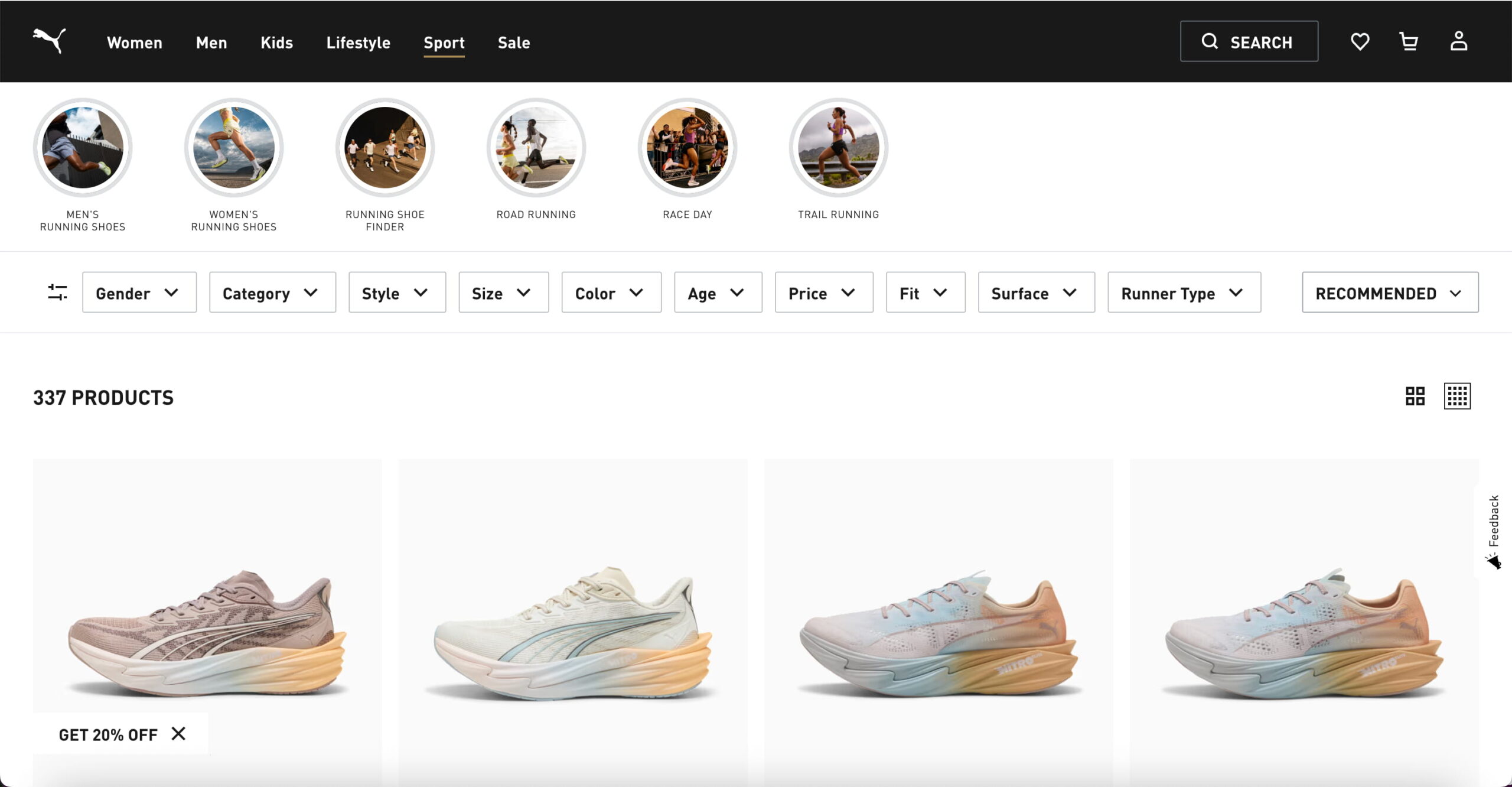
By using the advanced Segment Builder, PUMA targets users based on real-time browsing (e.g., gender-based targeting for users browsing Women’s products). This “one-to-few” approach allows them to influence intent even when users are not logged in.

From Insights to Impact

Puma also shared their focus on methodical, data-based decision making alongside the product and analytics teams. This allowed for greater flexibility to test across the site and eliminate groups that could have an impact on more efficient testing in the future. 

The Results: Analytics-Powered Agility

PUMA now moves with “Information-Powered Momentum” – ensuring every recommendation is backed by clear user behavior insights.

From Test to Treasure: Tracking the ROI

Through a seamless GA4 integration, PUMA can credit their revenue to personalized content using the same models as their standard site content. This uncovers valuable clarity in how to navigate the ever-changing user experience and fresh ideas for future tests. 

Find Your Better, Faster

After partnering with AB Tasty, PUMA’s team now breaks down their optimization tactics to be targeted to specific user groups. This includes comparing those who engaged with personalized content against those who didn’t, which can help to better understand the overall incremental boost – and what can be done to optimize and scale those results further.

One of the most powerful ways they put this analysis into action was through gender-based personalization. With the use of our platform’s segment builder and the ability to see which products men and women alike were browsing prior to purchase, PUMA saw exceptional success with gender-based personalization. Metrics such as on-page time, number of pages viewed, and more helped guide their strategy.

Building on these personalization insights, PUMA also refined their approach to how they manage their current campaigns. This is because clear exclusion groups and advanced prioritization matrices allow PUMA to run multiple campaigns simultaneously without overlapping or compromising the user experience.

“We focus our experimentation efforts where the data tells us to focus. Anywhere on the site where we can see a story that users are encountering pain points is a perfect opportunity for testing.” – PUMA
puma website screenshot

The Future: Speeding up for Success in 2026

PUMA isn’t slowing down. Their goal for 2026 is to continue increasing test volume and pushing the limits of what’s possible. 

By maintaining an organization-wide “intake portal” for test ideas, they have democratized experimentation, ensuring that the best insights can come from anywhere in the company.

PUMA plans to propel forward with:

  • Cross-Team Collaboration: PUMA is dedicated to creating a creative space for not only their CRO Squad to share new, innovative approaches to personalization and experimentation – but for everyone to contribute to the brand’s growth. By allowing anyone at PUMA to submit potential tests, company-wide collaboration is no longer limited to specific teams. 
  • Product Team Approval: Closely working with both their product and engineering teams helps PUMA to safely implement experimentation and personalization plans that are both bold and functionally sound. 
  • Big Dreams to Bold Tests: Pushing past the limits of what they once believed was possible and delighted with the progress they have made so far, PUMA is ready to build upon their existing success. This includes using both the discoveries they’ve made so far and the enticing experiments yet to come. 

As PUMA continues to push the boundaries of experimentation, their strategy highlights what’s possible when experimentation is embedded across the entire organization. 

With the right growth, your team can also take a step toward finding your better and unlocking the next phase of growth.

Case Studies

Search That Inspires: How Adaptive Search Turned Queries into Conversions at Attraction Tickets

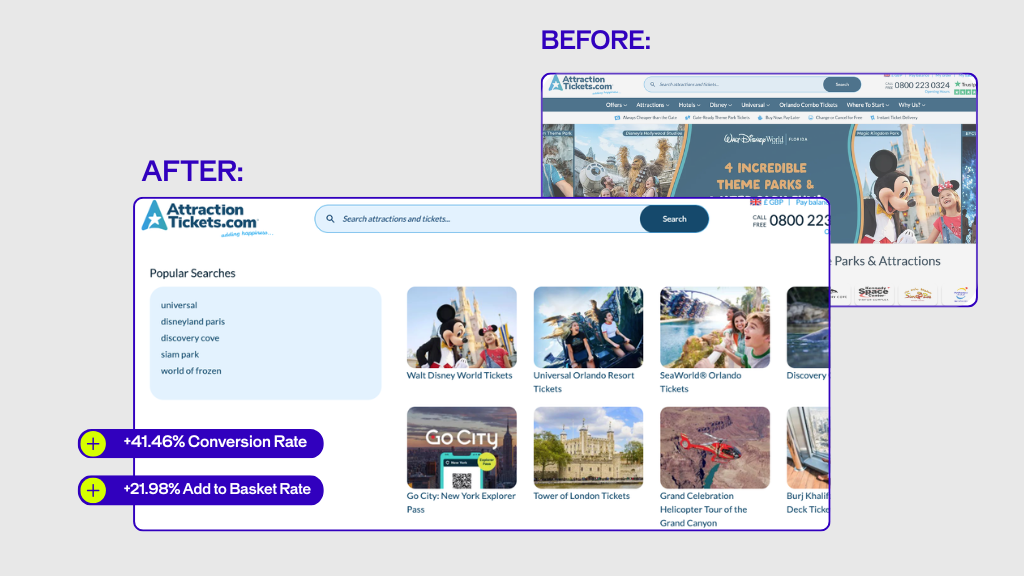
+41.46% Conversion Rate

+21.98% Add to Basket Rate

Meet Attraction Tickets:

Attraction Tickets has always been driven by a singular mission: to Add Happiness® to holidays by making it easier for customers to access tickets to the world’s top attractions. Having sold over 15 million tickets, the company’s values and customer promises remain as strong today as when it first began.

In pursuit of delivering seamless digital experiences, Attraction Tickets partnered with AB Tasty to use AdaptiveCX and Search to further optimize the online journey for its customers.

The challenge: Improving product discovery and conversion rates

Despite a robust offering, Attraction Tickets identified a key area for improvement: the search experience.

Previously, the search bar provided no suggestions until users began typing, offering little guidance — especially for first-time visitors with no search history. This limited the ability to inspire and guide users, potentially impacting product discovery and conversion rates.

Attraction Tickets aimed to transform the search journey by providing users with the most relevant keyword suggestions from the very start. The goal was to make product discovery intuitive and engaging, ensuring that both new and returning visitors could quickly find what they were looking for.

Adaptive Search was implemented to overhaul the existing search experience. This solution:

  • Delivers relevant keyword suggestions from the very first character typed, eliminating the previous gap in guidance until users began entering text.
  • Prioritizes suggestions based on in-session user affinities, such as most recently or most commonly searched terms. Attraction Tickets chose to highlight the most recent searches for returning users.
  • Seamlessly integrates with both in-house and third-party search solutions, enhancing flexibility and scalability.

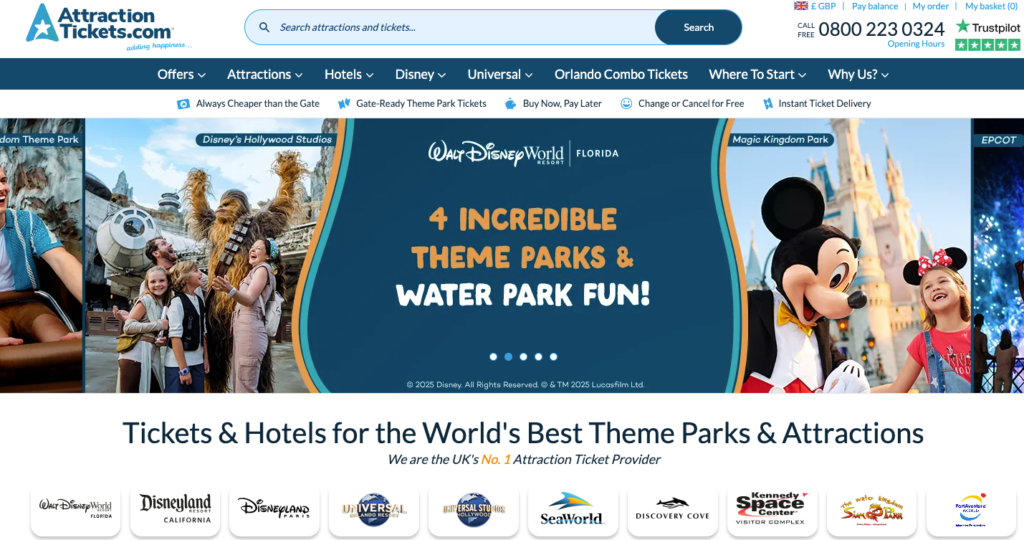
BEFORE:

Inactive search bar with no suggestions shown on click.

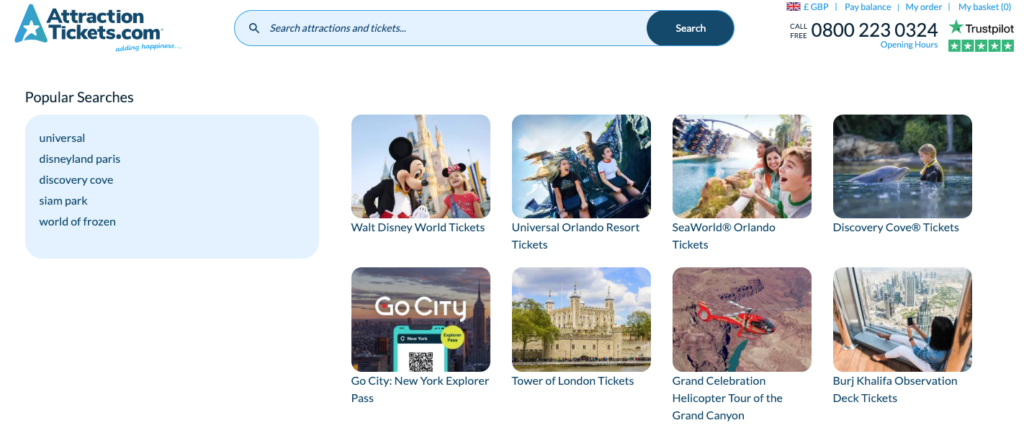
AFTER:

Adaptive Search: Instant keyword and product suggestions displayed on click.

Enhanced solution: Adaptive Search + recently viewed (with product images)

To further boost engagement, Attraction Tickets enriched AdaptiveCX Search with product images from users’ recently viewed items. This visual enhancement:

  • Captures user attention more effectively.
  • Drives higher engagement and click-through rates.
  • Contributes to improved conversion rates by making the search experience more intuitive and visually appealing.

Uplift and key results

The impact of Adaptive Search was both immediate and significant, as demonstrated by A/B testing:

  • +39.70% uplift in average page views (Used vs. Not Used)
  • +21.98% uplift in add-to-basket rate (Used vs. Not Used)
  • +41.46% uplift in conversion rate (Used vs. Not Used)
  • Adoption rate of 11.24% among users

Even in the broader Test vs. Control comparison, notable uplifts were observed across all key metrics, confirming the effectiveness of the new search experience.

The business impact and takeaways

The introduction of Adaptive Search led to:

  • Enhanced user engagement, with longer sessions and more page views per visit. This was reflected in both the Used vs Not Used and Test vs. Control groups.
  • Improved product discovery, as evidenced by higher add-to-basket rates.
  • Notably better conversion performance, with a substantial increase in conversion rates for users exposed to the new search.
  • A smoother and more personalized onsite journey, resulting in greater user satisfaction and a positive impact on revenue.

What’s next for Attraction Tickets?

Building on these successes, Attraction Tickets is preparing to launch additional enhancements, including a new product detail page (PDP) carousel. This experience is currently in Live QA mode and will soon be available to all users, further advancing the company’s commitment to digital innovation and customer happiness.

Case Studies

How Motorpoint Drives Smarter Experiences

Introduction

At Motorpoint, delivering a smooth and seamless experience for car buyers is a top priority. As the UK’s leading independent retailer of nearly new and used cars, the company is focused on making every part of the journey, both online and offline,  as simple and stress-free as possible.

We spoke with Razvan Ghica, Head of Design at Motorpoint, who oversees the online experience and leads the company’s optimization and research efforts. He shared how the team is using AB Tasty to improve digital journeys, support smarter decision-making, and move faster with confidence.

Q1: What led you to start using AB Tasty?

Razvan: We take a lot of care when building new features or user journeys, but no matter how thorough we are, there’s always room for improvement. AB Tasty allows us to fine-tune experiences after launch. That’s important because if the website better supports the user journey, it leads to a stronger experience overall, and ideally, better performance in our key metrics.

Q2: What types of experiments have you been running?

Razvan: Most of our tests so far have been simple, things like repositioning content, changing button labels, or making UI adjustments. They don’t require much setup but can deliver meaningful results. These smaller experiments have proven to be very effective, and they’ve shown us that even small changes can lead to measurable improvements.

Q3:Are there any specific experiments that stood out?

Razvan: Yes, a couple come to mind. One was on the product page, where we moved the car specs and features higher up. That small change resulted in a noticeable increase in leads.

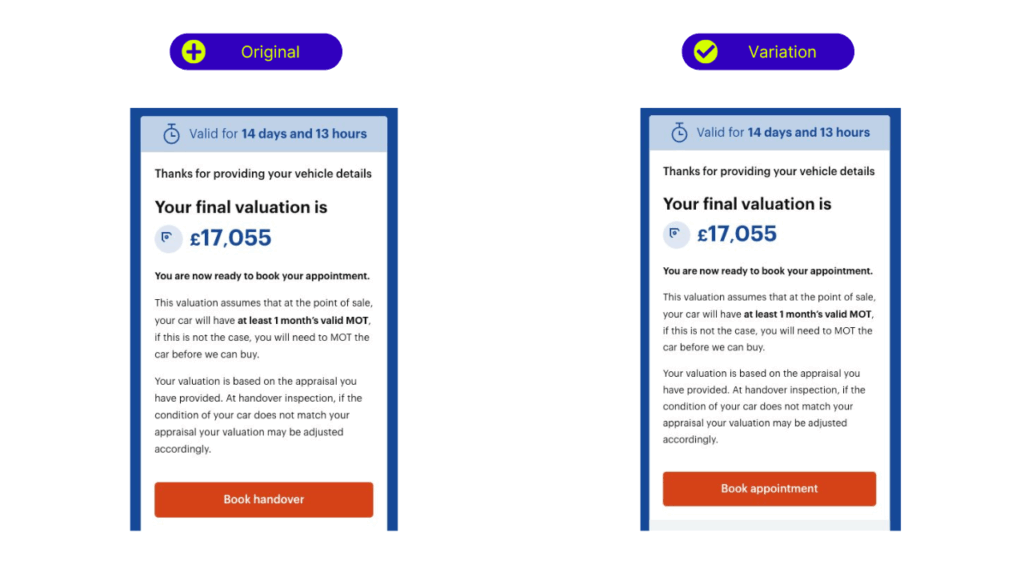
Another example is from our Sell Your Car experience. We changed the label on a button that takes users from one step to the next. The original term wasn’t very familiar to users, and just updating the language improved conversion through that part of the funnel.

Q4: Have you explored personalization yet?

Razvan: We’re starting to. We’re currently considering testing variations of our user journeys for different segments, based on things like location, device type, or whether the user is new. We want to understand how we can personalize the experience further for them, and AB Tasty is well-suited for that.

Q5: Beyond performance improvements, how has AB Tasty impacted your internal processes?

Razvan: It’s helped reduce uncertainty in the design phase. If we’re considering two different approaches and can’t decide, we now have the option to test both from the start. That removes a lot of back-and-forth and speeds up decision-making.

We can even test during the design phase when it makes sense. It saves time and helps us work more efficiently. Overall, we’ve seen an increase in lead generation and improved funnel performance, thanks to the ongoing optimization work we’re doing with AB Tasty.

Q6: How easy is it for teams without technical backgrounds to get involved?

Razvan: The test builder interface has been really useful. It’s intuitive and allows non-technical team members to build and launch tests on their own. If needed, someone with more technical experience can jump in and build on what’s there, but in most cases, the builder is accessible to everyone.

Q7: How is the tool used across different teams at Motorpoint?

Razvan: The design team leads most of the activity, but we’ve also seen involvement from our content and merchandising teams. Because the tool is user-friendly, they’ve been able to build tests around things they want to explore, without needing help from developers. That’s important for us, because our engineering team has its own dedicated backlog. They’re not involved in building these tests, and that keeps things more efficient.

Q8: And how does experimentation impact other teams or departments?

Razvan: One of the biggest benefits is the learning it brings. It’s not just about knowing what works; it’s also about understanding what doesn’t. That’s equally valuable. The insights we gain from testing help shape future decisions. We can start from a small observation, go through our workflow, and end up with answers to key questions. It’s a continuous learning loop that improves how we support users across the site.

Q9: How does experimentation fit into your overall digital strategy?

Razvan: Our team is relatively small, especially on the design and engineering side. So our time is valuable, both when building new experiences and when optimizing existing ones. AB Tasty allows us to do both in parallel. We can keep developing new features while also refining what we already have, without taking time away from our engineers.

Q10: Looking ahead, what’s next on your roadmap for testing and optimization?

Razvan: We want to increase the volume of tests we’re running and expand them across more of our journeys. We also want to spend more time identifying user segments we can personalize for. That’s something we haven’t fully explored yet, but we see a lot of potential there.

Overall, AB Tasty allows us to do a lot with relatively low effort,  and the results speak for themselves. We’re excited to build on that and keep improving.


Final Thoughts

Thank you to Razvan Ghica and the Motorpoint team for sharing their insights. Hearing how experimentation supports their decision-making and improves the customer journey offers a clear view of the impact ongoing optimization can have. We’re proud to support their work and to see how these efforts continue to shape a smoother, more confident experience for car buyers.

Webinars

Live from Accu Stadium: Scoring Big with Experimentation in E-Commerce


We took experimentation out of the office and onto the pitch.


Broadcast live from Accu Stadium in Huddersfield, this session gives you a behind-the-scenes look at how data, testing, and teamwork come together to drive e-commerce performance.


You’ll hear how Accu, alongside REO and AB Tasty, put experimentation into action, turning insights into continuous improvement across their digital experience.

Meet the Teams

Accu: A leading e-commerce platform supplying precision engineering components to innovators worldwide

REO: A digital agency focused on performance and experimentation, helping brands use data to drive meaningful results.

AB Tasty: A global platform for experimentation and personalization, empowering teams to optimize experiences and accelerate growth.

What You’ll Learn

  • How Accu uses experimentation to improve customer journeys and on-site performance
  • The power of partnership: how REO and AB Tasty work together to accelerate testing and insights
  • Lessons from the field: practical examples of tests that delivered impact

Speakers

Luke Jagger
Head of UX and Creative Strategy, Accu
Matthew Maidment
Head of CX, REO
Megan Tunney
Customer Success Manager, AB Tasty

Case Studies

Devred Turns E-commerce Site Into a Strategic Growth Lever Thanks to AB Tasty

35% Weight in revenue

10% Utilization rate

Devred’s Digital Success Strategy:

Recommendations, Merchandising, and Web Experimentation with AB Tasty

Devred, the iconic men’s ready-to-wear brand, has risen to a major challenge: transforming its e-commerce site into a remove genuine driver of strategic growth.

With 300 physical shops and a well-established in-store identity, Devred has embarked on an ambitious drive to conquer digital experiences, attract younger customers, and boost its online performance.

The company chose AB Tasty to implement a comprehensive solution combining recommendations and merchandising as well as web experimentation in order to, reinvent the online customer experience and maximize its digital impact.

Download our case study to see how Devred achieved significant online sales growth by harnessing improved personalization and strategic merchandising, boosting the digital channel’s contribution to overall sales.

Spark
your curiosity!

Get your copy of "Devred Turns E-commerce Site Into a Strategic Growth Lever Thanks to AB Tasty" now.

Case Studies

From Complexity to Conversion: AB Tasty Transformed Groupe Équipement de la Maison’s Personalization Strategy

+21% Conversion on homepage

+21% Average basket on product pages

When Groupe Équipement de la Maison—parent company of Bricomarché, Brico Cash, and Bricorama—needed to deliver seamless personalization at scale, they turned to AB Tasty Recommendations and Merchandising. With over 800 stores and a catalog of 250,000+ products, managing manual product recommendations had become inefficient and unsustainable.

AB Tasty introduced a cookie-free, AI-driven personalization solution tailored to the group’s unique needs. By applying dynamic recommendations across the entire customer journey, including homepage, product pages, and even 404 error pages, AB Tasty helped Groupe Équipement de la Maison boost online performance while respecting privacy regulations.

The results were remarkable: a 21% increase in homepage conversion rates, a 21% growth in average basket value, and a 10% engagement rate with personalized recommendations. Beyond the metrics, the group saved time and resources, allowing teams to focus on high-value projects.

Ready to transform your e-commerce strategy with AB Tasty? Download the case study to learn more.

Spark
your curiosity!

Get your copy of "From Complexity to Conversion: AB Tasty Transformed Groupe Équipement de la Maison’s Personalization Strategy" now.

Case Studies

Samsonite APAC personalizes customer journeys with EmotionsAI

+108% Click on Ratings - Competition Segment

+7.17% Overall Transaction Rate

Explore how Samsonite, a leader in the global lifestyle bag industry and one of the world’s largest travel luggage companies, elevated their digital strategy with AB Tasty.

With luggage being a thoughtful, infrequent purchase, the Samsonite APAC team faced the challenge of helping customers find their ideal luggage solution in as few clicks as possible.

By integrating EmotionsAI and leveraging AI-driven emotional insights, Samsonite APAC tailored the shopping experience based on key emotional drivers like ‘Competition’ and ‘Safety,’ making every interaction more relevant and engaging.

Focusing on critical touchpoints like the homepage, product pages, and checkout, Samsonite saw a 108% increase in clicks on product ratings from the competition segment and a 7.17% lift in transaction rates. By understanding and catering to diverse customer needs across regions, they streamlined the path to purchase and reinforced their position as a leader in the travel industry.

Download the full case study to learn how emotional personalization can revolutionize your customer experience.

Spark
your curiosity!

Get your copy of "Samsonite APAC personalizes customer journeys with EmotionsAI" now.

Case Studies

The Impact of Cookie-Free UX Personalization in E-commerce: Mademoiselle Bio

+9.2% in sales

+1.9% of conversions

Learn more about Mademoiselle Bio’s successful project to increase conversion rates and revenues.

Mademoiselle Bio, a leader in French organic cosmetics, partnered with AB Tasty to tackle the challenges of rising acquisition costs and the shift away from cookie-based personalization.

By implementing AB Tasty’s cookie-free personalization technology, the brand transformed its online shopping experience, leading to a 9.2% increase in sales, a 1.9% boost in conversions, and a 6.5% rise in average basket value.

Personalized product recommendations and intelligent e-merchandising helped guide customers through their shopping journeys, delivering tailored experiences that significantly enhanced engagement.

This successful project highlights how Mademoiselle Bio brought the personalized touch of in-store shopping to its online experience, creating a smoother and more intuitive journey for customers.

By tailoring product recommendations at every stage of the customer journey, Mademoiselle Bio not only boosts customer satisfaction but also builds stronger loyalty and increases sales.

Download the full case study to discover how Mademoiselle Bio maximized revenue and adapted to the evolving digital landscape without relying on cookies.

Spark
your curiosity!

Get your copy of "The Impact of Cookie-Free UX Personalization in E-commerce: Mademoiselle Bio" now.

Case Studies

Alltricks Increases AOV with Recommendations

+5% in AOV

+7% in Revenue per User

Learn more about Alltricks quickly boosted their KPIs.

Alltricks is a French online shop created in 2008 that’s specialised in the sale of cycling and running products. A leader in its sector, the website markets more than 50,000 products and has more than 2 million visits per month. In 2019, Alltricks was acquired by Decathlon.


When Valentin Calais, Alltricks’ UX and Conversion Manager, contacted AB Tasty, he was looking to optimize two aspects of Alltricks’ website UX:

1. Recommendations

2. Buying Process

Download the full case study to discover more on how and where Alltricks implemented recommendations on their site, boosting AOV by 5% and revenue per user to +7%.

Spark
your curiosity!

Get your copy of "Alltricks Increases AOV with Recommendations" now.

Case Studies

Independence Australia Drives Engagement with EmotionsAI

+3% Total revenue uplift

+1.13% Transaction rate uplift

Independence Australia, a not-for-profit social enterprise, is dedicated to supporting individuals with disabilities. With revenue from their commercial endeavors funding vital community programs, their mission hinges on maintaining a successful online presence.

Independence Australia faced a critical challenge: how to keep up with the growing demands of digital consumers while operating within the constraints typical of a social enterprise. The rapidly evolving digital landscape, coupled with increased competition, shifting consumer expectations, and a rise in price sensitivity, added further complexity to their situation. Additionally, brand loyalty had become increasingly volatile, making it more difficult to retain customers in a crowded market.

To address these challenges, Independence Australia integrated EmotionsAI into their digital strategy, marking a turning point in their approach to customer engagement. This AI-powered solution provided deep insights into customer emotions, allowing the team to segment audiences based on emotional needs like ‘Safetyʼ, ‘Need for communityʼ and ‘Competitionʼ.

Want to learn more about how Independence Australia drove insights with emotions while developing their personas for an e-commerce redesign? Download the case study to learn more.

AB Tasty is by far my favorite solution in the Independence Australia stack. The flexibility it offers and the improvements it enables have been transformative for our digital strategy

Head of Digital Experience

Spark
your curiosity!

Get your copy of "Independence Australia Drives Engagement with EmotionsAI" now.