
Article

8min read

Can AI Improve the Digital Customer Experience? [+5 Examples]

The future of digital experience optimization has arrived and it’s driven by AI.

Are you ready for it?

AI can often be a sensitive subject, as loud voices in the room will boast how AI can replace people, careers, or even entire sectors of society. We’re scaling back the dystopian imagery and instead finding ways where AI can be your sidekick, not a supervillain.

There are two sides to the coin with AI: it can help optimize your time and boost conversions, but it can also be risky if not used properly. We’ll dig into the ways AI can be a helpful tool, as well as some considerations to take.

The positive impact of AI on your customer experience roadmap

In one of our last pieces about AI in the CRO world, we discussed 10 generative AI ideas for your experimentation roadmap. Since the publication of this article, we’re back with even more ideas and concrete examples of successful campaigns.

1. Display reassurance messages to visitors who value it

Some shoppers value their privacy and data safety above all else. How can you comfort these visitors while they’re shopping on your website without interfering with other visitors’ journeys? While salespeople can easily gauge these preferences in face-to-face interactions, online shoppers deserve the same personalized experience when they shop independently.

Let’s see an example below of how you can enhance the digital customer experience for different shoppers at the same time:

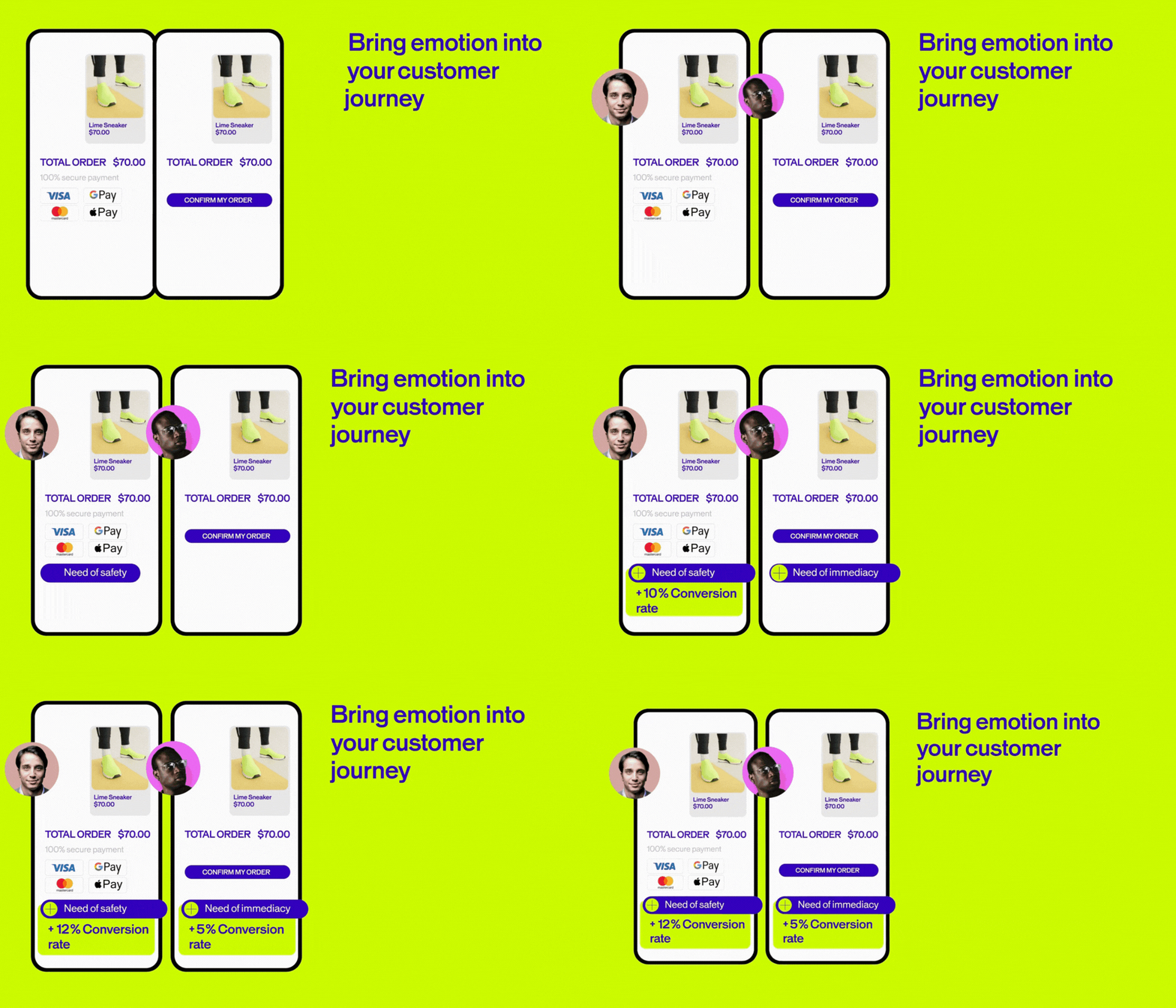
MAAF, a French insurance provider, knows just how complex buying auto insurance can be for visitors. Some shoppers prioritize safety and reassurance messages, while others don’t. With AI systems that segment visitors based on emotional buying preferences, you can detect and cater to this type of profile without deferring to other shoppers. “Intuitive” profiles are receptive to reassurance messages, while “rational” profiles tend to see these extra messages as a distraction.

Emotional segmentation - Improve the digital customer experience with AI

The team at MAAF used advanced AI technology to overcome this exact challenge. Once the “intuitive profiles” were identified, they were able to implement personalized messages ensuring their commitment to their customers’ data protection. As a result, they saw an increase of 4% in quote rates for those directed to the intuitive segmentation, and other profiles continued on their journey without extra messaging.

2. Segment your audience based on their shopping behavior

With so many online shoppers, how can you possibly personalize your website to give each shopper the best user experience? With AI-powered personalization software.

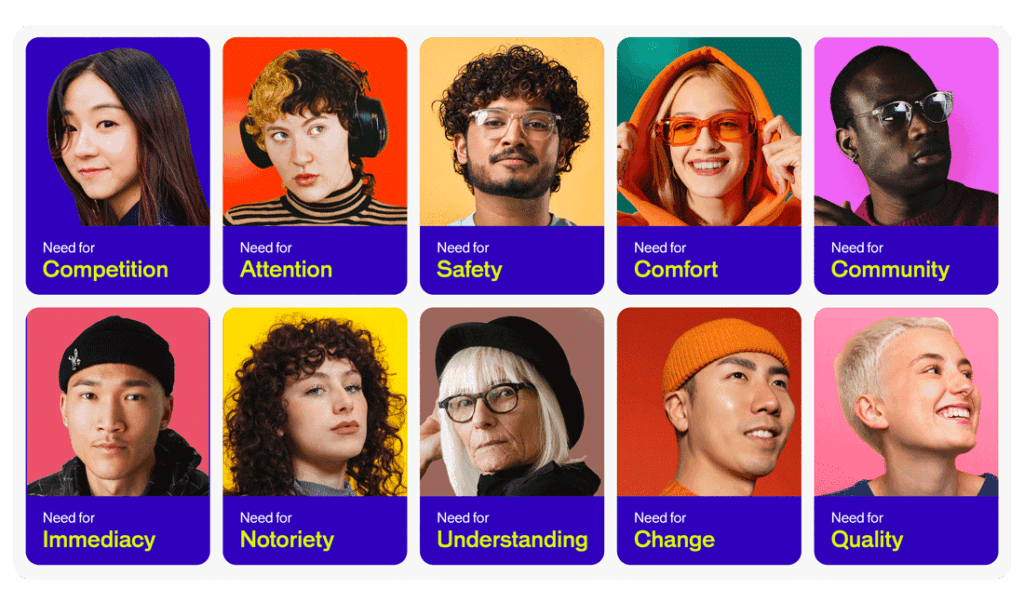
Some online shoppers have a need for competition. Don’t we all know someone who loves to turn everything into a competition? These “competitive” shoppers are susceptible to social-proof messaging and are influenced by the opinions of other customers while searching for the best product. One of the best ways to personalize a listing page for competitive shoppers is to show ratings from their peers. 

Meanwhile, what works for competitive shoppers, will not work effectively for speedy shoppers. Shoppers with a need for immediacy will appreciate a clear, no-frills browsing experience. In other words, they don’t want to get distracted. Let’s look at the example below.

Competition vs immediacy EmotionsAI

This website implemented two different segments targeting online shoppers with a need for “competition” and “immediacy.” These two segments brought in a 9% increase in conversion rates and a 2% increase respectively. The campaign was a success, but how did it work? 

Using AB Tasty’s AI personalization engine, EmotionsAI, this online shop identified its visitors’ main emotional needs and directed them toward a product listing page best suited for them. EmotionsAI turns buyer emotions into data-driven sales with actionable insights and targeted audiences.

Want to learn more about EmotionsAI? Get a demo to see how AI can impact your roadmap for the better!

AB Tasty Demo Banner

3. Automate and personalize your product recommendations 

European backpack designer, Cabaïa, used an AI-powered recommendation engine to generate personalized recommendations for their website visitors based on user data collected. The team at Cabaïa previously managed product recommendations manually but wanted to shift their focus to improving the digital customer experience. 

AI recommendation tools put the right product in front of the right person, helping boost conversions with a more tailored experience. Since implementing this AI-powered recommendation engine, they’ve had +13% revenue per visitor, increased conversions by 15%, and raised their visitor’s average cart size by 2.4%.

Cabaia recommendations test

4. Innovate your testing strategy with emotional targeting

According to an online shopper study (2024), traditional personalization is no longer enough. Personalizing based on age, location, and demographics just isn’t as precise anymore.

The team at Groupama, a multinational insurance group, wanted to take A/B testing a step further and better adapt their approach to fit their customers’ unique emotional needs. By using an AI-powered emotional personalization engine, they were able to identify two large groups of website visitors: emotionals and rationals. 

They created an A/B test based on these customer profiles. One variation catered to the “emotional” buyers by showing reassuring messaging on the insurance quote to protect their data, and the other catered to “rationals” that displayed the insurance quote without any extra messaging that allowed them to have a distraction-free buyer journey. Within 2 weeks, Groupama saw an instant win with a 10% increase in quote submissions.

Insurance quote segmentation test: emotionals vs rationals

5. Simplify the customer journey and build buyer confidence

Like many financial services, purchasing insurance is inherently complex. Consumer behaviors and expectations in insurance are quickly changing.

As a leading insurer in Singapore, DirectAsia has embraced innovative technologies to better serve their customers. By pioneering new technology, Direct Asia was able to segment their visitors based on emotional needs.

The team at DirectAsia identified that the ‘safety’ segment (buyers needing reassurance) was the top unsatisfied emotional need for visitors on both desktop and mobile devices. With these insights, DirectAsia ran an experiment on ‘safety’ visitors, displaying two banners to reassure them and move them further down the form to the quote page.

DirectAsia A/B Test Copy - Simply the customer journey

The banners led to + 10.9% in access to the quote page for one, and +15% in access to the quote page for the other.

The potential risks of AI on your customer experience roadmap

Artificial intelligence has been evolving (very quickly!) over the past few years and it can be tempting to run full speed ahead. However, it’s important to find the right AI that works for you and helps you achieve your goals. Is AI powering something you need, impacting your business, or is it just there to impress? 

With that in mind, let’s consider some precautions to take while using AI:

  • Unfactual or biased information on data reports, website copy, etc. 

When researching or asking for data sources, it’s important to keep in mind that artificial intelligence can get it wrong. Just as humans can make mistakes and have biased opinions, AI can do the same. Since AI systems are trained to produce information following patterns, AI can unintentionally amplify bias or discrimination.

  • Lack of creativity, dependence, and over-reliance

Excessive reliance on AI can reduce decision-making skills, creativity, and proactive thinking. In competitive industries, you need creativity to stand out in the market to capture your audience’s attention. Your roadmap could suffer if you put too much faith in your tool. After all, you are the expert in your own field.

  • Data and privacy risks 

Protecting your data should always be a top concern, especially in the digital experience world. You will want a trusted partner who uses AI with safeguards in place and a good history of data privacy. With the fast-developing capabilities of AI, handling your data correctly and safely becomes a hurdle. As a general best practice, it’s best not to upload any sensitive data into any AI system – even if it seems trustworthy. As these systems often require larger quantities of data to generate results, this can lead to privacy concerns if your data is misused or stored inappropriately.

  • Hallucinations 

According to IBM, AI hallucinations happen when a large language model (LLM) thinks it recognizes patterns that aren’t really there, leading to random or inaccurate results. AI models are incapable of knowing that their response can be hallucinogenic since they lack understanding of the world around us. It’s important to be aware of this possibility because these systems are trained to present their conclusions as factual.

Conclusion: Using AI in the Digital Customer Experience

As with any tool or software, AI is a powerful tool that can enhance your team – not attempt to replace it. Embracing the use of AI in your digital customer experience can lead to incredible results. The key is to be aware of risks and limitations, and understand how to use it effectively to achieve your business goals.

Subscribe to
our Newsletter

bloc Newsletter EN

We will process and store your personal data to send you communications as described in our  Privacy Policy.

Article

6min read

Hotel Chocolat at CX Circle: Sweetening Loyalty with Experimentation

Welcome to a world where chocolate isn’t just a treat but an experience—a world crafted by Hotel Chocolat, a British group with nearly 31 years of rich history. At the heart of their journey lies a realization: loyalty isn’t bought with discounts—it’s earned through authentic connections and shared values.

Recently, they shared this ethos at the CX Circle event by Contentsquare featuring Mel Parekh, Head of E-commerce at Hotel Chocolat. Mel took the stage to unravel the complexities of customer loyalty—a subject that has never been more critical in the fast-evolving world of eCommerce. The discussion centered around how Hotel Chocolat has navigated the challenges of a changing world while staying true to its brand values using the power of experimentation.

The Secret Ingredient: Authenticity and Quality

Hotel Chocolat stands out in the chocolate industry for its commitment to authenticity and quality. While most chocolate brands are content to source their cocoa, Hotel Chocolat went all-in, growing their own on the lush Rabot Estate in Saint Lucia. This direct control over their supply chain ensures that they use only the highest quality ingredients while helping craft a brand that’s as genuine as the cocoa it cultivates. 

Hotel Chocolat has witnessed a constant change in the e-commerce landscape. They’ve learned to adapt to these changes while staying true to their brand identity. One of their key initiatives has been to clearly define who they are as a brand and to create compelling reasons for customers to return to their site time and time again.

A Changing Landscape

It’s no secret that the world of eCommerce is in constant flux. Prices are rising across the board—from raw materials to operating costs—and the competition for customers is fiercer than ever.  In this environment, retailers must do more with less, finding innovative ways to stand out. 

As customers increasingly engage with various digital platforms and experiences, the range of choices available to them has become almost overwhelming. In this crowded marketplace, standing out from the competition requires more than just eye-catching design elements.

Moreover, the explosion of data in recent years has made it possible for even smaller companies to leverage insights that were once only accessible to larger players. However, the real challenge lies in capturing this data, interpreting it effectively, and, most importantly, implementing it in ways that drive meaningful results. Hotel Chocolat has embraced this data-driven approach, using insights to refine their strategies and create a more personalized experience for their customers with both Contentsquare and AB Tasty.

Building Lasting Relationships with Customers in a Phygital World

Loyalty is the cornerstone of Hotel Chocolat’s strategy in this new era. As a premium brand, they understand that their customers aren’t just looking for a product; they’re looking for an experience that resonates with their values and desires. This understanding has led Hotel Chocolat to focus on building a brand that not only meets customer expectations but exceeds them by offering a unique, personalized experience.

One of the key strategies they’ve implemented is their “phygital” approach, which blends the digital and physical worlds to create a more personalized, engaging shopping experience. This approach is centered on three key principles:

  • Instant: Reducing delay or lag to ensure a smooth customer experience.
  • Connected: Creating a more personal connection with each customer.
  • Engaging: Giving customers a sense of control over their shopping journey.

 Make the Experience Personal

With over 120 different chocolate recipes, Hotel Chocolat faced this challenge: how do you help customers find the perfect product without overwhelming them? Their solution was gamification—a method that makes the shopping experience more fun and interactive. In Spring 2023, they launched the “Chocolate Love Match,” a quiz that matches customers to one of six flavor profiles. This not only narrows down the selection from 120 options to 20 or 30, making it easier to shop but also helps customers find the perfect gift for friends and family based on their flavor preferences.

The personalization doesn’t stop there. 

Hotel Chocolat also leverages machine learning and tools like AB Tasty to improve their customer experience further. For instance, they’ve been experimenting with “Add to Bag” personalized recommendations. This initiative is crucial, especially as acquisition costs rise, making it more important than ever to maximize the value of each customer interaction.

Using AB Tasty, they tested two variations: one that showed products frequently bought together and another that displayed recently viewed items for easy access. Both approaches tested positively, resulting in a 5.31% increase in average order value and a 2.87% boost in revenue. 

Embracing Data for Optimization

Hotel Chocolat has also focused on optimizing its digital presence, particularly their website. Working with AB Tasty, they undertook a redesign of their homepage, recognizing that the layout and user experience across devices play a critical role in customer engagement. The goal was to create a more visually appealing and intuitive experience that could better connect with customers online—especially when you can’t taste or smell the products.

The results speak volumes. By optimizing the homepage, they saw a 10% reduction in bounce rate, a 1.67% increase in visiting time, and significant improvements in conversion rates—up 0.54% overall and a substantial 7.24% on desktop. This uplift was largely due to better highlighting the most attractive elements on the homepage, such as category tiles that drive higher conversion and revenue.

Loyalty from a Brand Perspective

Mel Parekh left us with three takeaways for building a brand that stands the test of time:

  1. Embracing Change: It shows that your brand is up-to-date and ready to adapt. Staying agile ensures that your brand remains relevant and continues to serve your customers, no matter the circumstances.
  2. Listening and Understanding Customers: If loyal customers aren’t heard and understood, they’ll lose their preference for your brand and start considering others.
  3. Sticking to Your Values: Clearly reward loyal customers for their loyalty, and make sure to differentiate between who is loyal and who isn’t.

Conclusion

Loyalty isn’t just about offering a great product; it’s about creating connections that resonate. Hotel Chocolat has perfected this recipe by blending their commitment to quality with a data-centric culture. Experimentation and data from AB Tasty have allowed them to be able to improve in all areas – whether that is personalization, gamification of their loyalty scheme, or the link between their online and physical shops. Experimentation has improved more than just their CRO but has helped define who they are and what they stand for.
Find out more in Mel’s talk below:

Hotel Chocolat at CX Circle