Article

16min read

From PDP to Checkout: 10 Optimization Opportunities on How to Boost E-commerce Sales

From Product Page to Purchase: Where E-commerce Sales Are Really Won 

The customer journey can be tricky. 

E-commerce brands invest heavily in traffic, but revenue is often either won or lost within a single click. Especially seeing as so many people now use AI to search for products as opposed to a more traditional Google search. 

In 2026, e-commerce brands are no longer only competing in Google search results or homepages, but via AI tools, social platforms, and viral moments that drive shoppers directly to product pages. 

As traffic from alternative sources like Chat GPT, Tik Tok, Instagram continue to grow exponentially – product listing pages have become an integral point for conversion in the customer journey.

This is exactly why brands need to optimize their pages, from product detail page to checkout, as it’s where friction also remains at its highest.

In turn, small moments of doubt, distraction, or confusion can derail a purchase entirely. This is where optimization steps in to not just about one “fix,” but about identifying multiple opportunities across the funnel.

This article will break down the 10 most practical optimization opportunities to help boost e-commerce sales and how optimization platforms like AB Tasty can help. 

Why the PDP-to-Checkout Journey Deserves More Attention

PDPs are where shoppers evaluate value, relevance, and trust, making them especially important in the shopper’s buying journey. 

Some of the most important components include cart and checkout, which is where buying intent often gets tested. This is why many brands optimize acquisition more aggressively than mid-and lower-funnel UX.

However, despite this more intensive testing – lost opportunities for revenue still appear in plain sight, such as with: 

  • Weak Urgency
  • Unclear product info
  • Poor mobile UX
  • Checkout friction

Brands can take one step closer to new levels of success when they view the journey from PDP to checkout as the gold standard it is in reality. 

Opportunity #1: Make Your PDP Do More Than Sit There and Look Pretty

Your product detail page has one job: help shoppers feel confident enough to move forward.

A beautiful PDP is nice, but if it leaves customers hunting for answers – it’s not doing the heavy lifting it needs to successfully convert users.

This is because the best PDPs don’t just show a product, but actually help shoppers decide to take a step closer towards purchasing an item. 

This means it’s best for PDPs to have:

  • Clear, benefit-led product descriptions
  • High-quality imagery
  • Useful videos
  • Easy-to-scan details like sizing, specifications, materials, or compatibility

In short terms: less mystery and more clarity is key to ensuring users convert at some point in the journey between PDPs to checkout.

This is because when purchase information is easy to find, shoppers spend less time second-guessing and more time progressing to checkout with the items in their cart.

A strong PDP reduces friction before it starts, answers questions before they become objections, and builds confidence before doubt creeps in – all of which gives shoppers the context they need to act on a potential purchase. 

As uncertainty is one of the fastest ways to lose momentum in the buying journey, it’s also one of the most important elements to address. 

Opportunity #2: Put Trust Signals Where Doubt Likes to Linger

Trust matters most when shoppers are closest to taking action. That’s why brands should never hide trust signals in places like footers or hidden on separate FAQ pages, as they actually perform best when they pop-up in the exact moments when doubt is most likely to appear.

Things like reviews, ratings, delivery information, returns policies, payment reassurance, and guarantees all help reduce potentially mis-perceived risk. However, it’s important to remember that having them on your brand’s website is not enough – but where is just as crucial, as placement and visibility matter. 

For example, a well-positioned review module near the CTA or clear return messaging on the PDP can do far more than a generic trust badge tucked away at the bottom of the page.

The goal is simple: make shoppers feel safe saying yes to your product or service. When brands proactively answer concerns around quality, delivery, payment, or returns – they can successfully turn anxiety into increased purchase confidence.

Trust is not a background element, but a conversion tool that works best when it appears right on cue.

Opportunity #3: Turn Product Discovery Into Product Confidence 

It’s one thing to get a customer to join the page, and another to get them to convert.

When a shopper reaches a PDP, they haven’t made up their mind yet. They’re still exploring, comparing, and weighing options. That’s your cue to guide them instead of pushing them to add to cart right away.

Smart recommendation blocks accomplish this exact goal. Related products, complementary items, “frequently bought together” suggestions, and recently viewed items all work together to keep discovery alive. They help shoppers refine their choices, expand their basket naturally, and feel like the experience was built for them.

Personalization makes it even more powerful. When suggestions are shaped by real browsing behavior and intent, they stop feeling like noise and start feeling like the answers to what they’re looking for. 

The result? Shoppers who explore more, hesitate less, and add more to their cart. This is why better product discovery doesn’t just support conversion, but can actually move average order value in the right direction, too.

There may only be one page, but there are endless possibilities. Let’s make every scroll count, together. 

Opportunity #4: Make Add-to-Cart Feel Like a Natural Next Step

The add-to-cart button is one of the most important moments on any PDP – but it remains a frequently overlooked step. 

If shoppers have to hunt for what they want, second-guess it, or wonder what happens after they click – you’ve already lost momentum during prime-time interest. The goal is to make that step feel obvious, easy and almost imminent towards purchase. 

That means testing more than you think. This could include even the smallest of changes, like testing different CTA wording like “Add to Bag” vs. “Get It Now” vs. “Reserve Yours” – as these can all land differently depending on your audience. Another example is test button placement, especially on mobile, where a less-visible CTA can be the difference between a tap towards “add to cart” and a scroll-away. Lastly, adding urgency signals, like low stock alerts, popularity indicators, and delivery windows close enough to the button to matter – can all make a difference.

And don’t forget what comes after the click. Brands should aim to provide users with a clear confirmation of purchase, a smooth transition to the cart, and a reassuring next step. These small moments reduce hesitation and make commitment feel lighter.

Less friction. More forward motion. That’s the test worth running.

Opportunity #5: Don’t Let the Cart Become a Waiting Room

Shoppers who reach the cart are close, but “close” isn’t “converted.” 

The cart is still a place where purchase momentum can grind to a halt, and where a few smart optimizations can make all the difference.

The key is to start with clarity. Brands should ask themselves: can shoppers see exactly what they’re buying – from product name, image, size, quantity — without squinting or scrolling? If not, that’s your first best test, as the shopper’s confidence drops fast when details feel unclear.

Next, it’s important to look at the friction points hiding in plain sight:

  • Shipping estimates: Show them early on, as surprise costs at checkout remain as the leading reason why carts get abandoned.
  • Promo code fields: Placement matters. A poorly positioned field can send shoppers off-site hunting for a discount they may never come back from.
  • Upsell blocks: Relevant suggestions can lift average order value, but only if they feel helpful. Avoiding irrelevant timing and aiming for proper placement count more than you think.
  • CTA clarity: One clear path forward. No competing buttons, no confusing hierarchy.

The cart should reinforce the decision to buy – not create new reasons to pause. Keep it clean, keep it confident, and keep shoppers moving toward checkout.

Every element is a test waiting to happen. Taking one step closer to success means running them.

blue shopping cart on light blue background

Opportunity #6: Make Checkout Feel Shorter Than It Is

When heading to checkout, no one wants potential pop-ups or friction that makes the process more time consuming or less smooth – as both of these cases could lead to cart abandonment.

Checkout friction remains one of the most common causes of lost revenue. To avoid this, it’s important that brands aim to simplify forms, reduce fields, and remove unnecessary steps.

The overview cards below will review potential tests that websites could perform to reduce friction during the checkout process:

Checkout flow icon

Single-Page vs Multi-Step Checkout

Test whether shoppers convert better with one streamlined checkout page or a guided multi-step flow that breaks the process into smaller actions.

Guest checkout icon

Guest Checkout Visibility

Make guest checkout easy to find so users who do not want to create an account can move forward without unnecessary friction.

Autofill options icon

Autofill Options

Reduce manual effort by supporting autofill for contact, shipping, billing, and payment fields to help users complete checkout faster.

Error handling icon

Error Handling

Use clear, specific error messages that explain what went wrong and how to fix it without forcing users to restart the checkout process.

Progress indicators icon

Progress Indicators

Show users where they are in the checkout journey and how many steps remain to reduce uncertainty and encourage completion.

Reassurance tactics icon

Reassurance Tactics

Build confidence with trust signals such as secure payment messaging, return policy reminders, delivery details, and customer support access.

The main goal of this step is to focus on making checkout feel manageable and intuitive, as a smoother checkout experience can have a substantial, direct impact on conversions.

Opportunity #7: Bring Reassurance Into the Final Stretch

Shoppers often feel the most anxiety right before payment, as it’s when sensitive details like inputting payment information or spending money finally come to light.

That’s why it’s important to reinforce confidence with mechanisms like secure payment messaging, easy returns, clarity on delivery options, length of shipping, flexible payment methods, and customer support options. 

Emotional friction can be just as important as UX friction.

Remember, even a technically smooth experience can still leave users feeling uncertain, overwhelmed, or hesitant. A checkout flow may load quickly and function perfectly, but it doesn’t support a user to feel confident about pricing, flexibility, or trustworthiness. 

This is why brands should seek to test the kind of reassurance that works best for your audience. At AB Tasty, we can help brands to do that with tools like EmotionsAI – which uses 10 different emotional segments to categorize users based on their specific emotional needs.

Opportunity #8: Use Personalization to Keep the Journey Relevant

In the same way that all people are unique and respond to different messages, no shopper shows up to your site the same way. 

A first-time visitor browsing a product page has different expectations than a loyal customer returning to reorder. Treating them identically is a missed opportunity – and is often the reason why they end up leaving.

Tactics like personalization allow your brand to adapt the journey to match where the user actually is such as their intent, behavior, and context for arriving at the site in the first place. 

That means showing the right product recommendations at the right moment, not just the most popular ones. It requires adjusting urgency messaging based on what’s in someone’s cart instead of mass-blasting the same countdown timer to everyone. It means surfacing loyalty prompts for customers who’ve earned them, and welcoming new visitors with content that builds trust instead.

When implemented and executed well, personalization can remove these potential roadblocks and make the path to purchase feel natural – as if the experience was built for that exact person. That’s what keeps shoppers moving forward, from PDP to cart to checkout, without second-guessing themselves.

In the same way of “working smarter and not harder”, the goal isn’t to show more – but to show what’s relevant.

Opportunity #9: Test Your Way to Higher AOV, Not Just Higher Conversion

More orders is a great goal, but creating more value per order is even better.

Conversion rate gets a lot of attention – and rightly so. But if you’re only optimizing for more checkouts, you’re leaving revenue on the table. Average order value (AOV) is just as powerful a tool, and yet – it’s often undertested.

Think about the moments where a shopper could naturally spend more: a well-timed bundle on the PDP, a cross-sell in the cart, and free shipping could all help a user push past the threshold and make the most of their purchase.

These aren’t tricks or consumer traps, but helpful nudges in the direction of conversion when they’re relevant and well-placed.

Remember, relevance and timing are everything. An upsell that feels forced can create doubt. An offer that appears too early interrupts the flow. That’s why testing matters here as much as anywhere else.

Some ideas of what brands could do include:

Bundle configurations icon

Bundle Configurations

Try different bundle configurations to understand which product combinations feel most relevant, valuable, and conversion-friendly for shoppers.

Cross-sell placement icon

Cross-Sell Placement

Experiment with where cross-sells appear and how they are framed, from product pages to carts, checkout flows, and post-purchase moments.

Free shipping threshold icon

Free Shipping Threshold

Test the free shipping threshold that moves the needle on average order value without creating friction or hurting overall conversion.

Your brand is on its own unique journey. Let the data tell you what actually works for your customers: not what worked for someone else’s.

Small shifts in AOV, scaled across thousands of orders, can compound faster than you think.

Opportunity #10: Stop Guessing & Start Experimenting Across the Whole Journey

Every PDP-to-checkout journey has its own friction points. What slows shoppers down on one site might not matter at all on another. That’s why best practices are a starting point – not a guarantee.

The only way to know what actually works for your customers is to test it.

A/B testing and multivariate testing let brands validate ideas before committing to them. They give you confidence that a change is genuinely improving performance – not just looking like a good idea or performing well in a demo. And when tests don’t land the way you expected, that’s not failure – but learning. 

Testing, trying, and iterating is the fastest way to understand your customers better.

The most effective teams don’t just test individual pages in isolation. They experiment across the full journey: from how a product is presented on the PDP, to how the cart communicates value, to how checkout handles trust and friction. 

By measuring both conversion impact and downstream business value: revenue per visitor, return rates, repeat purchase behavior – brands can successfully discover what works best for all types of customers.

How AB Tasty Helps E-commerce Brands Turn Journey Friction Into Sales Growth

Every opportunity we’ve covered in this article, from PDP clarity to checkout confidence, comes down to the same thing: understanding what your customers need at each step, and making use of the right tools to act on it.

That’s where AB Tasty comes in.

We help e-commerce brands optimize the moments that matter most, from product discovery through to purchase. Through experimentation, personalization, feature management, and AI-powered recommendations, your teams can test PDP layouts, refine cart flows, improve checkout experiences, and validate recommendation strategies without slowing down to wait on development cycles.

At AB Tasty, we take pride in helping you to learn fast. Every test, personalized experience, and feature rollout is an opportunity to better understand your customers and make smarter decisions for your next test.

Whether you’re a marketing team running on-site campaigns, a product team iterating on the checkout flow, or an engineering team managing progressive feature releases – AB Tasty can provide it all in a one-stop-shop format. 

Better e-commerce experiences aren’t built in a single sprint, but maintained through consistent iteration, brave testing, and a team that’s daring to go further.

We’re here for every step of that journey. Let’s build something better, together.

The Bottom Line: Better Journeys Build Better Sales

The path from PDP to checkout is filled with optimization opportunities especially when businesses partner to make progress with the right optimization platform like AB Tasty. 

Brands that reduce friction, improve relevance, and build confidence can unlock stronger sales performance. Revenue growth doesn’t just come from increasing traffic, but breaking down the customer journey to improve it step-by-step.

Ready to see what kind of growth is possible when we put teamwork to the test and make the dream work for you? 

FAQs

Still have questions about optimizing between product listing pages and checkout? Here are the answers you need.

Profile Image

Article

5min read

The Power of Connection: How AB Tasty and VWO are Building the Future of Optimization Hand-in-Hand

Experience Next NYC 2026 wasn’t just another tech conference – it was the moment a decade of shared history finally converged. While partnerships are often defined by spreadsheets and synergy metrics, this gathering was defined by the emotional core of an alliance that is reshaping our industry. Standing together on stage, it was clear that by joining forces, we are building something much better than we ever could apart.

“Together, we can build something much better than what we can do individually.” – Sparsh Gupta, Co-founder & CEO at VWO AB Tasty.

A Decade of Parallel Growth Comes Full Circle

When the merger between AB Tasty and VWO was first initiated, it signaled a profound shift in the digital experimentation landscape. For years, teams on both sides had worked in parallel, each pushing the other to innovate. Coming together wasn’t just a decision based on logistics, but an emotional milestone for the founders and partners who have poured their hearts into these brands.

At Experience Next NYC, that transition reached a real turning point. The event served as the very first customer meetup since the merger announcement. The atmosphere was defined by excitement and a deep sense of mutual respect.

“It was really cool to look out into the crowd and see people agreeing. They’re going through the same struggles, they totally understand… It’s cool to be amongst other people who love to practice in this optimization space.” – Stacey Wolf-Vig, CRO Manager at Newell Brands.

Seeing engineers, product managers, and success teams from both AB Tasty and VWO laughing, sharing ideas, and collaborating in the same space proved that this merger is not just about combining codebases: it’s about uniting people.

table setup nyc experience next 2026

Beyond the Software: The Heart of the Optimization Community

A recurring theme throughout the NYC event was that great optimization can’t happen in a vacuum. A platform is only as strong as the community and support system behind it.

This philosophy is the heartbeat of the newly unified AB Tasty and VWO. We are moving away from the traditional, transactional vendor-client relationship. Our goal is to build genuine, human-to-human connections. When clients partner with us, they aren’t just buying an experimentation tool; they are gaining an extended global family of optimization experts, developers, and strategists dedicated to their growth.

“At AB Tasty VWO, what is really meaningful is to build real relationships with our customers and partners to share ideas and challenges.” – Alix de Sagazan, Co-founder & CRO at AB Tasty VWO.

The NYC gathering showcased this community in action. Clients from diverse industries took the stage to share their real-world struggles, triumphs, and success stories. Attendees quickly realized they were not alone in their optimization challenges. Whether trying to scale regional programs, reduce checkout friction, or run complex server-side experiments, they found a room full of peers eager to listen, validate, and help.
speakers nyc experience next

Building Something Better, Together

By combining the greatest minds in the digital experimentation space, the merged company is uniquely positioned to redefine the industry. The combined market offering is, quite simply, extremely powerful.

We are bringing together:

  • Comprehensive Experimentation: Merging client-side ease-of-use with advanced, developer-friendly server-side capabilities.

  • Deep Personalization: Harnessing behavioral and contextual targeting triggers to help brands deliver ultra-relevant, real-time user experiences.

  • Robust Feature Management: Empowering engineering and product teams to deploy progressive rollouts and feature flags safely, minimizing release risks.

  • Intelligent Commerce (Recommendations, Merchandising, Search): Driving revenue and discovery through advanced Product Search, Recommendations, and Visual Merchandising.

  • Deep Analytics: Uncovering actionable behavioral insights and journey analytics to truly understand the Voice of the Customer.
  • Dynamic Engagement: Connecting with users across every touchpoint through integrated Email, SMS, and Push Notifications.

But more than the feature set, the merger represents a commitment to putting the “user first”. By combining our resources, we can innovate faster, resolve pain points quicker, and provide our customers with an unparalleled support ecosystem.

Looking Ahead: The Journey Continues

Experience Next NYC 2026 was more than just a customer conference; it was a celebration of a new era. The energy in the room made it clear that the future of CRO is not about standing alone – it’s about hand-in-hand collaboration.

We are incredibly grateful to our customers, partners, and team members who have embraced this transition with open arms and open hearts. Together, we are stepping into a future where technology and humanity meet to build extraordinary digital experiences. The old competition has transformed into a unified journey; we are moving forward hand-in-hand.

Ready to go further, together?

FAQs

Still have questions about AB Tasty’s Experience Talks? Here are the answers you need.

Profile Image

Article

15min read

From Analytics for Businesses to Experimentation: How to Make the Most of Your Data 

Beyond Analytics for Businesses: Why Measurement Alone Is No Longer Enough

Businesses have more data at their fingertips than ever before but how can they turn those numbers into confident decisions and measurable business impact? 

The value of analytics comes from how well teams can interpret the signals in front of them, uncover meaningful opportunities, and take action with confidence.

That’s why analytics for businesses plays such a critical role in modern decision-making. It helps teams understand performance, identify friction points, spot patterns in customer behavior, and measure what is or is not working across digital experiences.

But the advantage comes when businesses use those insights to guide action. Whether that means refining a customer journey, improving user experience, testing a new idea, or validating a strategic change – analytics for businesses become far more powerful when it guides the way to the next step of success.

In this article, we’ll explore why analytics matters for businesses, how it supports smarter decisions, and how teams can turn measurement into meaningful business impact.

Turning Insight Into Action: What Is Digital Experimentation?

Digital experimentation refers to the data-driven process of testing variations for digital products. This can include A/B testing, multivariate testing, and more for interfaces such as websites, apps, or marketing campaigns. 

The flip cards below will reveal some examples of digital experimentation: 

A/B Testing Icon

A/B Testing

Allows brands to test classic comparisons between two different ideas, such as text size, colors, and fonts, to validate which version performs best.

MVT Icon

MVT

Multivariate testing allows you to test multiple combinations of changes at once to identify which elements have the greatest impact on user behavior.

Feature Rollouts Icon

Feature Rollouts

Brands can progressively release new features using toggles, mitigating risk and validating impact before a full global rollout.

Personalization Icon

Personalization

Leverage tools like EmotionsAI and Evi AI to tailor individual shopping experiences in real-time based on emotional needs and intent.

The main goal of digital experimentation is to compare new ideas against older versions of these interfaces with the hope of helping businesses measure real-time user behavior to make more informed business decisions. 

Ultimately, the data collected from digital experimentation can allow brands to drive new ideas based on concrete information as opposed to relying on guesswork. This helps optimization to be more precise, and in turn, improve both the customer experience and opportunities for increased revenue. 

Analytics tells you what users are doing, and digital experimentation serves as the next step to better accommodate those users actions. Therefore, to help the brand move forward, creating new, digital experimentations aligned with business analytics is key for brands to make progress. 

How Analytics for Businesses Can Help Brands Go From Basic to Bold

Analytics can be useful, but on their own – the information isn’t extremely useful. 

The initial, numerical information can be valuable – but it’s what businesses do with that information moving forward that makes the real difference. 

Analytics can reveal trends, drop-off points, and behavior patterns – but it doesn’t always demonstrate why they have occurred. In turn, businesses often make the mistake of making changes based on dashboards, instincts, or stakeholder opinions. Without proper testing, it’s challenging to put substantial, logical practices in place that work to avoid false assumptions, conflicting interpretations of data, slow decision-making, and wasted development effort.

This is exactly where experimentation can actually compliment analytics by validating what works, and where brands can dare to grow.

How Analytics for Businesses Creates Clearer, Smarter Decisions

Analytics can be incredibly valuable when businesses know how to use it. On its own, data highlights what is happening across digital experiences – from traffic patterns to drop-off points to conversion performance – but its real power comes from helping teams decide what to do next.

Think of analytics as a roadmap rather than a rearview mirror. It helps businesses spot where customers are engaging, where friction is slowing them down, and where the biggest opportunities for improvement may be. From there, teams can prioritize the right actions, refine journeys, and test changes with more confidence.

For brands investing in analytics for businesses, the real advantage is not just measurement. It is the ability to turn insights into smarter, more actionable decisions that support growth.

Smart Decisions Start With Fewer Guessing Games

One of the clearest business benefits of digital experimentation is better decision-making. Instead of relying on instincts, internal opinions, or assumptions about what users might want, teams can validate changes before rolling them out on a larger scale. 

This creates a much more objective way of working. Marketing, product, design, and engineering can align around evidence instead of debating preferences in endless meetings. Instead of asking, “what do we think will work?” teams can ask, “what did the data prove?” – which sounds like a simple shift, but in reality, has a huge impact on how confidently organizations move. 

Experimentation also helps teams prioritize more strategically. Not every idea merits a full redesign or a major launch. Testing lets businesses evaluate the potential impact before making bigger investments, which means resources go toward the initiatives most likely to drive results.

And that confidence doesn’t stop with the teams running the tests – it extends to leadership, too. When decisions are backed by measurable outcomes, it becomes easier to justify investments, align stakeholders, and build trust in the optimization process itself. In short, experimentation replaces uncertainty with clarity – and that’s where smarter business decisions begin.

yellow light bulb and god coins on yellow background

Not Just a Funnel Fix: How Digital Experimentation Creates Business Value Across the Entire Customer Journey

Digital experimentation creates value that goes beyond a simple landing page or checkout button. When developed and used well, it can improve performance across the full customer journey, from acquisition to retention and everything in between.

Show Me the Revenue

Experimentation is often associated with conversion rate optimization, as it contributes to  testing different flows, CTAs, messaging, layouts, forms, and offers that can have a direct impact on lead generation, checkout completion, and purchases. Even small improvements can help brands take one step closer to success and compound quickly at scale. 

Instead of relying on best practices alone, businesses can use experimentation to prove which experiences actually drive revenue and which ones could be put on the back burner.

Friction Has Entered the Chat

Not every optimization opportunity is about selling bigger and better. Sometimes it’s about making things easier. Experimentation helps teams identify exactly where users hesitate, get confused, or drop off, then test ways to reduce that friction. This could include tactics like simplifying navigation, clarifying copy, improving page structure, or shortening forms. The result is a smoother, more intuitive customer experience – which often elicits a stronger sense of trust. This leads to greater brand loyalty, conversions, and overall business success, too.

Loyalty Deserves a Test Plan Too

Experimentation isn’t just for acquisition, but for audience retention – as it can strengthen customer loyalty long-term. Businesses can test onboarding flows, account experiences, post-purchase messaging, loyalty journeys, and re-engagement tactics to see what keeps customers coming back. This is especially valuable for subscription brands, SaaS companies, and any business where long-term customer value matters just as much as the first sign-up or conversion.

Innovation Without the Big Dramatic Reveal

Rolling out new features or product changes without testing can be risky. This is where experimentation steps in to help product teams validate ideas before revealing them to the rest of the world. Through controlled rollouts, staged releases, or feature flags, businesses can reduce risk, learn faster, and avoid all-or-nothing launches. It’s a smarter way to innovate – and  one that protects the user experience while still enabling progress.

Less Waste, More Wins

There’s also a major operational benefit to experimentation, as it helps teams focus on the KPIs that matter most and act on them with greater confidence. When teams can focus on ideas with proven impact, they can both save time and avoid making budget changes solely based on assumptions. That means fewer costly redesigns, fewer dead-end initiatives, and a more efficient path from idea to execution. 

In a world where every team is being asked to do more with less, experimentation becomes more than a testing tactic. It becomes a practical way to connect optimization efforts to business outcomes through a stronger KPI framework.

The overview cards below will reveal some of the most important KPIs in analytics for businesses: 

AOV Icon

Average Order Value (AOV)

Focus on measuring how much customers spend per transaction to identify opportunities for upselling and cross-selling.

Purchase Rate Icon

Purchase Rate

This metric involves tracking how effectively visitors convert into buyers, highlighting the success of your checkout and product journeys.

Revenue Icon

Revenue

By tying experimentation directly to business growth, you can prove the financial impact of every optimization and feature rollout.

Learn more about AB Tasty’s KPI’s here →

The Real Win: Why the Business Value of Experimentation Goes Beyond Short-Term Wins with Compounds

It’s easy to think of experimentation as a tactic for quick wins: where brands run a test, boost conversions, move on. But the real business value goes far beyond short-term performance lifts.

In reality, it isn’t that simple. When used to its full potential, experimentation builds long-term organizational capability. It helps teams learn faster, collaborate more effectively, and make better decisions over time. Instead of treating optimization as a one-off project, businesses begin to build a repeatable system for discovering what works and why.

That has ripple effects across the organization. Cross-functional teams become more aligned because they’re working from shared evidence. Prioritization gets sharper because roadmaps are shaped by insights instead of assumptions. Digital strategy becomes more resilient because teams are constantly learning and adapting instead of relying on fixed ideas.

However, the overarching benefit of experimentation is that it creates a culture of continuous improvement. It encourages curiosity, rewards evidence, and makes iteration part of the business rhythm. Over time, that mindset compounds into stronger business performance, as the organization is no longer just reacting – but learning in real time which proactive measures work best to achieve their specific business goals.  

In the end, experimentation can serve more as a maturity driver as opposed to a mere conversion tactic. The long-term value isn’t just in the tests themselves, but in the development of smarter working and ways to create.

Better Together: When Analytics Meets Experimentation

Analytics and experimentation are most powerful when they work hand in hand. This is because analytics for businesses helps brands understand what users are doing: such as where they drop off, where they engage, what paths they take, and where friction might be hiding. However, on its own –  analytics can only tell part of the story.

Experimentation is what helps validate which changes actually improve performance. In other words, analytics identifies the opportunity whereas experimentation proves the solution.

A strong workflow usually follows a pattern like this:

  1. Observe user behavior
  2. Identify a potential issue or opportunity
  3. Form a hypothesis
  4. Test a change
  5. Measure the results
  6. Iterate based on what you learn

This process then turns passive reporting into active optimization, which is where analytics for businesses becomes far more valuable. Rather than simply collecting data for dashboards and status updates, businesses can use analytics to prioritize the areas most worth testing. This creates a starting point for smarter action.

When analytics and experimentation are connected, businesses stop guessing which insights matter most and start acting on the ones that do – allowing them to focus on the right opportunities, test with intention, and create a much clearer path from data to decision.

blue puzzle piece yellow background

If You Want Buy-In, Bring Receipts

To prove the value of digital experimentation internally, businesses need more than just a few isolated wins. A credible and repeatable approach that shows experimentation can drive meaningful results over time is just as valuable for demonstrating the effectiveness of digital experimentation in business.

That starts with clear success metrics tied to actual business goals. Whether the focus is conversion rate, revenue per visitor, engagement, retention, or feature adoption – the metric should be relevant beyond the optimization team. It also helps to begin with well-defined hypotheses, so every test has a clear purpose and teams know what they’re trying to learn.

Reliable reporting matters, too. Statistical rigor, transparent measurement, and consistent documentation help build trust in the process. And that documentation should include learnings from losing tests, not just the wins. Sometimes knowing what doesn’t work is just as valuable as proving what does.

Cross-team alignment is another key piece. Experimentation gains traction when marketing, product, design, and leadership all understand what’s being tested and why. Over time, that alignment helps build executive confidence and makes experimentation easier to scale.

Ultimately, proving business value is about consistency. One successful test is interesting, but a  reputable, reliable system for learning and improving is what’s truly transformational.

From Dashboard to Decision: How AB Tasty Helps

AB Tasty helps businesses go beyond dashboards and act on insights with more speed, confidence, and control. Instead of stopping at observation, teams can use AB Tasty to experiment, personalize, release features safely, and optimize digital experiences across the full customer journey.

Here are just some of the ways that digital experimentation can take businesses to new levels of success: 

  • Experimentation: This is where businesses can validate ideas before committing fully, whether they’re testing messaging, flows, layouts, or new product concepts. This helps to ensure ideas can turn into success ahead of a full rollout.
  • Personalization: This part of digital experimentation allows brands to tailor experiences to different audiences, contexts, and behaviors in ways that feel more relevant and impactful – which can help brands to accommodate for each individual user and boost loyalty and conversions.
  • Feature Management: With feature management, teams can release changes gradually, reduce risk, and learn faster from real-world usage.
  • AI-powered Optimization: AI-powered tools allow brands to uncover new opportunities and scale decision-making more efficiently.

The real value starts when we partner together to make it all possible. AB Tasty helps teams connect insights to action, turning analytics into measurable impact instead of passive observation. 

By supporting smarter decision-making across acquisition, conversion, retention, and product experience – we help teams move faster and collaborate more effectively.

The Bottom Line: Analytics for Businesses is Great – But Action is Better

Analytics for businesses are essential, but remember – it’s only part of the picture. 

Knowing what happened is useful, but knowing what to do next – and being able to prove it – is where the real business value begins. 

This is where digital experimentation can step in and turn insight into measurable business value. Between AI-powered tools, personalization, and various types of testing – brands can successfully curate the exact user experience that the data is guiding them to further refine. 

This is exactly why businesses that test, learn, and iterate will be better equipped to grow with confidence – as digital experimentation will transform insights into action, assumptions into evidence, and ideas into measure outcomes.

Taking a step towards progress doesn’t have to be a mystery. By partnering with optimization software like AB Tasty, brands can successfully build a culture of evidence-based optimization that will unlock new levels of success.

Ready to dare to go further, together? 

FAQs

Still have questions about analytics for business? Here are the answers you need.

Profile Image

Article

13min read

Breaking Down Experience Optimization Platforms (EOP): How to Prioritize Experiments

Redefining the Digital Customer Experience

Nailing the online shopping experience for your customer is key to success – which is exactly what Experience Optimization Platforms (EOPs) were designed to help with. 

As a whopping 86% of shoppers are willing to pay for a better customer experience, making the digital atmosphere both approachable and conducive to conversions is key to securing a competitive edge in today’s market.  

Businesses are no longer just competing on product or price, but on the quality of the digital experience they offer. This means optimizing your websites accordingly has never been more important.

Many brands may not know where to start when it comes to curating the perfect online shopping experience, but the solution is simple. Experience Optimization Platforms (EOPs) serve as a comprehensive answer to create, test, and personalize your user experiences at scale. 

In this article, we’ll break down what an EOP is, explore a core strategic framework, and provide actionable guidance on how to prioritize experiments for maximum impact.

What is an Experience Optimization Platform (EOP)?

An Experience Optimization Platform (EOP) is a software solution that helps businesses analyze, test, and personalize digital customer interactions across apps, websites, apps, and additional points of contact with the user. 

Through a unique combination of informated-based insights, experimentation (like A/B testing), and AI-driven personalization to continuously improve the overall customer experience – Experience Optimization Platforms can help brands to optimize according to their user needs. 

This can result in improved audience retention and in turn, stronger conversion rates, which creates an environment for long-term brand loyalty and success. 

The overview cards below will reveal some of the hallmarks qualities and characteristics of Experience Optimization Platforms:

A/B Testing icon

A/B & MVT Testing

Lets teams experiment with different versions of pages or features to determine what performs best.

AI Personalization icon

AI Personalization

Deliver tailored content, offers, or experiences based on user behavior or demographics.

Data Integration icon

Data Integration

Unifies data from multiple sources (CRM, analytics, web/app) to create a single customer view.

Behavioral Analytics icon

Behavioral Analytics

Tracks user actions (clicks, scrolls, journeys) to uncover insights about digital interactions.

AI Recommendations icon

AI Recommendations

Uses machine learning to predict user needs and automate content suggestions. Link

Journey Orchestration icon

Journey Orchestration

Map and optimize end-to-end customer journeys across web, mobile, email, and more.

Why is it important to use an Experience Optimization Platform?

Using an Experience Optimization Platform (EOP) can allow for a robust, integrated suite of tools that allows businesses to expand operations and revenue with ease. This is because EOPs are a “one-stop-shop” for A/B testing, personalizing user journeys, and safely rolling out new features.

Additional benefits of Experience Optimization Platforms include:

  • Data-driven Decisions: Data revealed from testing with EOPs can centralize experimentation to make informed choices.
  • Improved Customer Loyalty: EOPs can create relevant experiences that keep users coming back.
  • Increased ROI: Information from experiments done with EOPs can allow brands to focus their efforts on changes that directly impact key business metrics.
  • Increased Average Order Value (AOV): By personalizing the user journey and optimizing the experience, EOPs can lead to an increase in the average amount spent per order.

What is the main difference between an EOP vs. Single-Point Solutions? 

The main difference between EOPs and Single-Point Solutions (point solutions) is that EOPs are best for a multifaceted approach to testing and experimentation, whereas point solutions are specialized tools or software designed to solve one specific problem.

The battle cards below will further break down the differences between EOPs and point solutions: 

Unified Approach

Experience Optimization Platform

Focus: Holistic customer journey
  • Unified data and shared audiences across all tools.
  • Streamlined workflows for testing and personalization.
  • Holistic view of the end-to-end customer experience.
  • Centralized experimentation for data-driven decisions.
Bottom line

An EOP acts as a robust “one-stop-shop” that eliminates data silos and expands operations and revenue with ease through integrated suites.

VS
Disparate Tools

Single-Point Solutions

Focus: Isolated, specific functions
  • Better for use cases where only one solution is needed.
  • Operates with standalone, single-function tools.
  • Often requires manual effort to sync data between systems.
  • Can lead to a fragmented view of user behavior.
Bottom line

While useful for simple or isolated needs, single-point solutions often lack the connectivity required for sophisticated, company-wide optimization.

How EOPs Benefit 3D Framework: Drive, Delivery, and Development

One of the most beneficial parts to using Experience Optimization Platforms is how they can propel brands to achieving the “3 D’s”.

Better known as drive, delivery, and development – the “3 D’s” in business serve as a strategic model for organizing optimization efforts. 

Drive: Fueling Strategy with A/B Testing

Drive in the “3 D’s” is about using a targeted approach to validate ideas through experimentation. In laymen’s terms, drive is the “driving force” for optimization and consequential testing or experimentation.

The main tools used for “drive” include:

One of the overarching benefits of drive in business is that it can help to mitigate risks, as brands will be able to quickly learn from user behavior and build a foundation of proven ideas.

Example: A retail client who tests two different versions of their product page layout, and finds a winning version through A/B testing which leads to an increase in “add to cart” clicks.

Delivery: Crafting Customized Experiences with Personalization

The second component of the “3 D’s” is when brands refine their method on how to create and execute action plans and tailored experiences to better align with business objectives.

This is where AI-powered personalization, such as using audience segmentation with tools like Emotions AI, can help to provide more dynamic content by basing user experiences on behavior, location, and real-time activity. 

In turn, “delivery” increases engagement, conversion rates, and average order value by showing the right message to the right user at the right time.

Example: A travel website that delivers real-time promotions for last-minute hotel deals to visitors whose browsing history shows exit-intent, which results in a lift in bookings.

Development: Innovating Safely with Feature Management

The last stage of the “3 D’s” is “development”, which centers on building a community of practice and using feature management to reduce the risk of rolling out new features.

This can be done through a variety of tactics such as feature flagging, progressive rollouts, or KPI-triggered rollbacks. During the development stage, businesses can enable product and engineering teams to innovate faster, test new features with specific user segments, and prevent negative impacts on the overall user experience.

Example: A SaaS company rolling out a new dashboard feature to only 10% of its user base to first keep an eye on early results. After closely monitoring the potential feature adoption and verifying performance metrics, they could confidently release this feature to the rest of their users. 

Drive Icon

Drive

This involves driving an optimization strategy with a focused and determined approach, often through A/B testing to validate ideas quickly.

Delivery Icon

Delivery

This focuses on delivering a bespoke action plan that aligns with objectives, often using AI-powered personalization to provide targeted experiences.

Development Icon

Development

This centers on developing a community to share best practices and methodologies, while using feature management to reduce risk with progressive rollouts.

How to Prioritize Experiments: From Ideas to Impact

With all of the different types of testing and experimentation, many brands face a problem with prioritization – not knowing which test is their next best move. 

While it’s true that mature optimization programs generate more ideas than can be tested, knowing when and where to play your experimentation cards is just as valuable. In other words, brands struggle more with deciding which tests to run first as opposed to coming up with a sufficient number of testing ideas. This presents the challenge of not knowing which of your ideas to pursue first. 

To solve this, there are prioritization frameworks which can provide an objective, structured way to rank and determine the best order to test ideas. This allows brands to move beyond gut feelings and one step closer toward information-based decisions. 

Here’s a breakdown of two prioritization frameworks that are used with Experience Optimization Platforms: 

PIE Framework

PIE, which stands for potential, importance, and ease, refers to a basic, structured method for prioritizing various experiments

Here’s the meaning behind each letter in PIE:

  • Potential: How much improvement can this test deliver?
  • Importance: How valuable is the traffic on the pages you want to test? (i.e., high-traffic or high-value pages)
  • Ease: How easy is the test to implement, both technically and operationally?

How does PIE work?

PIE framework and prioritization is determined by scoring each potential test or variation according to these categories, usually on a scale between 1 and 10. The method with the highest score is typically the first test to be run. 

blue puzzle piece yellow background

ICE Framework

ICE, which stands for impact, confidence, and ease, refers to another lightweight, organized method to help teams determine the best order for their various testing initiatives.

Here’s the meaning behind each letter in ICE:

  • Impact: If this test is a winner, what will the impact be on key metrics?
  • Confidence: How confident are you that this test will produce a positive result? (According to data, user research, past tests, etc.)
  • Ease: How easy is it to launch this experiment?

How does ICE work?

ICE framework and prioritization is decided by rating tests on a scale between 1 and 10 based on the three main facets of ICE: their potential impact, how confident the brand is it will be successful, and how easy it would be to implement. These numbers are then tallied up for a final score, revealing which test should be first in line for experimentation. 

Best Practices for Bold Implementation

Regardless of which prioritization framework you use in conjunction with your Experience Optimization Platform of choice it’s important to use the best practices in experimentation to ensure optimal results. 

These are some of the most effective experimentation practices:

  • Create a Centralized Backlog: This refers to making sure that all of your ideas are organized in one place.
  • Score as a Team: This involves stakeholders from different departments such as marketing, product, UX, and dev teams to get diverse perspectives.
  • Align with Business Goals: This requires ensuring your highest-priority tests directly map to your current company-wide objectives like OKRs or KPIs.
macbook pro against yellow background

Building a Culture of Experimentation

Beyond tools and frameworks, the overarching benefit of using an Experience Optimization Platform is not only to test ideas with fluidity – but inhabiting the idea that long-term success is more sustainable when there is a shift in how companies view experimentation.

Some of the key, cultural principles that EOPs usually foster include:

  • Embracing “Failed” Tests: Working with Experience Optimization Platforms can curate an environment where every result, win or lose, is a valuable learning opportunity.
  • Democratize Idea Generation: EOPs encourage everyone in the company to submit ideas to the testing backlog.
  • Share Results Widely: Teaming up with EOPs allows brands to better communicate the outcomes and learnings from experiments across the organization. This can also build momentum and excitement for the product while also demonstrating value.

Conclusion: Your Path to Optimization Maturity

Remember, the power of partnering with an Experience Optimization Platform is boosting your strategic value through the use of the 3D framework and structuring the prioritization process for testing and experimentation.

Optimization is not a one-time adventure that stops when a test is released to the public, but a long-time project that subscribes to a continuous cycle of learning and improvement. By teaming up with your EOP of choice, your brand can create a community where the drive to experiment and evolve becomes embedded in every decision and customer interaction.

Evaluating your current optimization process and identifying even one area where you can improve your approach to optimization, whether it’s adopting a framework or simply starting a testing backlog – could be the start of creative and constructive progress.

Are you ready to dare down the path to your next bold idea?

FAQs

Still have questions about experience optimization platforms? Here are the answers you need.

Profile Image

Article

11min read

What CMOs Should Demand From Their Web Experimentation Teams in 2026

The New Mandate for Growth

In 2026, growth in digital marketing and web experimentation is no longer contingent on brand-standard-styled CMOs – but their now pivotal, progressive role to be a growth architect. 

CMOs today pioneer the digital direction a company takes, and how that use of marketing is perceived by potential clients and users. This is because the C-suite now expects marketing to deliver quantifiable business results, from revenue to customer lifetime value.

What Does a CMO Do? 

A CMO, otherwise known as a Chief Marketing Officer, is the head of marketing operations in an organization. In turn, other roles in the marketing team will report to the CMO – with the CMO often communicating with other C-level executives in the organization.

CMOs are responsible for developing the planning and execution of all marketing activities within the organization. This means that successful CMOs should learn to be comfortable with growing technology and understanding changing consumer behavior. 

Some of the new tasks CMOs are responsible for in web experimentation include:

AI Solutions icon

Discover new potential AI-driven marketing solutions

Value Communication icon

Communicate value of product across partners & C-suite

Efficiency icon

Improve digital marketing efficiency as digital age skyrockets toward AI

Revenue icon

Driving company revenue & building brand relationships for future income generation

The Web Experimentation Gap: How CMOs Inspire Teams 

The challenge with web optimization in 2026 is that many experimentation teams are still focused on low-impact “superficial optimization”. 

To drive meaningful growth, CMOs must reset their expectations. Accomplishing this requires demanding that their experimentation teams evolve from tactical testers into strategic partners who can answer their business’s most pressing marketing endeavors and critical questions.

Demand #1: A Shift From Tactical Uplifts to Strategic Impact 

Moving Beyond Conversion Rate Optimization (CRO)

There’s no doubt that CRO is important, but it’s only one piece of the puzzle – as the real goal of web experimentation is Business Experience Optimization (BXO).

BXO, or Business Experience Optimization, refers to the process of seeking to better understand your customers and improve their shopping experience accordingly. 

In turn, CMOs should question how they read their analytics. Experimentation teams often share  how many conversion lifts are on a single page. Instead, CMOs could pursue analytics that reveal how experiments increase their revenue per visitor, reduce customer churn, and improve lifetime value.

Connecting Experiments to Business KPIs

To get real value from experimentation, every test should be tied to a clear business objective. Without that link, teams risk running isolated experiments that generate substantial insights – but little to no meaningful impact. A strong framework ensures that each experiment contributes to a bigger picture, whether that’s driving revenue, improving retention, or increasing customer lifetime value.

This is where concepts like North Star Metrics and OKRs (Objectives and Key Results) are key. A North Star Metric defines the single most important measure of long-term success for your business – such as active users, transactions, or engagement. This provides all experimentation efforts with a unified goal, helping teams prioritize tests that move the metric that matters most.

Meanwhile, OKRs translate that high-level ambition into actionable goals. While objectives define what you want to achieve, key results reveal how success will be measured. When experimentation is aligned with OKRs, each test has an individual motive: to influence a specific outcome. This can make it easier to measure the true impact of your experimentation program.

By tying experiments to both a North Star Metric and structured OKRs, organizations shift from running tests for incremental gains to building a disciplined, outcome-driven experimentation culture.

Here’s an example of how CMOs could inspire new conversations regarding KPIs and OKRs:

Old way: “We increased the click-through rate on the homepage banner by 8%.”

New way: “Our experiment on the homepage banner drove a 4% increase in average order value for first-time visitors. As a result, our models predict we will add $1.2M in incremental revenue this quarter.”

Demand #2: Leverage AI to Answer Bigger Questions, Faster 

It is imperative that CMOs view AI agents as a strategic co-pilot as opposed to an automation tool. This is because in 2026, AI is no longer just a tool for simple tasks – but a valuable, strategic partner for insight discovery and prediction.

Here are three main points CMOs should expect from their experimentation teams with AI: 

Three Core AI-Driven Demands From CMOs

Demand for Predictive Personalization at Scale

CMOs should anticipate teams to use predictive AI to personalize experiences for the 90% of anonymous traffic, not just known customers.

In this case, CMOs could ask their teams to avoid relying on static, rule-based segments. Instead, CMOs should convey to their experimentation teams that it’s better to use AI tools to forecast user intent in real-time and adapt the experience for every visitor, whether they’re logged-in or out. 

Tools like AdaptiveCX can help web experimentation teams to easily implement this exact strategy. This is because AdaptiveCX, cookieless by design, allows brands to personalize according to user preferences on the fly – even for anonymous visitors. 

infographic made by ab tasty explaining the benefits of adaptivecx and real time personalization

Demand for Deeper Audience Understanding

As users today are more impatient than ever, it’s crucial for CMOs to employ the concept of emotional and psychological segmentation. This is because to succeed with conversions, it’s key to understand not just what users do, but why they do it.

CMO’s should challenge their teams to go beyond demographics. This includes using AI to reveal the emotional incentives of key audience segments. Tools like EmotionsAI can accomplish this, as it groups visitors into 10 different categories according to their sentimental preferences. 

Demand for AI-Powered Ideation and Analysis

Experimentation teams shouldn’t be limited by their own biases. These predisposition results could be inclusive and fail to lead brands towards their next best test. Luckily, AI can analyze data to generate high-potential hypotheses – which can pave the path for better experimentation, improved conversions, and greater brand loyalty long-term. 

CMOs should be examining AI’s current involvement in how their experimentation teams come up with test ideas. Instead, CMOs could encourage their experimentation teams to explore generating hypotheses with AI that has analyzed our site data, competitor trends, and user feedback.

Demand #3: Build a Privacy-First, Future-Proof Program

In 2026, people are increasingly concerned with third-party cookies and personal information. As the use of these cookies has come to an end, brands that continue to rely on them have hit a strategic dead end. This means brands must find a new method to ensure data privacy for their users.

The Strategic Advantage of Privacy

Privacy doesn’t have to be a constraint, but can be used as a competitive advantage – as it’s a way to build deeper trust with your users. This is paramount for brands that want to cultivate a sense of exclusivity, long-term loyalty, and returning customers with high conversion rates. 

CMOs and their experimentation teams should aim to create a cookie-less personalization strategy with their experimentation teams. Seeking to implement the use of in-session, first-party data to create relevant experiences without compromising user privacy is key to making users feel safe to convert. 

The Right Technology

To make users more comfortable in this new age of data privacy, the right technology needs to be used. Our in-house tool at AB Tasty, AdaptiveCX, can help brands focus on real-time behavior rather than stored personal data. This ensures compliance with regulations like GDPR and CCPA and builds a sustainable foundation for the future.

macbook pro against yellow background

Demand #4: Foster a Culture of Experimentation, Not Just a Team

One Team, Endless Dreams

Experimentation shouldn’t be the sole responsibility of a small, isolated team – but rather a  shared task across marketing, product, and even sales.

This cross collaboration can allow for new, innovative ideas across the board – contributing to continued growth and more robust experimentation. 

Empower Every Idea

Experimentation teams should strive to go from being the “testers” to being the “enablers” who provide the tools, frameworks, and education for others to test safely and effectively.

In this case, CMOs should be evaluating their team’s plan to increase experimentation velocity across the entire organization. This can include how teams are scaling access to testing and creating a shared repository of learnings that are approachable for everyone.

From Trial to Better

Introduce the concept of an “Experimentation Maturity Model”. 

An experimentation program shouldn’t be static, but something that re-shapes itself in real-time to accommodate for new learnings and discoveries.


This is why CMOs should demand a clear roadmap for this evolution by using an Experimentation Maturity Model – which is a method for organizing the efficiency of how brands run various experiments, such as A/B tests or Multivariate testing. The main goal of an Experimentation Maturity Model is to build an organized experimentation program that delivers real results. 

This framework charts the path from early testing to a fully integrated culture of continuous improvement. This involves the organization progressing from the initial Discover stage, where tests are simple and singular, to the Scale and Blaze stages. 

At these more advanced levels, experimentation becomes an integral pillar for brands. This is because high-velocity testing, cross-team collaboration, and strategic insights contribute to major business decision making. 

This is exactly why CMOs should prioritize a clear path for advancing the organization from a “Discover” stage to a “Scale” or “Blaze” stage, where experimentation is eventually embedded in the company’s core culture. 

The interactive timeline below will break down these different stages: Discover, Scale, and Blaze:

1

Stage 1

Discover

Analyze performance, identify low-hanging fruit, and set benchmarks for initial experimentation success.

2

Stage 2

Scale

Expand testing across departments, implement automated personalization, and unify your customer data stream.

3

Stage 3

Blaze

Achieve full journey orchestration and predictive AI intent to lead with a culture of constant optimization.

Conclusion: The CMO as the Chief Experimenter

CMOs could spark growth in web experimentation by encouraging their teams to make more daring decisions in testing.

This includes”

  • Valuing strategic impact over tactical lifts
  • Benefiting from AI-powered insights over automation
  • Curating a privacy first foundation
  • Creating an enabling a company-wide culture of growth. 

Teamwork makes the dream work

Working smarter instead of harder is key for efficiency. Encouraging your web experimentation teams to take new, innovative paths towards success could prove worthwhile in the end. 

By making these demands, CMOs are not just overseeing a function – but transforming marketing to be the sustainable, customer-centric business model for growth suitable for 2026 and beyond. 

FAQs

Still have questions about CMOs and web experimentation? Here are the answers you need.

Profile Image

Article

14min read

Highlights From AB Tasty Experience Talks 2026: Customer Experience Strategy Examples From Our Clients

Ready, Set, Match: A Grand Slam Welcome at Roland-Garros  

At Roland-Garros Stadium, where champions are made, AB Tasty Experience Talks 2026 served up its own match-winning theme: Ready, Set, Match – bringing together experts and clients alike for a memorable day filled with high-impact customer experience strategies.

We met with our clients for another one of our “Experience Talks” on Tuesday, March 31st for a human-first environment where guests were welcomed with warm smiles, custom badges, and a community-driven spirit.

Exclusive to AB Tasty clients, part of our customer club, over 300 people attended – revealing the demand for future Experience Talks in New York and London, and soon all around the world. 

We started the day bright and early with a smooth, welcoming check-in experience for new arrivals.

The goal of our Experience Talks 2026 was to establish a community-driven foundation before diving deep into digital strategy.

The Roadmap to Better: Our Vision and Shared Momentum

Our Journey in Global Growth 

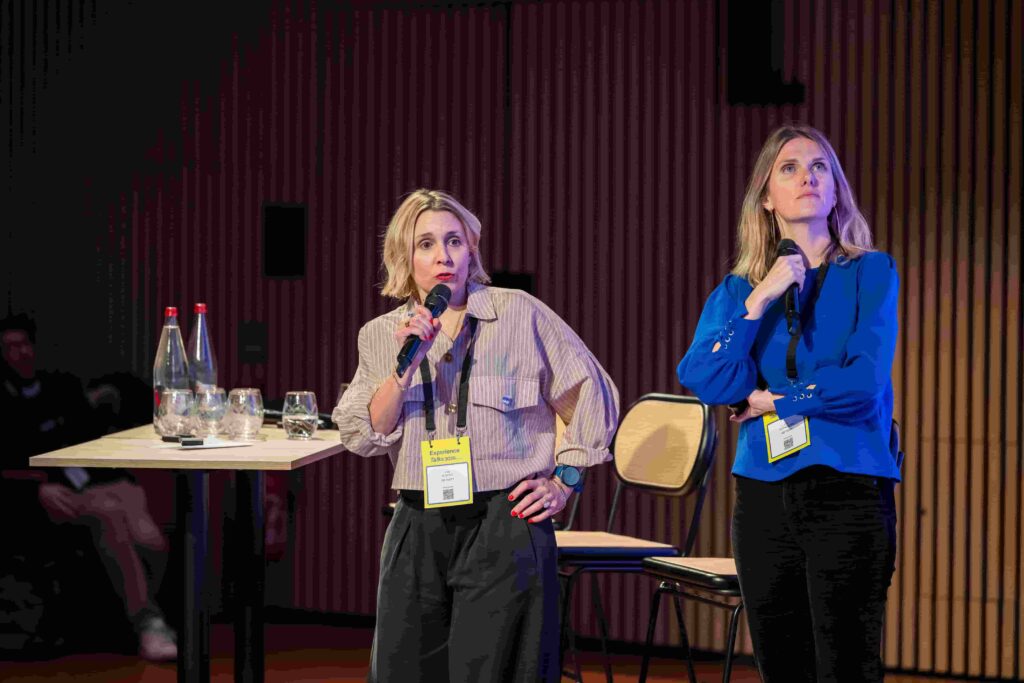
To start the afternoon, we had Alix de Sagazan (Co-founder of AB Tasty) and Julie Dumont (Chief Product Officer) recapping our recent momentum – including our recent Manchester event and our growing global community.

They also discussed our recent announcement in merging with VWO, clarifying our singular, shared vision with total continuity and alignment for our teams.

julie and alix experience talks 2026

Progress With Our Platform

Alix and Julie also provided an overview of our platform evolution. As AB Tasty was originally focused on a single capability (A/B testing), they discussed our shift from being a software with a single capability to a more comprehensive, multi-product platform. This is especially relevant in the world of optimization, where AI now goes hand in hand.

With AI features from AB Tasty, we can now dive deeper into experimentation and personalization with:

  • Easier onboarding
  • Emerging insights
  • One click activations
  • AI to control content optimization

Daring to Go Further with AI

We also touched on what AI can do in a world where it’s becoming “normal” to make use of it, and therefore – more challenging to stand out with features developed by artificial intelligence.

At AB Tasty, we reiterated our focus on building practical, everyday AI features that can be used as a co-pilot in your optimization strategy. 

Some of the current and upcoming innovative, AI-driven features highlighted at the start of the Experience Talks 2026 included:

AI Campaign Studio

Effortlessly design and launch AI-driven experiments with high-performing hypotheses.

Commerce Strategy Builder

Align your site’s commerce logic with user intent to drive higher margins and conversions.

Revenue IQ

A strategic pillar focused on connecting every digital interaction directly to your bottom line.

AdaptiveCX

Predict and react to user behavior in real-time to deliver truly unique user journeys.

With all of these projects underway, we continue to build a valuable optimization engine where AI reshapes knowledge and automation to deliver unique user experiences.


The Champion’s Mindset: Adapting for the Win with Marion Bartoli  

To go along with our tennis match theme, we invited Marion Bartoli, Wimbledon Champion and former pro-tennis player, to speak with us about how trial-and-error got her to the successful peak she stands at today.

From her legendary matches against Serena Williams to her current roles with Prime Video and the BBC, Marion shared how capacity to adapt helped her to achieve her highest hopes as a former athlete – even when the odds were stacked against her.

alix and marion experience talks 2026

Stay Ready. Shift Fast. Win.

Marion shared several stories on how her curious courageous nature helped her to beat the odds and be bold for her tennis competitions. 

For instance, she shared an anecdote about a match in Miami in 2007, and how her resilience allowed her to win when others said she couldn’t. Despite being told her physical stance wasn’t the best for sports, in the end – she became an accomplished tennis player. 

Experimenting with an Analytical Edge

Marion’s early use of data and structured analysis with her father, who was a doctor, helped her to gain greater insights into what she could do to maintain a competitive edge in sports. 

This parallels our modern AI tools used to organize performance insights, which she also mentioned is a useful tool to accomplish your goals. 

Personal Motivation to Make Progress

Marion discussed how tennis is both a high-stakes competition and personal therapy.

She then shared how routine and repetition, confidence in preparation, and finding creative ways to take one step closer toward your goals is key. This aligns with our own brand beliefs, as Marion represents how determination in daring to go further can unlock new levels of success.  

In the end, success isn’t just raw talent – but the ability to adapt continuously.

ab tasty merch

Scaling the Summit: Personalization at Peak Traffic with Groupe La Poste

Next we heard from Nicolas Vandenbulcke & Cecile Breil from Groupe La Poste. Celebrating over a decade of innovation and partnership with AB Tasty, he shared their challenge in managing massive desktop and mobile traffic to improve navigation and service discoverability.

Climbing to the Top as a Team

La Poste’s strategy started with a deep analysis, shifted to focusing on menu optimization (burger navigation), and ended with  journey-wide personalization. Long-term, their target was to move beyond isolated pages and toward a more structured model of audience segmentation and global activation.

The results were clear. After involving dozens of cross-team contributors and using personalization as an entry point to broader experimentation culture – La Poste successfully built a community ecosystem. This allowed them to connect physical and digital life moments and ultimately – a more fulfilling user experience.

Curated for You: Elevating the Digital Boutique with Soeur  

Soeur, a powerhouse digital presence with high product volume and partnered with AB Tasty since 2024, joined us at our Experience Talks with Léa Moraly and Capucine Charreyre presenting their e-commerce strategy. 

Focused on expanding their e-commerce operations including international optimization, merchandising, and the intersection of experimentation and personalization – Soeur was dedicated to discovering new ways to boost their personalization strategy. 

Brave Ideas to Bold Results

With over 500,000 Instagram followers and high product volume, Soeur teamed up with AB Tasty to go further.

Soeur illustrated their journey in improving recommendations and search for their users, before heading into personalization.

Here were some of the key pages Soeur sought out to optimize with AB Tasty:

Category icon

Optimized Category Pages

Reorder products in real-time based on in-session intent signals to ensure the most relevant items are always front and center.

Product icon

Product Pages

Tailor social proof, urgency signals, and technical details to match the visitor’s unique browsing behavior and predicted preferences.

Search icon

Innovative Search Bars

Predict what users are looking for from the first keystroke and surface result patterns that align with their real-time interests.

Recommendations icon

“Chosen for You” Sections

Leverage predictive AI to curate personalized product carousels that automatically adapt as a visitor’s interest evolves during the session.

They also employed pop-ups to provide users with customer support if there was inactivity. This method of intervening during cart hesitation helped shoppers to feel more confident in their potential purchase, such as by helping to reduce size uncertainty before a user accesses the size guide.

In the end, with success in increasing their recommendation pages and search bar revenue, Soeur was able to use behavioral insights and targeted activation to build a better foundation for ongoing experimentation. 

The Art of the Possible: Personalization Across the Maisons with LVMH

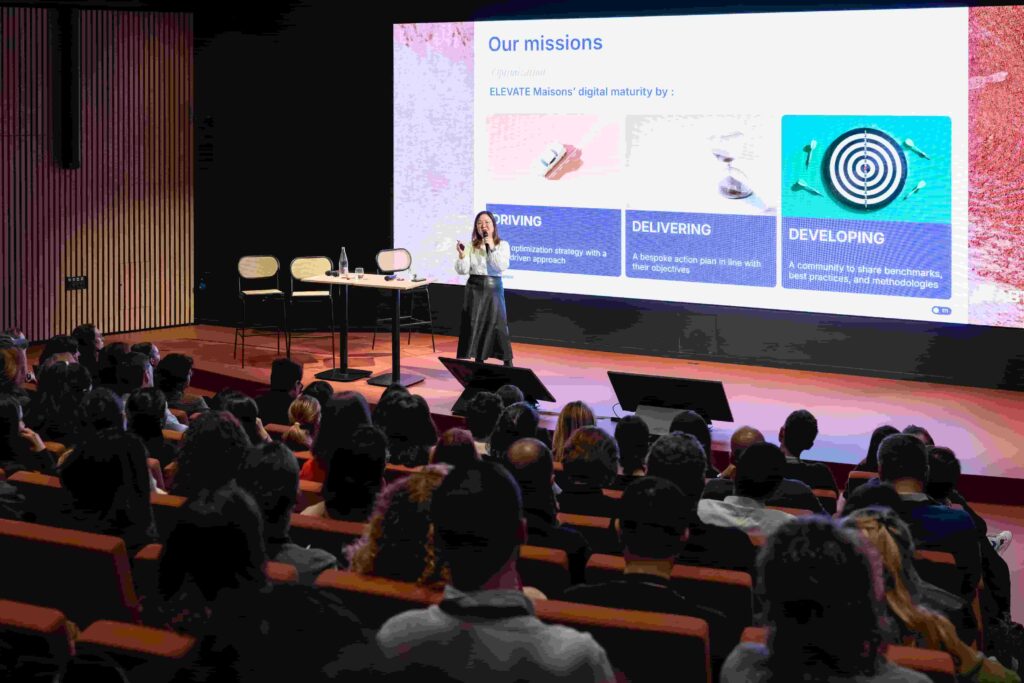
Sunny Song shared LVMH’s story in their adventure to accomplish the 3 D’s: drive, delivery, and development. 

The overview cards below will define each of the 3 D’s often used in the world of optimization:

Drive Icon

Drive

This involves driving an optimization strategy with a focused and determined approach, often through A/B testing to validate ideas quickly.

Delivery Icon

Delivery

This focuses on delivering a bespoke action plan that aligns with objectives, often using AI-powered personalization to provide targeted experiences.

Development Icon

Development

This centers on developing a community to share best practices and methodologies, while using feature management to reduce risk with progressive rollouts.

Having partnered with AB Tasty since 2015, LVMH showcased their journey in omnichannel scale, seeking to move from multichannel to a truly cross-channel and omnichannel experience.

To work toward this goal, LVMH followed 5 main pillars:

  • Identification
  • Segmentation
  • Activation
  • Measurement
  • Technical Foundations

This isn’t just theory, but a proven model for success – and LVMH’s story shows us how.

From a North Star to a Shared Galaxy

LVMH took a leap forward in their progress with personalization using these core pillars designed for success. 

This framework came to life through tangible actions at Maisons like Acqua di Parma, Maison Francis Kurkdjian, and FRED. By focusing on critical KPIs such as increasing login rates, enhancing product discovery, and boosting add-to-cart conversions – the teams turned strategy into measurable results.

The secret to scaling this success was their operating model, such as how LVMH curates a  culture of shared learning through internal workshops and detailed “Playbooks” that act as guides for personalization. 

By aligning every “Maison” around a central “North Star” metric, they allowed each brand to maintain its unique identity while still moving in the same direction. This proves value and building an insight-driven ecosystem of excellence.

sunny song giving presenation

Democratizing Data: The Voice of the Customer at Carrefour 

Next we had Laura Duhommet (CRO) and Pauline Massart (Customer Experience Manager) from Carrefour, which is a French based retail and wholesaling company. They recounted their mission to reduce risk, measure impact, and represent the customer’s voice.

Carrefour’s main mission was to experiment with the intent to better anticipate customer needs. 

This involved a collaborative model and a 4-key role approach to involve several teams including: 

  • Business
  • Product
  • Tech/Data
  • Design

CXO & AI Teaming Up For Your Next Big Win

Carrefour used both CXO Strategy and AI together to embark on their journey from the homepage through the checkout funnel using UX analysis, A/B testing, and NPS scoring.

Their CXO strategy, which included reworking product discovery across their home page, product pages, cart journeys and checkout funnel, made use of the following tools for their methodology: 

Carrefour also used AI integration for internal insight repositories, in addition to several AI assistants to analyze results and boost efficiency. This fostered a culture of improvement, where every test, win or lose, could be viewed as a learning opportunity that feeds a continuous improvement loop.

In teaming up with AB Tasty, Carrefour was able to build a collaborative, experimentation oriented environment where AI enhances efficiency and CRO enables better decision making.

Celebrating the Bold: The Customer Experience Awards 

Nearing the end of our Experience Talks 2026, we announced the winners for this year’s award winners for:

  • Best Mobile Strategy
  • Best Merchandising
  • Most Innovative
  • Best AI Usage
  • Most Engaged Clients

Some of our winners included L’Oréal Canada, SNCF Connect, Hello bank!, and Clarins – celebrating strategies that focus on simplicity, impact, and strong experimentation frameworks.

We also honored long-term partners who have shaped their industries through the strategic use of personalization and experimentation.

Here’s a breakdown of the winners from AB Tasty’s Experience Talks in Paris 2026:

Best Mobile Strategy

  • Bronze: L’Oreal Canada & SNCF Connect
  • Silver: Wurth & La Banque Postale
  • Gold: MACIF

Best Merchandising

  • Silver: Manutan
  • Gold: Raja

Most Innovative

  • Bronze: Sandaya 
  • Silver: Clarins
  • Gold: Hello bank!

Best AI Usage

  • Bronze: Tikamoon
  • Silver: SNCF
  • Gold: Mademoiselle bio

Most Engaged Clients

  • Bronze: Maxime Donnet: E-Commerce Manager Oscaro 
  • Silver: Lea Moraly: E-Commerce Director for Soeur 
  • Gold: Mathilde Veau: CRO Manager EMEA L’Occitane
  • Gold: Sunny Song: Lead E-Commerce Optimization
auditorium chairs

Innovative Ideas For the Win

The “Most Innovative” category recognized brands that moved beyond traditional testing to build both unique and successful user journeys.

  • Gold: Through the development of personalization tactics for users who had previously abandoned the application process, Hello bank! was able to encourage users to return and significantly improve lead generation.
  • Silver: Clarins focused on maximizing the impact of their welcome pages to better engage new customers.
  • Bronze: Sandaya used a “Headless & Data-Driven” approach to place product recommendations at the heart of their digital growth strategy and accelerate conversions.

Awarding Amazing AI Usage

These awards celebrated teams that best used AI to automate workflows and bring real-time user experiences to life.

  • Gold: Mademoiselle Bio improved their testing velocity with AI by making a majority of their tests automatic. This drastically reduced test generation time, making it easier than ever to modify site elements like buttons and colors.
  • Silver: Even in our long-standing partnership of over 10 years, SNCF Connect is still ready to take on new challenges –such as with AI. Using AI for both geolocalization and dynamic content to reduce friction in user’s search experiences, SNCF Connect was able to successfully increase engagement with service pages.
  • Bronze: Tikamoon Tikamoon used AI to accelerate the development of mobile variations. This was done specifically by implementing a scroll indicator that encouraged users to explore more products and improved mobile click-through rates.

Game, Set, Match: The Networking Celebration

After the awards ceremony, we regrouped for drinks and small bites –opening the floor for a celebratory, collaborative environment where clients, speakers, and AB Tasty teams connect beyond the presentations.

During this cocktail hour, we were able to strengthen the human connections that fuel digital innovation.

Trial, Better, Repeat: Bringing the Vision Home

In the end, the best parts of A/B Tasty go beyond the tool itself – but in how our bold, powerful partnerships create a creative community that encourages everyone to take new steps towards brave experiments.

Experience Talks 2026 showed how our clients don’t just use the platform, but contribute to re-shaping the future of optimization.

Roland-Garros proved that tactics like personalization and customer experience innovation are mindsets that require more than just strategy – but teamwork to find the perfect winning serve. 

Find Your Winning Swerve

Want to join our community of courageous thinkers dedicated to continuous optimization?

FAQs

Still have questions about AB Tasty’s Experience Talks? Here are the answers you need.

Profile Image

Article

12min read

AB Tasty Cements Leadership Position in G2 Spring 2026 Reports: What Sets Us Apart 

Real Reviews. Real Results. No Filter.

Choosing the right optimization software isn’t easy. The market is crowded, the promises are loud, and everyone claims to be the best. So how do you cut through the noise?

You listen to the people who’ve actually been there.

That’s exactly what G2 does. As one of the most trusted sources for peer-driven software reviews, G2 gives buyers something rare: honest, unfiltered insights from real users — no spin, no sales pitch. Just authentic experiences from teams who’ve tested, iterated, and formed an opinion worth sharing.

And in the G2 Spring 2026 reports? AB Tasty’s users spoke — loudly.

We’re breaking down exactly how G2’s rating system works, what it takes to earn a top spot, and why AB Tasty’s results reflect something we’re genuinely proud of: a community of users who believe in what we’re building together.

Decoding G2: What Are G2 Ratings and Why Do They Matter? 

G2’s rating serves as one of the world’s largest and most trusted software marketplaces for vetted, peer-to-peer reviews for  software. Operating as a cloud-based platform with millions of verified reviews, G2 helps companies to compare and contrast various technology solutions to discover which one is right for their business needs. 

How G2 Ratings Work

G2 ratings work by comparing software across four different categories: Leader, High Performer, Contender, Niche. These are determined by two key differentiators: Market Presence and Customer Satisfaction.

In addition to this breakdown, G2 ratings are also decided through:

Reliable Data Sources

As rankings are chosen using verified user reviews and select social data, G2 scores are widely regarded as both trustworthy and comprehensive. This is because each review undergoes a validation process to ensure authenticity, helping prevent bias or manipulation. 

With insights on review quality, timeliness, and volume, this approach ensures that rankings reflect real, up-to-date customer experiences as opposed to one-off opinions or outdated feedback.

Badge Significance

In order to showcase each special feature associated with each software, G2 awards various badges. 

Here’s a breakdown of the various badges offered by G2:

Leader Badge Icon

Leader

These badges indicate products with both high customer satisfaction and strong market presence.

Best Relationship Badge Icon

Best Relationship

This badge highlights tools that deliver exceptional customer experience, including support, trust, and ease of doing business.

Most Implementable Badge Icon

Most Implementable

These badges are awarded to software solutions that are exceptionally easy to set up and get up and running quickly.

Unique Algorithm

G2 Ratings use a specific algorithm to calculate their data for customer satisfaction and market presence, allowing for the most up-to-date information at all times.

In order to ensure precision, G2 ratings are scored according to two main areas: customer satisfaction and market presence. 

Customer Satisfaction

This score is derived from verified user reviews and aims to focus on the customer’s experience with the software. 

Various key factors contribute to this component of G2’s scoring system, such as: 

  • User-Focused Scores: This includes information from review forms related to the product’s ease of use and how helpful users found customer support. 
  • Recent Reviews & Volume: If reviews are more recent, they are given more weight to boost relevancy. A high volume of reviews is also required for statistical significance.
  • Admin-Focused Scores: How user-friendly customers found admin, set-up, and overall business logistics with the software they used. 
  • Review Quality & Source: If reviews are completed on the user’s own behalf without any additional incentives, they are given more weight to calculate the customer satisfaction score. 

Market Presence

This score combines G2’s internal review data with external third-party sources to measure a company’s market presence and influence in the industry:

  • Review Count: The total number of reviews associated with a specific category are weighted depending on quality and how recent the reviews are. 
  • Company Size & Revenue: Various data from platforms like ZoomInfo, LinkedIn, and Crunchbase can help to verify employee counts and estimated B2B software revenue.
  • Web Presence: This refers to search engine rankings (Moz Authority), estimated search volume, and website traffic data. However, this isn’t as important as review counts, revenue, or company size.
  • Growth & Engagement: Any substantial trends in employee growth over time or overall social/market influence are taken into account for G2’s market presence scoring system. 

Why G2 is a Critical Benchmark for Competitors 

G2 is an aspirational goal for many competitors in software as it provides an objective reflection of customer satisfaction and real-world product performance. 

Our Users Said It Best. We’re Just Here to Share It.

We could talk about our G2 Spring 2026 results all day. But honestly? Our users already did it better. From intuitive experimentation to responsive support, the reviews speak for themselves — and they’re saying something worth reading.

Here’s a look at where we landed, and why it matters.

We’re happy to announce that AB Tasty is once again recognized by G2 in their Spring 2026 report, showcasing us as a leader across the digital experience optimization landscape.

With an average 4.4 out of 5 review score across over 400 reviews, AB Tasty has been established as a leader in web experimentation and optimization – with over 19 different badges including regional leader, high performer, and providing industry-leading user adaptation. 

Badges to Show Our Bold

Here’s a breakdown of just a few the badges AB Tasty received:

Regional Leader

Software services that acquire this badge receive strong ratings from G2 users. This demonstrates both strong customer satisfaction and market presence.

High Performer

This badge reveals that companies like AB Tasty have higher customer satisfaction scores while having a smaller market presence than competitors in the same category.

Highest User Adoption

This badge showcases AB Tasty’s exceptional performance in user adoption in comparison to its competitors.

Best Estimated ROI

Companies that receive this badge earned the best estimated ROI rating in its category. This is calculated by the length of time it took to achieve ROI and how long it needed to go live.

Momentum Leader

Products and services that obtain this badge are rated in the top 25% of products in their category by users.

Easiest To Do Business With

This badge is awarded to software services that provide exquisite customer service and make it easy for customers to partner with AB Tasty and make progress together.

AB Tasty also positioned itself as a leader in several key categories, which illustrated our comprehensive platform capabilities in:

Here are some more places where AB Tasty shines according to this year’s Spring 2026 G2 ratings:

Recognition for Excellence in Customer Experience

AB Tasty acquired several badges related to exceptional customer experience.

These are some of the special awards we received that reflect our strong, customer-centric approach:

  • Momentum Leader: Recognized for our rapid growth and positive user feedback.
  • Most Implementable: Achieved for our user-friendly setup and smooth implementation process.
  • Best Relationship: Awarded for our solidified reputation for building strong, positive relationships with clients.

Broad Market Appeal

This year, AB Tasty received high performer and leader badges badges across several categories for businesses of all sizes: small businesses, mid-market, and enterprise. In turn, this depicts our ability to provide outstanding customer service and business value for companies of all sizes. 

Speed & Efficiency in Optimization

AB Tasty is being recognized for our quick, well-structured plans to help websites implement optimization. It can be tricky to be both fast and organized. However, our recent G2 Spring 2026 badges prove we can successfully do both.

Our Fastest Implementation badge shows that our product was a leader in its category with the shortest time to go live. Furthermore, our Most Implementable badge reveals that our product had the strongest rating for implementation within its group. 

red race car

AB Tasty vs. Competitors: How We Stand Out 

AB Tasty isn’t just known for our approachable, beneficial services – but for going one step ahead of our top competitors. This is because our optimization software offers various features not found with other A/B testing or web experimentation tools.

Here are some of the ways that AB Tasty stands out against competitors:

A Unified Platform for All Teams

Unlike other tools, AB Tasty offers a single platform for both client-side (no-code) web experimentation and server-side feature experimentation. This empowers marketing, product, and engineering teams to easily collaborate with one another.

Innovation Driven by AI & Patented Technology

At AB Tasty, we believe in innovative ideas to take you one step further – and that AI can help support your optimization journey.

Here are some of the AI-powered tools and technology we offer that make growth in experimentation even more exciting and efficacious than before:

  • Evi AI: Our AI-driven personalization tools, such as Evi AI beyond basic A/B testing with advanced AI agents and EmotionsAI for sophisticated audience segmentation.

Unwavering Performance and Speed

At AB Tasty, we put speed and precision together to create an unstoppable, unforgettable optimization experience.

AB Tasty has one of the fastest tags on the market, plus a built-in Performance Center to ensure experiments don’t slow down the user experience.This “performance-first” philosophy is what positions us as a leader in the field of web experimentation

Time script load

A True Partnership Approach

We know that successful software doesn’t just mean crunching numbers and spitting out data, but having real people pushing you towards greater progress. One of the reasons that our customers leave such overwhelming positive reviews is because people are at the heart of our core mission – combining powerful experimentation with expert guidance every step of the way.

AB Tasty provides dedicated Customer Success Managers (CSMs) who act as strategic partners. On the other hand, several of our top competitors have more expensive or less cohesive support models.

Moreover, more than 300 customer ideas were implemented into the product in the last year. This demonstrates our commitment to listening and evolving with not only client needs, but out-of-the-box ideas that could turn into exceptional experiments. 

This includes creating personalized road-maps, expanding feature capabilities inspired by user feedback, and continuously refining the platform to support more memorable experimentation.

Your Next Big Test Starts Here.

G2’s Spring 2026 reports are a good reminder of what we’re here for — helping brands turn bold ideas into real action.

The badges we received this year only further cements our leadership status in the world of optimization. This is because we’re recognized for our strong customer relationships and ease of implementation. In fact, 9.3 out of every 10 customers at AB Tasty share their satisfaction in working with us.

AB Tasty is more than just an A/B testing tool. We’re a comprehensive experience optimization platform that combines user-friendliness, powerful AI, uncompromising performance, and partnering together to make progress.

Want to see one of the leading platforms in optimization in action?

See AB Tasty in action with Maison Francis Kurkdjian.

Read the full Case Study here →

Our Customer Reviews from G2

Read some of our most recent reviews from our clients on G2:

FAQs

Still have questions about G2 Ratings? Here are the answers you need.

Profile Image

Article

11min read

What Can AI Agents Do: AI & Optimization in 2026

What is AI-Powered Optimization Really Doing in 2026?

What can AI agents do in 2026? It’s far more than you think – as AI is now playing an integral role in reshaping how optimization works.

The noise has never been louder for AI, with industries from food, fashion, to entertainment finding new ways to push the limits of what AI can do to optimize their success. No longer a futuristic concept, AI is now a daily component for teams across multiple industries to establish success in marketing, conversion, and more. 

However, many people still remain wary of AI in 2026 — as some fear it could replace them entirely. This concern is one that resonates across many industries, and the world of optimization is no exception.

But when we look past the potential fear associated with AI, we can see that AI isn’t here to replace the optimizer – but to be used as a tool to amplify already existing strategies. This is because AI can automate tedious, analytical tasks and uncover new insights that the naked human eye might miss. In turn, this can allow teams to focus more on strategy and creativity – and leave the more mundane chores in the hands of AI. 

We’re going to explore the tangible benefits of AI in optimization software today, how it is continuing to evolve, and address the common concerns regarding what the future holds for AI in Experimentation Optimization Platforms (EOPs).

The World Before: A Quick Look at Optimization Without AI

Things were different just a couple of years ago. College students didn’t have Claude to help write their papers. High school students didn’t have Chat GPT to finish their homework. Colleagues didn’t have Gemini to respond to emails. 

The same goes for the EOP world before AI. 

The overview cards below will show what traditional optimization process consisted of:

Data analysis icon

Manual data analysis

Test ideation icon

Time-consuming test ideation

Developer dependencies icon

Developer dependencies for simple changes

Complex results icon

The challenge of interpreting complex results

Before AI, optimization heavily relied on statistical models to optimize. While these were effective, it remained challenging to choose the best hypothesis to test – which is the first step to achieving conclusive results in experimentation.

Luckily, this is where AI has stepped in – helping us to develop stronger hypotheses and consequently, more robust testing and results.

When brands dare to find growth in unexpected ways, such as with AI, you can leverage opportunities that would have otherwise gone unnoticed.

This is where AI can step in and bring expertise to make experimentation easier. 

infographic explaining AI and personalization

How AI Benefits Experience Optimization in 2026

There are several benefits to using AI for your Experience Optimization Platform (EOP) in 2026.

Here are some of the various advantages AI brings to optimization platforms: 

  • Manual Analysis to Proactive Insights: AI doesn’t just present data, but interprets with more conducive results. This reduces the chance of subpar results and makes testing more effective and concise. Tools like AB Tasty’s Report Copilot (Evi) analyze results, summarize key takeaways in natural language, and even suggest the next best action, turning reporting from a passive dashboard into an active “optimization engine”.
  • Brainstorming to Data-Driven Ideation: AI tools like Visual Editor Copilot can analyze user feedback, competitor sites, and performance data to suggest high-impact A/B test ideas. This allows brands to overcome creative blocks and prioritize their roadmap.
  • Code-Dependent to Code-Free Creation: Generative AI in tools like the Visual Editor allows marketers to make changes with simple text prompts, such as by suggesting to make a button blue or add a banner. This dramatically reduces reliance on developers and accelerates test velocity.
  • Static Segments to Dynamic, Emotional Targeting: Perhaps the most pivotal benefit of AI in optimization software, AI tools can provide real-time, intelligent targeting as opposed to basic segments.
iphone face down on coral background

Addressing the Elephant in the Room: Will AI Replace Me?

Understandably, there’s a lot of uncertainty that accompanies the growing use of Artificial Intelligence (AI). Many people working across various industries worried that AI could replace them entirely.

According to National University, a whopping 52% of employed people are concerned that AI will be able to do their job and render their professional skills useless.

The overview cards below will reveal some key figures about the current use and future direction of AI:

35%

of companies around the world use AI in their business models

52%

of experts think AI will both replace and create jobs

77%

of companies are exploring the use of AI

It’s understandable that the near omnipresence of AI is overwhelming, especially with the looming apprehension that AI could make optimization roles obsolete. But if you think of AI as more of an assistant instead of a replacement, it could actually make your existing work easier. This can leave more room for more innovative ideas instead of time consuming data-analysis. 

The problem with AI in fields like optimization is that many people tend to think of it as simply being on autopilot. In reality, AI functions as more of a co-pilot in EOPs – handling the “how” so humans can focus on creating goals for the “why” and the “what’s next”. 

The table below will break down the differences between AI being on “autopilot” (what many consumers fear) and when AI works as a “co-pilot” :

AI on “autopilot”AI as a “co-pilot”
Uses AI to create content Uses AI to make suggestions & spark ideas
Executes tasks end-to-endCollaborates with humans to refine decisions
Prioritizes speed and automationBalances speed with control and creativity

How AI Can Boost Time Efficiency in Workflows

AI serves as more of an assistant rather than a replacement. In fact, 88% of creative professionals said that they felt generative AI could help them to produce content faster – without replacing them entirely (Adobe Digital Insights). 

Think of a marketer staring at a blank hypothesis backlog. By using AI as a sounding board, they can quickly generate fresh test ideas, suggest high-impact page elements to experiment on, and even draft email subject line variations to A/B test — all in a fraction of the time it would take to do manually. AI isn’t replacing the marketer’s judgment, but avoiding an incessant blank page so they can spend more time doing what they do best: thinking strategically and acting decisively.

AI can serve as a way to enhance already existing human thinking, creativity, and brand understanding. This is because the best AI strategies blend automation with human oversight and expertise.

yellow light bulb and god coins on yellow background

How Tools Like Evi AI & Emotions AI Boost Optimization Strategies 

Sometimes it’s hard to believe in the power of AI until you see it in action. 

At AB Tasty, we want optimization and AI to work together as a team – and that’s exactly what our software accomplishes. 

Here are three different AI-powered software tools used in AB Tasty optimization platform:

  • EmotionsAI analyzes in-session behavior to identify a visitor’s emotional needs (e.g., Need for Safety, Need for Immediacy) in just 30 seconds. This allows for personally tailored carousels, pop-ups, and more to boost conversion.
  • AdaptiveCX uses predictive AI to personalize experiences for anonymous visitors based on their live intent, adapting the journey in milliseconds.
  • Evi AI is an AI agent that transforms complex data into clear, actionable strategies for your experimentation program by automating the A/B testing journey. This includes generating data-backed ideas, hypotheses, and analyzing campaign results to help make smarter, evidence-based decisions.

 AB Tasty, we want optimization and AI to work together as a team – and that’s exactly what our software accomplishes. 

Our AI powered tools reveal that AI doesn’t have to work against you, but with you. When paired with daring ideas, AI can take you one step closer to the next level of success. 

The Future is Collaborative: What’s Next for AI in Optimization?

The future of AI in optimization isn’t just making suggestions, but taking action. As AI agents become more autonomous, teams will be able to redirect their focus to achieving greater goals instead of spending additional time on tiresome tasks. 

Here are just a few of the ways that AI could boost our collaborative efforts and make progress in personalization even more possible:

Agentic AI 

Instead of just suggesting a test, an AI agent might propose an idea, build potential models, monitor performance, and even make suggestions for follow-up steps. This turns the platform into an intelligent, self-improving system – one that requires no extra work or a large team of coders. 

Deeper Integration

Also, AI in optimization can help to bridge the gap between different platforms – such as between analytics, e-merchandising, and Customer Data Platforms (CDPs). This creates a unified, quick-witted optimization ecosystem that can respond to changes instantaneously.

Proactive Optimization

As AI becomes more authoritative, it will be able to not only report past activity – but actively make suggestions for the future. 

This means that instead of redirecting optimization tactics toward potentially obsolete information, future optimizations can expand revenue or reduce catalog fatigue according to live data. This shows how AI can operate as an effective tool in supporting already existing personalization plans, predictive analysis, A/B testing strategies, and more.  

blue shopping cart on light blue background

Conclusion: Your New Teammate is an Algorithm

In 2026, AI is not a threat – but an essential teammate in your growth journey. 

It makes optimization faster, smarter, and more human-centric by handling the machine-scale tasks that used to slow us down. Brands that are brave enough to try, iterate, and test the boundaries of what AI can do will be bound to be more successful than those who don’t take small steps forward with AI as their ally. 

Remember, AI isn’t meant to replace raw, human talent – but amplify your power to make progress.

Let’s push past the limits and learn what AI agents can do for optimization, together. 

FAQs

Still have questions about AI and optimization? Here are the answers you need.

Profile Image

Article

8min read

Feed Driven, Creative Ideas: How Top CRO Professionals Think with Richard Joe

Do you want to feed driven, creative ideas into your CRO plan – but aren’t sure where to start?

Richard Joe shares his unique journey that led him to CRO, his actionable insights that can help all marketers take a step toward increased conversions, and his predictions for CRO and experimentation in the near future. 

Currently working as an Experiment Lead at Yoghurt Digital, Richard Joe is passionate about CRO and deeply intrigued by the different ways to feed driven, creative ideas that have a tangible impact on business success. Richard is also the host of the podcast Experiment Nation. With more than 10,000 subscribers on YouTube, it has grown into a global community of CROs sharing fresh, innovative perspectives in the field. He has also spent several years gaining experience across a wide range of industries, including e-commerce, real estate, and healthcare. His background across SEO, paid search, and web development shaped the well-rounded CRO expertise he has today.

Richard spoke with AB Tasty’s Head of Marketing and the host of The 1000 Experiments podcast, John Hughes, about his vast experience in CRO across various marketplaces, the future of CRO, and how experimentation can be humanized and approachable for all. 

Here are the main points from their conversation to remember.

Anyone Can Get Started in CRO

Even if you’ve never heard of Conversion Rate Optimization (CRO) before, Richard Joe reveals how it’s more than possible to embark on this experimentation journey with no previous experience.

Having not even heard of the term “CRO” until 2016, Richard came across this word for the first time when someone he knew working in affiliate marketing in the e-commerce space was posting on social media.

Without even knowing what A/B testing was, despite having worked in marketing and web development, Richard was fascinated to learn more – as he was already working in an industry where clients were doing split testing. 

After this, Richard joined a team in general marketing and continued to pursue this interest by playing around with simple things while working in roles for SEO or paid ads – such as changing the font on a CTA button, headlines, and images. This sparked further curiosity and made him interested in CRO not from a business angle, but the creative aspect in taking an idea and eliciting tangible change. 

Bringing out the more inquisitive, psychological aspects of his mind – Richard was interested in how creative ideas can turn into multimodal moments that are capable of delivering new analytics, statistics, and actionable insights.

5 Principles Every Marketer Should Apply to Improve Conversions.

In our conversation with Richard, we discovered some of the best ways to feed driven, creative ideas to create effective CRO methods across all industries.

Here are 5 principles we learned in our discussion with Richard that every marketing professional should dare to explore: 

1. Keep Testing, Trying, and Learning

During our podcast, Richard stressed the importance of not giving up after first few failures. 

Real teams, real growth, and real results can often be achieved following the most unexpected experiments. 

By taking the plunge in trying and testing new optimization ideas, you can take your brand one step further to bold steps that lead to smarter wins.  

2. Digital Marketing is Beneficial for CRO

Having worked several years in marketing himself, Richard shared how CRO can leverage a marketing team’s power in making progress. 

Having a CRO manager serves as a dedicated position to improving your website’s performance. This can help your marketing team to be taken more seriously.

Often inspired by already existing, successful webpages – CROs can identify innovative ways to bring in great traffic. This can help develop new ways to strengthen audience interest. 

3. Don’t Fear AI

AI is continuing to take the optimization community by storm. This means it’s more important than ever to be brave in experimenting with AI platforms.

The use of Artificial Intelligence in Experience Optimization Platforms (EOPs) can prove extremely beneficial. Tools such as Evi AI can help to map customers based on their emotional needs and personalize their shopping experience accordingly. 

Your brand can achieve new growth and ambitious goals when you take AI into account. 

two people shaking hands with tan background

4. Find Fun Ways to Build Awareness

Despite his individual interest in CRO, Richard realized that not everyone might be as excited about boosting conversion rates. 

To combat this, Richard explained some of the dynamic ideas he used to get people involved in the testing community. This included engaging events such as by sending out a vote on which test won. 

This helped people to feel a more personal connection and investment to CRO strategies. It also created new opportunities for potential partnerships by engaging everyone in new tests and experiments. 

Additional ways you can showcase how CRO and experimentation benefits a company includes:

Host half-hour chats icon

Host half-hour chats

Opportunity to explore new things happening in your world, what’s worked and what’s been less successful but maybe spurred a new idea.

Test games icon

Test games

Share with people the control and variation and create a poll to get people engaged to see which one won.

Raise Awareness with Playfulness icon

Raise Awareness with Playfulness

Any other ways to make people more invested with fun activities or discussions can help to make CRO feel less analytical and more like a creative brainstorming session.

5. View Failure as a Step Toward Growth

Having a healthy sense of realism when testing can help to put things in perspective. 

Due to the nature of testing, there’s a high chance that it may not always go as planned. This is similar to when taking a test or exam. Even if you’re well prepared, you don’t know how you did until you receive the final results.

Recognizing that some tests are simply a trial run can give you the confidence to be more courageous for your next test. 

Not all tests are a success. But they are always allowing you to take one step closer to your next brave, breakthrough idea. 

The Future of CRO: Experimentation with AI

The future of experimentation is subject to change. This is especially true as technology continues to advance with the use of Artificial Intelligence (AI).

Everyone can, and should, take a dive into the world of AI. Even if you’re not an expert, playing around with simple platforms could open your eyes to new possibilities. Failing to be broad-minded, it could come at the cost of your brand’s competitive advantage. 

The hype surrounding AI may have passed in the experimentation community. However, it’s still important to find personal ways to make AI work in favor of your brand’s progress. 

Conclusion: The Reality of Becoming a CRO

Becoming a successful CRO isn’t always going to happen in a straight line. But if you aim to fail forward – it’s possible to feed driven, creative ideas.

Together, we can fledge a new path of phenomenal improvement you could’ve never imagined before.

FAQs

Profile Image

Article

14min read

From Static to Adaptive: The New Era of Personalization with Adaptive CX

The Adaptive Personalization Gap: Why It’s Needed in 2026

Shopping isn’t as simple as it used to be. Long gone are the days where we had the patience to drive to the mall, walk into a store, and wait in tedious lines to try on a pair of boots or test out a pair of headphones. Thankfully, this is where adaptive personalization can align with our modernized way of shopping.

In 2026, customers are more unpredictable than ever – with up to 70% of online shoppers abandoning their cart before even making it to checkout.

As a whopping 90% of human decisions are emotionally driven, it’s not surprising that a digital shopper’s intent is subject to change on a dime –  especially in today’s short-attention-span world. This reveals why adapting quickly to single-session activities is essential for success.

Therefore, the challenge with these less-than-analytic shoppers is that most brands have to invest in personalization. However, even then, many brands can still fall short on what makes for a truly successful personalization strategy. 

Take a look at just a few of the “micro-moments” that matter and are often still missing in many approaches to personalization today:

Low Battery icon

Low Battery

A user with low battery may not have enough time to finish their session, creating urgency to convert them quickly.

Private Browsing icon

Private Browsing

Incognito mode hides user history, making it harder to personalize based on past data. In-session behavior becomes critical.

Multiple Tabs Open icon

Multiple Tabs Open

A user with many tabs may be comparison shopping or get distracted. Grab their attention before they click away.

Color Preferences icon

Color Preferences

Users often show affinity for certain colors in products. Adapting image results to match these preferences can boost engagement.

Shopping Extensions icon

Shopping Extensions

The presence of coupon extensions signals a price-sensitive shopper who may be receptive to a targeted discount.

Zoomed Images icon

Zoomed Images

When a user zooms in on product images, it indicates high interest. This is a key moment to provide more detail or social proof.

The Problem with the “Unknown”

In the midst of the rise of digital shopping and consumption, up to 90% of website traffic is anonymous, incognito, or logged out – which deems more traditional data-reliant personalization strategies less effective.

In order to seize the opportunity at hand when a user reaches your site, brands have to take bold ideas and turn them into action. To that end, an effective transition from static to real-time, adaptive personalization strategies can make a world of difference.

Quick Recap: What is Personalization? 

In simple terms, personalization refers to the process of tailoring an experience according to the individual user’s preferences as an effort to encourage deeper and more methodical on-screen time to boost conversation rates. As a whole, the main goal of personalization is to leverage tactics that will increase the chances of a user making a purchase on the website.

Deploying an effective personalization strategy isn’t always easy, as brands need to have a good understanding of their customers. This requires collecting various demographic information such as age, gender, and location. As a result, this data can help brands to create a better digital experience for each individual user.

Real-World Example of Personalization

Imagine someone going to a popular fashion apparel store. Oftentimes, the main demographic for these websites may involve women in their teens or 20s living in warm climates –  meaning it might recommend something more fitting to their local temperature such as a lightweight jacket or capri pants that it may not share with a user living in Canada. 

As a result, personalization can also use predictive strategies, most commonly algorithms in order to further shape and refine the shopper’s digital experience.

For instance, customers who have previously purchased boots, sunglasses, or necklaces may be recommended the same products upon returning to the site — or even within the same session — based on the assumption that they are interested in that type of apparel.

What is Real-Time Personalization?

Real-time personalization refers to the type of personalization that occurs simultaneously as a consumer digitally explores a shopping site. 

The name “real-time” personalization comes from the instantaneous element of the experience: as the processing, analysis, and utilization of collected data happens on the fly – allowing brands to adjust the user experience accordingly while they’re still shopping. 

Especially as we dive deeper into the era of immediate gratification, such as how Gen Z shoppers are migrating their shopping habits toward PDPs instead of a traditional Google search – it’s becoming increasingly imperative to implement these types of instantaneous personalization techniques. 

Some examples of real-time personalization and how they could benefit your brand long-term include:

How Real-Time Personalization Benefits Your Business

In the age of real-time available insights that can be used immediately to boost the chances of a consumer purchase, many brands are contemplating if it’s worth making the switch from static to adaptive personalization.

The Limits of Traditional (Static) Personalization

While there isn’t anything inherently wrong with the use of more traditional, or better known as static, personalization – brands may benefit from implementing the use of adaptive personalization strategies with software such as AdaptiveCX.

The main issue between traditional and adaptive personalization is that static personalization relies on historical data, fixed segments, and can be too slow for real-life user behavior – as it operates under the notion that user activity remains consistent and doesn’t change within milliseconds.

Furthermore, passive personalization strategies aren’t preferred by the majority of consumers – with up to 53% of users claiming these tactics made for a less-than-optimal shopping experience. As a whole, this can lead to less conversation, brand loyalty, and reduced ROI – all of which could be evaded by implementing real-time personalization.

The battle cards below will further break down the differences between “real-time”(adaptive) and “non-real-time” (static) personalization:

The Future

Real-Time Personalization

⚡ Milliseconds — during the live session
  • Adapts to user behavior as it happens — clicks, scrolls, pauses, and tab switches all inform the experience in real time.
  • Triggers timely pop-ups, messages, and product changes while the user is actively shopping — not hours later.
  • Maintains consumer interest and momentum on-site, reducing the likelihood of drop-off or distraction.
  • More intuitive and user-friendly — helps visitors find what they are looking for without friction.
  • Maximizes revenue opportunities at the peak of buying intent, when the user is most likely to convert.
  • Works for anonymous, cookieless, and incognito users — no historical data required.
Bottom Line

Personalization that acts in the moment, not after it. The difference between a sale and a missed opportunity is measured in milliseconds.

VS
The Old Way

Standard Personalization

🕐 Hours, days, or weeks — after the session ends
  • Personalization occurs outside the direct session — often long after the user has already left the site.
  • Relies on historical data, past purchases, and cookies to build audience segments over time.
  • Retargeting emails and ads may reach the user days or weeks after their original intent has faded.
  • Has less immediate impact on the user experience during the moment that matters most — the visit itself.
  • Cannot account for in-session context shifts, such as a change in intent or urgency signals like low battery.
  • Dependent on known user data, making it ineffective for the ~90% of anonymous visitors.
Bottom Line

Personalization that arrives too late. By the time the message reaches the user, the buying window has already closed.

Enter AdaptiveCX: Real-Time Personalization for Everyone

What is AdaptiveCX?

AdaptiveCX is a predictive AI engine that processes behavioral signals while the user is still in session. This can help to better understand visitor intent and adapt their digital journey on the spot. Ultimately, this can help to boost revenue opportunities, as it keeps users engaged with their relevant interests and encourages stronger on-page time.

Ultimately, the goal of AdaptiveCX is to allow brands to make customer experiences more flexible and enticing to the user in real-time – as without it, websites can miss the mark on maintaining consumer interest all the way to check out.

Now used by over one billion visitors, several leading global brands utilize AdaptiveCX to ensure their personalization tactics remain instantaneously meaningful to the user at hand. 

Some of the hallmark qualities of AdaptiveCX include:

Cookieless by Design

AdaptiveCX relies entirely on in-session behaviors (clicks, scroll depth, dwell time, multiple tabs) rather than historical identity or PII, making it privacy-compliant and effective for anonymous traffic – which totals at a staggering 90% of visitors.

Speed and Scale

Predictions are calculated and activated in roughly 20 milliseconds, ensuring the experience adapts instantly without slowing down the site.

Ease of Use

With AdaptiveCX, there’s no need for data scientists or engineers – as product managers, data and analytics teams, and even those working in merchandising can easily deploy this personalization without any required additional skills.

How AdaptiveCX Works in Real-Time

The horizontal timeline below will reveal how AdaptiveCX works in real-time:

1

Step 1

Analyzes Live Signals

Captures micro-behaviors like mouse movements, pauses, and product comparisons as they happen in the session.

2

Step 2

Predicts Intent Instantly

Uses AI to forecast affinities (e.g., categories, colors, brands) and the likelihood of future actions (e.g., probability to purchase, abandon, or return).

3

Step 3

Delivers Real-Time Results

Automatically pushes the right experience — be it a customized search result, targeted content, or a timely promotional nudge — directly to the user.

infographic made by ab tasty explaining the benefits of adaptivecx and real time personalization

Real-World Use Cases of Real-Time Personalization with AdaptiveCX

There are several ways that AdaptiveCX helps users to seamlessly implement real-time personalization techniques. In turn, these practices can often prove worthwhile for brands over the long-run.

Here are just a few of the ways AdaptiveCX makes personalization both fearless and seamless:

  • Intelligent Incentives: AdaptiveCX’s technology works by predicting user intent and connecting people with the products they are most likely to buy. This ultimately curates a more clever digital experience bound to boost sales. 
  • Adaptive Search: With AdaptiveCX, you can personalize search suggestions and listing pages to be filtered according to inferred preferences from the user. This drives faster discovery and higher chances of a consumer purchase.
  • Adaptive Carousels: Users of AdaptiveCX can dynamically reorder categories based on user intent to ensure the most relevant items are always seen first. This includes color detection, promoting products more fitted towards potential revenue, and automatic reshuffling based on preferences.
  • Personalized Pop-Ups: Various adaptive promotions and perfectly tailored pop-ups are generated on the spot. This can help to align with the user’s interests and can incentivize a shopper to stay on the site.
  • Out-of-Stock Experiences: AdaptiveCX helps to avoid drop-offs by speedily showing personalized, high-affinity alternative products when an item is unavailable. As websites only have around 15 seconds before a user decides whether or not to leave the page, showing these customized replacements can help retain audience attention and engagement. 
shopping cart against orange background bird's eye view

The Benefits for Businesses Becoming Adaptive

In today’s modernized world, it’s crucial to step inside the consumer’s mindset to ensure continuous business success. Luckily, adaptive personalization can be the exact, “set-it-and-forget-it” method brands can easily use to assimilate to the challenges of online shopping.

Take a look at what can be achieved without the need for heavy infrastructure or large data science teams when you use AdaptiveCX for personalization:

+10%

increase in conversion rates.

+15%

uplift in revenue per visitor.

2.5x

improvement in retention rates.

The future of customer experience (CX) will continue to align with the rest of technology today. This means it isn’t about knowing who your customers were, but understanding what they want right now.

Taking a bold step, such as from static to adaptive personalization, could be the exact kind of brave change your brand needs to unlock the next level of excellence. 

Are you curious to learn more about how AB Tasty and AdaptiveCX can help you make progress in personalization? Let’s build better experiences together →

FAQs

Profile Image