Article

7min read

Why Modern E-commerce Needs a Semantic-First Search Strategy

For years, e-commerce search was built around a simple principle: match the words a shopper types with the words stored in a product catalog.

That model made sense in an earlier era of online retail. Traditional search solutions were built around keywords, synonym dictionaries, and manual rule-setting. If results were poor, teams fixed them by adding more synonyms, refining product terms, or tuning search rules.

That approach can still work in some cases. But shopper behavior has changed – and many search solutions have not evolved quickly enough to keep up.

Today’s shoppers don’t search like machines. They search in natural, sometimes imprecise language. They describe what they need, the problem they want to solve, or the type of product they have in mind. And they expect search to understand them.

That’s why more brands are rethinking their search strategy – and why semantic-first search is becoming the better foundation for modern e-commerce.

For brands with highly technical catalogs, structured product data, or shoppers who search using precise references, exact-term logic can be critical. In these cases, synonyms, keyword rules, and manual controls help ensure precision and consistency.

But problems arise when keyword-first search becomes the core model for every search experience.

Many established search solutions were built on that foundation. And even as they evolve, they often remain heavily reliant on manual synonym mapping, exact-term matching, and rule-based tuning to maintain relevance.

That creates real limitations.

  • Search quality can depend too heavily on manual upkeep
  • Broader or more natural-language queries can be harder to interpret
  • Modern shopper behavior gets forced into an older search model
  • Teams end up compensating for engine limitations through constant tuning

In other words, keyword logic is still useful – but for many brands, it works better as a layer of control than as the foundation of search itself.

That is why more e-commerce teams are moving toward semantic-first search: not to eliminate precision, but to build on a foundation that better matches how people search today.

Modern Approach

Semantic-based search

Starts from: meaning and intent
  • Understands what the user is trying to find.
  • Works well with more natural-language queries.
  • Less dependent on manual rule-building.
  • Best for modern, intent-driven experiences.
Bottom line

Semantic-based search is a strong modern foundation, while synonyms and keywords are still important for complex catalog environments. Newer search solutions, like AB Tasty Search, are built semantic-first, with flexibility for complex catalog needs.

VS
Traditional Approach

Keyword-based search

Starts from: exact terms and predefined rules
  • Matches what the user literally typed.
  • Works well with structured, precise product language.
  • More dependent on synonym lists, keyword mapping, and tuning.
  • Best for precision, control, and technical catalogs.
Bottom line

While keyword-based search is useful for complex catalogs, it is not adapted for modern buyer behavior. Legacy search solutions are trying to shift toward semantic-first architecture.

Shopper expectations have moved on

Modern shoppers are not thinking in taxonomy structures or exact product terms. They search in a way that feels intuitive to them.

They might type:

  • “comfortable black boots for winter”
  • “gift for a coffee lover”
  • “lightweight jacket for rainy weather”
  • “desk chair for back support”

These are not just keywords. They are expressions of intent.

A traditional keyword-based engine may interpret them literally and unevenly. A semantic-first engine is better equipped to understand the meaning behind the query and return more relevant results.

That difference matters because search is not just a navigation tool anymore. It is a core part of the customer experience. If search feels rigid or unhelpful, shoppers lose confidence quickly – and often leave.

Why semantic-first is the better foundation

Semantic-first search starts from meaning and intent, not just exact terms.

Instead of asking only, “Did the shopper type the right keyword?”, it is built to ask, “What is this shopper actually trying to find?”

That creates a stronger foundation for modern commerce because it better supports:

Data analysis icon

Natural-language queries

Test ideation icon

Broader or less precise searches

Developer dependencies icon

Discovery-oriented shopping behavior

Complex results icon

Evolving shopper language over time

This does not mean keyword logic has no value. For technical catalogs, specialized products, or highly structured environments, synonyms and precision controls still matter.

But those elements should support the search experience – not carry it.

That is the key difference.

A semantic-first strategy uses intent understanding as the foundation, then adds precision where needed. A keyword-first strategy starts with rules and tries to build toward intent afterward. For brands thinking long-term, that distinction matters.

There is another reason semantic-first matters: shoppers do not only search. They also browse, compare, refine, and explore.

That means search should be part of a broader product discovery strategy:

Search helps users find more

Capture user intent, return relevant results, and reduce friction when shoppers know what they want.

Recommendations help users discover

Surface alternative and complementary products, extend the journey beyond the original query, and support inspiration and browsing behavior.

Merchandising helps brands guide discovery

Promote strategic products, balance relevance with business priorities, and give teams control where automation alone is not enough.

When those elements work together, the experience becomes more cohesive and more effective. Instead of treating search as a standalone tool, brands can create a connected discovery journey that balances shopper intent with business priorities.

This is also where many point solutions fall short. A search tool may solve part of the problem, but still leave teams managing fragmented logic across multiple systems.

Why AB Tasty’s Search approach is different

At AB Tasty, our Search solution is built around a semantic-first approach. Rather than treating semantic search as an add-on to a legacy keyword model, we designed it to better reflect how shoppers actually search today: with intent, context, and natural language.

Just as importantly, semantic-first does not mean rigidly semantic-only. AB Tasty Search still allows brands to use synonyms and precision controls where they add value – especially for complex or technical catalogs.

That gives teams a better balance:

  • a more modern, intent-driven foundation
  • flexibility for catalog complexity
  • less dependence on manual rule management alone

And because AB Tasty Search sits within a broader optimization and product discovery ecosystem, brands can connect Search with Recommendations, Merchandising, and experimentation strategies instead of managing search in isolation.

For teams re-evaluating legacy vendors or looking for a more future-ready approach, that is a meaningful advantage.

The question for e-commerce teams is no longer simply whether their search tool functions.

The better question is whether their search strategy reflects how people shop today.

Many older search models were built for an era when exact keyword matching was enough. Today, that is no longer sufficient on its own. Shoppers expect relevance, flexibility, and a search experience that understands more than the literal terms they type.

That is why semantic-first search is becoming the new standard.

And it is why brands looking to modernize should move beyond keyword-first thinking toward a strategy built for intent, discovery, and adaptability.

Because modern shoppers do not search like machines.

And with AB Tasty Search, brands no longer need a search strategy that expects them to.

Profile Image

Article

21min read

Everything You Need to Know About Multivariate Testing in Travel

There’s nothing like the feeling of having your suitcase packed, ready to take flight, and being on your way to take a step on new parts of the planet. But the moments before takeoff may not be as simple as you think. This is where multivariate testing in travel steps in.

These days, travelers know what they want: and they’ll bounce quickly if their booking experience doesn’t meet their expectations. 

As travel remains one of the most competitive, emotionally complex purchase decisions a customer can make online – it’s extremely important to curate a satisfying digital experience. Otherwise, you don’t only risk losing a sale – but a long-term customer.

The travel experience starts long before luggage is pulled out of closets. People check the weather, potential flight cancellations, and research recommendations and reviews prior to booking flights or hotels.  

With so many factors at play, it’s crucial to continuously test every word, click, or button that could be optimized. In fact, a staggering 90% of visitors who land on a travel site end up leaving without booking.

Luckily, strategies like multivariate testing can give travel brands the power to understand not just what works, but which combination of varied pages, buttons, and banners drive the highest conversion — across search, booking, and beyond.

In this guide, you’ll learn what multivariate testing is, how it can benefit travel, and why optimization can be the answer to making the booking journey as smooth as the trip itself. 

The Travel Booking Funnel: Why It’s Uniquely Complex 

The Modern Traveler’s Journey is Non-Linear

Today’s travelers don’t move in a straight line. They open up a link on their phone, move to their laptops to make comparisons, add a flight to their cart on tablet, and abandon the purchase altogether — all before booking.

The overview stat cards below will reveal how dynamic the travel booking experience can be:

94%

A whopping 94% of travelers switch between devices when planning a trip.

70%

The majority use mobile devices, with up to 70% of people researching on their smartphones. However, only 31% complete a booking there.

53%

Over 53% of Americans have made a same-day hotel booking, revealing how spur-of-the-moment travel can be.

This cross-device, multi-session behavior makes it extremely difficult to identify which types of pages provoke drop-off during the booking process.

The Emotional Complexity of Travel Purchases

Unlike buying a product online, booking a holiday involves a myriad of emotional factors: 

Excitement icon

Excitement

The primary driver of travel planning. Lean into this emotion with high-quality, aspirational imagery and headers that spark joy.

Stress icon

Stress

Navigating flight times, hotel locations, and budgets can be overwhelming. Simplification and clear UX are your best tools here.

Disorganization icon

Potential Disorganization

Travel involves many moving parts. Help users stay organized by providing clear summaries and easy-to-find booking details.

Trust icon

Trust

Booking travel is a high-cost commitment. Build trust through social proof, secure payment markers, and clear cancellation policies.

Budget icon

Budget Sensitivity

Most travelers are price-conscious. Highlighting value, discounts, and “best price” guarantees is critical for this group.

Fear icon

Fear of Regret

Reassure users with flexible booking options, easy comparisons, and real-time availability updates to mitigate the “what if” factor.

All of these factors must be taken into account when designing the travel booking experience. This is because there’s no way to measure how one user may be reacting emotionally to travel-driven content created with the intent to draw in more bookings. 

For instance, a headline that creates urgency may convert one visitor and deter another. A price display that feels transparent to one user may feel overwhelming to another. This uncertainty and complexity is exactly where multivariate testing can help, as it experiments with different elements to help travel brands discover which winning combination works best for a diverse set of visitors. 

The High Cost of Getting It Wrong

Across several industries, the travel industry is home to some of the highest cart abandonment rates. As booking funnels often require several steps and sensitive, financial data to secure – every part of the journey is an opportunity to either build trust or lose it.

What is Multivariate Testing? 

Multivariate testing (MVT) refers to the method of testing multiple variables on a page at the same time to determine which combination of changes produces the best result.

Unlike A/B testing, which compares two versions of a single set of choices – MVT tests include several elements at the same time, providing a greater set of data to reveal how each component interacts with one other.

The goal of multivariate testing is to test a multitude of ideas on the same page, at the same time, to determine which set of variables make for the most impactful digital experience

A Travel-Specific Example

Multivariate testing and travel can go hand in hand for several steps throughout the booking journey.

Imagine you want to optimize a flight search results page. This could include testing the headline copy, the layout of the pricing display, the CTA button text, or even the way an urgency message is phrased (i.e., “only 3 seats left – book now). 

As multivariate testing automatically generates and runs every possible combination of these elements, it can identify not only the best-performing version of each individual element (button, text size, font, etc.), but the best-performing combination.

MVT vs. A/B Testing in a Travel Context

When it comes to optimizing your travel booking website, A/B testing and Multivariate testing can both be beneficial – but it’s important to understand how different the two types of testing can be in the world of travel.

Here’s a breakdown of how each type of testing works in the travel industry:

  • A/B Testing: Best for testing one hypothesis at a time — e.g., “Will ‘Book Now’ outperform ‘See Availability’?” Fast and accessible.
  • Multivariate Testing: Best for understanding how multiple trust signals, urgency cues, and CTAs work together to drive a booking. More powerful, but requires more traffic.

Does My Travel Brand Qualify for Multivariate Testing?

In general, MVT requires more traffic than A/B testing to reach statistical significance. 

If your travel website wants to optimize using multivariate testing, you’ll need to have substantial traffic. As a rule of thumb, sites seeking to use MVT should aim for pages with at least 50,000 to 100,000 monthly visitors

Lower-traffic travel pages can consider Fractional Factorial Testing, which tests a statistically representative subset of combinations.

pink suitcase hardshell bright pink background

How Does Multivariate Testing in Travel Work?

Multivariate testing works by simultaneously testing several components to discover which elements can have the most profound effect on making progress on your optimization journey.  

Here’s a step-by-step guide to how multivariate testing works:

Step 1: Identify the High-Value Page

This is where brands will focus on high-traffic, high-intent pages where even small improvements could create a tangible impact on revenue. 

In the travel industry, these pages often include:

  • Search result pages for flights & hotels
  • Destination landing pages
  • Booking & checkout pages
  • Loyalty or reward program sign-up pages
  • Mobile homepages

Step 2: Define the Elements to Test

This is when travel companies choose between 2 and 4 elements that are likely to have the greatest influence on user behavior. 

In travel, these variables could be:

  • Urgency messaging: This refers to the message travel bookers often see as a way to incentivize a purchase. Examples of these types of text include, “only 2 rooms left” or “book before prices rise” – as it puts users under the impression that they should book before the good deal is gone.
  • Price display format: The way that prices are presented on a travel booking website can have an impact on potential travel purchases. This means brands must decide between showing the total price, price per-night, or even pay over time options. 
  • CTA button copy and design: The color of a button, size of the text, or even the font could have an effect on the travel experience and incoming visitors looking to book a trip. 
  • Trust signals: When booking a trip, a lot of anxiety is induced – as people are spending large, lump sums of money on a single website. This means that things like security badges, reviews, and payment icons are important, as they make the user feel emotionally secure and more confident to move forward with a travel purchase. 
  • Hero image or destination photography: Have you ever been enticed to take a trip because of the gorgeous photo on a travel brand’s homepage? The images used on travel websites can play a pivotal role in encouraging users to book a vacation. 
  • Social proof: These days, people find comfort in knowing a particular website or brand is popular – as it serves as a form of security throughout the multi-faceted booking process. Subtitles or images revealing other people are interested in a travel booking site, like “500 people viewed this trip today”, can make a difference. 

Step 3: Create Variations and Launch

This is when travel brands will pick 2 to 3 variations to test at the same time. A MVT platform will automatically generate all of these possible combinations, meaning no manual setup will be required.

Once these elements have been decided, a hypothesis can be defined – and the effects of MVT can provide new, indispensable insights.

Here’s an example of how this works in practice:

  • 2 urgency messages (e.g., “Only 3 seats left at this price” vs. “Prices will increase in 24 hours”)
  • × 2 price displays (e.g., total price upfront vs. per-night breakdown)
  • × 2 CTA button variations (e.g., “Book Now” vs. “See Availability”)
  • = 8 unique combinations, all tested simultaneously

The traffic is evenly split across all the different combinations, and the test runs until statistical significance is achieved.

Step 4: Analyze Results

After all the multivarious elements have been simultaneously tested, the platform determines the winning combination. This advanced analysis reveals which individual components were most successful and which parts had an unexpected effect on user interaction.

Types of Multivariate Tests for Travel

The great thing about multivariate tests is that there are several different kinds – all of which could prove beneficial for travel in different ways.

Here’s a breakdown of the various types of multivariate tests that can be used for travel:

Full Factorial Testing

A full factorial test determines how multiple factors influence a specific outcome, otherwise known as the response variable. Each of these factors are tested at different levels, and the experiment includes every possible combination of these levels across all variables.

While full factorial testing is the most comprehensive, it is also the most traffic intensive. This makes full factorial testing best for high-traffic search results or homepages for large OTA or airline sites.

Fractional Factorial Testing

A reduced version of full factoring testing, fractional factorial testing uses a smaller subset of combinations in conjunction with statistical modeling to predict performance for untested combinations.

This type of multivariate testing requires significantly less traffic, making it more suitable for mid-sized travel brands. While it’s not as precise as full factorial testing, it can still provide actionable results – such as for hotel booking pages, tour operator product pages, loyalty sign-up flows.

Taguchi Method

The taguchi method is a highly structured form of fractional testing designed to minimize the number of experiments required while maximizing directional insight. This is particularly useful for travel brands with seasonal constraints, since long test durations aren’t viable.  

orange car driving alongside road

The Top Pages to Run Multivariate Tests in Travel

When multivariate testing for travel, there are several pages that are worth experimenting with, such as:

1. Search Results Pages

Search results pages are often the highest-traffic, highest-intent page on any travel site – and yet, they remain one of the most challenges ones to optimize.

Some of the ways search pages can be tested and optimized include default sort order, filter visibility, urgency messaging, price display, and card layout. 

Real-world example: CGN increased transaction rates by +29.3% and filter clicks by +6% by making the search bar and filters sticky on scroll.

2. Product / Destination Pages

This is a key component in travel website testing and optimization. Since this is where emotional decisions and purchases are made, this page needs to build desire, trust, and urgency to encourage the consumer to make a booking. 

Popular elements to test on these pages include the hero image selection, itinerary layout, pricing transparency, social proof placement, and CTA placement.

Real-world example: Club Med achieved a +2.4% uplift in conversion rate by hiding the default price until the user had selected their travel criteria, reducing sticker shock and improving perceived value.

3. The Booking & Checkout Funnel

The checkout is usually the most off-putting part of the travel booking journey. A/B testing alone typically can’t reveal the most optimal combination of trust signals, payment options, and form design. This is where multivariating testing can be vital to long-term success.

Common things to test for these travel pages include the length of forms users must fill out for purchases, progress bar visibility, where the trust badge or FAQs are placed, and payment display.

Real-world example: A North American insurance company saw a +140% increase in application submissions after repositioning an FAQ section above the quote form.

4. Mobile Homepage & Landing Pages

With 70% of travelers researching on mobile, the mobile homepage is a critical conversion opportunity – but remains difficult to optimize.

Key elements to test for these pages include the design and location of the search bar, CTA prominence, navigation layout, and what content is displayed for promotional banners.

Real-world example: Air Europa adopted a mobile-first experimentation strategy and achieved a +9% increase in overall conversions.

5. Loyalty Program Pages

Loyalty enrollment is one of the best ways for travel brands to ensure long-standing, high-value conversion rates. But it isn’t always tested as much as it could be, as the focus is usually on search results, landing, and checkout pages.

Crucial components to test for loyalty reward program pages include value proposition messaging, benefit display format, and sign-up form length.

Real-world example: Best Western increased loyalty program engagement by +12% through intent-based personalization.

MVT and Personalization: A Powerful Combination

Travel is inherently a personal choice: with people picking places to discover based on emotions, preferences, and lifestyle. This means that not only can multivariate testing help to optimize the travel booking experience, but so can personalization – especially when they work together. 

Finding the Winning Combination for Every Segment

The real power of MVT in travel is not just finding the best-performing combination for the average visitor, but  understanding which combination performs best for different types of travelers.

A family booking a summer holiday has different emotional needs than a solo business traveler. Traditionally, it could be hard to differentiate what each traveler needed – but multivariate testing can analyze results by audience segment and reveal personalization opportunities that would’ve otherwise gone unnoticed.

EmotionsAI: Adding an Emotional Layer to MVT

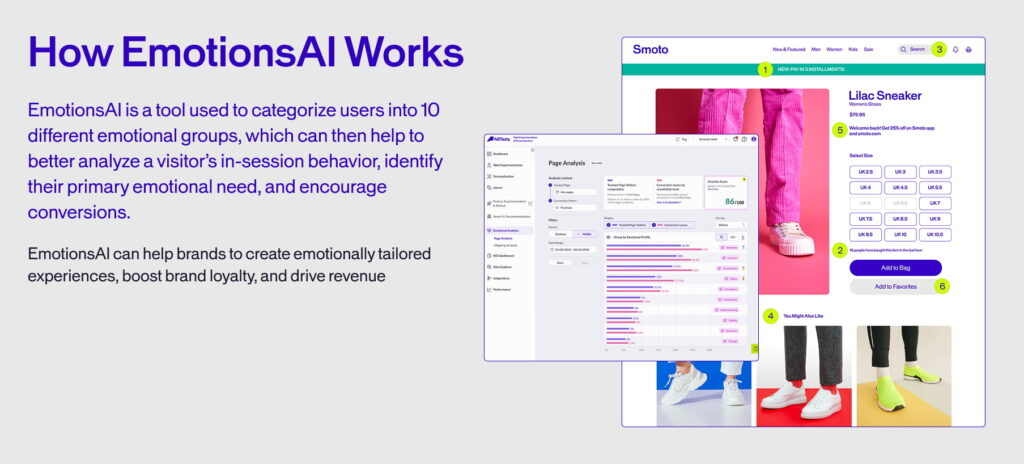
In addition to the benefits of traditional multivariate testing, personalization tactics with the use of tools like AB Tasty’s EmotionsAI classifies visitors into one of 10 emotional segments. These groups include safety-seekers, competition-driven shoppers, or people prone to impulsive purchases users.

Think of a safety-oriented visitor, who may convert best with a website layout that emphasizes secure payment icons, flexible cancellation copy, and a softer CTA. On the other hand, an immediacy-driven visitor may respond better to urgency messaging, a prominent “Book in 1 click” CTA, and real-time availability data.

By layering the use of EmotionsAI with MVT, travel brands will be able to better serve each visitors according to their emotional needs – which increases the chances of conversion. 

AdaptiveCX: Solving the 90% Anonymous Visitor Problem for Travel

As 90% of travel site visitors are anonymous, traditional personalization tools can fall short – and with travel, it’s increasingly imperative to ensure the booking experience is tailored to each individual traveler.

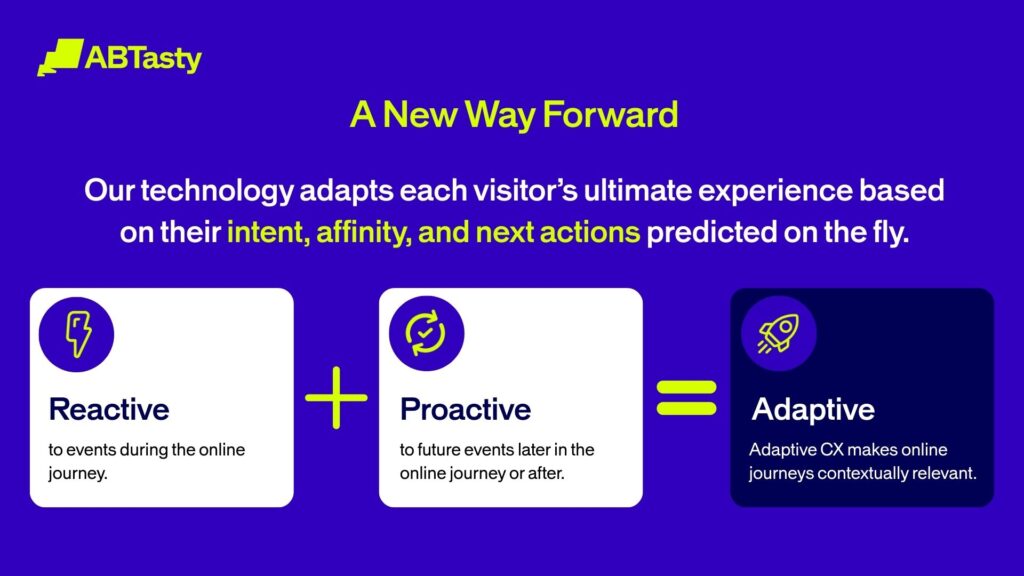
This is where tools like AdaptiveCX can help travel brands meet their booking goals. AdaptiveCX uses in-session behavioral signals instead of traditional third-party cookies. This predicts user intent and their preferences in real-time, which can ensure that MVT insights are implemented for 100% of your traffic.

infographic made by ab tasty explaining the benefits of adaptivecx and real time personalization

Common Mistakes to Avoid in MVT for Travel

Multivariate testing can be transformative for travel, but it’s also important to know when pushing the boundaries is pioneering, and when it’s been pushed too far. Maintaining the right data and strategy for MVT is integral to achieve the right growth. 

Here are some of the most common mistakes made for multivariate testing and travel

Testing Too Many Variables at Once

Multivariate testing can make it exciting for travel brands to test several bold ideas simultaneously, but it’s also important to avoid getting carried away. 

Remember, the more combinations your brand wants to test requires more traffic. It’s best to stick to 2 to 3 elements and 2 to 3 variations each to keep the length of your test comprehensive and effective. This is especially important in travel, as seasonality means tests that run for too long can risk being compromised by external factors – like school holidays or weather predicaments. 

Ignoring Mobile vs. Desktop Differences

Recent research from PYMNTS suggests that mobile has become the predominant channel for travel purchases – with 59% of long-distance travel bookings now being made on mobile devices. This highlights the shift toward smartphone-first vacation planning. 

It’s essential it is to ensure that winning desktop combinations could also be successful on mobile devices, and vice versa – as one could over or under perform the other. 

To prevent this, aim to divide your MVT results by device type. Given the fact that most people research trips on mobile devices and switch to booking on their desktops – this is a decisive factor to keep in mind while multivariate testing.  

Running Tests During Peak Periods: A Strategic Choice Seasonality

Seasonality is an influential force in the travel industry. This means that knowing when to test is just as important as knowing what to test. Unlike retail’s traditional holiday rush shopping period, travel has multiple “peak” seasons. This includes the January-to-March booking window when many travelers plan their summer vacations in addition to the traditional summer and holiday travel periods themselves.

Running tests during these high-traffic times can provide several strategic benefits. 

Advantages of Peak Season Testing

When your site traffic is in the middle of a peak, tests can reach statistical significance in a fraction of the usual time. This allows for rapid iteration and quick wins on high-impact pages. If you have a strong, data-backed hypothesis for a simple change, like a new CTA on your booking page, testing during peak season can  deliver reliable results at a much faster rate. 

Risks of Peak Season Testing

The downside of testing during peak season is that it can present external variables that could compromise your test results. Factors like competitor fare sales, school holiday schedules, and sudden spikes in demand can influence user behavior. For instance, a winning combination during a Black Friday sale might not be as successful during a typical week in May.

It’s true peak season tests can be very effective and responsive due to high traffic. However, it’s important to remember these potential variations and account for them accordingly when interpreting results and making long-term decisions.

The Strategic Approach: A Balanced Testing Calendar

The most effective travel brands use a balanced approach:

  • Use Peak Seasons for Data & Speed: Implementing low-risk A/B tests during a massive influx of traffic can allow for fast answers and the opportunity to gather rich behavioral data for building future hypotheses.
  • Use Shoulder Seasons for Stability & Confidence: Running more complex multivariate tests during more “normal” traffic periods are great for stable results. This is because they will be more representative of your site’s baseline performance, giving you greater confidence for your next bold test. 

Stopping Tests Too Early

Travel websites may be eager to implement new changes that have seen success with multivariate testing, but declaring a winner too early could lead to costly decisions.

Reaching statistical significance is crucial to effectively target leads.

Otherwise, you could be deploying tactics derived from unreliable results.

A good rule of thumb in MVT is to always define your minimum sample size and confidence threshold before launching.

Not Documenting Learnings

We believe that failure can lead you to new learnings for your next best test. Every MVT result, whether it be a win, loss, or inconclusive – contains valuable insights about your customers. 

Building off of this newfound knowledge as base can help your brand to avoid duplicating unsuccessful tests and improve future personalization strategies.

white plane in the sky

Getting Started: A Travel Brand’s MVT Roadmap

You don’t have to be a whizz in optimization to take flight with multivariate testing for travel. 

Here’s a step-by-step guide on how your travel brand can incorporate multivariate testing in its optimization strategy:

Step 1: Audit Your Booking Funnel

The first step of multivariate testing for travel is to identify which pages and steps of the booking process have the opportunity for the highest drop-off rates. Travel brands should seek to prioritize pages that are both high in traffic and user intent, as they provide the strongest opportunities for conversion. This can be done by using session recordings, heatmaps, and funnel analytics. 

Step 2: Build Hypotheses Based on Real Data

Every element to be tested for travel websites should be backed by a data-informed hypothesis. This can be done by using qualitative data like exit surveys and support tickets, which provide direct feedback on the customer’s experience. 

The goal is to understand why your visitors leave the site before making a booking, and amending the site’s various fonts, colors, and layouts to reduce the risk of abandonment. 

Step 3: Start with a Focused Test

Multivariate testing could appear overwhelming for a travel brand dipping its toes in the water and world of optimization. To make MVT more approachable, it’s best to choose one high-value page, 2 to 3 elements to test, and 2 to 3 variations per element.

Using AB Tasty’s no-code visual editor can help your travel brand to build your variations quickly, without developer dependency.

Step 4: Analyze Beyond the Headline Result

Looking beyond the most successful combination could inspire daring ideas that lead to even smarter wins.

After multivariate testing, travel brands should ask themselves which elements had the greatest individual impact and aim to develop new mechanisms that could take them one step closer to new, courageous experiments.  

Coming up with new ways to tackle targeted customers from different devices, traffic sources, or audience segments could allow for additional optimal outcomes in multivariate testing for travel.

Step 5: Activate the Insights

Collecting the information is one thing, but actually putting it to use is another. Using your MVT learnings to improve your long-term personalization strategy could prove worthwhile over the long-term for travel companies. This is because overtime, your brand will be more knowledgeable in how to draw-in customers according to their specific travel needs.

Find what wins with your highest-intent users, and let it lead your personalization playbook.

Conclusion & Next Steps

The travel industry can be challenging to test, as stakes are high, competition is fierce, and the customer journey is cluttered. 

Thankfully, multivariate testing is one of the most powerful tools available to digital teams – and can help mitigate the obstacles associated with travel website optimization. This is because MVt doesn’t just tell you what works, but what works together — and that distinction is what separates incremental gains from destination-defining results.

The most successful travel brands combine MVT with personalization, EmotionsAI, and real-time behavioral data to deliver adventure ready experiences that feel effortless for every type of traveler.

Let your booking take off without turbulence. Together, we uncover insight tactics to make travel optimization effortless, seamless, and adventurous.

FAQs

Still have questions about multivariate testing in travel? Here are the answers you need.

Article

11min read

What Can AI Agents Do: AI & Optimization in 2026

What is AI-Powered Optimization Really Doing in 2026?

What can AI agents do in 2026? It’s far more than you think – as AI is now playing an integral role in reshaping how optimization works.

The noise has never been louder for AI, with industries from food, fashion, to entertainment finding new ways to push the limits of what AI can do to optimize their success. No longer a futuristic concept, AI is now a daily component for teams across multiple industries to establish success in marketing, conversion, and more. 

However, many people still remain wary of AI in 2026 — as some fear it could replace them entirely. This concern is one that resonates across many industries, and the world of optimization is no exception.

But when we look past the potential fear associated with AI, we can see that AI isn’t here to replace the optimizer – but to be used as a tool to amplify already existing strategies. This is because AI can automate tedious, analytical tasks and uncover new insights that the naked human eye might miss. In turn, this can allow teams to focus more on strategy and creativity – and leave the more mundane chores in the hands of AI. 

We’re going to explore the tangible benefits of AI in optimization software today, how it is continuing to evolve, and address the common concerns regarding what the future holds for AI in Experimentation Optimization Platforms (EOPs).

The World Before: A Quick Look at Optimization Without AI

Things were different just a couple of years ago. College students didn’t have Claude to help write their papers. High school students didn’t have Chat GPT to finish their homework. Colleagues didn’t have Gemini to respond to emails. 

The same goes for the EOP world before AI. 

The overview cards below will show what traditional optimization process consisted of:

Data analysis icon

Manual data analysis

Test ideation icon

Time-consuming test ideation

Developer dependencies icon

Developer dependencies for simple changes

Complex results icon

The challenge of interpreting complex results

Before AI, optimization heavily relied on statistical models to optimize. While these were effective, it remained challenging to choose the best hypothesis to test – which is the first step to achieving conclusive results in experimentation.

Luckily, this is where AI has stepped in – helping us to develop stronger hypotheses and consequently, more robust testing and results.

When brands dare to find growth in unexpected ways, such as with AI, you can leverage opportunities that would have otherwise gone unnoticed.

This is where AI can step in and bring expertise to make experimentation easier. 

infographic explaining AI and personalization

How AI Benefits Experience Optimization in 2026

There are several benefits to using AI for your Experience Optimization Platform (EOP) in 2026.

Here are some of the various advantages AI brings to optimization platforms: 

  • Manual Analysis to Proactive Insights: AI doesn’t just present data, but interprets with more conducive results. This reduces the chance of subpar results and makes testing more effective and concise. Tools like AB Tasty’s Report Copilot (Evi) analyze results, summarize key takeaways in natural language, and even suggest the next best action, turning reporting from a passive dashboard into an active “optimization engine”.
  • Brainstorming to Data-Driven Ideation: AI tools like Visual Editor Copilot can analyze user feedback, competitor sites, and performance data to suggest high-impact A/B test ideas. This allows brands to overcome creative blocks and prioritize their roadmap.
  • Code-Dependent to Code-Free Creation: Generative AI in tools like the Visual Editor allows marketers to make changes with simple text prompts, such as by suggesting to make a button blue or add a banner. This dramatically reduces reliance on developers and accelerates test velocity.
  • Static Segments to Dynamic, Emotional Targeting: Perhaps the most pivotal benefit of AI in optimization software, AI tools can provide real-time, intelligent targeting as opposed to basic segments.
iphone face down on coral background

Addressing the Elephant in the Room: Will AI Replace Me?

Understandably, there’s a lot of uncertainty that accompanies the growing use of Artificial Intelligence (AI). Many people working across various industries worried that AI could replace them entirely.

According to National University, a whopping 52% of employed people are concerned that AI will be able to do their job and render their professional skills useless.

The overview cards below will reveal some key figures about the current use and future direction of AI:

35%

of companies around the world use AI in their business models

52%

of experts think AI will both replace and create jobs

77%

of companies are exploring the use of AI

It’s understandable that the near omnipresence of AI is overwhelming, especially with the looming apprehension that AI could make optimization roles obsolete. But if you think of AI as more of an assistant instead of a replacement, it could actually make your existing work easier. This can leave more room for more innovative ideas instead of time consuming data-analysis. 

The problem with AI in fields like optimization is that many people tend to think of it as simply being on autopilot. In reality, AI functions as more of a co-pilot in EOPs – handling the “how” so humans can focus on creating goals for the “why” and the “what’s next”. 

The table below will break down the differences between AI being on “autopilot” (what many consumers fear) and when AI works as a “co-pilot” :

AI on “autopilot”AI as a “co-pilot”
Uses AI to create content Uses AI to make suggestions & spark ideas
Executes tasks end-to-endCollaborates with humans to refine decisions
Prioritizes speed and automationBalances speed with control and creativity

How AI Can Boost Time Efficiency in Workflows

AI serves as more of an assistant rather than a replacement. In fact, 88% of creative professionals said that they felt generative AI could help them to produce content faster – without replacing them entirely (Adobe Digital Insights). 

Think of a marketer staring at a blank hypothesis backlog. By using AI as a sounding board, they can quickly generate fresh test ideas, suggest high-impact page elements to experiment on, and even draft email subject line variations to A/B test — all in a fraction of the time it would take to do manually. AI isn’t replacing the marketer’s judgment, but avoiding an incessant blank page so they can spend more time doing what they do best: thinking strategically and acting decisively.

AI can serve as a way to enhance already existing human thinking, creativity, and brand understanding. This is because the best AI strategies blend automation with human oversight and expertise.

yellow light bulb and god coins on yellow background

How Tools Like Evi AI & Emotions AI Boost Optimization Strategies 

Sometimes it’s hard to believe in the power of AI until you see it in action. 

At AB Tasty, we want optimization and AI to work together as a team – and that’s exactly what our software accomplishes. 

Here are three different AI-powered software tools used in AB Tasty optimization platform:

  • EmotionsAI analyzes in-session behavior to identify a visitor’s emotional needs (e.g., Need for Safety, Need for Immediacy) in just 30 seconds. This allows for personally tailored carousels, pop-ups, and more to boost conversion.
  • AdaptiveCX uses predictive AI to personalize experiences for anonymous visitors based on their live intent, adapting the journey in milliseconds.
  • Evi AI is an AI agent that transforms complex data into clear, actionable strategies for your experimentation program by automating the A/B testing journey. This includes generating data-backed ideas, hypotheses, and analyzing campaign results to help make smarter, evidence-based decisions.

 AB Tasty, we want optimization and AI to work together as a team – and that’s exactly what our software accomplishes. 

Our AI powered tools reveal that AI doesn’t have to work against you, but with you. When paired with daring ideas, AI can take you one step closer to the next level of success. 

The Future is Collaborative: What’s Next for AI in Optimization?

The future of AI in optimization isn’t just making suggestions, but taking action. As AI agents become more autonomous, teams will be able to redirect their focus to achieving greater goals instead of spending additional time on tiresome tasks. 

Here are just a few of the ways that AI could boost our collaborative efforts and make progress in personalization even more possible:

Agentic AI 

Instead of just suggesting a test, an AI agent might propose an idea, build potential models, monitor performance, and even make suggestions for follow-up steps. This turns the platform into an intelligent, self-improving system – one that requires no extra work or a large team of coders. 

Deeper Integration

Also, AI in optimization can help to bridge the gap between different platforms – such as between analytics, e-merchandising, and Customer Data Platforms (CDPs). This creates a unified, quick-witted optimization ecosystem that can respond to changes instantaneously.

Proactive Optimization

As AI becomes more authoritative, it will be able to not only report past activity – but actively make suggestions for the future. 

This means that instead of redirecting optimization tactics toward potentially obsolete information, future optimizations can expand revenue or reduce catalog fatigue according to live data. This shows how AI can operate as an effective tool in supporting already existing personalization plans, predictive analysis, A/B testing strategies, and more.  

blue shopping cart on light blue background

Conclusion: Your New Teammate is an Algorithm

In 2026, AI is not a threat – but an essential teammate in your growth journey. 

It makes optimization faster, smarter, and more human-centric by handling the machine-scale tasks that used to slow us down. Brands that are brave enough to try, iterate, and test the boundaries of what AI can do will be bound to be more successful than those who don’t take small steps forward with AI as their ally. 

Remember, AI isn’t meant to replace raw, human talent – but amplify your power to make progress.

Let’s push past the limits and learn what AI agents can do for optimization, together. 

FAQs

Still have questions about AI and optimization? Here are the answers you need.

Profile Image

Article

8min read

Feed Driven, Creative Ideas: How Top CRO Professionals Think with Richard Joe

Do you want to feed driven, creative ideas into your CRO plan – but aren’t sure where to start?

Richard Joe shares his unique journey that led him to CRO, his actionable insights that can help all marketers take a step toward increased conversions, and his predictions for CRO and experimentation in the near future. 

Currently working as an Experiment Lead at Yoghurt Digital, Richard Joe is passionate about CRO and deeply intrigued by the different ways to feed driven, creative ideas that have a tangible impact on business success. Richard is also the host of the podcast Experiment Nation. With more than 10,000 subscribers on YouTube, it has grown into a global community of CROs sharing fresh, innovative perspectives in the field. He has also spent several years gaining experience across a wide range of industries, including e-commerce, real estate, and healthcare. His background across SEO, paid search, and web development shaped the well-rounded CRO expertise he has today.

Richard spoke with AB Tasty’s Head of Marketing and the host of The 1000 Experiments podcast, John Hughes, about his vast experience in CRO across various marketplaces, the future of CRO, and how experimentation can be humanized and approachable for all. 

Here are the main points from their conversation to remember.

Anyone Can Get Started in CRO

Even if you’ve never heard of Conversion Rate Optimization (CRO) before, Richard Joe reveals how it’s more than possible to embark on this experimentation journey with no previous experience.

Having not even heard of the term “CRO” until 2016, Richard came across this word for the first time when someone he knew working in affiliate marketing in the e-commerce space was posting on social media.

Without even knowing what A/B testing was, despite having worked in marketing and web development, Richard was fascinated to learn more – as he was already working in an industry where clients were doing split testing. 

After this, Richard joined a team in general marketing and continued to pursue this interest by playing around with simple things while working in roles for SEO or paid ads – such as changing the font on a CTA button, headlines, and images. This sparked further curiosity and made him interested in CRO not from a business angle, but the creative aspect in taking an idea and eliciting tangible change. 

Bringing out the more inquisitive, psychological aspects of his mind – Richard was interested in how creative ideas can turn into multimodal moments that are capable of delivering new analytics, statistics, and actionable insights.

5 Principles Every Marketer Should Apply to Improve Conversions.

In our conversation with Richard, we discovered some of the best ways to feed driven, creative ideas to create effective CRO methods across all industries.

Here are 5 principles we learned in our discussion with Richard that every marketing professional should dare to explore: 

1. Keep Testing, Trying, and Learning

During our podcast, Richard stressed the importance of not giving up after first few failures. 

Real teams, real growth, and real results can often be achieved following the most unexpected experiments. 

By taking the plunge in trying and testing new optimization ideas, you can take your brand one step further to bold steps that lead to smarter wins.  

2. Digital Marketing is Beneficial for CRO

Having worked several years in marketing himself, Richard shared how CRO can leverage a marketing team’s power in making progress. 

Having a CRO manager serves as a dedicated position to improving your website’s performance. This can help your marketing team to be taken more seriously.

Often inspired by already existing, successful webpages – CROs can identify innovative ways to bring in great traffic. This can help develop new ways to strengthen audience interest. 

3. Don’t Fear AI

AI is continuing to take the optimization community by storm. This means it’s more important than ever to be brave in experimenting with AI platforms.

The use of Artificial Intelligence in Experience Optimization Platforms (EOPs) can prove extremely beneficial. Tools such as Evi AI can help to map customers based on their emotional needs and personalize their shopping experience accordingly. 

Your brand can achieve new growth and ambitious goals when you take AI into account. 

two people shaking hands with tan background

4. Find Fun Ways to Build Awareness

Despite his individual interest in CRO, Richard realized that not everyone might be as excited about boosting conversion rates. 

To combat this, Richard explained some of the dynamic ideas he used to get people involved in the testing community. This included engaging events such as by sending out a vote on which test won. 

This helped people to feel a more personal connection and investment to CRO strategies. It also created new opportunities for potential partnerships by engaging everyone in new tests and experiments. 

Additional ways you can showcase how CRO and experimentation benefits a company includes:

Host half-hour chats icon

Host half-hour chats

Opportunity to explore new things happening in your world, what’s worked and what’s been less successful but maybe spurred a new idea.

Test games icon

Test games

Share with people the control and variation and create a poll to get people engaged to see which one won.

Raise Awareness with Playfulness icon

Raise Awareness with Playfulness

Any other ways to make people more invested with fun activities or discussions can help to make CRO feel less analytical and more like a creative brainstorming session.

5. View Failure as a Step Toward Growth

Having a healthy sense of realism when testing can help to put things in perspective. 

Due to the nature of testing, there’s a high chance that it may not always go as planned. This is similar to when taking a test or exam. Even if you’re well prepared, you don’t know how you did until you receive the final results.

Recognizing that some tests are simply a trial run can give you the confidence to be more courageous for your next test. 

Not all tests are a success. But they are always allowing you to take one step closer to your next brave, breakthrough idea. 

The Future of CRO: Experimentation with AI

The future of experimentation is subject to change. This is especially true as technology continues to advance with the use of Artificial Intelligence (AI).

Everyone can, and should, take a dive into the world of AI. Even if you’re not an expert, playing around with simple platforms could open your eyes to new possibilities. Failing to be broad-minded, it could come at the cost of your brand’s competitive advantage. 

The hype surrounding AI may have passed in the experimentation community. However, it’s still important to find personal ways to make AI work in favor of your brand’s progress. 

Conclusion: The Reality of Becoming a CRO

Becoming a successful CRO isn’t always going to happen in a straight line. But if you aim to fail forward – it’s possible to feed driven, creative ideas.

Together, we can fledge a new path of phenomenal improvement you could’ve never imagined before.

FAQs

Profile Image

Article

5min read

Debugging Server-Side Experimentation Faster with Live Hits

When teams run server-side experiments, one of the biggest challenges is validating that everything is working correctly before and after launch.

Unlike client-side experimentation, where visual checks can often help confirm a setup, server-side experimentation depends heavily on event flows, payload quality, and implementation accuracy. If something is misconfigured, teams may not notice immediately. In many cases, they have to wait for reporting to refresh before they can confirm whether data is being collected as expected.

That delay can slow down QA, make troubleshooting harder, and reduce confidence at launch.

The server-side debugging challenge

For product, engineering, and experimentation teams, implementation validation is a critical part of the workflow. Before a campaign goes live, they often need to answer a few simple but important questions:

  • Are hits actually reaching the platform?
  • Are the right events being sent?
  • Do the payload details match what was expected?
  • Is everything working properly in production after launch?

Without real-time visibility, answering those questions can take longer than it should. Teams may need to wait for aggregated reporting or rely on manual checks across multiple tools. That creates friction in QA cycles and can make debugging more complex, especially in fast-moving release environments.

Introducing Live Hits

Live Hits is designed to make server-side QA and debugging much easier.

It provides a real-time stream of SDK events as they reach the platform, allowing teams to validate implementation immediately instead of waiting for reporting updates. This gives users direct visibility into what is being sent, helping them troubleshoot faster and launch with more confidence.

Rather than working from delayed, aggregated data, teams can inspect incoming hits as they happen.

What Live Hits helps teams do

Live Hits is especially useful during two key moments:

1. During QA before launch

When a campaign or feature is ready for validation, teams can use Live Hits to confirm that the expected events are arriving correctly. This helps verify that implementation is complete and that the right information is being sent.

2. Right after launch in production

Once a campaign is live, teams can run a second check to confirm that traffic is flowing as expected in the real environment. This helps catch issues early and adds an extra layer of confidence at go-live.

Why this matters

Real-time visibility can make a major difference for teams working on server-side experimentation.

Key benefits include:

Faster debugging

Identify issues without waiting for reporting refreshes

Smoother QA workflows

Validate implementation before launch

Better troubleshooting

Inspect detailed event information when something looks off

For teams running complex experimentation programs, these advantages can reduce back-and-forth between product, engineering, and QA while speeding up time to validation.

A more practical way to validate implementation

One of the most useful aspects of Live Hits is that it helps teams move from assumption to confirmation.

Instead of asking, “Did the event fire?” and waiting for reports, users can quickly verify:

  • the type of hit received
  • the associated identifiers
  • the event details being transmitted
  • whether the payload matches expectations

This makes it easier to investigate implementation issues, validate tracking logic, and confirm that a campaign is ready to move forward.

Built for real experimentation workflows

In practice, server-side experimentation often requires close collaboration across multiple teams. Product managers want confidence in setup, developers want to confirm implementation, and QA teams need a reliable way to validate behavior before launch.

Live Hits supports that workflow by giving teams a shared, immediate view of incoming SDK activity. It helps simplify the path from implementation to launch, especially when speed and accuracy both matter.

Why real-time validation is becoming essential

As experimentation programs mature, teams need more than reporting alone. They need tools that help them validate faster, troubleshoot earlier, and reduce uncertainty during rollout.

That is exactly where Live Hits adds value.

By giving teams real-time visibility into server-side events, it helps turn debugging and QA into a faster, more reliable process. For organizations looking to scale experimentation with confidence, that kind of visibility can be a meaningful operational advantage.

Final thoughts

Server-side experimentation offers flexibility and control, but it also raises the bar for implementation validation. Waiting for aggregated reports is not always enough when teams need to debug quickly and launch confidently.

Live Hits from AB Tasty helps close that gap by making server-side event validation immediate, practical, and easier to act on.

If your teams are looking for a better way to QA server-side campaigns and verify implementation in real time, Live Hits is built for exactly that.

Profile Image

Article

5min read

The Hidden Cost of Ignoring Your E-Commerce KPIs (And How to Fix It)

For e-commerce teams, the pressure to deliver results is constant. Whether you’re a merchandiser, a buyer, or a digital leader, you’re expected to show how your work translates into business value. But in the day-to-day rush, it’s easy to lose sight of the numbers that matter most.

The Real Challenge: Out of Sight, Out of Mind

Most e-commerce platforms offer a wealth of data. There are dashboards, reports, and analytics tools that can tell you almost anything about your site’s performance. But here’s the problem: these insights are often buried, hard to access, or only reviewed during quarterly business reviews. 

As a result:

  • After the initial setup, strategies can become “set and forget.”
  • Opportunities for improvement are missed because no one is regularly looking at the right KPIs.
  • When it’s time to prove ROI, it’s a scramble to pull together evidence and justify decisions.

When performance data isn’t front and center, it’s easy for teams to become reactive instead of proactive. The focus shifts from continuous improvement to simply keeping things running.

A Better Way: Make KPIs Part of the Weekly Routine

What if, instead of waiting for high-stakes quarterly reviews, you had a simple, structured way to check in every week? A routine that keeps your KPIs visible, your strategies healthy, and your team focused on improvement – not just maintenance.

That’s the thinking behind AB Tasty’s Performance Digest: a weekly loop that connects three things into one flow:

1

Step 1

Weekly Digest Email

A weekly email that highlights key performance signals and brings you back into the platform.

2

Step 2

Reporting on Business Impact

Stay up to date with KPIs designed to be buyer-friendly.

3

Step 3

Guided ideas for improvement

Think of our AI as a coach that helps you prioritize what to optimize next and gives step-by-step instructions.

This isn’t about adding more to your plate. It’s about making performance a habit, not a hurdle.

A Weekly Habit That Tells a Clear ROI Story

One of the hardest parts of e-commerce reporting isn’t collecting data — it’s telling a clear story about business impact.

AB Tasty’s Performance Digest makes that story easier by emphasizing direct contribution: the business generated when a shopper clicks a recommended or merchandised item and purchases within the same session.

Just as importantly, it builds a weekly routine around that story. Instead of hoping teams remember to log in (or only revisiting performance during quarterly reviews), Performance Digest starts in your inbox with a weekly snapshot of what moved — so KPIs stay visible and decision-making stays consistent.

Performance Digest: weekly revenue opportunities in your inbox

From “What Happened?” to “What to Do Next”

Dashboards can show you what happened, but the real bottleneck is deciding what to do next. That’s why Performance Digest will include a small set of guided improvement ideas to help you prioritize where to invest time, spot opportunities you might miss in a dashboard-only workflow, and iterate with confidence.

This weekly loop also makes ROI easier to prove. Quarterly reviews often create high-stakes, retroactive conversations. A weekly cadence creates a steady trail of decisions and outcomes — what changed, what improved, and why

Takeaway: Make Performance a Habit, Not a Hurdle

The most successful e-commerce teams don’t wait for problems to show up in quarterly reports. They build habits that keep performance and improvement part of the weekly workflow. The key is to make your most important KPIs visible, actionable, and impossible to ignore.

Because when ROI is always top of mind, better results tend to follow.

FAQs about E-commerce KPIs

Profile Image

Article

14min read

From Static to Adaptive: The New Era of Personalization with Adaptive CX

The Adaptive Personalization Gap: Why It’s Needed in 2026

Shopping isn’t as simple as it used to be. Long gone are the days where we had the patience to drive to the mall, walk into a store, and wait in tedious lines to try on a pair of boots or test out a pair of headphones. Thankfully, this is where adaptive personalization can align with our modernized way of shopping.

In 2026, customers are more unpredictable than ever – with up to 70% of online shoppers abandoning their cart before even making it to checkout.

As a whopping 90% of human decisions are emotionally driven, it’s not surprising that a digital shopper’s intent is subject to change on a dime –  especially in today’s short-attention-span world. This reveals why adapting quickly to single-session activities is essential for success.

Therefore, the challenge with these less-than-analytic shoppers is that most brands have to invest in personalization. However, even then, many brands can still fall short on what makes for a truly successful personalization strategy. 

Take a look at just a few of the “micro-moments” that matter and are often still missing in many approaches to personalization today:

Low Battery icon

Low Battery

A user with low battery may not have enough time to finish their session, creating urgency to convert them quickly.

Private Browsing icon

Private Browsing

Incognito mode hides user history, making it harder to personalize based on past data. In-session behavior becomes critical.

Multiple Tabs Open icon

Multiple Tabs Open

A user with many tabs may be comparison shopping or get distracted. Grab their attention before they click away.

Color Preferences icon

Color Preferences

Users often show affinity for certain colors in products. Adapting image results to match these preferences can boost engagement.

Shopping Extensions icon

Shopping Extensions

The presence of coupon extensions signals a price-sensitive shopper who may be receptive to a targeted discount.

Zoomed Images icon

Zoomed Images

When a user zooms in on product images, it indicates high interest. This is a key moment to provide more detail or social proof.

The Problem with the “Unknown”

In the midst of the rise of digital shopping and consumption, up to 90% of website traffic is anonymous, incognito, or logged out – which deems more traditional data-reliant personalization strategies less effective.

In order to seize the opportunity at hand when a user reaches your site, brands have to take bold ideas and turn them into action. To that end, an effective transition from static to real-time, adaptive personalization strategies can make a world of difference.

Quick Recap: What is Personalization? 

In simple terms, personalization refers to the process of tailoring an experience according to the individual user’s preferences as an effort to encourage deeper and more methodical on-screen time to boost conversation rates. As a whole, the main goal of personalization is to leverage tactics that will increase the chances of a user making a purchase on the website.

Deploying an effective personalization strategy isn’t always easy, as brands need to have a good understanding of their customers. This requires collecting various demographic information such as age, gender, and location. As a result, this data can help brands to create a better digital experience for each individual user.

Real-World Example of Personalization

Imagine someone going to a popular fashion apparel store. Oftentimes, the main demographic for these websites may involve women in their teens or 20s living in warm climates –  meaning it might recommend something more fitting to their local temperature such as a lightweight jacket or capri pants that it may not share with a user living in Canada. 

As a result, personalization can also use predictive strategies, most commonly algorithms in order to further shape and refine the shopper’s digital experience.

For instance, customers who have previously purchased boots, sunglasses, or necklaces may be recommended the same products upon returning to the site — or even within the same session — based on the assumption that they are interested in that type of apparel.

What is Real-Time Personalization?

Real-time personalization refers to the type of personalization that occurs simultaneously as a consumer digitally explores a shopping site. 

The name “real-time” personalization comes from the instantaneous element of the experience: as the processing, analysis, and utilization of collected data happens on the fly – allowing brands to adjust the user experience accordingly while they’re still shopping. 

Especially as we dive deeper into the era of immediate gratification, such as how Gen Z shoppers are migrating their shopping habits toward PDPs instead of a traditional Google search – it’s becoming increasingly imperative to implement these types of instantaneous personalization techniques. 

Some examples of real-time personalization and how they could benefit your brand long-term include:

How Real-Time Personalization Benefits Your Business

In the age of real-time available insights that can be used immediately to boost the chances of a consumer purchase, many brands are contemplating if it’s worth making the switch from static to adaptive personalization.

The Limits of Traditional (Static) Personalization

While there isn’t anything inherently wrong with the use of more traditional, or better known as static, personalization – brands may benefit from implementing the use of adaptive personalization strategies with software such as AdaptiveCX.

The main issue between traditional and adaptive personalization is that static personalization relies on historical data, fixed segments, and can be too slow for real-life user behavior – as it operates under the notion that user activity remains consistent and doesn’t change within milliseconds.

Furthermore, passive personalization strategies aren’t preferred by the majority of consumers – with up to 53% of users claiming these tactics made for a less-than-optimal shopping experience. As a whole, this can lead to less conversation, brand loyalty, and reduced ROI – all of which could be evaded by implementing real-time personalization.

The battle cards below will further break down the differences between “real-time”(adaptive) and “non-real-time” (static) personalization:

The Future

Real-Time Personalization

⚡ Milliseconds — during the live session
  • Adapts to user behavior as it happens — clicks, scrolls, pauses, and tab switches all inform the experience in real time.
  • Triggers timely pop-ups, messages, and product changes while the user is actively shopping — not hours later.
  • Maintains consumer interest and momentum on-site, reducing the likelihood of drop-off or distraction.
  • More intuitive and user-friendly — helps visitors find what they are looking for without friction.
  • Maximizes revenue opportunities at the peak of buying intent, when the user is most likely to convert.
  • Works for anonymous, cookieless, and incognito users — no historical data required.
Bottom Line

Personalization that acts in the moment, not after it. The difference between a sale and a missed opportunity is measured in milliseconds.

VS
The Old Way

Standard Personalization

🕐 Hours, days, or weeks — after the session ends
  • Personalization occurs outside the direct session — often long after the user has already left the site.
  • Relies on historical data, past purchases, and cookies to build audience segments over time.
  • Retargeting emails and ads may reach the user days or weeks after their original intent has faded.
  • Has less immediate impact on the user experience during the moment that matters most — the visit itself.
  • Cannot account for in-session context shifts, such as a change in intent or urgency signals like low battery.
  • Dependent on known user data, making it ineffective for the ~90% of anonymous visitors.
Bottom Line

Personalization that arrives too late. By the time the message reaches the user, the buying window has already closed.

Enter AdaptiveCX: Real-Time Personalization for Everyone

What is AdaptiveCX?

AdaptiveCX is a predictive AI engine that processes behavioral signals while the user is still in session. This can help to better understand visitor intent and adapt their digital journey on the spot. Ultimately, this can help to boost revenue opportunities, as it keeps users engaged with their relevant interests and encourages stronger on-page time.

Ultimately, the goal of AdaptiveCX is to allow brands to make customer experiences more flexible and enticing to the user in real-time – as without it, websites can miss the mark on maintaining consumer interest all the way to check out.

Now used by over one billion visitors, several leading global brands utilize AdaptiveCX to ensure their personalization tactics remain instantaneously meaningful to the user at hand. 

Some of the hallmark qualities of AdaptiveCX include:

Cookieless by Design

AdaptiveCX relies entirely on in-session behaviors (clicks, scroll depth, dwell time, multiple tabs) rather than historical identity or PII, making it privacy-compliant and effective for anonymous traffic – which totals at a staggering 90% of visitors.

Speed and Scale

Predictions are calculated and activated in roughly 20 milliseconds, ensuring the experience adapts instantly without slowing down the site.

Ease of Use

With AdaptiveCX, there’s no need for data scientists or engineers – as product managers, data and analytics teams, and even those working in merchandising can easily deploy this personalization without any required additional skills.
How AdaptiveCX Works in Real-Time

The horizontal timeline below will reveal how AdaptiveCX works in real-time:

1

Step 1

Analyzes Live Signals

Captures micro-behaviors like mouse movements, pauses, and product comparisons as they happen in the session.

2

Step 2

Predicts Intent Instantly

Uses AI to forecast affinities (e.g., categories, colors, brands) and the likelihood of future actions (e.g., probability to purchase, abandon, or return).

3

Step 3

Delivers Real-Time Results

Automatically pushes the right experience — be it a customized search result, targeted content, or a timely promotional nudge — directly to the user.

infographic made by ab tasty explaining the benefits of adaptivecx and real time personalization

Real-World Use Cases of Real-Time Personalization with AdaptiveCX

There are several ways that AdaptiveCX helps users to seamlessly implement real-time personalization techniques. In turn, these practices can often prove worthwhile for brands over the long-run.


Here are just a few of the ways AdaptiveCX makes personalization both fearless and seamless:

  • Intelligent Incentives: AdaptiveCX’s technology works by predicting user intent and connecting people with the products they are most likely to buy. This ultimately curates a more clever digital experience bound to boost sales. 
  • Adaptive Search: With AdaptiveCX, you can personalize search suggestions and listing pages to be filtered according to inferred preferences from the user. This drives faster discovery and higher chances of a consumer purchase.
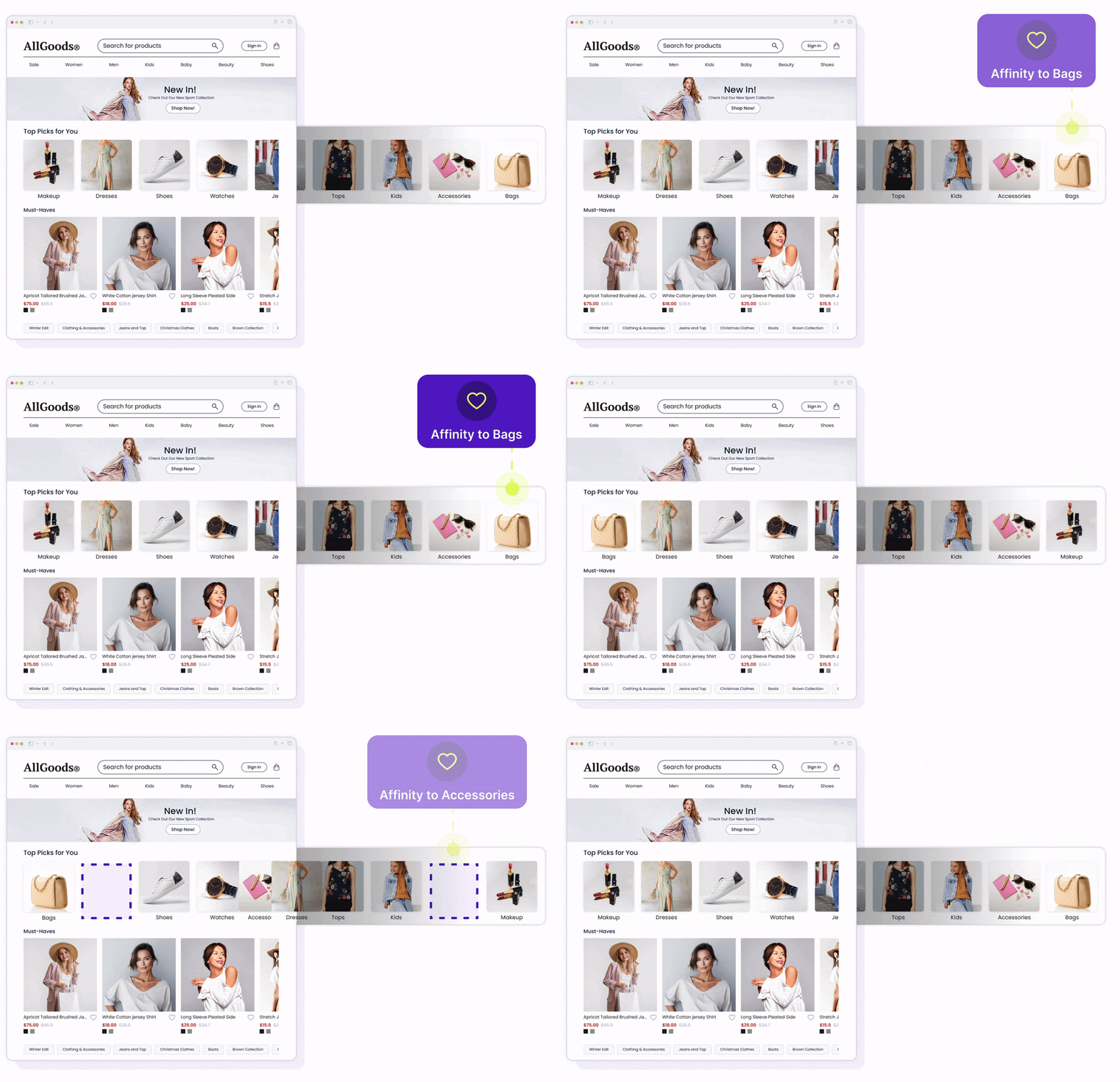
  • Adaptive Carousels: Users of AdaptiveCX can dynamically reorder categories based on user intent to ensure the most relevant items are always seen first. This includes color detection, promoting products more fitted towards potential revenue, and automatic reshuffling based on preferences.
  • Personalized Pop-Ups: Various adaptive promotions and perfectly tailored pop-ups are generated on the spot. This can help to align with the user’s interests and can incentivize a shopper to stay on the site.
  • Out-of-Stock Experiences: AdaptiveCX helps to avoid drop-offs by speedily showing personalized, high-affinity alternative products when an item is unavailable. As websites only have around 15 seconds before a user decides whether or not to leave the page, showing these customized replacements can help retain audience attention and engagement. 
shopping cart against orange background bird's eye view

The Benefits for Businesses Becoming Adaptive

In today’s modernized world, it’s crucial to step inside the consumer’s mindset to ensure continuous business success. Luckily, adaptive personalization can be the exact, “set-it-and-forget-it” method brands can easily use to assimilate to the challenges of online shopping.

Take a look at what can be achieved without the need for heavy infrastructure or large data science teams when you use AdaptiveCX for personalization:

+10%

increase in conversion rates.

+15%

uplift in revenue per visitor.

2.5x

improvement in retention rates.

The future of customer experience (CX) will continue to align with the rest of technology today. This means it isn’t about knowing who your customers were, but understanding what they want right now.

Taking a bold step, such as from static to adaptive personalization, could be the exact kind of brave change your brand needs to unlock the next level of excellence. 

Are you curious to learn more about how AB Tasty and AdaptiveCX can help you make progress in personalization? Let’s build better experiences together →

FAQs

Profile Image

Article

8min read

More Than a Booking: How to Drive Revenue with Smarter Digital Experiences

With digital channels now the default for travel planning, the game has changed. Passenger revenues are hitting record highs, but intense competition means thinning margins on ticket sales. To counter this, airlines are tapping into the $144 billion ancillary revenue market, with 73% now investing in AI-driven personalization and pricing tools according to the Boston Consulting Group. The shift is clear: your digital storefront is the critical battleground.

This isn’t just about a prettier booking form. It’s a strategic shift happening right now. The real question is, are you ready for it?

From timetable to travel partner

An airline’s website used to be a simple payment portal. Today, that model is obsolete. The modern airline site is a continuous commerce engine and a personalized travel concierge. The industry is moving toward a retail-like experience where every interaction is an opportunity to add value and drive revenue.

This transformation is driven by what we’ve all come to expect from the best e-commerce sites: seamless and relevant experiences. Research from the Baymard Institute shows significant gaps remain in user-friendly booking.

With 72% of all travel reservations now made online, the winners will be those who close these gaps, creating a journey that feels less like a form and more like a conversation.

The friction that grounds your conversions

Even the biggest carriers fall victim to common UX issues that create friction. The result? CellPoint Digital reports an industry cart abandonment rate of nearly 90%. That means nine out of ten booking processes are never completed. These are the problems we see time and again:

  • Opaque fare comparisons & surprise fees: The single biggest driver of abandonment is unexpected costs. A 2025 study found that 39% of users leave a purchase because extra fees are too high. Hiding what’s included in different fares forces users to hunt for information, breaking the booking flow.
  • A slow and complex funnel:Baymard Institute has found that a complicated checkout process is responsible for 18% of all abandonments. Every second a page takes to load, especially on mobile, is a chance for a user to navigate away. A one-second delay can reduce conversions by 7%, according to SITE123.
  • Clunky ancillary flows: Poorly designed interfaces for adding bags, meals, or upgrades can make the process frustrating, leading to users skip it entirely.
  • Widespread accessibility failures: A critical and pervasive failure is in digital accessibility. A 2024 study found a shocking 76% of airline websites are not accessible enough for users with disabilities, effectively excluding a market segment that includes 16% of the world’s population.
  • Deceptive urgency: As detailed by Web Designer Depot, dark patterns like high-pressure countdown timers or misleading “only 2 seats left” banners can erode trust.
person in yellow shirt and jeans with crossbody bag

Your pre-flight checklist for a better UX

Before you can find your better, you need to know where you stand.

The interactive flip cards below (move cursor over card to flip) will reveal a checklist to audit your site and pinpoint key areas for improvement.

Performance

How quickly does your flight search load? According to SITE123, 40% of users will abandon a site that takes more than three seconds.

Search & availability UX

Is it easy to filter results and compare dates? Are you putting the most relevant information front and centre? Working with Iberojet, we made simple search box adjustments that increased clicks by 25%.

Fare clarity

Are all fees and inclusions presented upfront to avoid the 39% of drop-offs that the Baymard Institute attributes to surprise costs?

Ancillary merchandising

Are add-ons presented clearly, or do customers need to click around to understand what you’re offering?

Personalization signals

Are you recognizing logged-in users or remembering their recent searches?

Mobile experience

Does your site work seamlessly on a small screen? Data from hotelagio.com reveals over 45% of all online travel bookings in Q1 2025 were on a mobile device.

Accessibility

Does your site meet the benchmark of a Google Lighthouse score of 90 or above? According to MarketingTech, only a third of airlines currently do.

Trust signals

Are security logos, clear policies, and recognizable payment options visible? These elements are crucial for building the user confidence needed to complete a high-stakes transaction involving sensitive personal and financial data.

Checkout abandonment triggers

Where are users dropping off? Research from the Baymard Institute indicates that mandatory account creation alone causes 19% of users to abandon their purchase.

Better, faster: your first 30 days

You don’t need a complete overhaul to see meaningful results. Start with these high-impact changes you can implement quickly.

  • Simplify the fare breakdown: Use a clear, visual grid to show the differences between fare types to combat the trust erosion from hidden fees.
  • Show price guarantees: Add a simple message like “Find a lower price within 24 hours? We’ll refund the difference.” Let customers know that they are getting the best deal by booking with you.
  • Reduce form fields: Do you really need every piece of information, like passport details, at the initial booking stage? It’s much more practical to capture only the essential details needed to secure the purchase. Less critical information can be collected post-booking through a “Manage My Booking” portal, reducing initial friction and getting more customers across the finish line.
  • Add a progress indicator: Show users exactly where they are in the booking process (e.g., “Step 2 of 4”) to reduce the friction and help set customer expectations.
  • Highlight the most popular ancillaries: Pre-select the most commonly chosen baggage option to simplify choice, making the process feel easier and faster.
  • Optimize mobile search: Use a larger, thumb-friendly calendar and single-column layout for mobile search forms, targeting the 45% of bookings coming from mobile.

Trial and better: A 60–90 day roadmap

With quick wins in place, it’s time to build a culture of continuous improvement. Here are concrete A/B test ideas to get you started.

Test dynamic ancillary placement with personalization

Hypothesis: Offering ancillaries at different points in the funnel based on user behavior will increase take-rate.

We can test this by using our personalization engine to segment users. For “decisive” users who quickly select a flight, we’ll offer a bundled “Trip Pack” immediately, while “browsing” users who spend time comparing will see ancillary offers on the seat selection page. We will use funnel tracking to measure the impact on the primary metric of ancillary revenue per booking, as well as progression through the checkout flow.

Test personalized destination banners

Hypothesis: Personalizing the homepage banner based on a user’s origin or past searches will increase engagement.

As a variant, instead of a generic banner, we can use our audience builder to target users from Chicago with a “Weekend Getaways from ORD” banner, responding to findings from Skyscanner that 66% of travelers want personalized offers. The primary metric for this test would be the click-through rate on the homepage banner.

Test guest checkout flow with feature flags

Hypothesis: Offering a prominent “Continue as Guest” option will significantly reduce abandonment caused by the friction of mandatory account creation.

We can use a feature flag to safely roll out a redesigned login page where “Continue as Guest” is the primary call-to-action for a small segment of traffic before running a full A/B test. Funnel tracking can then be used to precisely measure the impact on the primary metric of checkout completion rate.

The right way to say, “we remember you”

True personalization is about being helpful, not intrusive. The goal is to use data to remove friction and add value. The incentive is powerful. Companies that excel at personalization generate 40% more revenue on average, which makes sense when71% of consumers now expect it.

However, consumers are also wary of how companies handle their data. The key is a transparent value exchange. Use what you know to be helpful. If a logged-in user frequently flies to San Francisco, show them SFO fares. If a user is searching from mobile on a Tuesday morning, they might be a business traveler who would appreciate fares with Wi-Fi. It’s about recognizing intent and responding with relevance.

Don’t trade trust for a transaction

In the rush to optimize, it’s tempting to use “dark patterns” that manipulate users. But tactics like hidden opt-outs or false urgency burn trust. A 2022 European Commission report found 97% of popular apps use at least one deceptive design element.

The better path is transparency. Aggressive dark patterns can lead to unintended purchases and post-purchase regret, eroding the loyalty you need. With the FTC in the USA now banning“drip pricing” fees, the tide is turning toward honesty.

For example, instead of a pre-checked insurance box, try a version where the user has to actively select “Yes” or “No.” You might find that a clear, well-explained offer converts just as well without the negative feelings.

Embrace positive change to transform your digital presence. By auditing your site, securing quick wins, and developing an experimentation roadmap, you can create an experience that converts casual browsers into dedicated customers.

Article

6min read

Conversion is a conversation: how GenAI is reshaping e-commerce and travel

Generative AI is now creating a massive shift in how online buyers discover and compare products. That’s why we’ve put together a roadmap to help you understand the 2026 consumer in our e-book, The Spontaneous Shift: Consumer E-Commerce Trends for 2025. For e-commerce and travel brands this represents a real paradigm shift in how digital marketing works; one they will need to adapt to, and fast, if they want to survive.

Meet your customer’s new shopping assistant

While Google search is still the dominant force in discovery, our research shows that other channels are rapidly gaining ground. And the fastest growing channel of all is Generative AI (like ChatGPT, Google’s Gemini, or Claude from Anthropic). Use of Gen AI tools by online shoppers in the discovery phase has grown 75% in just the last year, rising from 8% in 2025 to 18% as it quickly moves from a novelty to a utility.

But while more people are choosing to use AI, the level of uptake differs across generations. Perhaps not surprisingly, younger shoppers are more comfortable using AI tools to find what they need. 32% of Gen Z now say that they find AI helpful in their online buying journey. Millennials are not far behind, with 30% of them seeing AI as a helpful assistant, but this number falls to 13% of Baby Boomers.

What’s clear is that the online behavior of consumers is changing and at pace. Younger generations especially are no longer content with scrolling through a list of blue links. Instead, they’re asking questions – and expecting answers. They aren’t just typing keywords like “red sneakers” into their browser; they’re giving AI prompts, like “Find me a pair of red sneakers that look cool and are under $80.”

This is a profound shift and one that has big implications for e-commerce and travel brands. Firstly, it means consumers no longer need to visit multiple websites to compare different products and services. They can do all of that and more by simply asking questions to an AI interface: “Is this sustainable?” “Will this work for my specific use case?” “How does this compare to their competitor’s offer?” The transaction is quickly becoming a conversation.

What this signals is a move away from carefully crafted product detail pages (PDPs) and towards much more dynamic interactions. If your brand can’t answer these questions in the conversational spaces where they’re being asked, either an on-site AI chatbot or a third-party platform, you’re effectively invisible. You don’t exist in an online consumer’s decision-making loop.

The new frontier of optimization

That in turn presents brands with a unique challenge. When online buyers perform a Google search or search directly on your website, you can see their query. But when they ask a question to a third-party AI platform, that happens inside a metaphorical “black box”. You can’t see what question they asked, and you can’t (currently) buy an ad to influence it.

This “invisible intent” requires a new kind of optimization. Because you’re no longer just writing for humans or typical SEO algorithms; you’re also writing for the Large Language Models (LLMs) of Generative AI. Fortunately, the core SEO principles of E-E-A-T (Experience, Expertise, Authoritativeness, Trustworthiness) can still provide brands with a competitive edge.

This is because LLMs are designed to recommend what they interpret as being the most credible answer, not just the one with the most (or best) keywords. If you want GenAI to recommend your products or services, you’ll have to give it proof that your brand is the authority.

To stay visible in this conversational future, that means your content strategy needs to move from volume to value. And if LLMs are to place any trust in your user reviews, they’ll need to be authentic. You also need to ensure that product data is structured with schema markup so it can be “read” by these new gatekeepers. It needs to be rich enough to answer the nuanced questions of online shoppers, not just fill a spec sheet.

Changing the face of travel

Human interaction has always been at the heart of the travel industry. And travelers have traditionally been happy to receive personalized recommendations or resolve any issues they might have by speaking with a real person. But this change in online buyer behavior from keyword search to asking questions of GenAI means the travel sector is perhaps even more exposed than most to this disruption. 

Our research shows that 36% of travelers have now used AI-powered tools, chatbots, or virtual assistants to book travel or solve issues and found them helpful. Another 32% haven’t tried using these yet but are open to doing so. Again, Gen Z are the most open to AI, with 49% saying they have used AI tools and found them helpful when booking travel. And while this figure is 41% for Millennials, it falls to 21% of Baby Boomers.

Focus on quality

This is good news for travel brands looking to embrace on-site AI chatbots to help visitors plan travel. But at the same time, there’s also nothing to stop those same online buyers from doing that on a third-party platform. A prompt like “Plan a 5-day family-friendly trip to Lisbon in May, staying near the city center with a budget of $2000,” can generate a complete itinerary with flight suggestions, hotel options, and activity booking links. All without visitors ever going near a brand’s website.

That means there’s a real possibility for travel brands of being reduced to a single item in an AI-generated plan. And if they lose the ability to showcase a unique brand experience on their website, travel companies like hotels and airlines risk being compared merely on price and basic features alone. Loyalty programs and creating exceptional customer experiences are likely to be more important than ever.

Travel is also time sensitive. A third-party AI platform is unlikely to recommend a hotel or a flight if it can’t access real-time availability, accurate pricing, and clear policies. This requires travel companies to be laser-focused on the quality and accessibility of their data. Again, the best way to ensure that GenAI recommends your brand to online buyers is to have rich, well-structured information that is instantly available.

Conclusion

The world of e-commerce and online travel is undergoing a real paradigm shift in how online buyers discover and compare products. And the rules are still changing in real-time. Ensuring that your data is as authoritative as possible and easily accessible to GenAI is currently your best bet to remain visible in this new environment. The only viable way to do this is to build a culture of continuous experimentation; testing, learning, and iterating towards your “better”.

Takeaways for e-commerce and travel brands

  • Test your GenAI visibility: Go to ChatGPT or Gemini and ask questions about your product category. If your brand doesn’t show up, you have an optimization gap to fill.
  • Develop AI-friendly product data structure: Implementing comprehensive schema markup across your site is no longer optional, it’s the price of entry.
  • Create AI-friendly content: Develop clear, factual, easily digestible content that directly answers questions your customers might have. This makes it much more likely that it will be used by an LLM.
  • Track GenAI adoption monthly: Monitor the amount of traffic to your website coming from third-party Gen AI tools and how this affects sales.
Profile Image

Article

4min read

Real-Time Personalization in 2026: How to Meet Customer Expectations

Personalization has long been a goal for brands looking to create more relevant and engaging experiences. Traditionally, this has meant using static rules and segments – showing different content to new visitors, returning customers, or VIP shoppers.

While this approach has value, it often falls short when customer needs and interests change quickly.

Why Real-Time Personalization Matters More Than Ever

Today’s customers are unpredictable. They jump between devices, change their minds mid-session, and expect brands to keep up. It’s very common for shoppers to change their intent during a single visit.

For example: a user who starts out searching for a small purse for everyday fashion [category: bag] might begin looking for black sunglasses for an upcoming beach trip [category: accessories] – all in one session. Real-time personalization adapts to user needs in the moment.

Traditional personalization is based on fixed segments and rules.

It can’t keep up with rapid shifts in customer needs and preferences. Traditional personalization treats users the same way throughout their visit, missing crucial signals and opportunities to engage.

The Challenge: Static Personalization’s Limits

Most brands have invested in standard personalization. It’s a great foundation, using segments like “new visitor” or “VIP” to tailor experiences. But static rules are slow to react. They’re built on who a customer was, not who they are right now or how they are behaving.

The result? Missed chances to upsell, cross-sell, or simply delight your customers with relevant content. In a world where attention spans are short and competition is fierce, that’s a risk brands can’t afford.

The Solution: Real-Time Personalization with AdaptiveCX

Real-time personalization is about responding to customer intent as it happens. Instead of relying solely on historical data or static segments, real-time solutions monitor user actions (clicks, searches, time spent on pages) and adjust the experience instantly.

So, how can brands personalize in real time in 2026? The answer lies in solutions like AdaptiveCX – technology designed to sense, interpret, and respond to customer intent as it happens. Adopting real-time personalization doesn’t mean abandoning what works. Think of it as evolving your strategy – layering real-time capabilities on top of your existing efforts.

Here’s what real-time personalization looks like:

  • Continuous monitoring: Every interaction is tracked as it happens.
  • Intent recognition: The system identifies when a user’s interests or goals change, even within a single session.
  • Instant updates: Content, offers, and recommendations are refreshed on the fly to match the user’s current intent.

Example:
Let’s say there’s a user who has a typically of using one brand to rent a car for business travels and now this user wants to use the same brand to explore family vacation rental options. With real-time personalization, the website immediately shifts to highlight family-friendly deals and relevant upsells, ensuring the experience stays relevant throughout the session.

How to Personalize in Real Time in 2026

  1. Use behavioral data: Go beyond static segments by analyzing real-time actions – what users are clicking, searching, and viewing right now.
  2. Integrate across channels: Ensure your personalization engine works seamlessly on your website, mobile app, email, and even in-store.
  3. Prioritize intent: Focus on what users are doing in the moment, not just who they are or what they did in the past.
  4. Test and refine: Continuously experiment with different approaches to see what drives the best results.
  5. Respect privacy: Be transparent about how you use data and give users control over their personalization preferences.

The Impact of Real-Time Personalization

Brands that implement real-time personalization see clear benefits:

  • Higher engagement and conversion rates
  • Increased customer satisfaction and loyalty
  • More effective upselling and cross-selling
  • A stronger competitive position

Moving Forward

Personalization in 2026 is about more than just knowing your customers. It’s about understanding and responding to what they want in the moment. Real-time personalization helps brands stay relevant, capture more opportunities, and deliver experiences that truly resonate.

Ready to see how real-time personalization can work for you? Explore our resources, request a demo, or connect with our team to learn more about AdaptiveCX and how it can help you deliver what your customers want, instantly.

Profile Image