Article

7min read

From Lookers to Bookers: The Small Tests Fueling Hotel Growth

Let’s be honest: your hotel’s real front door is digital. The entire guest experience now begins not in a lobby, but on a landing page. That first, make-or-break moment of hospitality has moved online, and it all kicks off with a single click.

For modern travelers, the digital experience isn’t a prelude to their stay; it’s part of it. They expect the same level of intuitive, personal service from your website that they’d expect in your lobby. They’re looking for a seamless journey, one that understands what they need before they even have to ask.

Delivering that isn’t about a massive, one-time overhaul. It’s about embracing a mindset of continuous optimization. It’s about seeing every interaction as a chance to learn, to test, and to improve. It’s about moving from “trial and error” to “trial and better.” This is the path to turning lookers into bookers and first-time visitors into lifelong guests. Let’s walk through how to build it, one step at a time.

From landing pages to lobbies

The shift is simple but profound: your website is no longer just a tool for transactions, it’s the start of the entire guest relationship. A slow-loading page, a confusing booking engine, or an offer that misses the mark doesn’t just cost you a sale, it subtly damages your brand’s promise of a stress-free, welcoming experience. The feeling a guest gets from your website is the feeling they’ll associate with your brand.

That means your digital presence needs to embody the very essence of hospitality. It should be effortless to navigate, anticipate your guests’ needs, and make them feel seen and valued from the moment they arrive. Every element, from your homepage hero image to the copy on your call-to-action buttons, contributes to this digital-first impression.

The great news is that you have more opportunities than ever to make that impression a brilliant one. While a front desk agent can only interact with one guest at a time, your website interacts with thousands. Each of those interactions is a rich source of data, a clue that can help you understand your guests on a deeper level and refine their experience. The challenge isn’t a lack of opportunity, but knowing where to start.

First, learn who’s at the door

Before you can offer a guest the perfect room, you need to know why they’re traveling. Are they on a family vacation, a solo business trip, or a romantic getaway? Just as a great concierge listens before making a recommendation, a great website must first understand user intent. Your visitors are telling you what they want through their behavior, you just have to learn how to listen.

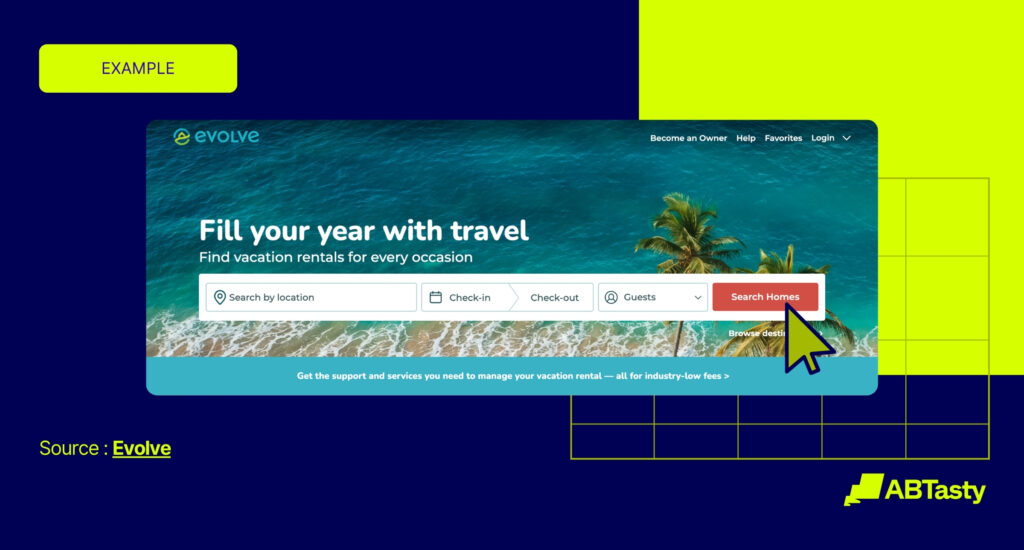
Evolve separates its traffic sources

A fantastic example of this comes from Evolve Vacation Rental. They recognized that not all traffic is created equal when it came to attracting new homeowners to list their properties. A visitor arriving from a targeted Google search for “how to rent my vacation home” has a very different intent than someone who clicked a beautiful, brand-aware ad on Facebook. The first user is actively looking for a solution and is ready for details about fees, services, and qualifications. The second is likely in an earlier, more curious phase, just exploring the possibility.

By separating these traffic sources, Evolve was able to tailor its landing pages to match the visitor’s mindset. The high-intent Google visitor got straight to the point with clear calls-to-action and qualifying questions, while the Facebook visitor received more inspirational content. It’s a simple, powerful idea: speak to the journey your guest is on, not just the one you want them to take. Start by analyzing your traffic sources. What are your visitors’ search queries telling you? How does engagement differ between channels? Every click is a clue.

Using segmentation to deliver relevant offers

Once you have a sense of who’s at the door, you can start personalizing their welcome. A one-size-fits-all approach to offers is like a hotel restaurant with only one item on the menu, it’s bound to disappoint most of your guests. Segmentation is the key to creating a menu of experiences that feels personal to each visitor.

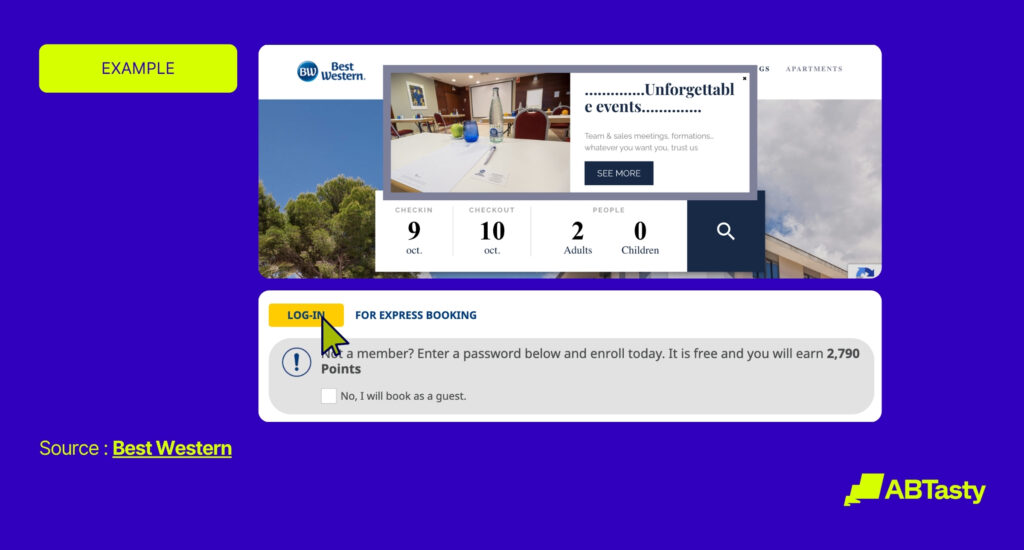
Best Western Rewards program

This is where we can learn from a leader in the industry, Best Western Hotels & Resorts. Their team wanted to encourage more visitors to sign up for their Best Western Rewards program. But instead of just showing the same generic pop-up to everyone, they got smart. They used data from their visitors’ search queries to create relevant, timely offers.

Here’s how it worked: a visitor searching for a one-night stay might be a business traveler with a specific need. But a visitor searching for a stay of two nights or longer is likely a leisure traveler with more flexibility. Best Western created different audience segments for these users. The leisure traveler looking for a longer stay was shown a pop-up with a special promotional offer, available only by signing up for a Rewards account. The result? A 12% increase in sign-ups from the campaign. They didn’t just shout about their loyalty program, they showed visitors exactly how it could benefit them, right when they were most receptive.

Make ‘book now’ the easiest click of their day

You’ve welcomed your visitor, understood their needs, and presented them with the perfect offer. Now comes the most critical moment: the booking. All the great work you’ve done can be undone in an instant by a clunky, confusing, or frustrating checkout process. At this stage, your one and only job is to remove friction.

Sometimes, the biggest barriers are the smallest things. The travel company Smartbox believed the “Add to Cart” CTA on their vacation packages wasn’t visible enough. They formed a simple hypothesis: a more vibrant, contrasting color would draw more attention and, therefore, more clicks. Using a simple A/B test, they changed the button color from aqua to a bright pink. This tiny change generated a 16% increase in clicks. It wasn’t a guess, it was a data-backed decision that made the user’s path clearer.

Similarly, Evolve Vacation Rental tested the copy on their call-to-action button for homeowners interested in listing their properties. The original read “See if You Qualify,” while the variation said “Start for Free.” The new phrasing, which better aligned with the user’s goal of understanding the service, resulted in a staggering 161% increase in conversions. These tests prove that you don’t need a complete redesign to see dramatic results. You need a willingness to question every element and let your users’ behavior guide you to the better option.

The journey doesn’t end at the confirmation page

What if the most hospitable digital experiences are the ones that know when to stop being purely digital? The goal isn’t just to build a self-service journey, but to create one that’s smart enough to recognize when a guest is confused or frustrated. Instead of letting that friction lead to an abandoned booking, you can proactively offer a human interaction to guide them through it. This is about augmenting the digital journey with a personal touch, right when it’s needed most.

The most forward-thinking brands understand that their website and physical properties are not separate channels, they are two parts of one holistic experience. We can draw inspiration from the travel agency Havas Voyages. Their team implemented a clever strategy for users who showed “exit intent”. Instead of just letting them go, a pop-up appeared offering them an appointment with a travel planner at their nearest physical agency. They saved a potential lost lead by seamlessly offering a human alternative.

The application for a hotel is incredibly powerful. Imagine a user struggling on a complex booking page and showing signs of leaving. What if, instead of losing them, you triggered a pop-up offering a “live chat with our concierge” or a “call back from the front desk within five minutes”? This is more than a conversion-saving tactic; it’s a brand-defining moment. It shows that your hospitality isn’t confined to your lobby. It proves your team is ready to help, across any channel, at any time. By blending your digital tools with a human touch, you build a unified brand experience that creates trust and earns loyalty.

Ready to find your better? We help teams like yours turn brave ideas into brilliant results. Let’s talk about what you want to achieve.

Article

6min read

Destination: Different – How Gen Z is Rewriting the Travel Playbook

Travel and hospitality is a huge industry, estimated at 955.90 billion USD in 2025. It’s also one that’s changing rapidly, with online travel bookings projected to account for 75% of all revenue by 2029. That’s why we’ve put together industry insights in our e-book, Decoding Online Shopping: Travel and Hospitality Consumer Trends for 2025.

What’s clear from our research is that Gen Z is quickly reshaping the online travel journey. They’re doing things differently to previous generations, from where they find inspiration, to why they abandon a cart, and how they view personalization. And that has big implications for travel brands.

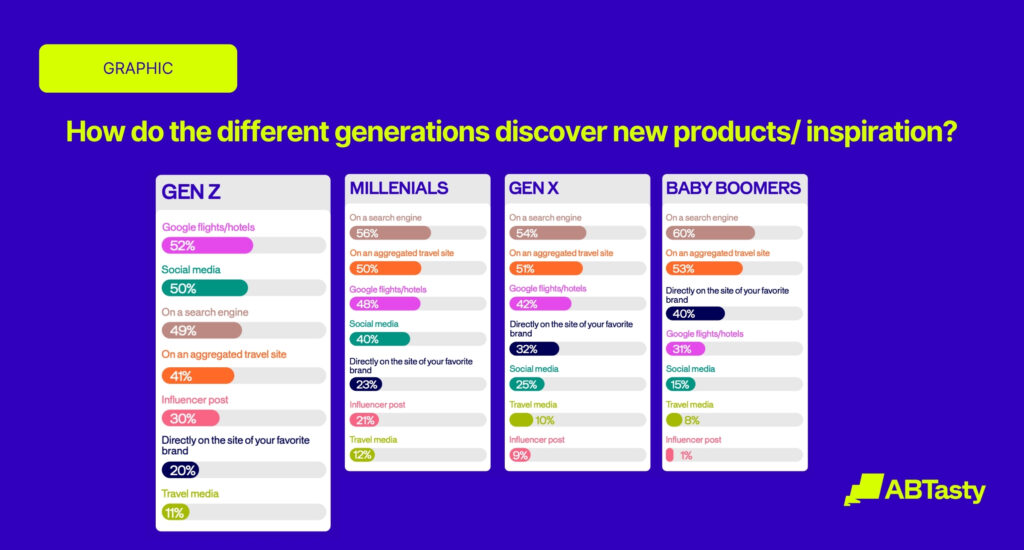
Google flights/hotels and social media are now their go-to

A majority of Gen Z say they now start their search for travel options on Google Flights/Hotels (52%) or social media (50%). This shows a major shift from all other generations, who prefer to start their online search on a search engine or an aggregated travel site like Booking.com.

These results indicate that social media will, if anything, be an even more crucial battleground for travel brands going forward. To grab Gen Z’s attention, you’ll need to budget for targeted social media ads. Influencer content also plays an important role here, not only in making Gen Z aware of potential travel options but in providing social proof of existing ones.

Gen Z travel options

Location still leads, but reviews and visuals are more important

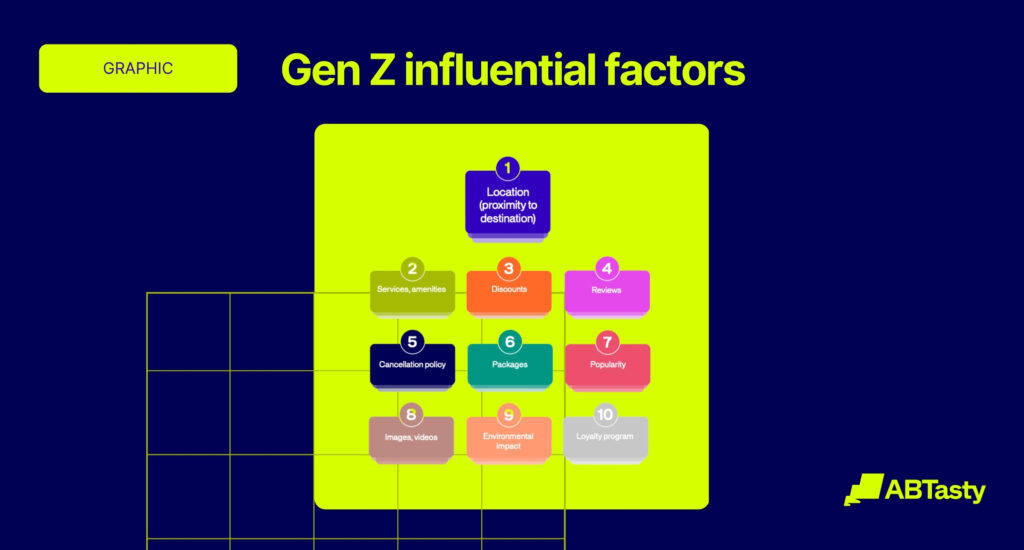
One thing that hasn’t changed for Gen Z when booking accommodation and transportation options online is the importance of location. Proximity to key destinations is still the most influential factor in convincing Gen Z to book, as it is with other generations.

What does change for Gen Z is their even greater reliance on authentic reviews. They want their travel choices to be validated by their peers, and well-positioned authentic reviews provide them with the reassurance they need to feel confident in their decision. Use A/B testing to determine the ideal placement of customer reviews on the relevant pages of your website.

Growing up with digital technology and social media, Gen Z also thrives on visual content. Having visually engaging, up-to-date images and videos on your website will appeal to them more than any other generation. This also holds true for hotel listings on Google Hotels and aggregated travel sites.

Gen Z influential factors

Simplify checkout and increase payment options

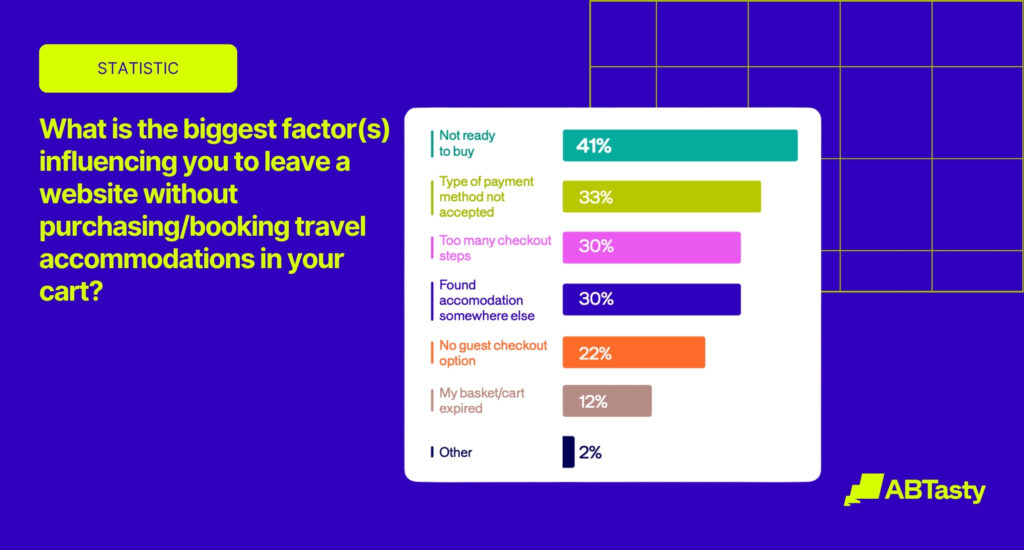
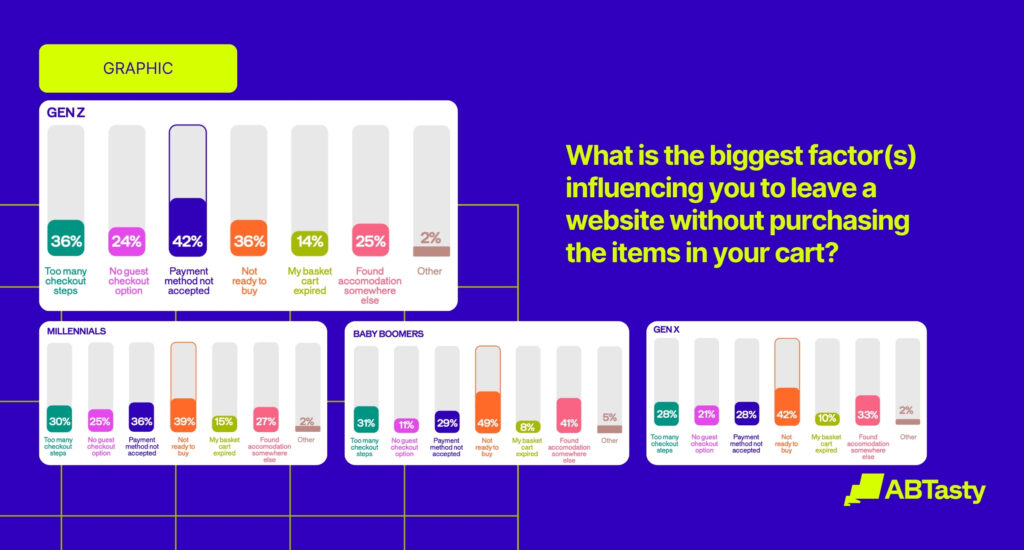
The number one reason that Gen Z leaves a travel website without making a purchase is that their chosen payment method is not accepted. This again is in sharp contrast to previous generations, where the top reason for doing so is that they simply aren’t ready to buy. However, that does suggest that if Gen Z gets to your website, they’ll be more ready to buy. Adding additional payment methods, like Apple Pay or Google Pay, will reduce the chances of Gen Z leaving before they’ve booked.

Gen Z also say they leave a website if there are too many steps involved in checkout. Adjusting the checkout process to make it more streamlined will reduce unnecessary friction and increase the likelihood of Gen Z making a purchase.

Gen Z and the checkout process

Adapt with personalization and AI

Above all, Gen Z wants a seamless digital experience that’s tailored to their needs. And 65% of Gen Z embrace data-driven personalization as a helpful tool. Once again, this is a higher number than generations before them. Specifically, Gen Z wants a website to remember their preferences and offer them real-time recommendations based on those preferences.

Personalization gives you a perfect opportunity to build stronger relationships with Gen Z customers. You can do this by leveraging first-party data to offer tailored recommendations, simplify the booking process, and provide faster checkout.

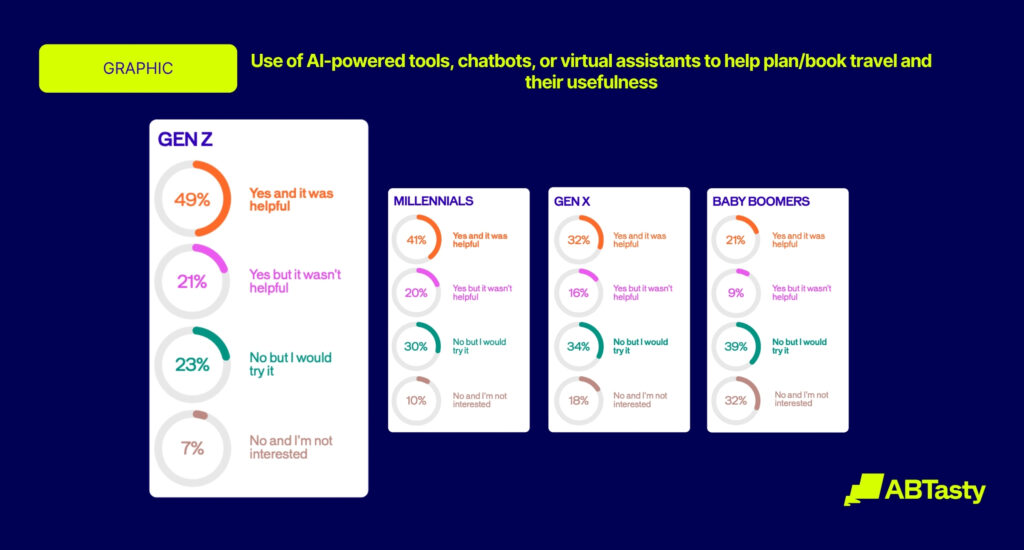
Gen Z are also more open than any previous generation to using AI-powered tools, like chatbots or virtual assistants. Nearly half of Gen Z (49%) say they’ve used an AI tool when booking travel options and found it helpful. And just 7% of Gen Z say they’re not interested in AI at all.

Focus on making AI interactions feel natural, efficient and genuinely helpful. Set clear expectations about what AI can and can’t do, and ensure human support is easily accessible if needed.

Use of AI and chatbots

Examples of personalization done right

While there’s no one-size-fits-all when it comes to personalization, some companies seem to do personalization consistently well:

  • Netflix uses personalization to determine customers’ interests and promote related content and suggestions in real time. This is a perfect example of how personalization can remove friction by making it easier for customers to find what they’re looking for.
  • Stitch Fix collects information customers supply about their size, shape, and personal style. It then selects outfits based on each one’s taste and personality. This shows how personalization and AI can work together to offer customers a great website experience.
  • LinkedIn is a great example of a company that knows how to balance privacy concerns with utility. By providing personalized suggestions and links based on users’ current connections, LinkedIn makes it easier to network, look for work, or catch up with former co-workers.

Conclusion

The travel and hospitality industry is rapidly evolving, and Gen Z are quickly reshaping what the online travel journey looks like. Their expectations of what makes a good digital experience are also greater than ever before. To be successful, this needs to be seamless and tailored to their needs.

Key to this is greater personalization powered by data and experimentation. By optimizing Gen Z’s experience of booking travel options, you can build trust and loyalty and keep Gen Z travelers coming back for more.

Takeaways for travel and hospitality brands

  • Work on your social media presence to influence potential customers and increase brand awareness.
  • Showcase nearby attractions and must-see sites in listings to capture attention.
  • Feature high-quality reviews and images on key pages to build trust and credibility. 
  • Simplify checkout and offer more payment options to reduce drop off.
  • Personalize with relevant real-time recommendations for a more tailored digital experience. 
  • Use AI to provide instant answers and assist travelers in real time.

Article

8min read

Flying Through Checkout: How Experimentation Shapes Airline Consumer Behavior

The airline checkout is where booking intent becomes revenue. Yet for most airlines, it’s also where the majority of customers drop off. This high abandonment rate isn’t just a cost of doing business; it’s a direct result of a complex booking process failing to meet modern traveler expectations. Fixing this friction is one of the biggest opportunities for growth in the industry.

This drop-off isn’t just a technical problem, it’s a human one. The checkout flow is where a traveler’s excitement meets anxiety, and where price sensitivity clashes with the desire for comfort. For airline and travel professionals, understanding this interplay is the key to conversion.

The answer isn’t to guess what travelers want or to copy a competitor’s design. It’s to listen, learn, and adapt by building a system that lets you ask customers what they prefer, not with a survey, but with their clicks. As we discuss in our Travel Essentials Kit e-book, this is the world of experimentation, where every test becomes part of a continuous cycle of learning and iteration.

Why airline checkout is so complex

Unlike a simple e-commerce purchase, booking a flight is rarely a one-click affair. The complexity is baked right into the business model. You’re not just selling a seat; you’re selling a multi-faceted travel experience, and each component adds another layer to the checkout.

First, there’s the core booking. A simple round-trip flight is one thing, but multi-leg journeys with different carriers, layovers, and time zones create a significant cognitive load for the user. Then come the additional services, such as seats, bags, meals, or insurance, where each choice is a potential exit point. Finally, regulatory requirements can create long, intimidating forms.

The result of this complexity is an abandonment rate that, according to Inai, hits 90%. To put it another way, nine out of every ten potential customers that start booking a flight will leave without paying. That’s significantly higher than the already high average e-commerce site abandonment rate of 70%. And the problem is even worse on mobile.

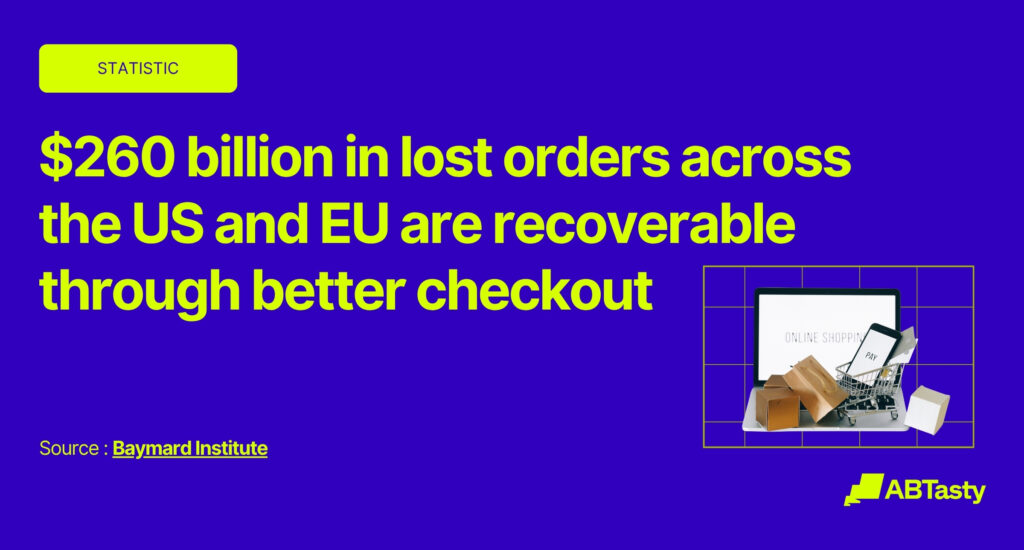
$260 billion in lost orders across the US and EU are recoverable through better checkout

This is more than a user experience flaw; it’s a massive financial bleed. The Baymard Institute estimates that $260 billion in lost orders across the US and EU are recoverable through better checkout design alone. It’s a multi-billion dollar design challenge waiting for a solution, but the fix doesn’t require a complete and costly overhaul. A commitment to analyzing user data, testing hypotheses, and letting the results guide incremental, high-impact changes will have your customers soaring through your checkout process in no time.

Decoding consumer behavior at checkout

To optimize the checkout flow, you have to get inside the traveler’s mind. Their behavior is driven by powerful psychological factors, and your data shows exactly where the friction is.

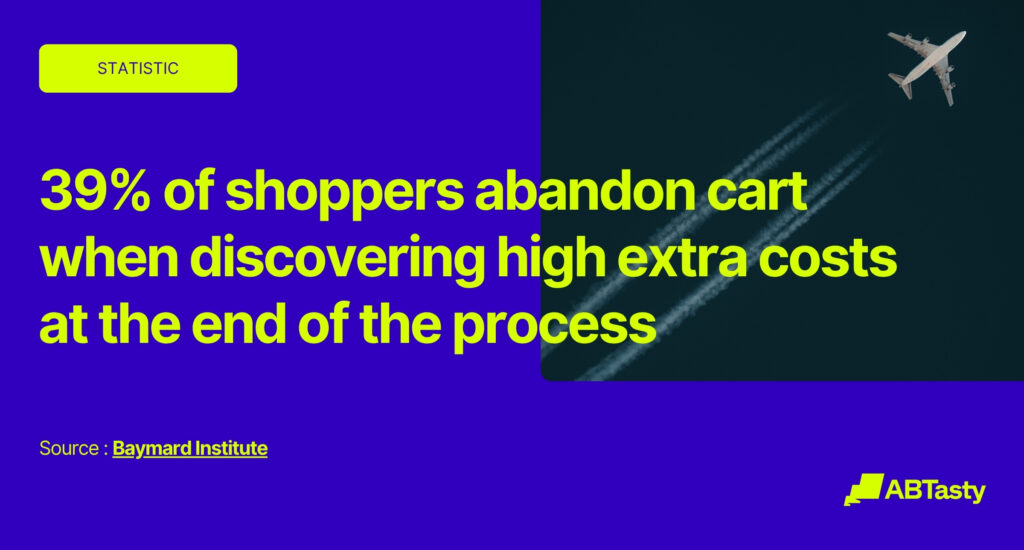
39% of shoppers abandon cart

The single biggest culprit is cost ambiguity. The top reason for cart abandonment, cited by 39% of shoppers in research aggregated by the Baymard Institute, is discovering high extra costs at the end of the process. This points directly to the airline industry’s practice of “drip pricing.” The low base fare gets them in the door, but the steady drip of fees erodes trust. It’s not just the final price; it’s the feeling of being misled.

Next is process friction. The same research found a “too long or complicated” checkout will cause 18% of users to leave. Forcing a user to create an account is another major barrier, responsible for another 19% of abandoned carts. This accumulation of friction—multiple pages, endless form fields, and mandatory sign-ups—creates a powerful negative momentum that pushes users to exit.

Finally, there’s the trust deficit. A staggering 19% of users will abandon a purchase simply because they didn’t trust the website with their payment information. This isn’t just about SSL logos. A user who experiences a price increase through drip pricing is psychologically primed to be more skeptical when it’s time to enter their payment details, as the final cost no longer aligns with their initial expectation.

Understanding these behaviors isn’t about exploiting them. It’s about designing a smoother, more transparent, and less stressful experience that guides the traveler confidently toward their destination while also building brand credibility.

Experimentation as a window into the traveler’s mind

So, how do you solve for cost ambiguity or process friction? The answer is to ask your users, not with a survey, but by testing different approaches and measuring the results. Experimentation, through A/B and multivariate testing, is the most effective way to understand what travelers actually do.

The process starts with a data-driven hypothesis. For example, if your analytics show a high drop-off rate on the passenger details page, you could hypothesize that reducing the number of form fields will reduce friction and increase conversions. From there, you can run a simple A/B test: Version A is your current, longer form, and Version B is the new, simplified one. By showing each version to different segments of your audience, you can measure which one leads to more completed bookings. The result is no longer a guess; it’s a data-backed insight that de-risks design changes and allows you to make improvements with a measurable impact.

But this isn’t just about one-size-fits-all fixes. You can take it a step further with personalization and segmentation. A first-time booker might need more guidance and reassurance during checkout, while a frequent flyer would prefer a streamlined experience that pre-fills their preferences and key information. Experimentation allows you to test different, tailored experiences for these segments, ensuring every traveler gets the smoothest possible path to booking.

What airlines can test in checkout

Once you embrace an experimentation mindset, you’ll see test opportunities everywhere. The goal is to challenge assumptions and find what truly moves the needle. Here are a few powerful areas to start:

  • Call-to-action design: Don’t underestimate the power of a button. We worked with Smartbox to test colour variations of their “Add to cart” button, and a simple color change resulted in a 16% increase in clicks.
  • Payment options: The payment step is the final hurdle. Adding digital wallets is one of the most impactful changes you can make. An analysis by Stripe found that businesses enabling Apple Pay saw an average 22% increase in conversion. It’s a powerful antidote to checkout friction, especially on mobile. You could even explore digital boarding passes that integrate directly with mobile wallets. 
  • Form factor and flow: Is a single-page checkout less intimidating than a multi-step progress bar? Test it and see!
  • Trust-building elements: Reinforce security at the moment of payment. Test the placement of security seals and clear language around your cancellation policies. A simple statement like “Free 24-hour cancellation” can provide the reassurance a hesitant traveler needs.
  • Upsell placement: How and when you present add-ons matters. Test bundling services versus offering them a la carte. You might find users are more receptive to upsells like early check-in or seat selection via a follow-up email after the booking is confirmed, reducing friction in the initial checkout.
  • Mobile-first experiences: Your mobile checkout shouldn’t just be a shrunken version of your desktop site. Test mobile-specific designs with larger tap targets, simplified navigation, and form fields that trigger the correct mobile keyboard layout.

From insights to impact: Building a culture of experimentation

The true power of optimization isn’t found in a single winning test. It’s found in building a culture of continuous learning. When your product, marketing, and engineering teams are united by an experimentation mindset, you stop debating opinions and start making decisions based on data. You dare to go further.

Iberojet increase in clicks

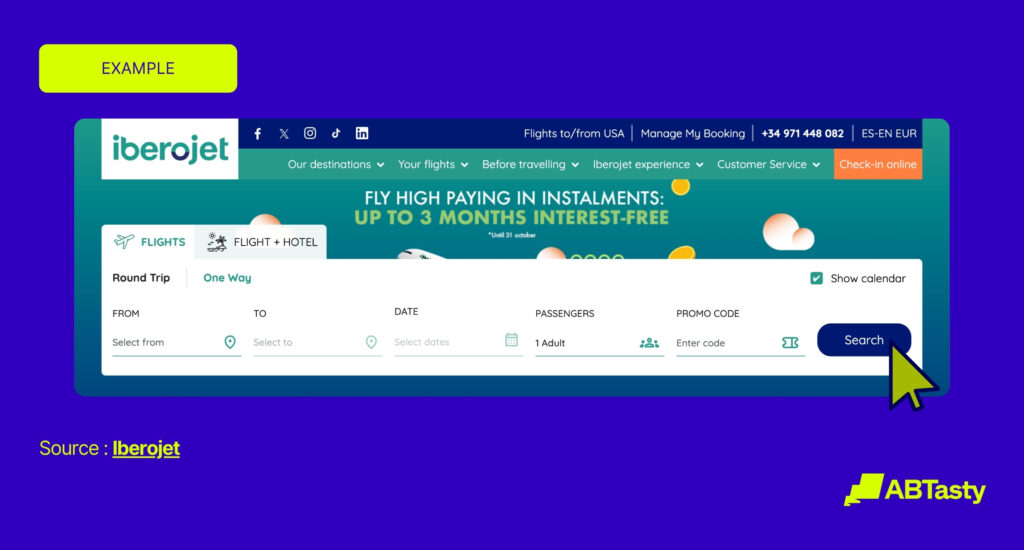
Take Iberojet, for example. The online travel agency questioned whether the order of tabs on their homepage was ideal. Working with us, they ran a simple A/B test to change the order based on user browsing history. That small change increased clicks on the “Search” button by 25%, pushing more users down the conversion funnel.

Another powerful example is Ulta Beauty. Working with us, they’ve embedded experimentation into their innovation process, scaling their program from 20 tests per year to over 65. Rather than relying on assumptions, their teams use testing to get quick, data-driven answers. For example, by testing an overlay with product recommendations in the shopping cart, they drove a 9% increase in revenue and a 15% increase in “add to bag” clicks, proving the value of a nimble, “fail-fast” environment.

This is how you find your better. It’s not about finding one perfect, final version of your checkout. It’s about the restless, determined pursuit of a better experience for every traveler, on every device, every single day. The journey starts with a single question: What will you try?

Article

6min read

The Mobile Playbook: Personalization, Performance, and Profitability

Mobile commerce has revolutionized how consumers interact with brands — from browsing products on the go to researching the latest trends. Yet, despite mobile usage soaring, the full potential of mobile commerce remains untapped. While traffic from mobile devices continues to rise, conversion rates still trail behind other channels. What’s driving the gap between browsing and purchasing on mobile? 

In this post, we’ll explore key mobile performance stats, delve into the challenges behind these numbers, and showcase how Quantum Metric and AB Tasty collaborate to help brands close this gap. If you want the your own mobile playbook, the insights shared here are based on data from Quantum Metric’s eBook, How Mobile Performance Builds Consumer Confidence.

1. Mobile is everywhere, but conversions lag.

Mobile traffic is not just a trend, it’s the backbone of online shopping. Consumers are increasingly using their phones for everything from discovering products to making final purchase decisions. However, despite this surge in mobile traffic, conversions still don’t match the volume of visits. So, what’s going wrong?

Insight:

  • Mobile accounts for 73% of monthly traffic, but only 47% of sales.
  • Travel sees the highest mobile traffic (73%), but the lowest sales share (39%).

Challenge:
Consumers love to browse on mobile — reading reviews, comparing prices, and window shopping. But when it comes time to make a purchase, they often shift to desktops or other channels. This disconnect between browsing and buying is a critical challenge.

Solution:
Quantum Metric delivers real-time insights to identify where users drop off in their mobile journeys, helping brands pinpoint key friction points. Armed with this data, AB Tasty can run A/B tests and experiments to optimize mobile conversions by improving layouts, simplifying checkout, or personalizing offers based on user behavior.

2. Personalization drives engagement (and sales).

With so much information available at their fingertips, consumers expect personalized experiences that speak to their unique preferences. But while mobile apps can deliver these tailored experiences, it’s not always the case that mobile users receive the level of customization they desire. So, how can brands keep up with the demand for hyper-personalized mobile experiences?

Insight:

  • 39% of consumers prefer mobile apps, but 33% have reduced app usage.
  • Conversion rates on mobile apps are 3X higher than on mobile web.

Challenge:
Consumers are increasingly expecting experiences that are customized to their preferences. Whether it’s personalized product recommendations or location-based offers, users demand content that resonates with them on a deeper level. But how do brands manage to provide this while maintaining convenience and ease of use?

Solution:
Quantum Metric provides detailed session data, revealing exactly what users are engaging with and where they’re dropping off. AB Tasty then uses this data to create personalized experiencesthrough hyper-targeted experiments, ensuring that each user sees content that’s most relevant to them — ultimately boosting engagement and driving conversions.

3. Building confidence in mobile transactions.

Even with mobile traffic growing, many consumers are still hesitant to make purchases — especially larger ones — on their phones. Trust is a major factor in whether or not a consumer feels confident enough to complete a mobile transaction. But how can brands overcome the hurdles of security concerns and poor mobile experiences?

Insight:

  • 59% of consumers only feel confident making purchases of $50 or less on mobile.
  • Desktop AOVs are 70% higher than mobile for retail and nearly 2X higher for travel.

Challenge:
Security concerns and clunky mobile experiences can drive away customers before they even hit the checkout button. Many consumers feel more comfortable making purchases on desktops, where they associate higher transaction values with a more secure, familiar environment.

Solution:
Quantum Metric identifies friction points — slow load times, security concerns, or error messages — that can erode trust. AB Tasty uses A/B testing and experiments to address these pain points, creating smoother, more secure user flows that enhance trust and improve conversion rates.

4. Performance matters more than ever.

With consumers’ expectations for speed at an all-time high, mobile performance can make or break the user experience. From slow loading times to app crashes, mobile performance issues are a significant barrier to conversions. So how can brands ensure their mobile experiences are fast and seamless?

Insight:

  • 59% of users have experienced slow performance; 43% have faced app crashes.
  • API error rates are 2-3X higher on mobile than desktop, with issues like long spinner rates causing 48% higher friction.

Challenge:
Users have little patience for performance issues. A slow-loading page or app crash can lead to frustration and, ultimately, abandonment. The pressure to deliver fast, smooth mobile experiences is higher than ever.

Solution:
Quantum Metric’s real-time data quickly highlights performance issues, from slow page loads to API errors. Once identified, AB Tasty can experiment with various solutions, optimizing mobile performance and delivering a smoother, faster user journey.

5. Turning data into action.

In the fast-paced mobile landscape, time is of the essence. Consumers expect quick, efficient mobile experiences, and if a transaction takes too long, they won’t hesitate to abandon it. So, how can brands ensure they are responding to user behavior in real time?

Insight:

  • 55% of consumers will abandon a mobile transaction if it takes longer than 3-5 minutes.

Challenge:
The pressure to scale innovation without losing sight of the customer is real. Mobile transactions need to be fast and seamless, or customers will simply walk away — especially when it comes to on-the-go transactions. 

Solution:
Quantum Metric empowers brands with real-time behavioral data that shows where and when users drop off during their mobile journey. AB Tasty then helps turn this data into action by running targeted experiments that address specific friction points, reducing abandonment and improving the overall mobile experience.

Conclusion: turning mobile commerce into your competitive edge.

Mobile commerce isn’t just another sales channel — it’s a key competitive advantage. To succeed, brands must focus on delivering fast, personalized, and secure mobile experiences that build consumer trust. By combining Quantum Metric’s real-time behavioral insights with AB Tasty’s experimentation platform, brands can close the gap between browsing and buying, unlocking the true potential of mobile commerce.

Article

9min read

How The Contentsquare & AB Tasty Integration Improves Testing & Drives Results

The Contentsquare & AB Tasty integration helps you optimize your A/B testing lifecycle, driving high-value outcomes with low-risk scenarios. Let’s dive into how this integration will help you improve your customer experience (CX) and boost your growth metrics.

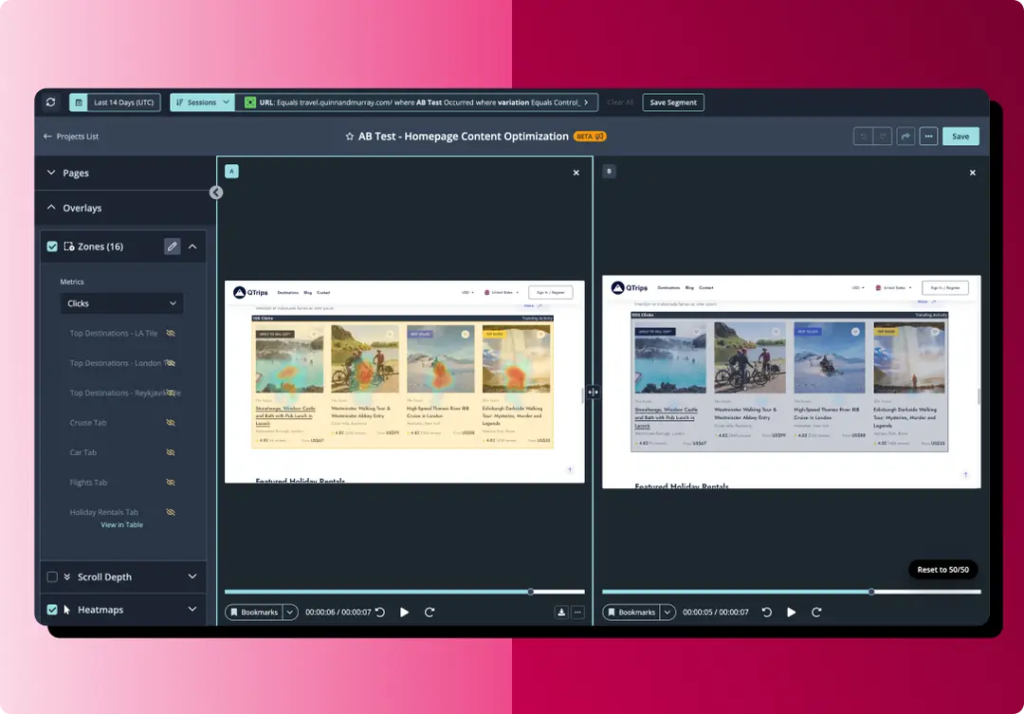
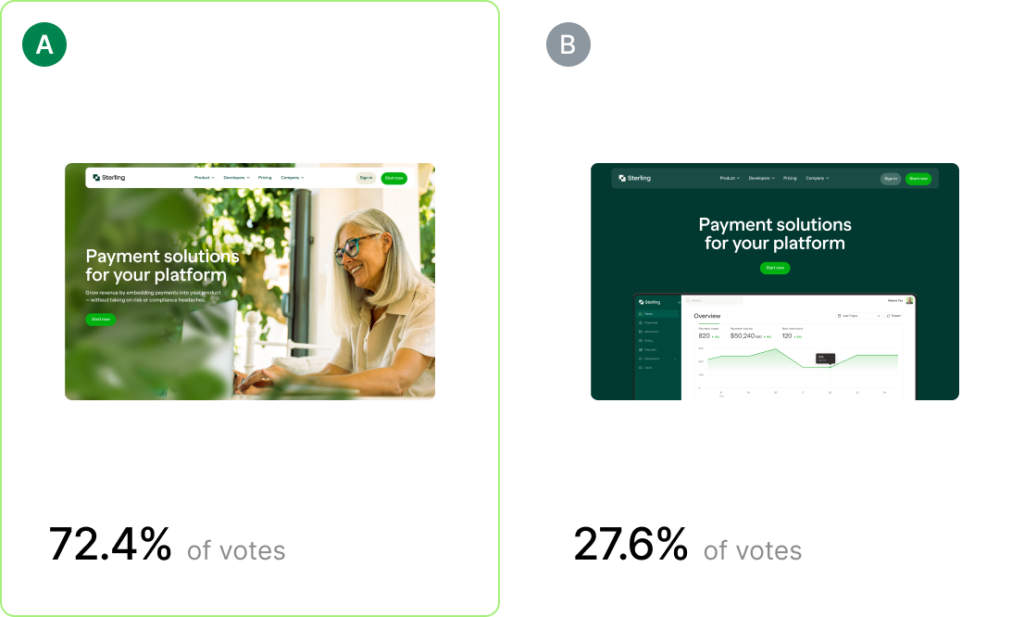
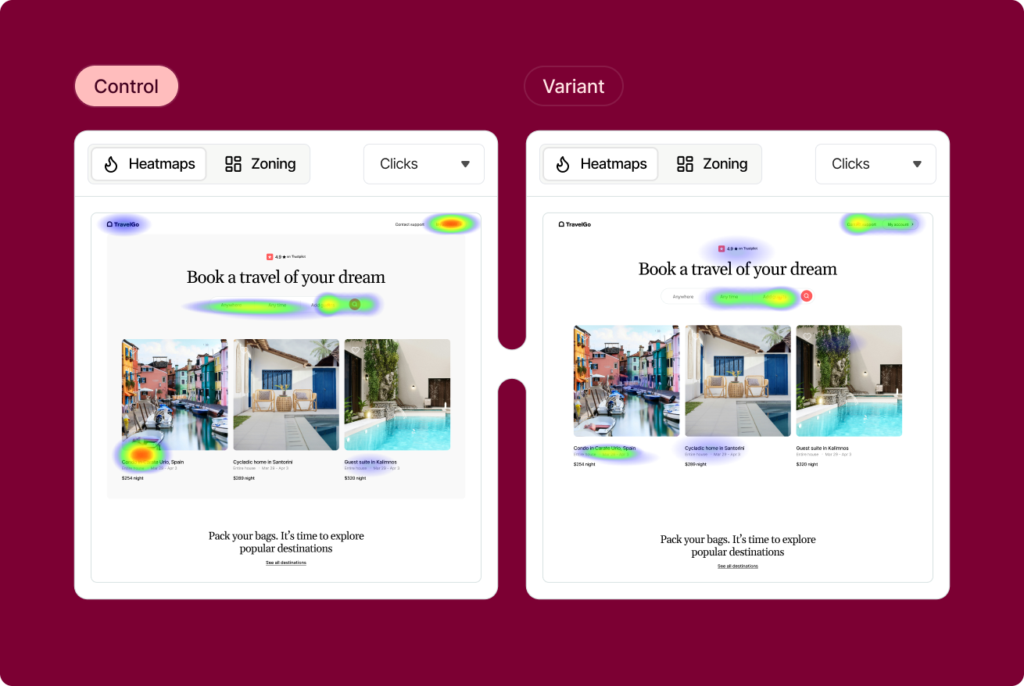
A side-by-side comparison of 2 webpages using Contentsquare analysis

 An overview of the integration

When Contentsquare and AB Tasty are used separately, you only get half the success of your test results. Say you want to test a hero banner. Using AB Tasty, you test 2 versions, and find there’s no improvement to your conversion rate. But, perhaps one of the versions increased customer engagement? Without the help of Contentsquare, you’re limited in your view of how your tests impact your entire customer experience.

Or, let’s say you’ve analyzed your customer journey using Contentsquare and discovered one of your conversion pages has a high drop-off rate. You come up with a hypothesis as to why this might be the case and hard-code a change, but this leads to more drop-offs, not less. Without AB Tasty, you’re unable to test your hypotheses, which results in wasted time, resources, and a potentially worse customer experience.

But, it doesn’t have to be this way. By integrating Contentsquare and AB Tasty, you can dive deeper into your customer experience to pinpoint and prioritize the most critical friction points or opportunities to experiment. You can also build better hypotheses based on key metrics, create and run data-informed tests, and better understand why variations perform well (or not). 

With Contentsquare, you gain a more comprehensive understanding of your customer experience, enabling you to conduct more informed, data-driven tests with AB Tasty.

 Benefits of the Contentsquare and AB Tasty integration

Where Contentsquare provides deep and meaningful insights into your customer behavior, AB Tasty empowers you to act on those insights, in real time.

Using  Contentsquare and AB Tasty together, you get

  • Unparalleled insights into customer behavior 
  • Hyper-personalization features to deliver tailor-made experiences to boost conversion rates
  • A simplified, streamlined workflow that eliminates data silos by having data accessible across easy-to-understand dashboards
  • Greater business impact by uncovering hidden opportunities in your customer journey and testing your hypotheses before hard-coding changes
  • Comprehensive experiment analysis with easy-to-understand visuals and side-by-side comparisons of your control and variation
  • Continuous improvement to your digital strategy

Want to know the fundamentals of how the Contentsquare and AB Tasty integration works? Learn more.

How Contentsquare can inform your testing in AB Tasty

Let’s look at how this works in practice, using the framework of a continuous testing cycle. There are 5 stages to the continuous testing cycle—here’s how the Contentsquare and AB Tasty integration works to optimize each step along the way:

Stage 1: analysis phase

This first stage involves finding friction points or opportunities at each point of your customer journey. Then, it’s about generating test hypotheses to help solve or optimize the points that need the most attention.

You can break down this stage into 2 forms of analysis. 

  1. Innovation analysis, where you work out whether your content is optimized for the best customer experience you can provide

2. Troubleshooting analysis, where you uncover errors or friction points in the customer journey, preventing users from moving forward.

With Contentsquare’s Experience Analytics, you can find out how your customers are behaving page by page, from entry to exit, and why. With a suite of capabilities, you can deep-dive into your customer experience and analyze areas that need the most improvement.

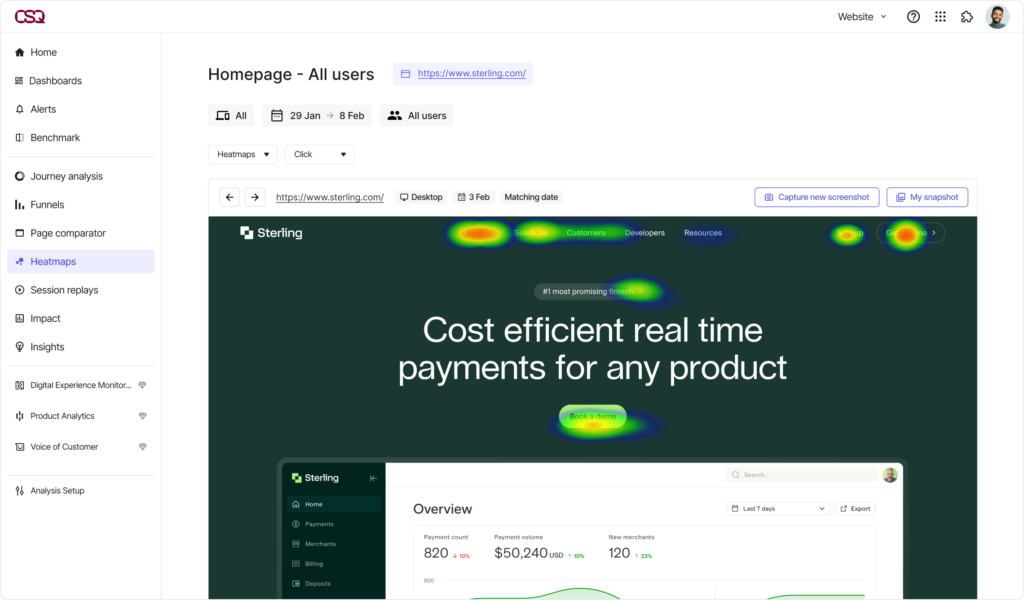
 Screenshot of Contentsquare’s Experience Analytics dashboard, open on the Heatmaps capability.

Use Session Replay to find out

  • What are the behaviors of customers at critical conversion points?
  • What’s causing rage clicks or other frustration behaviors?
  • Where are customers encountering errors?

Rage clicks are when customers click on an element (clickable or not) of a website or app multiple times in frustration or anger. They’re often caused by technical issues, confusing navigation, or a cluttered design.

Use Journey Analysis to find out

  • What are the top landing pages?
  • What is the lowest-performing landing page?
  • What is the highest-performing journey to reach your goal?
  • What are the most popular journeys?
  • Where do customers drop off or bounce?

Use Heatmaps to find out

  • What’s the most attractive content/category on the page?
  • What’s leading to the most conversions? Is it visible enough?
  • In what order do customers consume the page?
  • Are there any frictions or rage clicks on the page?

Stage 2: analysis resolution

Now you’ve got a few hypotheses to test, it’s time to work out how to prioritize what to test first.

The focus should be on tests with low effort, high reward and those with the biggest impact on your key performance indicators (KPIs).
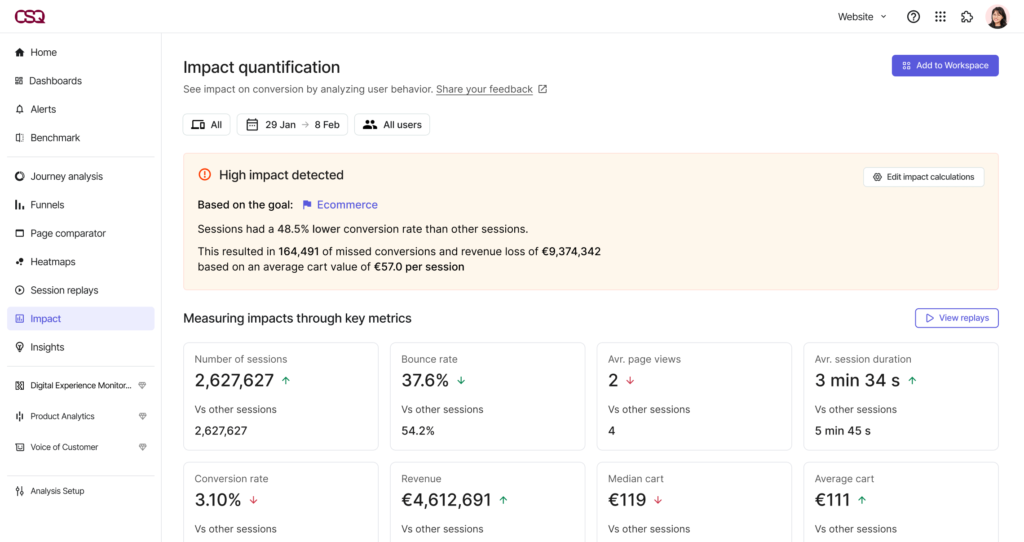
Contentsquare’s Impact Quantification can help you prioritize your tests and make better decisions by assessing the impact of each test. All you need to do is clarify your goal and then segment users based on whether they completed the goal of your A/B test.

Contentsquare’s Impact Quantification in action.

Impact Quantification can then be used to compare these segments and confirm how much revenue the success of the test will likely generate.

 Stage 3; experimentation roadmap

Once you’ve established which hypotheses have the greatest potential to impact your KPIs, it’s time to start fleshing out your testing roadmap.

This roadmap will help guide every step of your testing process—from the build to the design and copy and finally, the execution. This roadmap is where you detail who’s doing what and when, giving you an overview of your site. This is especially useful if you’re running tests on multiple pages.

The dos and don’ts of your testing roadmap

Do’s

✅ Run your tests in at least 2-week increments to account for site traffic cycles and seasonality.

✅ Color-code your roadmap for the different stages of your experimentation so it’s easy to quickly see where each test is at.

Don’t

❌ Have 2 tests running on 2 pages at the same time—it can muddy the data and lead you to potentially misread your results.

❌ Don’t run multiple tests on the same page independently—use multivariate tests to see how changes to multiple sections interact with one another.

Stage 4: start A/B testing

All that hard work has finally paid off—it’s time to put your hypotheses into action and start running tests with AB Tasty.

Using your roadmap as a guide, start building out your tests in AB Tasty to optimize, personalize, and improve your customer experience.

Stage 5: analysis and results

Get site statistics directly through AB Tasty and couple that with Contentsquare’s customer behavioral insights. 

From AB Tasty, get direct reports based on page statistics—giving you a snapshot of what’s going on in your campaign testing period.

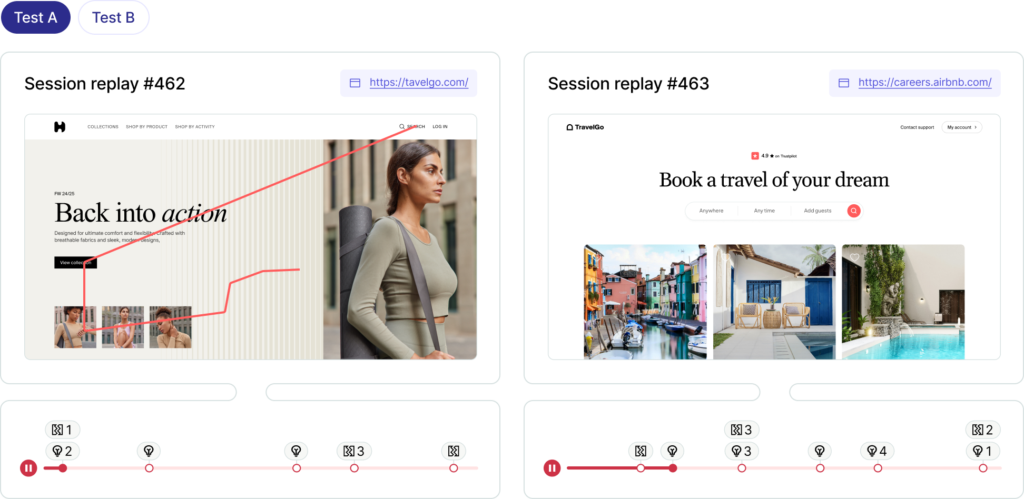
From Contentsquare, as soon as your test goes live, you can watch how your customers behave in the control and variation, side-by-side using Heatmaps and Session Replay. Get a visual understanding of why and how your customers behave differently in your variation and use these insights to inform your next testing phase.

 How the partnership works in real life

Now that you know how the Contentsquare and AB Tasty partnership works, it’s time to see what it’s like in the real world. 

Here’s how 2 leading brands have embraced the integration of experience analytics and experimentation into their CX to drive real growth outcomes.

Clarins

Global skincare company Clarins wanted to find out whether a “wishlist” option on their site would help to increase pageviews and conversions. 

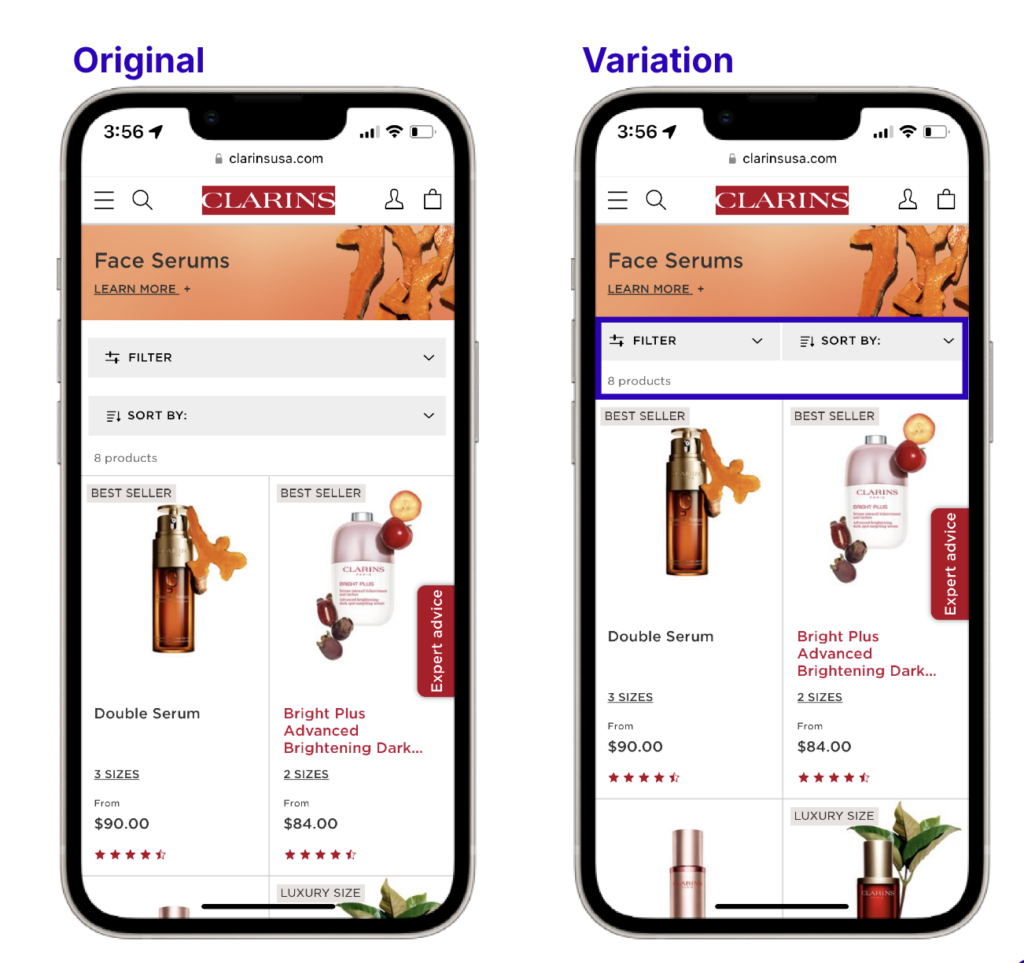
Using the Contentsquare integration with AB Tasty, they tested adding a heart icon to their product listing pages (PLPs) and product description pages (PDPs). This heart allowed users to save their favorite products to potentially purchase them at a later stage.

This test increased the overall number of transactions and resulted in

  • +1.54% increase in basket page views
  • +1.83% increase in transactions

“We are really passionate about continually optimizing what we’re already doing well plus also testing new theories to drive a great customer experience and continue to drive the commercial priorities of our website.”—Roisin O’Brien, Ecommerce Trading Manager at Clarins UK

Hotel Chocolat

British chocolate manufacturer Hotel Chocolat wanted to optimize its digital presence and improve its brand and on-site customer experience. 

Rather than focusing on conversion rates, Mel Parekh, Head of ecommerce at Hotel Chocolate and his team wanted to focus on engagement and clickthrough rates. 

Recognizing the importance of layout and user experience on customer engagement, the goal was to create a more visually appealing and intuitive homepage. 

WithContentsquare’s integration with AB Tasty, his team redesigned the homepage, focusing on the category tiles, which were found to be the most attractive elements on the page.

By optimizing the homepage, they saw a

  • -10% reduction in bounce rates
  • +1.67% increase in visiting time
  • +0.54% increase in overall conversion rates, +7.24% increase on desktop

Mel Parekh, Head of ecommerce at Hotel Chocolate talked about customer loyalty at a recent Contentsquare CX Circle event. 

Smarter insights with Contentsquare

Contentsquare is the all-in-one Experience Intelligence platform designed to be easily used by anyone that cares about digital journeys. With our flexible and scalable platform, you quickly get a deep understanding of your customers’ whole online journey. 

Our AI-powered insights provide those “ah ha” moments you need to deliver the right experiences. You get to work faster and smarter with the confidence to know what to do next to improve your digital experiences. Leading brands use Contentsquare to grow their business, deliver more customer happiness and move with greater agility in a constantly changing world. Our insights are used to optimize the experience on over 1.3 million websites worldwide. For more information, visit: www.contentsquare.com

Article

6min read

Hotel Chocolat at CX Circle: Sweetening Loyalty with Experimentation

Welcome to a world where chocolate isn’t just a treat but an experience—a world crafted by Hotel Chocolat, a British group with nearly 31 years of rich history. At the heart of their journey lies a realization: loyalty isn’t bought with discounts—it’s earned through authentic connections and shared values.

Recently, they shared this ethos at the CX Circle event by Contentsquare featuring Mel Parekh, Head of E-commerce at Hotel Chocolat. Mel took the stage to unravel the complexities of customer loyalty—a subject that has never been more critical in the fast-evolving world of eCommerce. The discussion centered around how Hotel Chocolat has navigated the challenges of a changing world while staying true to its brand values using the power of experimentation.

The Secret Ingredient: Authenticity and Quality

Hotel Chocolat stands out in the chocolate industry for its commitment to authenticity and quality. While most chocolate brands are content to source their cocoa, Hotel Chocolat went all-in, growing their own on the lush Rabot Estate in Saint Lucia. This direct control over their supply chain ensures that they use only the highest quality ingredients while helping craft a brand that’s as genuine as the cocoa it cultivates. 

Hotel Chocolat has witnessed a constant change in the e-commerce landscape. They’ve learned to adapt to these changes while staying true to their brand identity. One of their key initiatives has been to clearly define who they are as a brand and to create compelling reasons for customers to return to their site time and time again.

A Changing Landscape

It’s no secret that the world of eCommerce is in constant flux. Prices are rising across the board—from raw materials to operating costs—and the competition for customers is fiercer than ever.  In this environment, retailers must do more with less, finding innovative ways to stand out. 

As customers increasingly engage with various digital platforms and experiences, the range of choices available to them has become almost overwhelming. In this crowded marketplace, standing out from the competition requires more than just eye-catching design elements.

Moreover, the explosion of data in recent years has made it possible for even smaller companies to leverage insights that were once only accessible to larger players. However, the real challenge lies in capturing this data, interpreting it effectively, and, most importantly, implementing it in ways that drive meaningful results. Hotel Chocolat has embraced this data-driven approach, using insights to refine their strategies and create a more personalized experience for their customers with both Contentsquare and AB Tasty.

Building Lasting Relationships with Customers in a Phygital World

Loyalty is the cornerstone of Hotel Chocolat’s strategy in this new era. As a premium brand, they understand that their customers aren’t just looking for a product; they’re looking for an experience that resonates with their values and desires. This understanding has led Hotel Chocolat to focus on building a brand that not only meets customer expectations but exceeds them by offering a unique, personalized experience.

One of the key strategies they’ve implemented is their “phygital” approach, which blends the digital and physical worlds to create a more personalized, engaging shopping experience. This approach is centered on three key principles:

  • Instant: Reducing delay or lag to ensure a smooth customer experience.
  • Connected: Creating a more personal connection with each customer.
  • Engaging: Giving customers a sense of control over their shopping journey.

 Make the Experience Personal

With over 120 different chocolate recipes, Hotel Chocolat faced this challenge: how do you help customers find the perfect product without overwhelming them? Their solution was gamification—a method that makes the shopping experience more fun and interactive. In Spring 2023, they launched the “Chocolate Love Match,” a quiz that matches customers to one of six flavor profiles. This not only narrows down the selection from 120 options to 20 or 30, making it easier to shop but also helps customers find the perfect gift for friends and family based on their flavor preferences.

The personalization doesn’t stop there. 

Hotel Chocolat also leverages machine learning and tools like AB Tasty to improve their customer experience further. For instance, they’ve been experimenting with “Add to Bag” personalized recommendations. This initiative is crucial, especially as acquisition costs rise, making it more important than ever to maximize the value of each customer interaction.

Using AB Tasty, they tested two variations: one that showed products frequently bought together and another that displayed recently viewed items for easy access. Both approaches tested positively, resulting in a 5.31% increase in average order value and a 2.87% boost in revenue. 

Embracing Data for Optimization

Hotel Chocolat has also focused on optimizing its digital presence, particularly their website. Working with AB Tasty, they undertook a redesign of their homepage, recognizing that the layout and user experience across devices play a critical role in customer engagement. The goal was to create a more visually appealing and intuitive experience that could better connect with customers online—especially when you can’t taste or smell the products.

The results speak volumes. By optimizing the homepage, they saw a 10% reduction in bounce rate, a 1.67% increase in visiting time, and significant improvements in conversion rates—up 0.54% overall and a substantial 7.24% on desktop. This uplift was largely due to better highlighting the most attractive elements on the homepage, such as category tiles that drive higher conversion and revenue.

Loyalty from a Brand Perspective

Mel Parekh left us with three takeaways for building a brand that stands the test of time:

  1. Embracing Change: It shows that your brand is up-to-date and ready to adapt. Staying agile ensures that your brand remains relevant and continues to serve your customers, no matter the circumstances.
  2. Listening and Understanding Customers: If loyal customers aren’t heard and understood, they’ll lose their preference for your brand and start considering others.
  3. Sticking to Your Values: Clearly reward loyal customers for their loyalty, and make sure to differentiate between who is loyal and who isn’t.

Conclusion

Loyalty isn’t just about offering a great product; it’s about creating connections that resonate. Hotel Chocolat has perfected this recipe by blending their commitment to quality with a data-centric culture. Experimentation and data from AB Tasty have allowed them to be able to improve in all areas – whether that is personalization, gamification of their loyalty scheme, or the link between their online and physical shops. Experimentation has improved more than just their CRO but has helped define who they are and what they stand for.

Find out more in Mel’s talk below:

Hotel Chocolat at CX Circle

Article

3min read

Analytics Reach New Heights With Google BigQuery + AB Tasty

AB Tasty and Google BigQuery have joined forces to provide seamless integration, enabling customers with extensive datasets to access insights, automate, and make data-driven decisions to push their experimentation efforts forward.

We have often discussed the complexity of understanding data to power your experimentation program. When companies are dealing with massive datasets they need to find an agile and effective way to allow that information to enrich their testing performance and to identify patterns, trends, and insights.

Go further with data analytics

Google BigQuery is a fully managed cloud data warehouse solution, which enables quick storage and analysis of vast amounts of data. This serverless platform is highly scalable and cost-effective, tailored to support businesses in analyzing extensive datasets for making well-informed decisions. 

With Google BigQuery, users can effortlessly execute complex analytical SQL queries, leveraging its integrated machine-learning capabilities.

This integration with AB Tasty’s experience optimization platform means customers with large datasets can use BigQuery to store and analyze large volumes of testing data. By leveraging BigQuery’s capabilities, you can streamline data analysis processes, accelerate experimentation cycles, and drive innovation more effectively.

Here are some of the many benefits of Google BigQuery’s integration with AB Tasty to help you trial better:

  • BigQuery as a data source

With AB Tasty’s integration, specific data from AB Tasty can be sent regularly to your BigQuery set. Each Data Ingestion Task has a name, an SQL query to get what you need, and timed frequency for data retrieval. This information helps make super-focused ads and messages, making it easier to reach the right people.

  • Centralized storage of data from AB Tasty

The AB Tasty and BigQuery integration simplifies campaign analysis too by eliminating the need for SQL or BI tools. Their dashboard displays a clear comparison of metrics on a single page, enhancing efficiency. You can leverage BigQuery for experiment analysis without duplicating reporting in AB Tasty, getting the best of both platforms. Incorporate complex metrics and segments by querying our enriched events dataset and link event data with critical business data from other platforms. Whether through web or feature experimentation, it means more accurate experiments at scale to drive business growth and success.

  • Machine learning

BigQuery can also be used for machine learning on experimentation programs, helping you to predict outcomes and better understand your specific goals. BigQuery gives you AI-driven predictive analytics for scaling personalized multichannel campaigns, free from attribution complexities or uncertainties. Access segments that dynamically adjust to real-time customer behavior, unlocking flexible, personalized, and data-driven marketing strategies to feed into your experiments.

  • Enhanced segmentation and comprehensive insight

BigQuery’s ability to understand behavior means that you can segment better. Its data segmentation allows for categorizing users based on various attributes or behaviors. With data that is sent to Bigquery from experiments, you can create personalized content or features tailored to specific user groups, optimizing engagement and conversion rates.

Finally, the massive benefit of this integration is to get joined-up reporting – fully automated and actionable reports on experimentation, plus the ability to feed data from other sources to get the full picture.

A continued partnership

This integration comes after Google named AB Tasty an official Google Cloud Partner last year, making us available on the Google Cloud Marketplace to streamline marketplace transactions. We are also fully integrated with Google Analytics 4. We were also thrilled to be named as one of the preferred vendors from Google for experimentation after the Google Optimize sunset. 


As we continue to work closely with the tech giant to help our customers continue to grow, you can find out more about this integration here.

Article

5min read

The Future of Digital Personalization: EmotionsAI by AB Tasty

At AB Tasty, we understand the importance of personalization in reaching your audience. We also know that up to 80% of consumers are more likely to complete an online purchase with brands that offer personalized customer experiences.

We have worked extensively to enable businesses to dynamically customize website content, product recommendations and promotional offers based on individual user preferences, behavior and demographics.

However, website experiences have not lived up to customer expectations when it comes to feeling understood by brands. If brands can’t bring relevance to their audience, at the very least they should reduce frustration and negative emotions.

The role of emotions

Emotions have a big impact on the entire purchasing journey. Brands not only need to understand customer preferences, but they also need to understand the emotional impact behind each decision. People are not always rational when it comes to making buying decisions – and not all people react in the same way.

Emotions play a huge role in how we make our decisions. In fact, once we start to think of the customer journey as a succession of micro-decisions (e.g. clicking on a CTA is one of them), we can easily understand how important it is to serve a personalized experience depending on emotional profiles. 

What if you can understand your customers beyond the surface level? To make concrete data-driven decisions based on the abstract notion of emotional needs in order to connect with audiences like never before? To be equipped with more knowledge and data on your customers’ behaviors? To be able to use language to describe different shopper personalities? 

How can you optimize according to the distinct desires of each person?

The next step in digital personalization: AB Tasty’s EmotionsAI

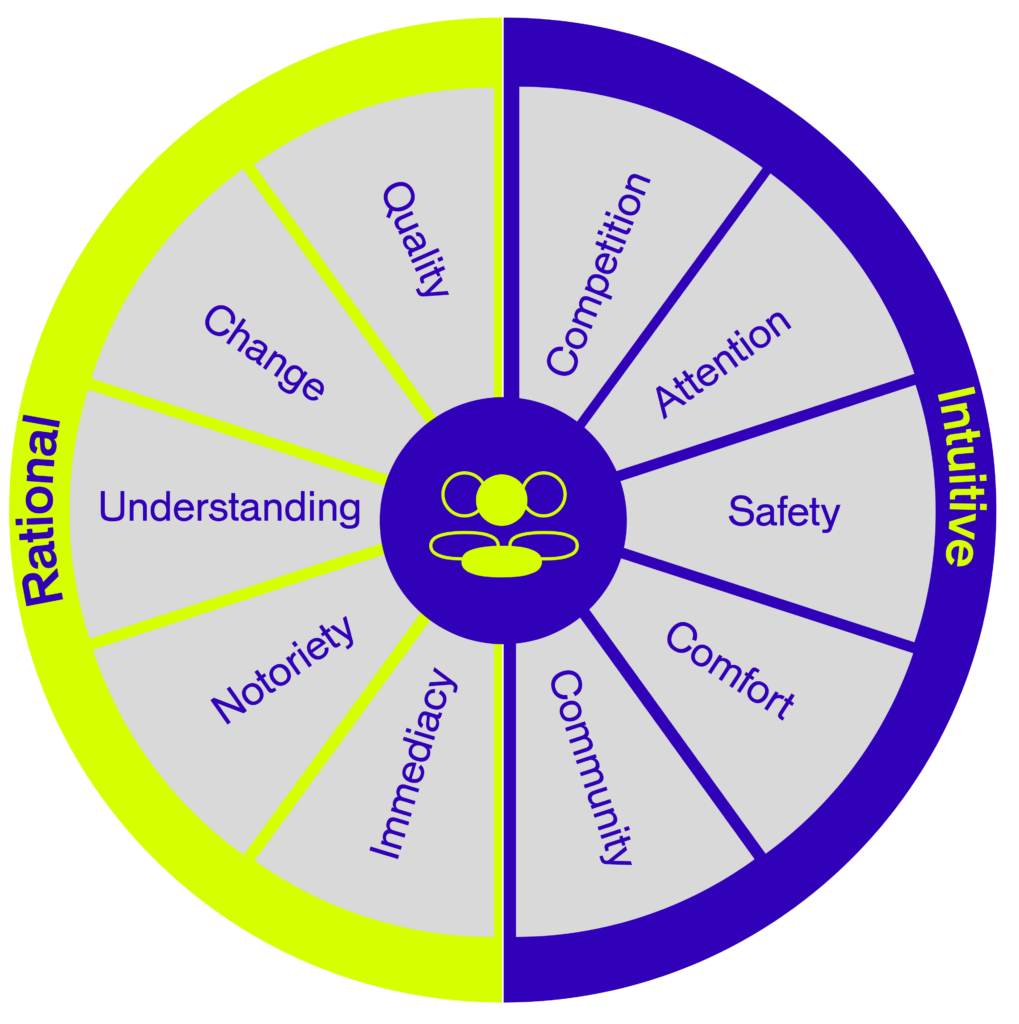
Hundreds of behavioral patterns uncover your buyers’ emotional needs and train our EmotionsAI algorithm.

At AB Tasty, we love to push the boundaries of digital experiences which is why we are excited to launch our most recent acquisition. With EmotionsAI, you can experiment with unique, personalized messages for each visitor type, delve into data to understand their needs, conduct tests to identify effective messaging and construct personalized journeys targeting specific emotional needs.

Formerly known under the name Dotaki, this new technology is based on years of psychographic modeling, customer journey mapping and AI technology combined with real-time interactions on your site and device usage.

Brands are already using EmotionsAI and AB Tasty to:

  • Understand the emotional needs of audiences to bolster their Experience Optimization roadmap with effective messages, designs and CTAs that activate their visitors.
  • Have more winning variations by digging deeper into what works and for which type of personality with analytics.
  • Personalize campaigns by targeting based on emotional needs in the AB Tasty Audience Builder.

Customer Segmentation By Personality Type

EmotionsAI can help you understand what type of visitor is on your site. For instance, if they were classed as a “Competitive” visitor, they would react strongly to either social proof or labels that indicated previous sales or limited stock on products. If they were considered a “Safety” visitor – they would be looking for a clear, secure payment system, with easy reassurance along the way. Pragmatic visitors, who are looking for “immediacy” want the quickest route to order completion, with as few blocking points as possible.

Results

Once you are able to classify visitors with EmotionsAI, you can then start using winning variations to address their specific needs.

You can instantly identify when a variation meets the emotional need of a portion of the audience. The impact on the test success rate is impressive: with EmotionsAI, it is possible to detect a significant impact on sales in 3 times more A/B tests. This opens the door to easily implement personalizations targeting visitors on the most relevant criterion: the emotional.

In addition, the emotional segments make it possible to identify which stages of the online journey do not respond well enough to the emotional needs of the audience and generate a shortfall. This gives you ideas for future tests, for example, adding a reassurance strip to a basket stage. A/B tests based on these emotional insights have a success rate twice as high as the average.

We have seen a massive increase in revenue from previous customers. More than 60% of test variations show a successful business impact compared to 10% without EmotionsAI. Additionally, personalization campaigns using EmotionsAI have driven revenue increases ranging from 5% to 10%.

Stay ahead of the curve with the next step in experience optimization by mastering emotional personalization with EmotionsAI. Let your audience be seen by incorporating learning algorithms to map customer behaviors for predictable buying profiles.

EmotionsAI is an AI-Powered Segmentation Tool by AB Tasty, allowing for better personalization and higher conversion rates.

Want to find out more? Get in touch with us today!

Article

3min read

AB Tasty Teams Up with Google Cloud

We are thrilled to announce that AB Tasty is now an official Google Cloud Partner, the next step in the strengthening of our partnership with Google.

With this partnership, our clients and partners can now benefit from the combination of AB Tasty’s powerful digital experience tools and Google’s secure and reliable platform.

Whether you are looking to engage and activate your clients or create resilient digital products that deliver exceptional customer experiences and strong business results, AB Tasty’s suite of products is now easier than ever to access. 

From experimentation to personalization, server-side testing, feature flags, search and product recommendations, our solutions are designed to help you achieve your goals and take your digital experiences further.

Google Cloud Marketplace

With AB Tasty available on the Google Cloud Marketplace (GCM), product and marketing teams can easily integrate AB Tasty’s digital experience tools into their existing Google Cloud vendor relationships, without the need for time-consuming vendor certification processes. 

The streamlined marketplace transactions and standardized terms also provide added peace of mind, requiring less involvement from legal and contracting teams, and enabling product teams to deploy AB Tasty solutions quickly and efficiently.

It also means businesses can be more flexible and agile if they want access to our experimentation tools to quickly set up accounts and contracts through Google. Businesses with an annual commitment to Google Cloud can easily incorporate AB Tasty solutions into their existing packages and quotes, while also gaining access to established vendor relationships with Google Cloud. 

Additionally, the partnership allows businesses to take advantage of Google Cloud’s flexible billing options, as GCM automatically breaks up annual commitments into monthly charges on their Google Cloud Platform (GCP) bill. This makes it easier for businesses to manage their digital marketing budgets and adjust them according to their needs. 

Finally, it enables businesses to count their AB Tasty departmental spend against their broader GCP Cloud infrastructure committed spend, helping them maximize their overall investment in Google Cloud. Partnering with Google Cloud and AB Tasty provides businesses with a more streamlined and cost-effective approach to digital marketing.

Our Strengthened Relationship with Google

Following the announcement of our integration with Google Analytics 4  (GA4) and AB Tasty being chosen at one of Google’s vendors of choice after the sunset of Google Optimize, this news takes our relationship with Google to new heights:

“As the first platform to integrate bi-directional synchronization with Google Analytics 4, and being one of the three partners highlighted by Google for the Optimize sunset, AB Tasty has established strong ties with the tech giant.” said Remi Aubert, CEO and Co-founder of AB Tasty. “Moreover, as one of the top Google Cloud partners and the largest digital native on the platform, AB Tasty is the ideal partner for navigating the Google Optimize sunset.

As AB Tasty continues to help clients improve each touchpoint of their customer experience journey, we’re pleased to cement our ties with Google so strongly. Our work with Google fuels the growth of our software for experimentation, personalization, recommendation and intelligent search. In an increasingly competitive market, this strategic alliance provides businesses with the competitive edge they need.

Article

4min read

AB Tasty Unleashes New GA4 Integration for Next-Level Experimentation

We know how important data is to our clients. Understanding what people are doing on your website, app, or mobile site, is vital for businesses to create the best digital experiences. To meet customer demands for a more personalized experience, brands turn to AB Tasty to optimize at every stage of the digital customer journey.

And now we’re taking your data-driven optimization strategy even further with our GA4 integration.

What this integration means for marketing teams

By connecting AB Tasty and Google Analytics 4 (GA4), marketing teams have a clearer vision of how visitors interact with their site via advanced analytics on CPA, conversion rate, bounce rate, SEO and traffic. This integration means you can use data from either tool to better understand the effects of your experimentation during or post-rollout and drive more innovative ideas with data-backed hypotheses.

With this simplified integration, you can seamlessly connect Analytics with AB Tasty enabling you to leverage the robust reporting and intelligence features of Analytics, while taking advantage of our digital experience software.

The AB Tasty and Google collaboration offers businesses a powerful toolkit for optimizing their digital experiences and driving better results. By combining advanced analytics capabilities with sophisticated testing and personalization features, businesses can gain a competitive edge and deliver more value to their customers, deepen their understanding of users’ behavior and preferences, and use that knowledge to create more effective and engaging experiences.

With the ability to test and personalize every element of their digital experiences, businesses can ensure that their websites, apps, and campaigns are optimized for maximum engagement and conversion, ultimately leading to increased revenue and customer loyalty. In short, the AB Tasty and Google integration is essential for businesses looking to stay ahead of the curve in today’s fast-paced digital landscape.

AB Tasty partners with Google Cloud

As AB Tasty strengthens its partnership with Google, we are delighted to announce that we are an official Google Cloud Partner

This means that clients and partners can access AB Tasty’s digital experience tools and Google’s secure platform. Engage and activate your clients through AB Tasty’s suite of products, testing and experimentation, personalization, server-side testing, feature flags, search and product recommendations, to create resilient digital products, make exceptional customer experiences, and deliver strong business results.

A continued partnership

This strategic alliance is crucial for businesses looking to offer exceptional products and services to their customers. By harnessing the advanced capabilities of AB Tasty’s platform and Google Cloud’s cutting-edge technologies in AI and ML, this partnership promises to empower companies in delivering optimized solutions that drive superior outcomes for their consumers.

Businesses with an annual commitment to Google Cloud can easily add AB Tasty solutions to their packages and quotes with ease. The partnership will also enable customers to access existing vendor relationships with Google Cloud, streamlining the deployment of AB Tasty on the platform.

Google Optimize Sunset

AB Tasty is excited to be a launch partner for Google Analytics newly released experimentation dimension and to help Google Optimize customers transition to new software.

By making the move to AB Tasty, you can gain access to top-of-the-line experience optimization tools to elevate your digital experiences to the next level. For companies that have progressed further in their CRO journey and require more extensive experimentation capabilities, AB Tasty provides a superior solution.

Discover the perks of our advanced solution that delivers a range of integrations with diverse providers, personalized features, pre-built widgets for optimizing the customer journey, and expert CSMs and account managers to offer personalized support throughout the entire contract period. This includes seamless transfer of your test history and data from Google Optimize.

Improving each touchpoint for your customers and learning from every product and feature rollout can have a big impact on your ROI.

The GA4 and AB Tasty integration levels up your ability to create highly personalized experiences for each step of the customer journey with a wide range of audience targeting options and in-depth data on user behavior.

Are you ready to make the move?

The post-Google Optimize world doesn’t have to be bleak. 

As one of Google’s top picks as your new A/B testing platform, AB Tasty is a best-in-class A/B testing tool that helps you convert more customers by leveraging experimentation to create a richer digital experience – fast. This experience optimization platform embedded with AI and automation can help you achieve the perfect digital experience with ease.