
Article

6min read

Hotel Chocolat at CX Circle: Sweetening Loyalty with Experimentation

Welcome to a world where chocolate isn’t just a treat but an experience—a world crafted by Hotel Chocolat, a British group with nearly 31 years of rich history. At the heart of their journey lies a realization: loyalty isn’t bought with discounts—it’s earned through authentic connections and shared values.

Recently, they shared this ethos at the CX Circle event by Contentsquare featuring Mel Parekh, Head of E-commerce at Hotel Chocolat. Mel took the stage to unravel the complexities of customer loyalty—a subject that has never been more critical in the fast-evolving world of eCommerce. The discussion centered around how Hotel Chocolat has navigated the challenges of a changing world while staying true to its brand values using the power of experimentation.

The Secret Ingredient: Authenticity and Quality

Hotel Chocolat stands out in the chocolate industry for its commitment to authenticity and quality. While most chocolate brands are content to source their cocoa, Hotel Chocolat went all-in, growing their own on the lush Rabot Estate in Saint Lucia. This direct control over their supply chain ensures that they use only the highest quality ingredients while helping craft a brand that’s as genuine as the cocoa it cultivates. 

Hotel Chocolat has witnessed a constant change in the e-commerce landscape. They’ve learned to adapt to these changes while staying true to their brand identity. One of their key initiatives has been to clearly define who they are as a brand and to create compelling reasons for customers to return to their site time and time again.

A Changing Landscape

It’s no secret that the world of eCommerce is in constant flux. Prices are rising across the board—from raw materials to operating costs—and the competition for customers is fiercer than ever.  In this environment, retailers must do more with less, finding innovative ways to stand out. 

As customers increasingly engage with various digital platforms and experiences, the range of choices available to them has become almost overwhelming. In this crowded marketplace, standing out from the competition requires more than just eye-catching design elements.

Moreover, the explosion of data in recent years has made it possible for even smaller companies to leverage insights that were once only accessible to larger players. However, the real challenge lies in capturing this data, interpreting it effectively, and, most importantly, implementing it in ways that drive meaningful results. Hotel Chocolat has embraced this data-driven approach, using insights to refine their strategies and create a more personalized experience for their customers with both Contentsquare and AB Tasty.

Building Lasting Relationships with Customers in a Phygital World

Loyalty is the cornerstone of Hotel Chocolat’s strategy in this new era. As a premium brand, they understand that their customers aren’t just looking for a product; they’re looking for an experience that resonates with their values and desires. This understanding has led Hotel Chocolat to focus on building a brand that not only meets customer expectations but exceeds them by offering a unique, personalized experience.

One of the key strategies they’ve implemented is their “phygital” approach, which blends the digital and physical worlds to create a more personalized, engaging shopping experience. This approach is centered on three key principles:

  • Instant: Reducing delay or lag to ensure a smooth customer experience.
  • Connected: Creating a more personal connection with each customer.
  • Engaging: Giving customers a sense of control over their shopping journey.

 Make the Experience Personal

With over 120 different chocolate recipes, Hotel Chocolat faced this challenge: how do you help customers find the perfect product without overwhelming them? Their solution was gamification—a method that makes the shopping experience more fun and interactive. In Spring 2023, they launched the “Chocolate Love Match,” a quiz that matches customers to one of six flavor profiles. This not only narrows down the selection from 120 options to 20 or 30, making it easier to shop but also helps customers find the perfect gift for friends and family based on their flavor preferences.

The personalization doesn’t stop there. 

Hotel Chocolat also leverages machine learning and tools like AB Tasty to improve their customer experience further. For instance, they’ve been experimenting with “Add to Bag” personalized recommendations. This initiative is crucial, especially as acquisition costs rise, making it more important than ever to maximize the value of each customer interaction.

Using AB Tasty, they tested two variations: one that showed products frequently bought together and another that displayed recently viewed items for easy access. Both approaches tested positively, resulting in a 5.31% increase in average order value and a 2.87% boost in revenue. 

Embracing Data for Optimization

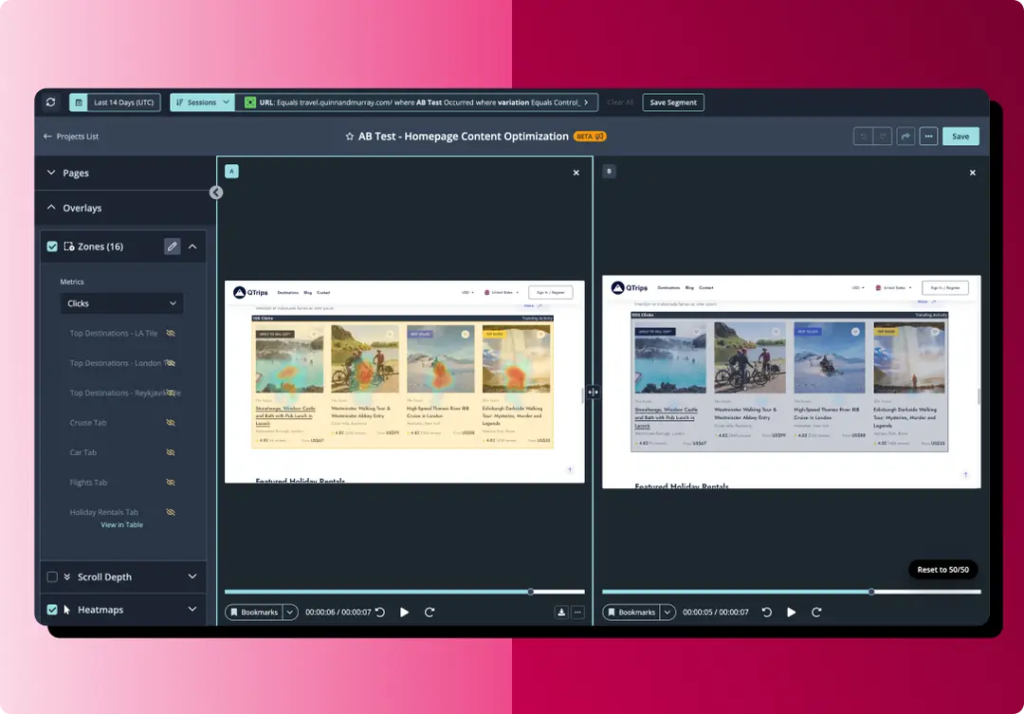
Hotel Chocolat has also focused on optimizing its digital presence, particularly their website. Working with AB Tasty, they undertook a redesign of their homepage, recognizing that the layout and user experience across devices play a critical role in customer engagement. The goal was to create a more visually appealing and intuitive experience that could better connect with customers online—especially when you can’t taste or smell the products.

The results speak volumes. By optimizing the homepage, they saw a 10% reduction in bounce rate, a 1.67% increase in visiting time, and significant improvements in conversion rates—up 0.54% overall and a substantial 7.24% on desktop. This uplift was largely due to better highlighting the most attractive elements on the homepage, such as category tiles that drive higher conversion and revenue.

Loyalty from a Brand Perspective

Mel Parekh left us with three takeaways for building a brand that stands the test of time:

  1. Embracing Change: It shows that your brand is up-to-date and ready to adapt. Staying agile ensures that your brand remains relevant and continues to serve your customers, no matter the circumstances.
  2. Listening and Understanding Customers: If loyal customers aren’t heard and understood, they’ll lose their preference for your brand and start considering others.
  3. Sticking to Your Values: Clearly reward loyal customers for their loyalty, and make sure to differentiate between who is loyal and who isn’t.

Conclusion

Loyalty isn’t just about offering a great product; it’s about creating connections that resonate. Hotel Chocolat has perfected this recipe by blending their commitment to quality with a data-centric culture. Experimentation and data from AB Tasty have allowed them to be able to improve in all areas – whether that is personalization, gamification of their loyalty scheme, or the link between their online and physical shops. Experimentation has improved more than just their CRO but has helped define who they are and what they stand for.

Find out more in Mel’s talk below:

Hotel Chocolat at CX Circle

Article

3min read

Analytics Reach New Heights With Google BigQuery + AB Tasty

AB Tasty and Google BigQuery have joined forces to provide seamless integration, enabling customers with extensive datasets to access insights, automate, and make data-driven decisions to push their experimentation efforts forward.

We have often discussed the complexity of understanding data to power your experimentation program. When companies are dealing with massive datasets they need to find an agile and effective way to allow that information to enrich their testing performance and to identify patterns, trends, and insights.

Go further with data analytics

Google BigQuery is a fully managed cloud data warehouse solution, which enables quick storage and analysis of vast amounts of data. This serverless platform is highly scalable and cost-effective, tailored to support businesses in analyzing extensive datasets for making well-informed decisions. 

With Google BigQuery, users can effortlessly execute complex analytical SQL queries, leveraging its integrated machine-learning capabilities.

This integration with AB Tasty’s experience optimization platform means customers with large datasets can use BigQuery to store and analyze large volumes of testing data. By leveraging BigQuery’s capabilities, you can streamline data analysis processes, accelerate experimentation cycles, and drive innovation more effectively.

Here are some of the many benefits of Google BigQuery’s integration with AB Tasty to help you trial better:

  • BigQuery as a data source

With AB Tasty’s integration, specific data from AB Tasty can be sent regularly to your BigQuery set. Each Data Ingestion Task has a name, an SQL query to get what you need, and timed frequency for data retrieval. This information helps make super-focused ads and messages, making it easier to reach the right people.

  • Centralized storage of data from AB Tasty

The AB Tasty and BigQuery integration simplifies campaign analysis too by eliminating the need for SQL or BI tools. Their dashboard displays a clear comparison of metrics on a single page, enhancing efficiency. You can leverage BigQuery for experiment analysis without duplicating reporting in AB Tasty, getting the best of both platforms. Incorporate complex metrics and segments by querying our enriched events dataset and link event data with critical business data from other platforms. Whether through web or feature experimentation, it means more accurate experiments at scale to drive business growth and success.

  • Machine learning

BigQuery can also be used for machine learning on experimentation programs, helping you to predict outcomes and better understand your specific goals. BigQuery gives you AI-driven predictive analytics for scaling personalized multichannel campaigns, free from attribution complexities or uncertainties. Access segments that dynamically adjust to real-time customer behavior, unlocking flexible, personalized, and data-driven marketing strategies to feed into your experiments.

  • Enhanced segmentation and comprehensive insight

BigQuery’s ability to understand behavior means that you can segment better. Its data segmentation allows for categorizing users based on various attributes or behaviors. With data that is sent to Bigquery from experiments, you can create personalized content or features tailored to specific user groups, optimizing engagement and conversion rates.

Finally, the massive benefit of this integration is to get joined-up reporting – fully automated and actionable reports on experimentation, plus the ability to feed data from other sources to get the full picture.

A continued partnership

This integration comes after Google named AB Tasty an official Google Cloud Partner last year, making us available on the Google Cloud Marketplace to streamline marketplace transactions. We are also fully integrated with Google Analytics 4. We were also thrilled to be named as one of the preferred vendors from Google for experimentation after the Google Optimize sunset. 


As we continue to work closely with the tech giant to help our customers continue to grow, you can find out more about this integration here.

Article

5min read

The Future of Digital Personalization: EmotionsAI by AB Tasty

At AB Tasty, we understand the importance of personalization in reaching your audience. We also know that up to 80% of consumers are more likely to complete an online purchase with brands that offer personalized customer experiences.

We have worked extensively to enable businesses to dynamically customize website content, product recommendations and promotional offers based on individual user preferences, behavior and demographics.

However, website experiences have not lived up to customer expectations when it comes to feeling understood by brands. If brands can’t bring relevance to their audience, at the very least they should reduce frustration and negative emotions.

The role of emotions

Emotions have a big impact on the entire purchasing journey. Brands not only need to understand customer preferences, but they also need to understand the emotional impact behind each decision. People are not always rational when it comes to making buying decisions – and not all people react in the same way.

Emotions play a huge role in how we make our decisions. In fact, once we start to think of the customer journey as a succession of micro-decisions (e.g. clicking on a CTA is one of them), we can easily understand how important it is to serve a personalized experience depending on emotional profiles. 

What if you can understand your customers beyond the surface level? To make concrete data-driven decisions based on the abstract notion of emotional needs in order to connect with audiences like never before? To be equipped with more knowledge and data on your customers’ behaviors? To be able to use language to describe different shopper personalities? 

How can you optimize according to the distinct desires of each person?

The next step in digital personalization: AB Tasty’s EmotionsAI

Hundreds of behavioral patterns uncover your buyers’ emotional needs and train our EmotionsAI algorithm.

At AB Tasty, we love to push the boundaries of digital experiences which is why we are excited to launch our most recent acquisition. With EmotionsAI, you can experiment with unique, personalized messages for each visitor type, delve into data to understand their needs, conduct tests to identify effective messaging and construct personalized journeys targeting specific emotional needs.

Formerly known under the name Dotaki, this new technology is based on years of psychographic modeling, customer journey mapping and AI technology combined with real-time interactions on your site and device usage.

Brands are already using EmotionsAI and AB Tasty to:

  • Understand the emotional needs of audiences to bolster their Experience Optimization roadmap with effective messages, designs and CTAs that activate their visitors.
  • Have more winning variations by digging deeper into what works and for which type of personality with analytics.
  • Personalize campaigns by targeting based on emotional needs in the AB Tasty Audience Builder.

Customer Segmentation By Personality Type

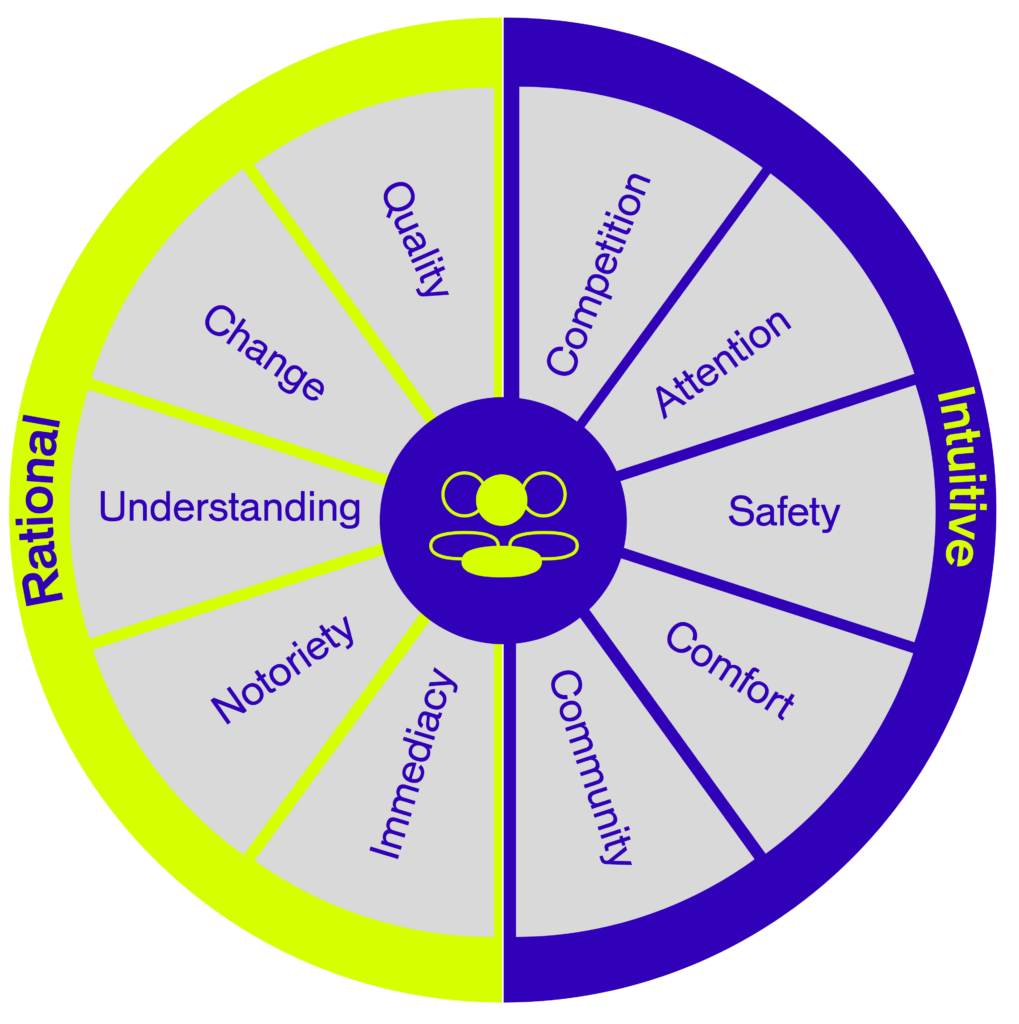
EmotionsAI can help you understand what type of visitor is on your site. For instance, if they were classed as a “Competitive” visitor, they would react strongly to either social proof or labels that indicated previous sales or limited stock on products. If they were considered a “Safety” visitor – they would be looking for a clear, secure payment system, with easy reassurance along the way. Pragmatic visitors, who are looking for “immediacy” want the quickest route to order completion, with as few blocking points as possible.

Results

Once you are able to classify visitors with EmotionsAI, you can then start using winning variations to address their specific needs.

You can instantly identify when a variation meets the emotional need of a portion of the audience. The impact on the test success rate is impressive: with EmotionsAI, it is possible to detect a significant impact on sales in 3 times more A/B tests. This opens the door to easily implement personalizations targeting visitors on the most relevant criterion: the emotional.

In addition, the emotional segments make it possible to identify which stages of the online journey do not respond well enough to the emotional needs of the audience and generate a shortfall. This gives you ideas for future tests, for example, adding a reassurance strip to a basket stage. A/B tests based on these emotional insights have a success rate twice as high as the average.

We have seen a massive increase in revenue from previous customers. More than 60% of test variations show a successful business impact compared to 10% without EmotionsAI. Additionally, personalization campaigns using EmotionsAI have driven revenue increases ranging from 5% to 10%.

Stay ahead of the curve with the next step in experience optimization by mastering emotional personalization with EmotionsAI. Let your audience be seen by incorporating learning algorithms to map customer behaviors for predictable buying profiles.

EmotionsAI is an AI-Powered Segmentation Tool by AB Tasty, allowing for better personalization and higher conversion rates.

Want to find out more? Get in touch with us today!

Article

3min read

AB Tasty Teams Up with Google Cloud

We are thrilled to announce that AB Tasty is now an official Google Cloud Partner, the next step in the strengthening of our partnership with Google.

With this partnership, our clients and partners can now benefit from the combination of AB Tasty’s powerful digital experience tools and Google’s secure and reliable platform.

Whether you are looking to engage and activate your clients or create resilient digital products that deliver exceptional customer experiences and strong business results, AB Tasty’s suite of products is now easier than ever to access. 

From experimentation to personalization, server-side testing, feature flags, search and product recommendations, our solutions are designed to help you achieve your goals and take your digital experiences further.

Google Cloud Marketplace

With AB Tasty available on the Google Cloud Marketplace (GCM), product and marketing teams can easily integrate AB Tasty’s digital experience tools into their existing Google Cloud vendor relationships, without the need for time-consuming vendor certification processes. 

The streamlined marketplace transactions and standardized terms also provide added peace of mind, requiring less involvement from legal and contracting teams, and enabling product teams to deploy AB Tasty solutions quickly and efficiently.

It also means businesses can be more flexible and agile if they want access to our experimentation tools to quickly set up accounts and contracts through Google. Businesses with an annual commitment to Google Cloud can easily incorporate AB Tasty solutions into their existing packages and quotes, while also gaining access to established vendor relationships with Google Cloud. 

Additionally, the partnership allows businesses to take advantage of Google Cloud’s flexible billing options, as GCM automatically breaks up annual commitments into monthly charges on their Google Cloud Platform (GCP) bill. This makes it easier for businesses to manage their digital marketing budgets and adjust them according to their needs. 

Finally, it enables businesses to count their AB Tasty departmental spend against their broader GCP Cloud infrastructure committed spend, helping them maximize their overall investment in Google Cloud. Partnering with Google Cloud and AB Tasty provides businesses with a more streamlined and cost-effective approach to digital marketing.

Our Strengthened Relationship with Google

Following the announcement of our integration with Google Analytics 4  (GA4) and AB Tasty being chosen at one of Google’s vendors of choice after the sunset of Google Optimize, this news takes our relationship with Google to new heights:

“As the first platform to integrate bi-directional synchronization with Google Analytics 4, and being one of the three partners highlighted by Google for the Optimize sunset, AB Tasty has established strong ties with the tech giant.” said Remi Aubert, CEO and Co-founder of AB Tasty. “Moreover, as one of the top Google Cloud partners and the largest digital native on the platform, AB Tasty is the ideal partner for navigating the Google Optimize sunset.

As AB Tasty continues to help clients improve each touchpoint of their customer experience journey, we’re pleased to cement our ties with Google so strongly. Our work with Google fuels the growth of our software for experimentation, personalization, recommendation and intelligent search. In an increasingly competitive market, this strategic alliance provides businesses with the competitive edge they need.

Article

4min read

AB Tasty Unleashes New GA4 Integration for Next-Level Experimentation

We know how important data is to our clients. Understanding what people are doing on your website, app, or mobile site, is vital for businesses to create the best digital experiences. To meet customer demands for a more personalized experience, brands turn to AB Tasty to optimize at every stage of the digital customer journey.

And now we’re taking your data-driven optimization strategy even further with our GA4 integration.

What this integration means for marketing teams

By connecting AB Tasty and Google Analytics 4 (GA4), marketing teams have a clearer vision of how visitors interact with their site via advanced analytics on CPA, conversion rate, bounce rate, SEO and traffic. This integration means you can use data from either tool to better understand the effects of your experimentation during or post-rollout and drive more innovative ideas with data-backed hypotheses.

With this simplified integration, you can seamlessly connect Analytics with AB Tasty enabling you to leverage the robust reporting and intelligence features of Analytics, while taking advantage of our digital experience software.

The AB Tasty and Google collaboration offers businesses a powerful toolkit for optimizing their digital experiences and driving better results. By combining advanced analytics capabilities with sophisticated testing and personalization features, businesses can gain a competitive edge and deliver more value to their customers, deepen their understanding of users’ behavior and preferences, and use that knowledge to create more effective and engaging experiences.

With the ability to test and personalize every element of their digital experiences, businesses can ensure that their websites, apps, and campaigns are optimized for maximum engagement and conversion, ultimately leading to increased revenue and customer loyalty. In short, the AB Tasty and Google integration is essential for businesses looking to stay ahead of the curve in today’s fast-paced digital landscape.

AB Tasty partners with Google Cloud

As AB Tasty strengthens its partnership with Google, we are delighted to announce that we are an official Google Cloud Partner

This means that clients and partners can access AB Tasty’s digital experience tools and Google’s secure platform. Engage and activate your clients through AB Tasty’s suite of products, testing and experimentation, personalization, server-side testing, feature flags, search and product recommendations, to create resilient digital products, make exceptional customer experiences, and deliver strong business results.

A continued partnership

This strategic alliance is crucial for businesses looking to offer exceptional products and services to their customers. By harnessing the advanced capabilities of AB Tasty’s platform and Google Cloud’s cutting-edge technologies in AI and ML, this partnership promises to empower companies in delivering optimized solutions that drive superior outcomes for their consumers.

Businesses with an annual commitment to Google Cloud can easily add AB Tasty solutions to their packages and quotes with ease. The partnership will also enable customers to access existing vendor relationships with Google Cloud, streamlining the deployment of AB Tasty on the platform.

Google Optimize Sunset

AB Tasty is excited to be a launch partner for Google Analytics newly released experimentation dimension and to help Google Optimize customers transition to new software.

By making the move to AB Tasty, you can gain access to top-of-the-line experience optimization tools to elevate your digital experiences to the next level. For companies that have progressed further in their CRO journey and require more extensive experimentation capabilities, AB Tasty provides a superior solution.

Discover the perks of our advanced solution that delivers a range of integrations with diverse providers, personalized features, pre-built widgets for optimizing the customer journey, and expert CSMs and account managers to offer personalized support throughout the entire contract period. This includes seamless transfer of your test history and data from Google Optimize.

Improving each touchpoint for your customers and learning from every product and feature rollout can have a big impact on your ROI.

The GA4 and AB Tasty integration levels up your ability to create highly personalized experiences for each step of the customer journey with a wide range of audience targeting options and in-depth data on user behavior.

Are you ready to make the move?

The post-Google Optimize world doesn’t have to be bleak. 

As one of Google’s top picks as your new A/B testing platform, AB Tasty is a best-in-class A/B testing tool that helps you convert more customers by leveraging experimentation to create a richer digital experience – fast. This experience optimization platform embedded with AI and automation can help you achieve the perfect digital experience with ease.

Article

7min read

Understanding User Behavior Through Data

As part of our customer-centric data series, we are speaking with AB Tasty partners about how brands can use data to better profile customers, understand their needs, and forge valuable emotional connections with them, as well as measure overall digital impact and build a data-based, customer-centric vision.

You can catch the beginning of the series here. For our 8th installment, we spoke with Helen Wilmot, UX Director at Dentsu International. Dentsu is one the largest marketing and digital companies in the world and provides communication, marketing and digital strategies across a range of disciplines. Helen leads the UX strategy and research for Dentsu.

Why customers come to Dentsu

Dentsu is an integrated global company. People are often looking for the different channels they operate in, as well as having several disciplines collaborating under one roof to serve a client. More than that, Dentsu is a multi-national company with a network of global expertise focused on how to provide value to clients so that they actually see that they are linked to something that’s larger. Specific to the  UX and optimization team, they are tightly integrated with other channels such as brand and digital strategists, SEO, and commercial. All of those aspects are taken on board when they are looking at optimization.

That means growth is one of the major factors at play: “We are firmly focused on being customer-centric and providing value for the users,” says Helen. “We also live in the real world and we want to tie that value to real growth. We know that being customer-centric drives growth, study after study after study shows that, but it’s important that we can show that ourselves in our own behaviors.”

Understanding user behavior

Helen stresses that there is no single way to understand user behavior and as such it will often depend on what is appropriate for the research or business problem at hand. Dentsu combines many techniques when looking to understand customer behavior, often a balance of qualitative and quantitative data. In many cases they are looking for a breadth of data to make it accurate – interviews, usability testing, AI, eye tracking, data insights, and card sorting all play a part.

The techniques employed depend on the customer and the business model. Consistently, however, they are led by data. Researchers perform usability tests, both at a distance via remote studies and in-person moderated use testing. Having users try something out in their own environment using their own devices also helps Dentsu asses more natural behavior. They sometimes employ ethnographic techniques, which are borrowed from anthropology, as researchers are embedded in users’ real experiences. Looking at interaction with a topic or task in real-time, this research is more generative and exploratory but can help uncover larger issues. New technology in behavioral science and neuroscience can look at emotions, implicit response testing and eye behavior.

What customers say they want and how they actually behave

Specifically, when Helen’s team conducts interviews they look at how users behave as well as what they say. 

User testing should be about observing,” shares Helen. “If the user said they found the task easy, but they clearly didn’t, it’s a sign to use our critical thinking to evaluate that feedback.” 

So Dentsu always dig deeper to back those statements up with data. They have a rigorous approach to their research, including the use of a laddering technique used to get to the root cause of people’s thoughts and experiences. “It’s all working within the reality of how we know people’s minds work. We know that people are terrible at remembering exactly how they felt and terrible at predicting our own behavior. So that’s not to say that experiences don’t matter but as researchers, our job is to work within the reality of how human psychology works too,” says Helen.

The importance of testing and experimentation

Another way Dentsu works to validate user feedback is with a reliance on A/B testing. In the past, they have had users report certain things that motivate them, but the A/B tests do not back up that information. For Dentsu, testing out a hypothesis is a crucial part of their optimization process and it is unthinkable that they would go ahead with new ideas without testing them first. 

“I think it’s a bit of an act of hubris If you don’t go ahead and test,” stresses Helen. “The risk just absolutely shoots up, and you can’t de-risk a solution without testing it. Even if a solution is successful and is fit for purpose, there are always iterative changes that you can make. That is the beauty of a testing and experimentation mindset. You are never finished, and we never think that what we do is perfect.”

Testing allows Dentsu to move at speed. Some tests don’t always work, but Helen points out that losing tests also brings a wealth of information for other ideas. Knowing something doesn’t work for your users informs you for your next test and when you are working with future customers, it can point you in the right direction as to what techniques are currently effective for messaging and psychological persuasion.

The KPI’s and metrics within user behavior

For UX, one if the main KPIs is NPS (Net Performance Score), just as it was for Realise. In usability tests, Dentsu will look at the number of errors someone makes. If they are testing a certain structure or tree testing, they will look at success rate and directness. NPS compliments all of these because it has numerous studies behind it associated with growth. There is also a holistic view to take when it comes to user behavior metrics: what areas within the business are being affected by friction on the website? It could be customer support, payment or delivery, but they are all vital to the user experience.

A good user journey

A good user journey will always provide revenue. The two are intrinsically linked for Dentsu. If you get it right, people become more engaged in the brand, more engaged with what you are offering and it makes them more likely to do what you want. Helen wants to go further, though. Usability and revenue are vital aspects, but they are only the beginning.

Helen explains, “I think usability is the absolute baseline that we should aim for, and we really should be focused on delighting customers while creating emotionally resonant experiences. There is strong data on the link between emotion, memory and brand perception and by creating these rich, emotionally resonant experiences we can boost lifetime value. 

It seems that in the current climate, people are placing an emphasis on the bottom line and conversion, but, as Helen shares, the original thinkers on UX such as Donald Norman were looking to delight to provide insight into optimization. Brand and user experience are inevitably related and users who have an emotional connection with a brand will give you more and more chances to be present in their lives.

“It’s important to view delight as a bit of a North Star. If you make your users happy, you’ll make shareholders happy as well.”

You can find out more about our Customer Centric led by looking at our previous installment on how to solve real user problems with a CRO strategy.

Article

6min read

How to Become a Data-Centric Company

Get caught up with the series introduction here or read the previous installment, Building Customer-Centric Cultures with Data.

In our next installment of the  Customer-Centric Data Series, we spoke to Stephen Welch, Managing Director, and Ian Bobbit, Chief Analytics Officer from Realise about how businesses can become data-centric companies. Realise, a part of the larger Unlimited Group, helps brands make data-driven decisions to maximize growth. 

They discussed how organizations can structure themselves better to become data-driven, what teams, structure, tech stack and KPI’s you need to look out for, as well as some details on personalization and customer lifetime value.

What are the main challenges facing companies that want to become data-centric?

The first thing both Ian and Stephen stress is that most companies already have a large amount of data, but that data can sometimes be siloed by teams. The first challenge is being able to consolidate that information and understand its potential. 

Another challenging factor is needing the buy-in from key stakeholders. There needs to be a senior leader in the team who wants to learn from data. Having someone on board, who can manage across multiple teams, will help companies identify data that describes their customers and behavior on a day-to-day basis.

So if we know that the data is already there, the other challenge is to ensure it is being used to reach the correct conclusions. Often companies can have a strategy that is not evidence-based. Becoming data-centric is about being able to recognize effective KPI’s and data about your consumer behavior.

“We try and understand who your customers are and how they interact with your business. Therefore we’ll be quite focused on the customer touch points that’s a really an area that gets us for us,” says Stephen.

Transforming a company to becoming data-centric

Being able to transform a company to be truly data led is not an easy process. Key stakeholders need to be involved and teams need to be able to speak to one another. Ian and Stephen both identified conflicting team goals as one of the reasons companies are not as effective as they could be. 

“What we’re really trying to do by becoming more data-centric is provide rich and broader information such as context around the customer that shows needs and behaviors,” says Stephen “We also look at how to engage the business beyond just one specific channel.”

The initial stage often begins with a data-rich area used to prove the effectiveness of change in one specific area and get buy-in from the larger company stakeholders. Next, is to ask business leaders questions like what do they want to achieve? Where do they want to get to? Where are they currently? All these factors help identify what data the company should be looking at to build its data maturity curve.

The search for personalization

We know from our customers at AB Tasty that personalization is one of the most sought-after features for CX. The way to achieve that is through data. One of the reasons it is so difficult to get right, according to Realise, is that the idea of “personalization” means different things to different people. Ian points out that once you start to personalize, you need to have the resources to create content for each different segment and this, in turn, can lead to some very complicated workflows and messaging. 

“It requires an awful lot of data, thinking and planning because once you’ve started automated personalized columns, it becomes quite complicated quite quickly,” says Stephen.

Both Ian and Stephen are excited about the new technology appearing on the market to support this, but urge caution as to whether this actually improves companies bottom line, efficiency, as well as overall CX.

Customer Lifetime Value

What they do value as a metric is CLV, complementary to looking at your data in a holistic way. As we approach more difficult times for companies, being able to concentrate on giving your brand value is really important. Ian and Stephen are enthusiastic about brands that are less focused on transactional value with their marketing.

Stephen spoke about a brand that looked at the metrics of their mailing over a year to calculate the incremental increase, rather than looking at the transactional value of each one: “Whatever you’re looking at, if you don’t look at that longer-term affinity and engagement for future value, you’re missing a trick.”

Customer Loyalty Schemes are also part of CLV and Realise works hard to help companies improve them. Part of this is being able to understand who your customers are and what value they are looking for from your brand, in addition to identifying the target metrics you hope to achieve through loyalty schemes  Measuring loyalty can be difficult and the cost of running such schemes is often expensive. Companies need to create a business case for it, with clear expectations and markers of success.

The KPI’s for a Data-Centric Company

No two businesses are the same, but we pressed Stephen and Ian to give us an idea of what KPI’s they look for. It is important to see which reports teams are accessing and what metrics they use on a day-to-day basis. To know for certain that companies are looking at future growth, measuring acquisition, churn and NPS is key. 

Engagement is also a crucial metric for parsing Customer Lifetime Value. Stephen adds that Data-centric companies should also look at their spend. Sometimes they look at the profit of a particular action, but don’t actually benchmark to see if they could have achieved more. 

Each company can be different, but you can approach CLV with a different focus each time – your company (how much profit it is making), your customer (how they are behaving) and your staff (do they have the right tools to help them make decisions).

You can find out more about our Customer Centric led by looking at our previous installment on How To Measure Your Digital Impact.

Article

13min read

The Impact of Experimentation on Cumulative Layout Shift (CLS)

We teamed up with our friends at Creative CX to take a look at the impact of experimentation on Core Web Vitals. Read our guest blog from Creative CX’s CTO Nelson Sousa giving you insights into how CLS can affect your Google ranking, the pros and cons of experiments server and client side, as well as organisational and technical considerations to improve your site experience through testing, personalisation and experimentation.

What are Core Web Vitals?

Core Web Vitals (CWV) are a set of three primary metrics that affect your Google search ranking. According to StarCounter, the behemoth search engine accounts for 92% of the global market share. This change has the potential to reshape the way we look at optimising our websites. As more and more competing businesses seek to outdo one another for the top spots in search results.

One notable difference with CWV is that changes are focused on the user experience. Google wants to ensure that users receive relevant content and are directed to optimised applications. The change aims to minimise items jumping around the screen or moving from their initial position. The ability to quickly and successfully interact with an interface and ensure that the largest painted element appears on the screen in a reasonable amount of time.

Core Web Vitals

What is CLS?

Let’s imagine the following scenario:

You are navigated to a website. Click on an element. It immediately moves away from its position on the page. This is a common frustration. It means you click elsewhere on a page, or on a link, which navigates you somewhere else again! Forcing you to go back and attempt to click your desired element again.

You have experienced what is known as Cumulative Layout Shift, or for short, CLS; a metric used to determine visual stability during the entire lifespan of a webpage. It is measured by score, and according to Core Web Vitals, webpages should not exceed a CLS score of 0.1

CLS within Experimentation

When working with client-side experimentation, a large percentage of A/B testing focuses on making experimentation changes on the client side (in the browser). This is a common pattern, which normally involves placing a HTML tag in your website, so that the browser can make a request to the experimentation tool’s server. Such experimentation tools have become increasingly important as Tech teams are no longer the sole entities making changes to a website.

For many, this is a great breakthrough.

It means marketing and other less technical teams access friendly user interfaces to manipulate websites without the need of a developer.It also frees up time for programmers to concentrate on other more technical aspects.

One drawback for client-side, is certain elements can be displayed to the user before the experimentation tool has had a chance to perform its changes. Once the tool finally executes and completes its changes, it may insert new elements in the same position where other elements already exist. Pushing those other elements further down the page. This downward push is an example of CLS in action.

Bear in mind that this only affects experiments above the fold. Elements initially visible on the page without the need of scrolling.

So when should you check for CLS and its impact upon the application? The answer is up for debate. Some companies begin to consider it during the design phase, while others during the User Acceptance Testing phase. No matter what your approach is, however, it should always be considered before publishing an experiment live to your customer base.

Common CLS culprits

According to Google’s article on optimising CLS, the most common causes of CLS are:

  • Images without dimensions
  • Ads, embeds, and iframes without dimensions
  • Dynamically injected content
  • Web Fonts causing FOIT/FOUT
  • Actions waiting for a network response before updating DOM

Overall CLS Considerations

Team awareness and communication

Each variation change creates a unique CLS score. This score is a primary point in your prioritisation mechanism. It shapes the way you approach an idea. It also helps to determine whether or not a specific experiment will be carried out.

Including analysis from performance testing tools during your ideation and design phases can help you understand how your experiment will affect your CLS score. At Creative CX, we encourage weekly communication with our clients, and discuss CLS impact on a per-experiment basis.

Should we run experiments despite possible CLS impact?

Although in an ideal world you would look to keep the CLS score to 0, this isn’t always the case. Some experiment ideas may go over the threshold, but that doesn’t mean you cannot run the experiment.

If you have data-backed reasons to expect the experiment to generate an uplift in revenue or other metrics, the CLS impact can be ignored for the lifetime of the experiment. Don’t let the CLS score to deter you from generating ideas and making them come to life.

Constant monitoring of your web pages

Even after an experiment is live, it is vital to use performance testing tools and continuously monitor your pages to see if your experiments or changes cause unprecedented harmful effects. These tools will help you analyse your CLS impact and other key metrics such as First Contentful Paint and Time to Interactivity

Be aware of everyone’s role and impact

For the impact of experimentation on Web Core Vitals, you should be aware of two main things:

  • What is the impact of your provider?
  • What is the impact of modifications you make through this platform?

Experimentation platforms mainly impact two Web Vitals: Total Blocking Time and Speed Index. The way you use your platform, on the other hand, could potentially impact CLS and LCP (Largest Contentful Paint).

Vendors should do their best to minimize their technical footprint on TBT and Speed Index. There are best practices you should follow to keep your CLS and LCP values, without the vendor being held liable.

Here, we’ll cover both aspects:

Be aware of what’s downloaded when adding a tag to your site (TBT and Speed Index)

When you insert any snippet from an experimentation vendor onto your pages, you are basically making a network request to download a JavaScript file that will then execute a set of modifications on your page. This file is, by its nature, a moving piece: based on your usage – due to the number and nature of your experimentations, its size evolves.

The bigger the file, the more impact it can have on loading time. So, it’s important to always keep an eye on it. Especially as more stakeholders in your company will embrace experimentation and will want to run tests.

To limit the impact of experimenting on metrics such as Total Blocking Time and Speed Index, you should download strictly the minimum to run your experiment. Providers like AB Tasty make this possible using a modular approach.

Dynamic Imports

Using dynamic imports, the user only downloads what is necessary. For instance, if a user is visiting the website from a desktop, the file won’t include modules required for tests that affect mobile. If you have a campaign that targets only logged in users to your site, modifications won’t be included in the JavaScript file downloaded by anonymous users.

Every import also uses a caching policy based on its purpose. For instance, consent management or analytics modules can be cached for a long time. While campaign modules (the ones that hold your modifications) have a much shorter lifespan because you want updates you’re making to be reflected as soon as possible. Some modules can also be loaded asynchronously which has no impact on performance. For example, analytics modules used for tracking purposes.

To make it easy to monitor the impact on performance, AB Tasty also includes a tool, named “Performance Center”. The benefit of this is that you get a real time preview of your file size. It also provides on-going recommendations based on your account and campaign setup:

  • to stop campaigns that have been running for too long and that add unnecessarily weight to the file,
  • to update features on running campaigns, that have benefited from performance updates since their introduction (ex: widgets).

How are you loading your experimentation tool?

A common way to load an A/B testing platform is by inserting a script tag directly into your codebase, usually in the head tag of the HTML. This would normally require the help of a developer; therefore, some teams choose the route of using a tag manager as it is accessible by non-technical staff members.

This is certainly against best practice. Tag managers cannot guarantee when a specific tag will fire. Considering the tool will be making changes to your website, it is ideal for it to execute as soon as possible.

Normally it’s placed as high up the head tag of the HTML as possible. Right after any meta tags (as these provide metadata to the entire document), and before external libraries that deal with asynchronous tasks (e.g. tracking vendors such as ad networks). Even if some vendors provide asynchronous snippets to not block rendering, it’s better to load synchronously to avoid flickering issues, also called FOOC (Flash of Original Content).

Best Practice for flickering issues

Other best practice to solve this flickering issue include:

  • Make sure your solution uses vanilla JavaScript to render modifications. Some solutions still rely on the jQuery library for DOM manipulation, adding one additional network request. If you are already using jQuery on your site, make sure that your provider relies on your version rather than downloading a second version.
  • Optimize your code. For a solution to modify an element on your site, it must first select it. You could simplify this targeting process by adding unique ids or classes to the element. This avoids unnecessary processing to spot the right DOM element to update. For instance, rather than having to resolve “body > header > div > ul > li:first-child > a > span”, a quicker way would be to just resolve “span.first-link-in-header”.
  • Optimize the code auto generated by your provider.When playing around with any WYSIWYG editors, you may add several unnecessary JavaScript instructions. Quickly analyse the generated code and optimize it by rearranging it or removing needless parts.
  • Rely as much as possible on stylesheets. Adding a stylesheet class to apply a specific treatment is generally faster than adding the same treatment using a set of JavaScript instructions.
  • Ensure that your solution provides a cache mechanism for the script and relies on as many points of presence as possible (CDN)so the script can be loaded as quickly as possible, wherever your user is located.
  • Be aware of how you insert the script from your vendor. As performance optimization is getting more advanced, it’s easy to mess around with concepts such as async or defer, if you don’t fully understand them and their consequences.

Be wary of imported fonts

Unless you are using a Web Safe font, which many businesses can’t due to their branding, the browser needs to fetch a copy of the font so that it can be applied to the text on the website. This new font may be larger or smaller than the original font, causing a reflow of the elements. Using the CSS font-display property, alongside preloading your primary webfonts, can increase the change of a font meeting the first paint, and help specify how a font is displayed, potentially eliminating a layout shift.

Think carefully about the variation changes

When adding new HTML to the page, consider if you can replace an existing element with an element of similar size, thus minimising the layout shifts. Likewise, if you are inserting a brand-new element, do preliminary testing, to ensure that the shift is not exceeding the CLS threshold.

Technical CLS considerations

Always use size attributes for the width and height of your images, videos and other embedded items, such as advertisements, and iframes. We suggest using CSS aspect ratio properties for images specifically. Unlike older responsive practices, it will determine the size of the image before it is downloaded by the browser. The more common aspect ratios out there in the present day are 4:3 and 16:9. In other words, for every 4 units across, the screen is 3 units deep, and every 16 units across, the screen is 9 units deep, respectively.

screen sizeKnowing one dimension makes it possible to calculate the other. If you have an element with 1000px width, your height would be 750px. This calculation is made as follows:

height = 1000 x (3 / 4)

When rendering elements to the browser, the initial layout often determines the width of a HTML element. With the aspect ratio provided, the corresponding height can be calculated and reserved. Handy tools such as Calculate Aspect Ratio can be used to do the heavy lifting math for you.

Use CSS transform property

The CSS transform property is a CSS trigger which will not trigger any geometry changes or painting. This will allow changing the element’s size without triggering any layout shifts. Animations and transitions, when done correctly with the user’s experience in mind, are a great way to guide the user from one state to another.

Move experiment to the server-side

Experimenting with many changes at once is considered against best practice. The weight of the tags used can affect the speed of the site. It may be worth moving these changes to the server-side, so that they are brought in upon initial page load. We have seen a shift in many sectors, where security in optimal, such as banking, to experiment server-side to avoid the use of tags altogether. This way, once a testing tool completes the changes, layout shift is minimised.

Working hand in hand with developers is the key to running server-side tests such as this. It requires good synchronisation between all stockholders, from marketing to product to engineering teams. Some level of experience is necessary. Moving to server-side experiments just for the sake of performance must be properly evaluated.

Server-side testing shouldn’t be confused with Tag Management server-side implementation. Some websites that implement a client-side experimentation platform through tag managers (which is a bad idea, as described previously), may be under the impressions that they can move their experimentation tag on the server-side as well and get some of tag management server-side benefits, namely reducing the number of networks request to 3rd party vendors. If this is applicable for some tracking vendors (Goggle Analytics, Facebook conversions API…), this won’t work with experiment tags that need to apply updates on DOM elements.

Summary

The above solutions are there to give you an overview of real life scenarios. Prioritise the work to be done in your tech stack. This is the key factor in improving the site experience in general. This could include moving requests to the server, using a front-end or server-side library that better meets your needs. All the way to rethinking your CDN provider and where that are available versus where most of your users are located.

One way to start is by using a free web tool such as Lighthouse and get reports about your website. This would give you the insight to begin testing elements and features that are directly or indirectly causing low scores.

For example, if you have a large banner image that is the cause of your Largest Contentful Paint appearing long after your page begins loading, you could experiment with different background images and test different designs against one another to understand which one loads the most efficiently. Repeat this process for all the CWV metrics, and if you’re feeling brave, dive into other metrics available in the Lighthouse tools.

While much thought has gone into the exact CWV levels to strive for, it does not mean Google will take you out of their search ranking as they will still prioritise overall information and relevant content over page experience. Not all companies will be able to hit these metrics, but it certainly sets standards to aim for.

Written by Nelson Sousa, Chief Technology Officer, Creative CX

Nelson is an expert in the field of experimentation and website development with over 15 years’ experience, specialising in UX driven web design, development, and optimisation.