Article

6min read

From Clicks to Connections: How AI is Shaping the Future of Digital Optimization

Any marketer will tell you that Digital Optimization is crucial to ensure successful e-commerce operations and yield the best possible return on investment (ROI). This practice includes both A/B testing and website personalization: every website presents a unique set of features and designs, which must, in turn, be optimized through A/B testing. 

Building a great website is, unfortunately, not simply a matter of following best practices. Even within a single industry, users will hold varied expectations based on your brand, communication style, target audience, funnel, etc. And while browsing the same website, users’ expectations can vary, with some knowing exactly what they want and others needing to explore, check your returns policy, learn about your sustainability initiatives, and so on.

We have all heard the hype about how AI has been revolutionizing how marketers approach experimentation. Generative AI offers new opportunities for optimizing every aspect of the user journey, allowing marketers to:

  • streamline testing,
  • create new online experiences, 
  • and create new types of user segments for more precise personalized experiences that drive conversions.

This guest blog post was written by Rodolphe Dougoud, Project Lead at fifty-five—a leading data company that helps brands harness the potential of Generative AI and mitigate associated risks effectively with a comprehensive and pragmatic AI strategy, among other services. 

Below, we’ll explore these three perspectives in depth, with real-life examples gleaned from AB Tasty’s new algorithm, Emotions AI, and fifty-five’s work with its clients around GenAI. 

AI in Action for Experiences that Matter

1. Streamline testing

    When thinking about A/B testing, you might immediately picture creating an experiment and launching it live on a website. However, the most time-consuming phases of the A/B testing process generally come before and after that: finding new features to try out in order to create a testing roadmap and analyzing the results of these tests. Here, AI can increase test velocity by helping to reduce bottlenecks hindering both of the aforementioned stages.

    Test ideation

    Your roadmap must not only be top-down but also bottom-up: pay close attention to insights from your UX designers, based on benchmarks from your competitors and industry trends, and data-driven insights based on your own analytics data. Here, AI can facilitate the process by analyzing large datasets (e.g., on-site Analytics data) to find insights humans might have missed.

    Result analysis

    Similarly, it’s essential to analyze the results of your tests thoroughly. Looking at one KPI can sometimes be enough, but it often represents only one part of a bigger story. An aptly-calibrated AI model can find hidden insights within your testing results

    While we generally know what data we want to access, the actual querying of that data can be time-consuming. Applying a GenAI model to your dataset can also allow you to query your data in natural language, letting the model pull the data for you, run the query, and create instant visualizations for major time gains.

    Content creation

    While not necessary for most tests, creating new content to be included in the testing phase can take a long time and impact your roadmap. While GenAI cannot produce the same quality of content as your UX team, a UX designer equipped with a GenAI tool can create more content faster. The model used can be trained with your design chart to ensure it integrates with the rest of your content. Overall, adding a GenAI tool as a complement to your design arsenal can yield substantial gains in productivity and, therefore, reinforce your testing roadmap timeline.

    2. Create new online experiences

    Marketers should not hesitate to experiment with AI to create unique and interactive experiences. Generative AI can create personalized content and recommendations that can engage users more effectively. 

    Consider, for instance, fifty-five’s recent work with Chronodrive, a grocery shopping and delivery app. We used AI to address a common user challenge (and, frankly, near-universal issue): deciding what to make for dinner. 

    With our innovative solution, taking a picture of the inside of your fridge will allow the app to create a recipe based on the ingredients it identifies, while a photo of a dish – taken at a restaurant or even downloaded from social media – will generate a recipe for said dish and its associated shopping list. 

     Artificial Intelligence opens new creative options that weren’t available with previous LLM models. Chronodrive’s solution may not be applicable to most companies, but every business can think back on their typical user’s pain points and conceptualize how GenAI could help ease them.

    3. Create new types of user segments for more precise personalized experiences

    When a customer enters a store, a salesperson can instantly personalize their experience by checking if they want to be helped or just want to browse, if they are discovering the brand or are already sold on it, if they require guidance or know precisely what they want… A website, on the other hand, necessitates extra effort to present the user with a similarly personalized experience. 

    Online, segmentation thus becomes indispensable to deliver the most satisfying user experience possible. Even during testing phases, deploying A/B tests on user segments makes achieving significant results more likely, as increased precision helps mitigate the risk of obtaining neutral results.

    AI can analyze a wide array of user interactions on a given website to determine which elements drive the most conversions, or how different users respond to specific stimuli. This analysis can allow brands to classify users into new segments that could not have been available otherwise. For instance, fifty-five applied AI to split Shiseido’s website users between low and high-lifetime value segments. This allowed Shiseido to run differentiated A/B tests and personalize their website depending on the expected lifetime value of the user, resulting in a 12.6% increase in conversions.

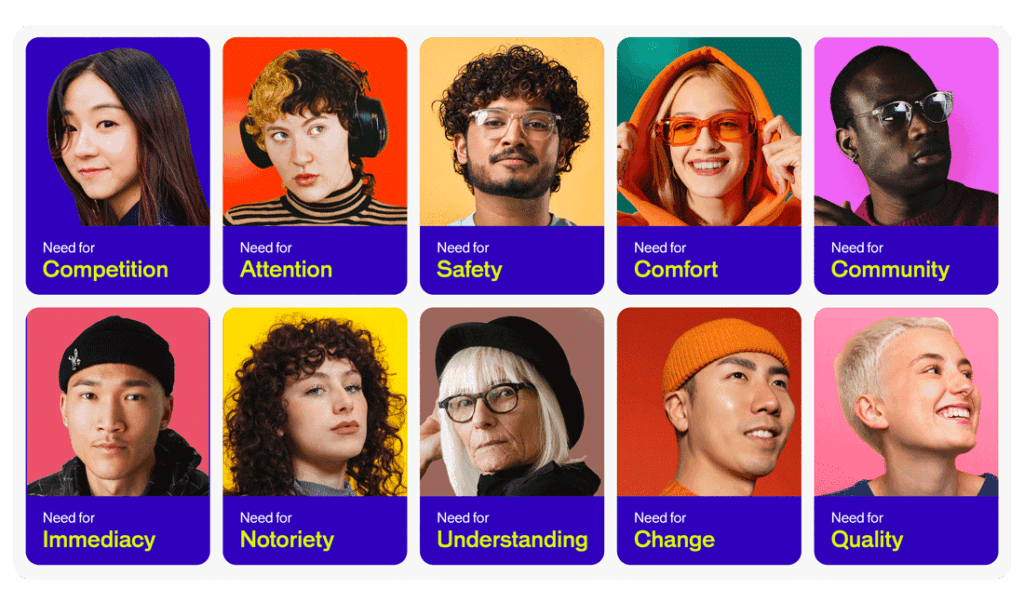
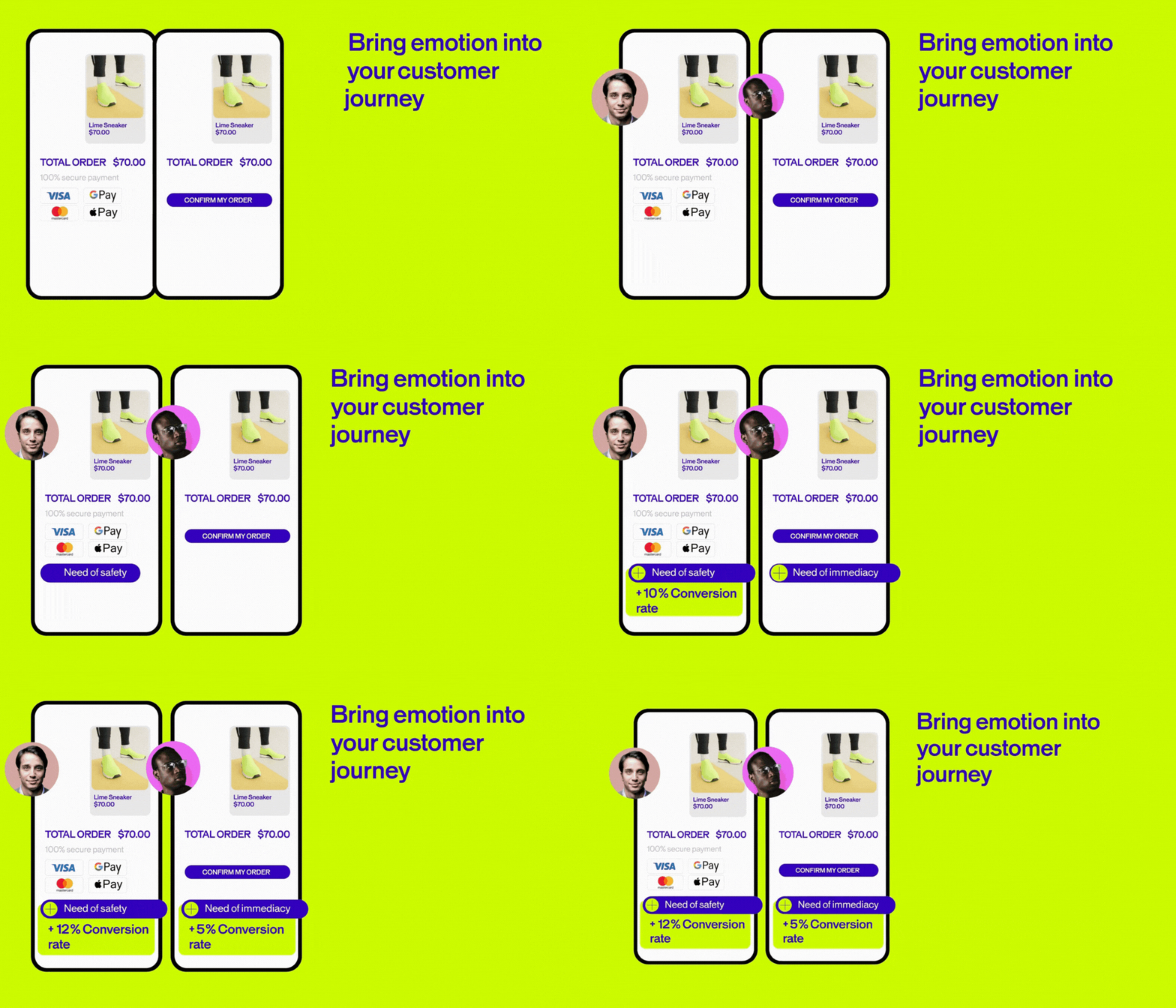
    Going even further, what if AI could read your emotions? AB Tasty’s new AI algorithm, Emotions AI, can automatically segment your audience into 10 categories based on emotional needs. 

    • If a user needs to be reassured, the website can emphasize its free return policy
    • If they need clarity, the website can highlight factual information about your product
    • And if they need immediacy, the website can hide any unnecessary information to instead focus on its main CTAs

    The model estimates the needs of the user by taking into consideration all of their interactions with the website: how long they wait before clicking, whether they scroll through an entire page, where their mouse hovers, how many times they click, etc. This enables stronger personalization, both during testing phases and when deploying online features, by letting you know exactly what your users need. 

    Want to Learn More?

    If you would like to dive deeper into current experimentation trends, watch our webinar replay here, where fifty-five and AB Tasty explored key CRO case studies and more. And if you have any questions or insights you’d like to share, please leave a comment – we would love to hear from you! 

    Article

    4min read

    Transaction Testing With AB Tasty’s Report Copilot

    Transaction testing, which focuses on increasing the rate of purchases, is a crucial strategy for boosting your website’s revenue. 

    To begin, it’s essential to differentiate between conversion rate (CR) and average order value (AOV), as they provide distinct insights into customer behavior. Understanding these metrics helps you implement meaningful changes to improve transactions.

    In this article, we’ll delve into the complexities of transaction metrics analysis and introduce our new tool, the “Report Copilot,” designed to simplify report analysis. Read on to learn more.

    Transaction Testing

    To understand how test variations impact total revenue, focus on two key metrics:

    • Conversion Rate (CR): This metric indicates whether sales are increasing or decreasing. Tactics to improve CR include simplifying the buying process, adding a “one-click checkout” feature, using social proof, or creating urgency through limited inventory.
    • Average Order Value (AOV): This measures how much each customer is buying. Strategies to enhance AOV include cross-selling or promoting higher-priced products.

    By analyzing CR and AOV separately, you can pinpoint which metrics your variations impact and make informed decisions before implementation. For example, creating urgency through low inventory may boost CR but could reduce AOV by limiting the time users spend browsing additional products. After analyzing these metrics individually, evaluate their combined effect on your overall revenue.

    Revenue Calculation

    The following formula illustrates how CR and AOV influence revenue:

    Revenue=Number of Visitors×Conversion Rate×AOV

    In the first part of the equation (Number of Visitors×Conversion Rate), you determine how many visitors become customers. The second part (×AOV) calculates the total revenue from these customers.

    Consider these scenarios:

    • If both CR and AOV increase, revenue will rise.
    • If both CR and AOV decrease, revenue will fall.
    • If either CR or AOV increases while the other remains stable, revenue will increase.
    • If either CR or AOV decreases while the other remains stable, revenue will decrease.
    • Mixed changes in CR and AOV result in unpredictable revenue outcomes.

    The last scenario, where CR and AOV move in opposite directions, is particularly complex due to the variability of AOV. Current statistical tools struggle to provide precise insights on AOV’s overall impact, as it can experience significant random fluctuations. For more on this, read our article “Beyond Conversion Rate.”

    While these concepts may seem intricate, our goal is to simplify them for you. Recognizing that this analysis can be challenging, we’ve created the “Report Copilot” to automatically gather and interpret data from variations, offering valuable insights.

    Report Copilot

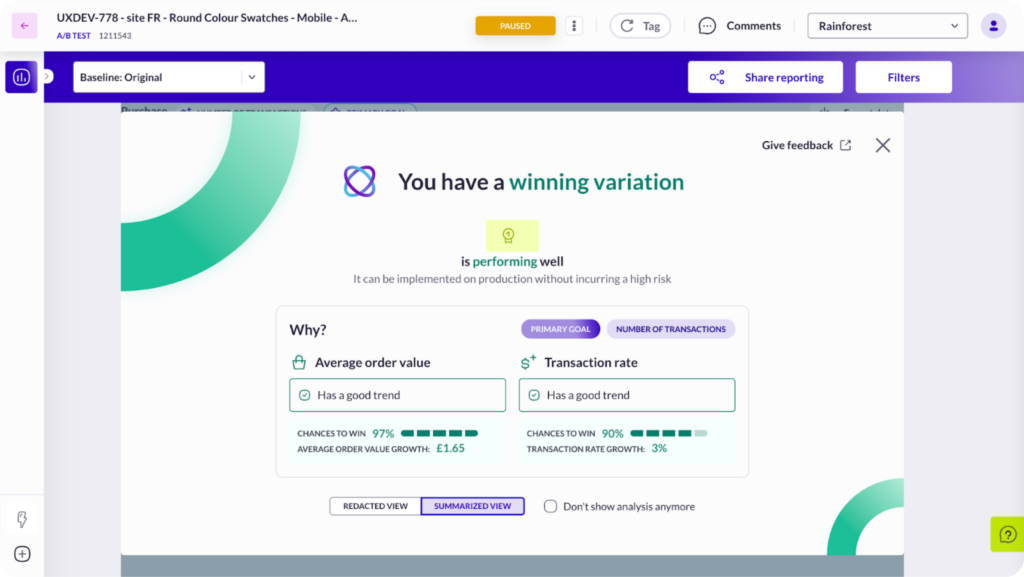
    The “Report Copilot” from AB Tasty automates data processing, eliminating the need for manual calculations. This tool empowers you to decide which tests are most beneficial for increasing revenue.

    Here are a few examples from real use cases.

    Winning Variation:

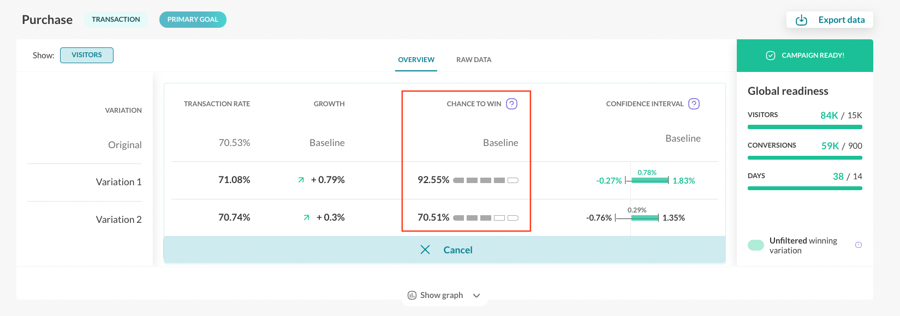
    The left screenshot provides a detailed analysis, helping users draw conclusions about their experiment results. Experienced users may prefer the summarized view on the right, also available through the Report Copilot.

    Complex Use Case:


    The screenshot above demonstrates a case where CR and OAV have opposite trends and need a deeper understanding of the context.

    It’s important to note that the Report Copilot doesn’t make decisions for you; it highlights the most critical parts of your analysis, allowing you to make informed choices.

    Conclusion

    Transaction analysis is complex, requiring a breakdown of components like conversion rate and average order value to better understand their overall effect on revenue. 

    We’ve developed the Report Copilot to assist AB Tasty users in this process. This feature leverages AB Tasty’s extensive experimentation dashboard to provide comprehensive, summarized analyses, simplifying decision-making and enhancing revenue strategies.

    Article

    5min read

    The Past, Present, and Future of Experimentation | Bhavik Patel

    What is the future of experimentation? Bhavik Patel highlights the importance of strategic planning and innovation to achieve meaningful results.

    A thought leader in the worlds of CRO and experimentation, Bhavik Patel founded popular UK-based meetup community, CRAP (Conversion Rate, Analytics, Product) Talks, seven years ago to fill a gap in the event market – opting to cover a broad range of optimization topics from CRO, data analysis, and product management to data science, marketing, and user experience.

    After following his passion throughout the industry from acquisition growth marketing to experimentation and product analytics, Bhavik landed the role of Product Analytics & Experimentation Director at product measurement consultancy, Lean Convert, where his interests have converged. Here he is scaling a team and supporting their development in data and product thinking, as well as bringing analytical and experimentation excellence into the organization.

    AB Tasty’s CMO Marylin Montoya spoke with Bhavik about the future of experimentation and how we might navigate the journey from the current mainstream approach to the potentialities of AI technology.

    Here are some of the key takeaways from their conversation.

    The evolution of experimentation: a scientific approach.

    Delving straight to the heart of the conversation, Bhavik talks us through the evolution of A/B testing, from its roots in the scientific method, to recent and even current practices – which involve a lot of trial and error to test basic variables. When projecting into the future, we need to consider everything from people, to processes, and technology.

    Until recently, conversion rate optimization has mostly been driven by marketing teams, with a focus on optimizing the basics such as headlines, buttons, and copy. Over the last few years, product development has started to become more data driven. Within the companies taking this approach, the product teams are the recipients of the A/B test results, but the people behind these tests are the analytical and data science teams, who are crafting new and advanced methods, from a statistical standpoint.

    Rather than making a change on the homepage and trying to measure its impact on outcome metrics, such as sales or new customer acquisition, certain organizations are taking an alternative approach modeled by their data science teams: focusing on driving current user activity and then building new products based on that data.

    The future of experimentation is born from an innovative mindset, but also requires critical thinking when it comes to planning experiments. Before a test goes live, we must consider the hypothesis that we’re testing, the outcome metric or leading indicators, how long we’re going to run it, and make sure that we have measurement capabilities in place. In short, the art of experimentation is transitioning from a marketing perspective to a science-based approach.

    Why you need to level up your experiment design today.

    While it may be a widespread challenge to shift the mindset around data and analyst teams from being cost centers to profit-enablement centers, the slowing economy might have a silver lining: people taking the experimentation process a lot more seriously. 

    We know that with proper research and design, an experiment can achieve a great ROI, and even prevent major losses when it comes to investing in new developments. However, it can be difficult to convince leadership of the impact, efficiency and potential growth derived from experimentation.

    Given the current market, demonstrating the value of experimentation is more important than ever, as product and marketing teams can no longer afford to make mistakes by rolling out tests without validating them first, explains Bhavik. 

    Rather than watching your experiment fail slowly over time, it’s important to have a measurement framework in place: a baseline, a solid hypothesis, and a proper experiment design. With experimentation communities making up a small fraction of the overall industry, not everyone appreciates the ability to validate, quantify, and measure the impact of their work,  however Bhavik hopes this will evolve in the near future.

    Disruptive testing: high risk, high reward.

    On the spectrum of innovation, at the very lowest end is incremental innovation, such as small tests and continuous improvements, which hits a local maximum very quickly. In order to break through that local maximum, you need to try something bolder: disruptive innovation. 

    When an organization is looking for bigger results, they need to switch out statistically significant micro-optimizations for experiments that will bring statistically meaningful results.

    Once you’ve achieved better baseline practices – hypothesis writing, experiment design, and planning – it’s time to start making bigger bets and find other ways to measure it.

    Now that you’re performing statistically meaningful tests, the final step in the evolution of experimentation is reverse-engineering solutions by identifying the right problem to solve. Bhavik explains that while we often focus on prioritizing solutions, by implementing various frameworks to estimate their reach and impact, we ought to take a step back and ask ourselves if we’re solving the right problem.

    With a framework based on quality data and research, we can identify the right problem and then work on the solution, “because the best solution for the wrong problem isn’t going to have any impact,” says Bhavik.

    What else can you learn from our conversation with Bhavik Patel?

    • The common drivers of experimentation and the importance of setting realistic expectations with expert guidance.
    • The role of A/B testing platforms in the future of experimentation: technology and interconnectivity.
    • The potential use of AI in experimentation: building, designing, analyzing, and reporting experiments, as well as predicting test outcomes. 
    • The future of pricing: will AI enable dynamic pricing based on the customer’s behavior?

    About Bhavik Patel

    A seasoned CRO expert, Bhavik Patel is the Product Analytics & Experimentation Director at Lean Convert, leading a team of optimization specialists to create better online experiences for customers through experimentation, personalization, research, data, and analytics.
    In parallel, Bhavik is the founder of CRAP Talks, an acronym that stands for Conversion Rate, Analytics and Product, which unites CRO enthusiasts with thought leaders in the field through inspiring meetup events – where members share industry knowledge and ideas in an open-minded community.

    About 1,000 Experiments Club

    The 1,000 Experiments Club is an AB Tasty-produced podcast hosted by John Hughes, Head of Marketing at AB Tasty. Join John as he sits down with the experts in the world of experimentation to uncover their insights on what it takes to build and run successful experimentation programs.

    Article

    3min read

    AB Tasty is now available on the Shopify App Store

    We’re excited to share that AB Tasty is now available on the Shopify app store. This means it’s easier to use AB Tasty’s leading experimentation and personalization solutions directly on Shopify sites.

    The launch marks an important milestone for the partnership between AB Tasty and Shopify, providing a more seamless user experience and keeping experience optimization accessible with easy-to-use solutions.

    What this means for Shopify merchants

    Brands using Shopify can enhance their commerce sites with AB Tasty to boost conversions and optimize experiences. Set-up is simple: search for AB Tasty in the Shopify App Store and install the tag in just three steps.

    Once a site is equipped with AB Tasty, you can easily access your favorite features, run tests, and personalize content throughout the shopping funnel from homepage to cart page.

    Building better experiences on your Shopify sites is also easy with AB Tasty’s ready-to-use widget library including interactive features like the scratch card. Or you can create your own custom widget.

    When it’s time to check on how your campaigns are performing, track your success with analytics that automatically link Shopify transactions(transaction rate, total number of transactions, average basket, items per transaction, average item price per transaction, etc.) and other transaction data (like currency, coupons, payment method, etc.) to your AB Tasty campaigns. Quickly identify what campaigns work for your audience and where you can make adjustments.

    How does it work?

    When you are ready to get started, connect AB Tasty with your Shopify site in three steps.

    1. Install the AB Tasty app directly from the Shopify app store.
    2. Enable the extension with your AB Tasty identifier.
    3. Hit save.

    Now you can get to work building better experiences for your visitors. Really, that’s it.

    Over 100 brands already use AB Tasty & Shopify to optimize their sites

    Learn more about how Embark Veterinary’s e-commerce teams use AB Tasty’s experimentation solution to test product copy and increase revenue per session and conversion rate. 

    To wrap up

    At AB Tasty, we’re your optimization partners helping ignite change from the inside out. That’s why we’re continuously improving the experience of our customers, from new integrations to strengthened partnerships and beyond.

    To connect AB Tasty to your Shopify site, get started here.

    Article

    3min read

    CX Optimization Webseries APAC: Episode #3 – The Importance of Continuous Optimization in A/B Testing

     Testing as well is such a benefit from de-risking that decision making.

    – Tom Shepherd, UX Lead at David Jones

    Hosted by Serena Ku, Senior CSM at AB Tasty

    Featuring Tom Shephard, UX Lead at David Jones

    In the fast-paced world of digital commerce, A/B testing and continuous optimization are important processes allowing brands to refine strategies, improve customer experiences, and increase conversion rates over time.

    One huge pitfall many businesses face is they look at what their competitors are doing and assume that it will work for them too. But remember, things are not always as they appear. 

    In this third episode of our CX Optimization Web Series, Tom Shepherd, UX Lead at David Jones joins Serena Ku, Senior Customer Success Manager at AB Tasty to discuss the importance of Continuous Optimization in A/B Testing.

    Discover how a business perspective can shift from “we think” to “we know”.

    Episode #3:

    Why is it important for brands to run A/B tests?

    The main benefits are improved content engagement, increased conversion rates and reduced bounce rates. 

    If you’re not A/B testing, you may already be behind your direct competitors. This by itself is a compelling motivation for why brands should start testing. Speeding up the time it takes to bring an idea or a concept to market is another benefit worth considering A/B testing.

    Take note, businesses need to level up and be able to keep up with behavioral changes and look for opportunities where experiences are not achieving the results they  should be.

    The Role of AB Tasty to empower David Jones’ CRO strategy

    In a traditional UX setting, it is quite frustrating when you invest a lot of time mocking up experiences, taking those to customers, and later finding out that they just don’t work. 

    The Australian luxury department store, David Jones, takes experience optimization seriously. They look closely to understand their customers in all facets. Using GA4 and FullStory, they can draw out ideas and build solutions that will make an experience more seamless, removing friction. With AB Tasty, they launch these experiences quickly and expose them to their customers to gather valuable insights. 

    As a discipline within the user experience team, David Jones leverages AB Tasty and analytics tools to marry quantitative data with qualitative insights delighting every customer.

    Winning customer loyalty

    Customer loyalty is all about the experience. Its essence in the e-commerce landscape is where the digital store has made each customer feel highly valued.

    Perfecting the art of customer loyalty requires both creativity and precision.That is why, like your local store attendant, EmotionsAI helps brands understand the emotional needs of audiences to bolster your Experience Optimization roadmap with effective messages, designs and CTAs that activate your visitors.

    Factors to consider when testing?

    Truly knowing your customer demographics and understanding their behaviors online will allow you to create a well-formulated hypothesis. Consider the time of the year when you launch a test. Is it an off-peak season, are you running promotions, or clearing stocks?  Analyze your data and focus on where your conversion points are. 

    Tom suggests iterating and running as many follow-up tests as possible. If you tested something that worked, you might be up to something even greater. So test more iterations to unlock more results.

    The wrap:

    The strongest path to customer loyalty, higher conversion, and a customer base nobody can touch is having ‘differentiated experiences’. Start with a deeper knowledge of your industry and beyond. Know your customers and empathize with them. Be mindful that behaviors and preferences are ever-changing. Continuous optimization helps you adapt, execute strategies, and stay ahead of the game.

    Article

    5min read

    Tapping into Emotional Marketing | Talia Wolf

    Talia Wolf reveals how emotional marketing can revolutionize your experimentation process and lift conversions.

    Taking a customer-centric approach to marketing, founder and CEO of Getuplift, Talia Wolf, harnesses the power of emotional marketing techniques to increase visitor conversions. 

    Her natural interest in conversion rate optimization (CRO) and experimentation was sparked through her early work in a social media agency, later moving on to become an expert in the field – consulting for many companies on the subject, and speaking on stage at Google, MozCon and Search Love.

    Guest host and AB Tasty’s Head of Growth Marketing UK, John Hughes, spoke with Talia about emotional marketing as a tool for optimization, delving into how customer research can facilitate the experimentation process, reduce the rate of failure, and earn the buy-in from company stakeholders.

    Here are some of the key takeaways from their conversation.

    Based upon the idea that emotion drives every single decision that we make in life, the emotional targeting methodology shifts the focus of your online marketing content from your solution, features, or pricing, to your customer. Rather than playing a guessing game and simply reshuffling elements on a page, this technique requires a deeper understanding of human behavior. By identifying customer intent and buying motivation, you can create an optimized experience, which meets their needs and increases conversions.

    Backed by academic research, the fundamental role of emotion in our daily choices can be integrated into your strategy to better cater to your customers by figuring out a) their biggest challenges and, b) how they want to feel after finding a solution. What is their desired outcome? 

    With this in mind, you can optimize your digital communications with high-converting copy and visuals that speak directly to your customers’ needs. By shifting the conversation from the product to the customer, an incredible opportunity opens up to scale and multiply conversions.

    Firstly, experimentation should be backed by research. From customer and visitor surveys, to review mining, social listening and emotional competitor analysis, Talia encourages extensive research in order to create the most likely hypothesis upon which to base an A/B test. 

    Once you know more about your customers, you can review the copy and visuals on your product page for example, and from your research you might discover that your content is not relevant to your target customer. You can then come up with a hypothesis based on their actual needs and interests supported by compelling social proof, and write a brief for your designer or copywriter based on the new information. 

    From there you can build your experiment into your A/B testing platform with a selected North star metric, whether it’s check-outs, sign-ups or add-to-carts, to prove or disprove your hypothesis. And, while we know that nine out of 10 A/B tests fail, emotional marketing facilitates the hypothesizing process, strengthening the chance of creating a winning experiment by testing variables that can actually impact the customer journey.

    How to persuade stakeholders to support your experiments.

    When it comes to CRO, there are often too many chefs in the kitchen, especially in smaller organizations where founders have a concrete vision of their customers and their messaging. 

    Talia explains that a research-based approach to experimentation can offer reassurance as part of a slow-and-steady strategy, backed by evidence. This personalized methodology involves talking to your customers and website visitors and scouring the web for conversations about your specific industry, rather than simply following your competitor’s lead.

    It becomes a lot easier to propose a test to a founder or CEO when your hypothesis is supported by data and research, however, Talia recommends resisting the urge to change everything at once and rather, start small. Test the emotional marketing in your ads or send out an email sequence requiring only a copywriter, and share the results.

    When you’re trying to get buy-in, you need to have a strong hypothesis paired with good research to prove that it makes sense. If this is the case, you can demonstrate the power of emotional marketing by running a couple of A/B tests: one where the control is the current solution-focused content and the variant is a customer-focused alternative, and another which highlights how customers feel right now versus how they want to feel – two important variations which help you to relate better to your customer. The key to garnering support is to take baby steps and continuously share your research and results.

    What else can you learn from our conversation with Talia Wolf?

    • Why B2B purchases are more emotional than B2C. (15:50)
    • How to stand out in a crowded market by knowing your customer. (20:00)
    • How emotional marketing impacts the entire customer journey. (25:50)
    • How to relate to your customer and improve conversions. (32:40)

    About Talia Wolf

    Conversion optimization specialist Talia Wolf is the founder and CEO of Getuplift – a company that leverages optimization strategies such as emotional targeting, persuasive design, and behavioral data to help businesses generate more revenue, leads, engagement and sales. 

    Starting her career in a social media agency, where she was introduced to the concept of CRO, Talia went on to become the Marketing Director at monday.com, before launching her first conversion optimization agency, Conversioner, in 2013. 

    Today, with her proven strategy in hand, Talia teaches companies all over the world to optimize their online presence using emotional techniques.

    About 1,000 Experiments Club

    The 1,000 Experiments Club is an AB Tasty-produced podcast hosted by John Hughes, Head of Marketing at AB Tasty. Join John as he sits down with the experts in the world of experimentation to uncover their insights on what it takes to build and run successful experimentation programs.

    Article

    4min read

    CX Optimization Webseries APAC: Episode #2 – A/B Testing Strategies for Revenue Optimization

    Personalization is a hypothesis that needs to be tested

    Ben Combe, Data Director, Optimization & Personalization APAC at Monks

    Hosted by Julia Simon, VP APAC at AB Tasty

    Featuring Ben Combe, Data Director, Optimization & Personalization APAC at Monks

    Conversion Rate Optimization (CRO) is a user-centric approach that emphasizes long-term benefits over just leading customers to click on certain elements or CTAs. To achieve this, understanding your data through the use of experimental and scientific methods is key. In this episode, Ben Combe, Data Director, Optimization & Personalization APAC at Monks joins Julia Simon, VP APAC at AB Tasty to discuss CRO techniques and best practices. They find answers to where companies should start, what to prioritize, which methodologies to use, and how to execute a compelling optimization roadmap.

    Whether you’re just starting your CRO journey, or you’re already a CRO expert, this session is for you!

    Episode #2:

    Where do you start?

    Ideas flow from everywhere in the business as data collection happens perpetually. Knowing what your top priorities are is where you should start. You don’t just change the color of your CTA from blue to red because it’s Valentine’s Day and you have a gut feeling.

    Ben points out to first take a look at how the business is doing and where you can focus on for the most impact. Should you focus on acquisition, retention, or loyalty? Identify what and where are the pain points that need solving. Secondly, dive into your customer data by looking at your conversion points. Draw a parallel to where your customers are dropping off and mix them with your qualitative insights. Thirdly, brainstorm with your team to come up with ideas.

    Prioritization Frameworks: PIE or ICE?

    In CRO, time and resources are finite, therefore every experiment counts. You need clear guidelines to choose what ideas to test and what to leave behind. So it’s essential to prioritize – but should you use PIE or ICE?

    If you’re just starting your experimentation journey, Ben recommends taking a look at traffic, value and ease. It’s basically like answering how many people are visiting a webpage, what is it worth in dollars, and what are your development resources. If you’re mature in CRO, a bespoke checklist tailored towards your business needs is recommended.

    The importance of UX

    Running A/B tests is a great way of conducting UX research while your product is live. It helps you decide on what works and what doesn’t work for your customers. By testing different design options, designers are able to gather valuable user feedback. This can then be used for design improvement that is more user-centric, and that leads to increased user engagement and satisfaction. Keeping the UX Team in the loop is essential for continuous learning and improvement.

    The Quick Wins

    Looking into easy, quick wins in the beginning of your experimentation strategy will bring you good results. Once you pick all the low-hanging fruit, Ben encourages you to shift your mindset towards a more innovative approach. Think outside the box, analyze your segments deeper, and iterate.

    Synchronizing AB Testing and Personalization

    AB testing allows you to understand the effectiveness of your personalization strategies by comparing various content, design elements, and offers. This insight allows you to deliver an experience that resonates best with customers, leading to higher engagement. It’s important to take note that no personalization goes live without being tested. Behaviors change and it’s necessary to continuously experiment in order to validate that your personalization is still relevant.

    Article

    1min read

    Trial and Error of Building a Culture of Experimentation in Marketing | Rand Fishkin

    Rand Fishkin discusses the importance of “non-attributable” marketing and why companies should take more risks and allow themselves the freedom to fail.

    Rand Fishkin is the co-founder and CEO of SparkToro, a software company that specializes in audience research for targeted marketing. Previously, Rand was the co-founder and CEO of Moz, where he started SEOmoz as a blog that turned into a consulting company, then a software business. Over his seven years as CEO, Rand grew the company to 130+ employees, $30M+ in revenue, and brought website traffic to 30M+ visitors/year. 

    He’s also dedicated his professional life to helping people do better marketing through his writing, videos, speaking, and his latest book, Lost and Founder.

    AB Tasty’s VP Marketing Marylin Montoya spoke with Rand Fishkin about the culture of experimentation and fear of failure when it comes to marketing channels and investments. Rand also shares some of his recommendations on how to get your brand in front of the right audience. 

    Here are some key takeaways from their conversation.

    Taking a more risk-based approach

    Rand believes there’s too much focus on large markets that people often overlook the enormous potential of smaller markets to go down the more typical venture path. In that sense, founders become biased towards huge, totally addressable markets.

    “They don’t consider: here’s this tiny group of people. Maybe there are only three or 4000 people or companies who really need this product, but if I make it for them, they’re going to love it. I think that there’s a tremendous amount of opportunity there. If folks would get out of their head that you have to look for a big market,” Rand says.

    People avoid such opportunities because of the regulatory challenges, restrictions, and other barriers to entry that often come with them but for Rand, these underserved markets are worth the risk because competition is scarce. There’s a real potential to build something truly special for those willing to overcome the challenges that come with it, Rand argues. 

    There are a lot of underserved niches and many business opportunities out there in the tech world, if companies would shift away from the “growth at all cost” mentality. 

    “The thing about being profitable is once you’re there, no one can take the business from you. You can just keep iterating and finding that market, finding new customers, finding new opportunities. But if you are constantly trying to chase growth unprofitably and get to the metrics needed for your next round, you know all that goes out the window,” Rand says.

    Freedom to fail

    Similarly, Rand states that there’s a huge competitive advantage in committing resources toward marketing channels where attribution is hard or impossible because no one else is investing in these kinds of channels. That’s where Rand believes companies should allocate their resources.

    “If you take the worst 10 or 20%, worst performing 10 or 20% of your ads budget, your performance budget, and you shift that over to hard-to-measure, experimental, serendipitous, long-term brand investment types of channels, you are going to see extraordinary results.”

    However, the problem is getting buy-in from more senior stakeholders within a company because of these “hard-to-attribute” and “hard-to-measure” channels. In other words, they refuse to invest in channels where they can’t prove an attribute – a change of conversion rate or sales – or return on investment. Thus, any channels that are poor at providing proof of attribution get underinvested. Rand strongly believes that it’s still possible to get clicks on an organic listing of your website and get conversions even if a brand doesn’t spend anything on ads. 

    “I think brand and PR and content and social and search and all these other organic things are a huge part of it. But ads are where those companies can charge because the CEO, CMO, CFO haven’t figured out that believing in hard-to-measure channels and hard-to-attribute channels and putting some of your budget towards experimental stuff is the right way to do things,” Rand argues.

    According to Rand, these are exactly the kinds of channels where more resources need to be allocated as they generate a higher return on investment than any ad a company might spend on the more typical and bigger name platforms. 

    “Your job is to go find the places your audience pays attention to and figure out what your brand could do to be present in those places and recommended by the people who own those channels.”

    According to Rand, there is a learning curve in finding the message that resonates with this audience and the content that drives their interest as well as the platforms where you can connect with them and this will all depend on who your audience is.

    Experiment with AI

    For Rand, the AI boom is more realistic and interesting than previous big tech trends. He especially sees its biggest advantage in solving big problems within organizations that can be best solved with large language model generative AI. 

    However, it’s important not to insert AI in a business or create problems just for the sake of using it or to apply it to the wrong places.

    “If you find that stuff fascinating and you want to experiment with it and learn more about it, that’s great. I think that’s an awesome thing to do. Just don’t don’t go trying to create problems just to solve this, to use it.” 

    He believes the best use case for AI is for more tedious jobs that would be otherwise too time-consuming as opposed to using it for more tactical or strategic marketing advice. Nonetheless, he does believe that there are a lot of interesting and useful solutions and products being built with AI that will solve many problems.

    What else can you learn from our conversation with Rand Fishkin?

    • The importance of brand and long-term brand investments
    • Why it’s hard to get leadership to shift away from common ad platforms
    • How social networks have become “closed networks”
    • Why attention needs to shift to your audience and how they can become “recommenders” of your product

    About Rand Fishkin

    Rand Fishkin is the co-founder and CEO of SparkToro, makers of fine audience research software to make audience research accessible to everyone. He’s also the founder and former CEO of Moz and also co-founded Inbound.org alongside Dharmesh Shah, which was sold to Hubspot in 2014. Rand has become a frequent worldwide keynote speaker over the years on marketing and entrepreneurship with a mission to help people do better marketing. 

    About 1,000 Experiments Club

    The 1,000 Experiments Club is an AB Tasty-produced podcast hosted by John Hughes, Head of Marketing at AB Tasty. Join John as he sits down with the experts in the world of experimentation to uncover their insights on what it takes to build and run successful experimentation programs.

    Article

    3min read

    CX Optimization Webseries APAC: Episode #1 – CRO Trends in 2024

    The opportunity cost of NOT testing is never knowing how much revenue you are losing from not knowing.

    Dave Anderson, VP Product Marketing and Strategy

    We are living in a time where people treat products and services as commodities. Customers of today expect an experience alongside whatever they have purchased. Optimizing digital experiences can directly impact a company’s bottom line by improving conversion rates, reducing customer frustration, and enhancing brand sentiment. 

    Hosted by Julia Simon, VP APAC at AB Tasty

    Featuring Dave Anderson, VP Product Marketing and Strategy at Contentsquare

    In this episode, Dave joins us to discuss various facets of customer experience and experimentation trends in Asia Pacific. They unravel key insights regarding the impact of Customer Experience (CX) Optimization on revenue generation, the widespread adoption of optimization practices across industries, the importance of collaboration between teams, and the value of continuous experimentation.

    Dive deep into Episode #1

    1. Impact of CX Optimization on Revenue: 

    Businesses that focus on understanding the needs of their customers increase revenue by making new buyers loyal and loyal customers purchase consistently. Providing a great customer experience directly impacts a company’s bottom line by improving conversion rates, reducing customer frustration, and in the long run increasing customer lifetime value.

    2. Adoption of Optimization Practices Across Industries:

    Virtually every industry including education, finance, retail, and telecommunications is now embracing CX optimization as a means to meet evolving customer expectations. They discuss how companies leverage social proof, countdown banners, personalisation strategies and more to enhance digital experiences and stay competitive in today’s market.

    3. Importance of Collaboration Between Teams: 

    Collaboration between different teams in an organization is key to driving a successful CX strategy. The need for alignment between UX, product, tech, and marketing teams is important to ensure that optimization efforts are cohesive and well executed.

    4. Value of Continuous Experimentation: 

    Continuous experimentation is the cornerstone of a successful optimization strategy. Our content also underscores the importance of testing hypotheses, analyzing results, and iterating based on insights to drive ongoing improvements in digital experiences. Closing up this section, they determined that organizations need to adopt a culture of experimentation and data-driven decision-making to remain agile and responsive to evolving customer needs.

    Article

    3min read

    Analytics Reach New Heights With Google BigQuery + AB Tasty

    AB Tasty and Google BigQuery have joined forces to provide seamless integration, enabling customers with extensive datasets to access insights, automate, and make data-driven decisions to push their experimentation efforts forward.

    We have often discussed the complexity of understanding data to power your experimentation program. When companies are dealing with massive datasets they need to find an agile and effective way to allow that information to enrich their testing performance and to identify patterns, trends, and insights.

    Go further with data analytics

    Google BigQuery is a fully managed cloud data warehouse solution, which enables quick storage and analysis of vast amounts of data. This serverless platform is highly scalable and cost-effective, tailored to support businesses in analyzing extensive datasets for making well-informed decisions. 

    With Google BigQuery, users can effortlessly execute complex analytical SQL queries, leveraging its integrated machine-learning capabilities.

    This integration with AB Tasty’s experience optimization platform means customers with large datasets can use BigQuery to store and analyze large volumes of testing data. By leveraging BigQuery’s capabilities, you can streamline data analysis processes, accelerate experimentation cycles, and drive innovation more effectively.

    Here are some of the many benefits of Google BigQuery’s integration with AB Tasty to help you trial better:

    • BigQuery as a data source

    With AB Tasty’s integration, specific data from AB Tasty can be sent regularly to your BigQuery set. Each Data Ingestion Task has a name, an SQL query to get what you need, and timed frequency for data retrieval. This information helps make super-focused ads and messages, making it easier to reach the right people.

    • Centralized storage of data from AB Tasty

    The AB Tasty and BigQuery integration simplifies campaign analysis too by eliminating the need for SQL or BI tools. Their dashboard displays a clear comparison of metrics on a single page, enhancing efficiency. You can leverage BigQuery for experiment analysis without duplicating reporting in AB Tasty, getting the best of both platforms. Incorporate complex metrics and segments by querying our enriched events dataset and link event data with critical business data from other platforms. Whether through web or feature experimentation, it means more accurate experiments at scale to drive business growth and success.

    • Machine learning

    BigQuery can also be used for machine learning on experimentation programs, helping you to predict outcomes and better understand your specific goals. BigQuery gives you AI-driven predictive analytics for scaling personalized multichannel campaigns, free from attribution complexities or uncertainties. Access segments that dynamically adjust to real-time customer behavior, unlocking flexible, personalized, and data-driven marketing strategies to feed into your experiments.

    • Enhanced segmentation and comprehensive insight

    BigQuery’s ability to understand behavior means that you can segment better. Its data segmentation allows for categorizing users based on various attributes or behaviors. With data that is sent to Bigquery from experiments, you can create personalized content or features tailored to specific user groups, optimizing engagement and conversion rates.

    Finally, the massive benefit of this integration is to get joined-up reporting – fully automated and actionable reports on experimentation, plus the ability to feed data from other sources to get the full picture.

    A continued partnership

    This integration comes after Google named AB Tasty an official Google Cloud Partner last year, making us available on the Google Cloud Marketplace to streamline marketplace transactions. We are also fully integrated with Google Analytics 4. We were also thrilled to be named as one of the preferred vendors from Google for experimentation after the Google Optimize sunset. 


    As we continue to work closely with the tech giant to help our customers continue to grow, you can find out more about this integration here.